ENA - ENA English
Live:
' + getPhotos(pictures, true) + '
';
/*let navs = getNavs();
let lastNav = navs[navs.length - 1];
if (pictures.length > 10) {
getNav().classList.add("multiline");
}
for (let i = navs.length; i < pictures.length; i++) {
let newNav = lastNav.cloneNode(true);
lastNav.parentNode.insertBefore(newNav, lastNav.nextSibling);
lastNav = newNav;
}*/
let titleText = document.getElementById("ena_title_text")
if (titleText) {
setTimeout(titleText.scrollIntoView(), 100);
}
}
function getPhotos(pictures, pictureOnly) {
let result = "";
pictures.forEach(picture => {
result += '';
result += '
';
})
return result;
}
function getPhotoImage(picture, pictureOnly) {
let result = '';
if (!pictureOnly) {
result += '';
}
result += '';
result += getPhotoImage(picture, pictureOnly);
result += '
';
if (!pictureOnly) {
result += '';
result += getPhotoText(picture);
result += '
';
}
result += '';
result += '
';
if (!pictureOnly) {
result += '';
}
return result;
}
function getPhotoText(picture) {
let result = '';
result += '';
result += ' ';
result += '
';
result += '';
result += getPhotoTitle(picture);
result += '
';
result += '';
return result;
}
function getPhotoTitle(picture) {
let image = picture.getElementsByTagName("IMG")[0];
return image.alt;
}
function getPhotoLink(picture) {
let image = picture.getElementsByTagName("IMG")[0];
return image.src.replace("&download=true","");
}
let contents=Array.from(
fragmentElement.getElementsByClassName(
"ena_display_item_content"));
contents.forEach(item => {
item.innerHTML=item.innerHTML.replaceAll(" "," ")})
Array.from(fragmentElement.getElementsByClassName(
"ena_display_item_content")).forEach(item => {
if (item.innerHTML.length!=item.textContent.length) {
item.innerHTML=item.textContent;}});
if (checkModes(["headlines", "alertbar", "slider", "advertisement"])) {
if (checkModes(["headlines", "alertbar"])) {
moveTo(getItems().length > 1 ? 1 : 0);
} else {
moveTo(0);
}
if (checkModes(["slider"])) {
setTimeout(() => autoMove(), 1);
} else {
autoMove();
}
}
function checkModes(modes, prefix){
if (!prefix) prefix = "mode";
var display = fragmentElement.getElementsByClassName(
"ena_display")[0];
for (let i in modes) {
if (display.classList.contains(
"ena_display_" + prefix + "_" + modes[i])) {
return true;
}
}
return false;
}
function getAutoInterval(){
if (checkModes(["advertisement"])) {
return 10000;
}
else {
return 5000;
}
}
function getCarouselNavs(){
return fragmentElement.getElementsByClassName("ena_carousel_control_navs")[0]}
function getPort(){
return fragmentElement.getElementsByClassName("ena_display_port")[0]}
function getItems(){return Array.from(
getPort().getElementsByClassName("ena_display_item"))}
function getNav(){return document.getElementById("ena_display_control_nav")}
function getNavs() {
if (checkModes(["Photos"], "type")) {
return Array.from(
fragmentElement.getElementsByClassName("ena_display_item_picture"));
} else {
return Array.from(
fragmentElement.getElementsByClassName("ena_display_control_nav_item"));
}
}
function getPrev(){
return fragmentElement.getElementsByClassName(
"ena_display_control_arrow_prev")[0];
}
function getNext(){
return fragmentElement.getElementsByClassName(
"ena_display_control_arrow_next")[0];
}
/*function getArrows(){
return fragmentElement.getElementsByClassName(
"ena_display_control_arrows")[0];
}*/
function getCurrent(items){return items.indexOf(items.find(
item => item.classList.contains("ena_display_current")))}
function setCurrent(index, itemsArray){
let currents = [];
itemsArray.forEach((items, i) => {
currents[i] = getCurrent(items);
if (currents[i]>=0)items[currents[i]].classList.add("ena_display_visible");
items.forEach(
item => {
item.classList.remove("ena_display_a");
item.classList.remove("ena_display_b");
item.classList.remove("ena_display_c");
item.classList.remove("ena_display_current");
item.classList.remove("ena_display_backward");
item.classList.remove("ena_display_forward");
})});
/*setTimeout(()=>{*/
itemsArray.forEach((items, i) => {
if(index >= 0 && index < items.length) {
let current=currents[i];
items[index].classList.add("ena_display_current");
if (current<0 || index==current) {
/*if (index==0){
items[items.length-1].classList.add("ena_display_a");
} else {
items[index-1].classList.add("ena_display_a");
}*/
items[index].classList.add("ena_display_b");
/*if (index==items.length-1){
items[0].classList.add("ena_display_c");
} else {
items[index+1].classList.add("ena_display_c");
}*/
} else {
let direction="";
/*setTimeout(()=>{*/
if(isForward(index, current, items.length-1)){
items[index].classList.add("ena_display_c");
/*setTimeout(()=>{*/
items[current].classList.add("ena_display_b");
/*}, 1000);*/
direction="ena_display_forward";
} else {
items[index].classList.add("ena_display_a");
/*setTimeout(()=>{*/
items[current].classList.add("ena_display_b");
/*}, 1000);*/
direction="ena_display_backward";
}
setTimeout(function(){
items[current].classList.add(direction);
items[index].classList.add(direction);
items[current].classList.remove("ena_display_visible");
}, 100);
/*}, 2000);*/
}
}});
/*}, 2000);*/
/*getItems().filter(
item => item.classList.contains("ena_display_current")).forEach(
item => {if (getPort()) getPort().scrollLeft=item.offsetLeft});*/
}
function isForward(index, current, last){
if(index==0&¤t==last)return true;
if(index==last&¤t==0)return false;
return index>current;
}
function moveTo(index){setCurrent(index, [getItems(), getNavs()]);}
function prevIndex(){
var items = getItems();
var index = getCurrent(items) - 1;
if (index < 0) index = items.length - 1;
return index;
}
function nextIndex(){
var items = getItems();
var index = getCurrent(items) + 1;
if (index >= items.length) index = 0;
return index;
}
getNavs().forEach((item, index) => item.onclick = function(){
moveTo(index)});
getPrev().onclick = function(){moveTo(prevIndex())};
getNext().onclick = function(){moveTo(nextIndex())};
fragmentElement.onmouseenter = function(){
autoStop();
//getArrows().style.display="inline-flex";
}
fragmentElement.onmouseleave = function(){
autoMove();
//getArrows().style.display="none";
}
function autoMove(){
autoStop();
if (fragmentElement.getElementsByClassName("portlet-topper").length==0
&& !fragmentElement.ena_timer_display){
fragmentElement.ena_timer_display=setInterval(
() => {
fragmentChild = fragmentElement.children[0];
let visibility = window.getComputedStyle(fragmentChild, null).visibility;
if (visibility != "hidden") {
moveTo(nextIndex());
}
}, getAutoInterval());
}
}
function autoStop(){
clearInterval(fragmentElement.ena_timer_display);
fragmentElement.ena_timer_display = null;
};}());


Headlines
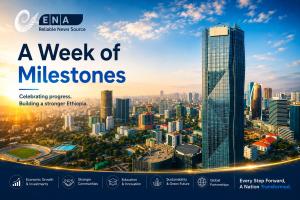
Ethiopia in the Global Spotlight: Health Leadership, Major Policy Briefing and a New Push for Sudanese Peace
Nov 29, 2026 1530
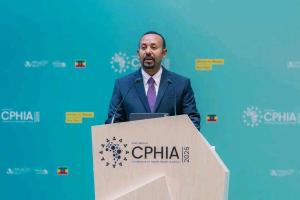
By Staff Writer November 29, 2026 (ENA) Ethiopia closed the final week of November with a series of major international and domestic engagements, bringing global health cooperation, national economic ambitions and regional peace diplomacy into sharp focus. From hosting tens of thousands of delegates at Africa’s flagship public health conference to presenting its economic and development priorities before Parliament and offering to facilitate an inclusive Sudanese national dialogue, Ethiopia featured prominently in discussions shaping the continent’s future. The week underscored Addis Ababa’s growing role as a hub for international engagement, while highlighting the Ethiopian government's stated priorities on economic transformation, national security, regional stability and African cooperation. Three major developments defined the week: the Fifth International Conference on Public Health in Africa (CPHIA 2026), Prime Minister Abiy Ahmed’s comprehensive parliamentary briefing on government performance, and Ethiopia’s renewed diplomatic initiative to help end the devastating war in neighboring Sudan. Addis Ababa Brings Africa’s Health Sovereignty into Global Focus Ethiopia placed Africa’s health sovereignty and the future of its public health systems at the center of international attention as it successfully hosted the Fifth International Conference on Public Health in Africa (CPHIA 2026) in Addis Ababa. Co-hosted by the Ethiopian government and the Africa Centres for Disease Control and Prevention (Africa CDC), the conference brought together more than 30,000 participants, including policymakers, health professionals, researchers, development partners and international delegates. The gathering demonstrated Addis Ababa’s capacity to convene major international events and provide a platform for addressing some of the continent’s most pressing development challenges. Opening the conference, Prime Minister Abiy Ahmed reaffirmed Ethiopia’s commitment to building a resilient, self-reliant African health system through investments in human capital, domestic pharmaceutical production, digital health technologies and artificial intelligence. Welcoming participants to Addis Ababa, home to both the African Union and Africa CDC, the Prime Minister emphasized the importance of strengthening Africa’s capacity to address its own health challenges through greater investment, innovation and institutional cooperation. The conference also brought renewed attention to the broader question of health sovereignty, particularly Africa’s need to strengthen local pharmaceutical manufacturing, expand access to essential healthcare services, develop its health workforce and reduce dependence on external supply chains. With thousands of participants converging on the Ethiopian capital, CPHIA 2026 further highlighted Addis Ababa’s growing significance as a continental center for policy dialogue, scientific exchange and international cooperation. PM Abiy’s Parliamentary Briefing Highlights Economic Transformation, Mega Projects and National Security While Addis Ababa hosted the international health gathering, Prime Minister Abiy Ahmed appeared before the House of Peoples’ Representatives on Thursday to present the federal government's performance during the first quarter of the 2026/27 Ethiopian fiscal year and respond to lawmakers' questions on major national and regional issues. The parliamentary briefing covered the government's economic performance, infrastructure development, national defense, domestic peace, regional diplomacy and Ethiopia's position on the utilization of the Abay (Blue Nile) River. Responding to questions and observations from lawmakers, the Prime Minister addressed progress against the 2019 Ethiopian fiscal year government plan presented by President Taye Atske Selassie during the joint opening session of the House of Peoples’ Representatives and the House of Federation on October 6, 2026. GDP Rebasing Puts Ethiopia’s Economic Size at 210 Billion USD One of the key economic issues raised during the parliamentary session was Ethiopia’s recent GDP rebasing exercise, undertaken after 11 years without a comprehensive revision of the country's national economic accounts. Prime Minister Abiy said the exercise had provided a more comprehensive picture of Ethiopia’s economic capacity, placing the country's economy at approximately 210 billion USD and making it the third-largest economy in Sub-Saharan Africa, after South Africa and Nigeria. He explained that the revision was necessary to reflect structural changes in the economy, including the emergence of new industries, expanding economic activities and changes in the contribution of existing sectors. International standards generally recommend rebasing national accounts approximately every five years to ensure that economic measurements reflect evolving market realities. However, Ethiopia had gone 11 years without undertaking the exercise, leaving several economic activities inadequately captured in its national accounts. According to the Prime Minister, the rebasing exercise produced three possible estimates, with the government adopting the most conservative assessment, which put the country's economic size at 210 billion USD. The updated figures, he said, offer a clearer understanding of the scale of Ethiopia's economy and provide a stronger statistical foundation for economic planning and policymaking. More Than 30 Billion USD in Guba Mega Projects Advance The Prime Minister also highlighted progress in Ethiopia's ambitious Guba mega-projects, a development package valued at more than 30 billion USD that he announced during the September 2025 inauguration of the Grand Ethiopian Renaissance Dam (GERD) in Guba, Benishangul-Gumuz Region. The projects span several strategic sectors, including housing, energy, natural gas, fertilizer production, petroleum refining and aviation infrastructure. PM Abiy cited progress in the 1.5 Million-Home Program, the Ogaden liquefied natural gas and gas infrastructure projects, the Gode urea fertilizer plant and oil refinery, Bishoftu International Airport and the country's nuclear energy development plans. The initiatives form part of Ethiopia's broader efforts to expand productive capacity, strengthen industrial development, improve infrastructure and diversify the national economy. Their implementation is expected to contribute to the country's long-term ambitions of increasing domestic production, creating employment opportunities and strengthening economic competitiveness. National Defense, Economic Strength and Regional Security On national security, Prime Minister Abiy emphasized that a sustainable and productive economy is fundamental to building a capable and enduring national defense force. He cautioned that military strength cannot be sustained through defense investment alone, stressing the need for a strong economic foundation to support national security. "Defense is like a house. If we build the defense force alone, it will not endure. We must ensure that the economy can sustain it," he said. Addressing regional security, the Prime Minister reaffirmed Ethiopia's stated commitment to peace and stability across the Horn of Africa and the wider continent, while emphasizing that the country would firmly defend its sovereignty and territorial integrity against any violation. He recalled Ethiopia's longstanding contributions to African peacekeeping and security operations, citing its involvement in Rwanda, Somalia, the Democratic Republic of Congo, Liberia and South Sudan. Ethiopian forces, he noted, have made significant sacrifices in support of regional peace and security. The Prime Minister maintained that Ethiopia has no intention of invading neighboring countries, while stressing that peaceful coexistence and respect for territorial integrity should guide relations among states. He also urged the Eritrean government to refrain from arming or cooperating with forces hostile to Ethiopia, renewing his call for peaceful coexistence and cooperation between the two neighboring countries. PM Abiy further recalled Ethiopia's diplomatic efforts to help Eritrea overcome international isolation and strengthen its relations with neighboring states. Abay River: Sovereign Development and Regional Cooperation The utilization of the Abay (Blue Nile) River also featured prominently in the Prime Minister's parliamentary address. Reaffirming Ethiopia's sovereign right to develop and utilize its water resources without external authorization, Abiy stressed that harnessing the river's potential is essential to overcoming poverty, expanding electricity generation, strengthening food security and improving citizens' livelihoods. Describing the Abay as a divine gift to Ethiopia, he reiterated that the country remains committed to pursuing regional cooperation and shared development with downstream countries. His remarks reinforced Ethiopia's longstanding position that the equitable utilization of transboundary water resources should be guided by cooperation, mutual benefit and the development aspirations of all riparian countries. Ethiopia Offers to Host Inclusive Sudanese Dialogue as Calls for Peace Intensify Beyond its domestic economic and development agenda, Ethiopia also placed regional peace diplomacy at the center of its international engagement during the week. Prime Minister Abiy Ahmed extended an open invitation to Sudanese military, political and civilian stakeholders to participate in an inclusive national dialogue to be hosted and facilitated by Ethiopia, calling for an end to the devastating conflict that has engulfed Sudan since April 15, 2023. In a statement issued in Arabic language, the Prime Minister described the proposed initiative as a sincere effort to bring all Sudanese parties together around a comprehensive, open and Sudanese-led dialogue aimed at finding a lasting political solution. "At this critical historical juncture, the Ethiopian government is putting forward a sincere and genuine initiative calling on all Sudanese parties, across their military, political, and civilian components, to participate in a comprehensive and open Sudanese dialogue to be hosted and facilitated by Ethiopia," he stated. Highlighting the deep historical, cultural and people-to-people ties between the two neighboring countries, the Premier described Sudan as a brotherly nation whose suffering resonates deeply with the Ethiopian people. He stressed that the ongoing war is not simply a political or security crisis confined to Sudan but a humanitarian tragedy with far-reaching consequences for neighboring countries and the wider Horn of Africa. Reaffirming Ethiopia's commitment to Sudan's unity, territorial integrity and stability, the Prime Minister emphasized that peace in Sudan is inseparable from the security and stability of the wider region. He also recalled Ethiopia's diplomatic engagement during Sudan's 2019 political transition, when Addis Ababa worked to bring civilian and military stakeholders closer together and facilitate an agreement reflecting the Sudanese people's aspirations for civilian rule. Sudanese Public and Political Groups Welcome Ethiopia’s Initiative The Ethiopian initiative has received positive reactions from Sudanese public figures, researchers and political groups, with calls for dialogue and an end to the war continuing to feature prominently in public discussions. Sara Al-Saeed, a Sudanese researcher and international relations analyst specializing in the Horn of Africa at Newcastle University in the United Kingdom, told ENA that the initiative had been widely welcomed by Sudanese people. "The Sudanese people have widely welcomed the Prime Minister's initiative. If you look at social media, you will find Sudanese expressing their support for Dr. Abiy Ahmed's initiative. The people want peace," she said. Al-Saeed described the initiative as an important diplomatic effort to bring Sudanese stakeholders together through dialogue and negotiations, emphasizing the need for a peaceful and lasting solution to the country's crisis. She added that public and political reactions had demonstrated considerable support for Ethiopia's proposed engagement. Political groups have also expressed support for the initiative. The Civil Democratic Alliance of Revolutionary Forces (Sumoud) and the Sudan Founding Alliance (Tasis) have both welcomed Ethiopia's proposal and indicated their readiness to participate in the proposed dialogue. The responses have brought renewed attention to the potential role of regional diplomacy in creating opportunities for Sudanese stakeholders to pursue a negotiated settlement to the conflict. A Week Reflecting Ethiopia’s Expanding Regional and International Engagement Taken together, the week's developments illustrate the breadth of Ethiopia's engagement across continental health cooperation, domestic economic transformation and regional peace initiatives. Hosting CPHIA 2026 brought thousands of international participants to Addis Ababa and placed African health sovereignty at the center of a major continental discussion. The Prime Minister's parliamentary address provided an overview of the government's economic ambitions, strategic infrastructure projects, national security priorities and approach to regional relations. Meanwhile, the offer to facilitate an inclusive Sudanese dialogue highlighted Ethiopia's continued diplomatic engagement in addressing instability in its neighborhood. As the Horn of Africa navigates complex political, economic and security challenges, these developments place Ethiopia's domestic transformation agenda and regional diplomatic initiatives within a broader continental context. The final week of November thus brought three interconnected priorities into focus: strengthening Africa's capacity to address its own development challenges, advancing Ethiopia's economic and institutional ambitions, and pursuing regional solutions to conflicts that threaten shared stability. For Addis Ababa, the week was not only marked by major international gatherings and parliamentary deliberations, but also by renewed diplomatic engagement on an issue with profound implications for the future of the Horn of Africa.
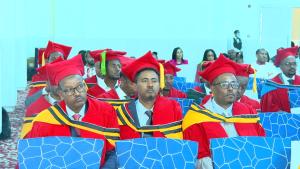
Ethiopia-South Africa Deepen Academic Ties as UNISA Marks 20 Years in Ethiopia
Nov 29, 2026 1571
Addis Ababa, November 29, 2026 (ENA)— Ethiopia and South Africa are deepening their longstanding partnership through expanding academic cooperation, with the University of South Africa (UNISA) marking two decades of contribution to higher education in Ethiopia. South Africa’s Ambassador to Ethiopia, Nonceba Losi, said UNISA’s presence in Ethiopia reflects the enduring friendship between the two countries and their growing commitment to advancing education, knowledge exchange and human capital development across Africa. She made the remarks as UNISA celebrated the graduation of 61 Ethiopian students, including 58 doctoral scholars, at a ceremony held on Saturday at Haile Grand Hotel in Addis Ababa, coinciding with the university’s 20th anniversary of operations in Ethiopia. Ambassador Losi said the graduates’ achievements represent more than individual academic success, underscoring the growing educational partnership and historical bonds between the two countries. She traced Ethiopia-South Africa relations to a shared history of solidarity, mutual respect and a common commitment to African liberation, unity and progress. Recalling a significant chapter in that history, Losi noted that Ethiopia provided a home to South Africa’s founding president, Nelson Mandela, during the 1960s, describing the connection as a lasting symbol of African solidarity. She said bilateral cooperation has continued to expand through institutional frameworks, particularly the Joint Ministerial Commission, and is underpinned by nearly 20 agreements and memoranda of understanding. The bilateral Memorandum of Understanding on Higher Education, she added, provides an important foundation for academic collaboration and further underscores the significance of UNISA’s longstanding presence in Ethiopia. Losi highlighted UNISA’s open and distance learning model for expanding access to higher education, enabling professionals to pursue advanced qualifications while maintaining their careers and continuing to serve their communities. She stressed that such cooperation is instrumental in producing skilled professionals, researchers and academics capable of responding to Ethiopia’s development priorities and contributing to Africa’s broader transformation. Speaking at the ceremony, Asegid Samuel, Lead Executive Officer for Human Resources Development and Improvement at the Ministry of Health, said the graduation demonstrates the growing pool of advanced academic talent needed to strengthen national institutions and improve public services. He described the UNISA Ethiopia Regional Learning Center as an expression of shared values embodied in South Africa’s Ubuntu philosophy and Ethiopia’s Medemer (Synergy) vision, both emphasizing collective responsibility, solidarity and shared progress. Asegid particularly highlighted the contribution of UNISA graduates specializing in public health and nursing to strengthening Ethiopia’s healthcare system. He cited improvements in maternal health, noting that maternal mortality declined from approximately 950 deaths per 100,000 live births in 2000 to about 195 in 2023. He attributed the progress largely to sustained investments in health infrastructure and human resources, including the deployment of nearly 43,000 health extension workers who deliver essential services at the community level. However, he emphasized that further investment in qualified health professionals, research and specialized training remains critical to advancing universal health coverage. He urged the graduates to translate their academic achievements into practical solutions, mentor emerging professionals and contribute meaningfully to national development and improved public service delivery. For his part, UNISA Vice Principal for Institutional Development and Transformation, Solomon R. Magano, commended the graduates for their perseverance in completing their studies while balancing professional and family responsibilities. He challenged them to turn their academic knowledge into practical responses to Africa’s pressing challenges, including poverty, unemployment, political instability and gender-based violence. Magano stressed that Africans must take the lead in generating solutions to the continent’s challenges, emphasizing the importance of applying research, innovation and professional expertise to drive sustainable development. Speaking on behalf of the graduating class, Solomon Abebe, a PhD graduate in Development Studies, said the academic journey had strengthened their discipline, resilience, critical thinking and capacity for evidence-based decision-making. He noted that the Ethiopia-South Africa academic partnership had enabled Ethiopian professionals to pursue advanced studies without stepping away from their institutional responsibilities and community service. Abebe described graduation as the beginning of a greater responsibility, calling on fellow graduates to transform their research and academic accomplishments into innovation, effective public service and tangible contributions to society. The university’s 20-year presence in Ethiopia highlights the growing role of cross-border academic partnerships in expanding access to advanced education, developing skilled human capital and strengthening cooperation among African institutions. The graduation of 61 Ethiopian scholars, including 58 doctoral graduates, further underscores the potential of sustained educational collaboration to build the expertise needed to address national and continental development challenges.
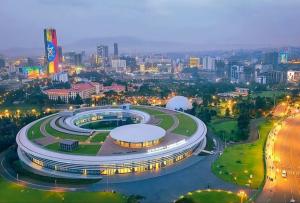
Gov’t Reaffirms Ethiopia’s Transformation, Sovereign Ambitions Under Medemer State
Nov 29, 2026 1961
Addis Ababa, November 29, 2026 (ENA)— Ethiopia has reaffirmed its commitment to national sovereignty, self-reliance and regional cooperation, highlighting wide-ranging economic, institutional and political transformations under the Medemer State vision. In its weekly statement issued today, the Government Communication Service (GCS) said Ethiopia would continue to pursue peaceful relations, cooperation and shared development with neighbouring countries without compromising its national interests or territorial integrity. Titled “From Recovery to Sovereign Heights: Ethiopia as a Regional Anchor under the Medemer Government,” the statement outlined the government's assessment of the country's recent economic progress, institutional reforms, major development projects and evolving regional engagement. It followed Prime Minister Abiy Ahmed's recent briefing to the House of Peoples' Representatives, which highlighted Ethiopia's efforts to build economic resilience and advance a sovereign and prosperous future amid geopolitical tensions, disruptions to international trade routes and global economic uncertainty. The GCS described the Medemer philosophy as a framework for mobilizing Ethiopia's natural resources and human potential, strengthening national capacity and building institutions capable of sustaining development across generations. “The core philosophy and role of the Medemer State vision is to connect our national gifts, build the capacity to deliver starting from our natural and human potential, and change that into strong national power and sovereign preeminence,” the statement said. On the economic front, the service cited Ethiopia's gross domestic product of 210 billion U.S. dollars, describing the country as the largest economy in East Africa and the third-largest in Sub-Saharan Africa. It further reported that the industrial sector had accounted for 31.8 percent of GDP, surpassing agriculture for the first time in the country's history. Foreign-exchange reserves have increased more than twentyfold, while export earnings reached 3.1 billion dollars in a single quarter. The government also said domestic production had replaced imports worth six billion dollars, underscoring efforts to expand productive capacity and reduce dependence on foreign goods. The statement also pointed to improved performance by state-owned enterprises as evidence of stronger domestic management and more effective utilization of national assets. The Ethiopian Railway Corporation, following its transition from foreign management to Ethiopian leadership, increased its annual profit from 3.4 billion birr to 43 billion birr. Meanwhile, Ethiopian Investment Holdings tripled its total assets to nine trillion birr, according to the GCS. Major infrastructure and industrial projects were also highlighted as central pillars of the country's transformation agenda. These include the Grand Ethiopian Renaissance Dam (GERD), Koysha hydropower project, Gode fertilizer plant, natural gas development initiatives and the Bishoftu International Airport project, alongside urban corridor development and the Green Legacy Initiative. The GCS said such investments are helping convert the country's natural and human resources into productive national assets while strengthening Ethiopia's development capacity and regional role. On domestic political affairs, the service underscored the importance of dialogue and reconciliation in overcoming longstanding divisions and building national consensus. It said the National Dialogue process had engaged hundreds of thousands of citizens over the past four years, seeking to move the country away from confrontation and resentment towards constructive engagement and lasting agreement. “By maintaining what is precious and repairing flaws through serious discussion, the national debate has replaced the previous political practice of ‘tearing down and destroying’ and created a historic bridge toward lasting agreement,” the statement read. The government also identified peace agreements, forgiveness and patience as important instruments for resolving internal conflicts and strengthening national cohesion. Turning to regional diplomacy, the GCS said Ethiopia's approach to neighbouring countries was guided by the principle that “a tree near its source of water always flourishes,” reflecting its belief that national progress and regional prosperity are closely interconnected. It emphasized that Ethiopia's commitment to peaceful coexistence and shared development should not be interpreted as a willingness to compromise its sovereignty or national interests. The statement described the country as one that does not seek to invade others but will not tolerate threats against itself. The service also underscored the role of the Ethiopian National Defense Force in protecting national sovereignty and contributing to regional peace and security, citing improvements in technology, human-resource development and domestic production. Regarding Ethiopia's pursuit of access to the Red Sea, the statement said the country was advancing its historical and geographical interests through peaceful dialogue and reciprocal engagement, presenting the issue as an opportunity to address the challenges of being landlocked while promoting shared regional prosperity. In its broader assessment, the GCS characterized Ethiopia's trajectory as a transition from recovery to reconstruction, dependence to self-reliance, and limited productive capacity to expanded production and exports. It also stressed that the country's development and sovereignty are collective responsibilities that transcend individual administrations. “Ethiopia is not the exclusive property of any one administration; it is our shared home and a sacred trust,” the statement declared, calling on citizens across the country to contribute through cooperation, solidarity and a shared sense of responsibility to building a stronger and more prosperous nation.
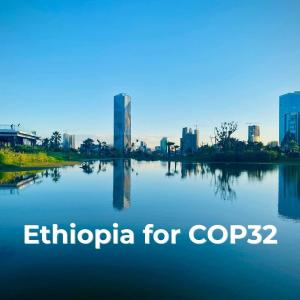
IGAD to Mobilize Climate, Health Expertise to Back Ethiopia-Hosted COP32
Nov 29, 2026 1412
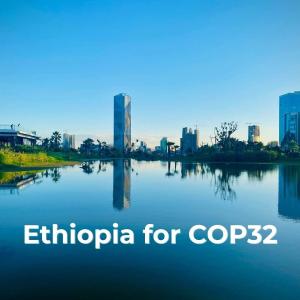
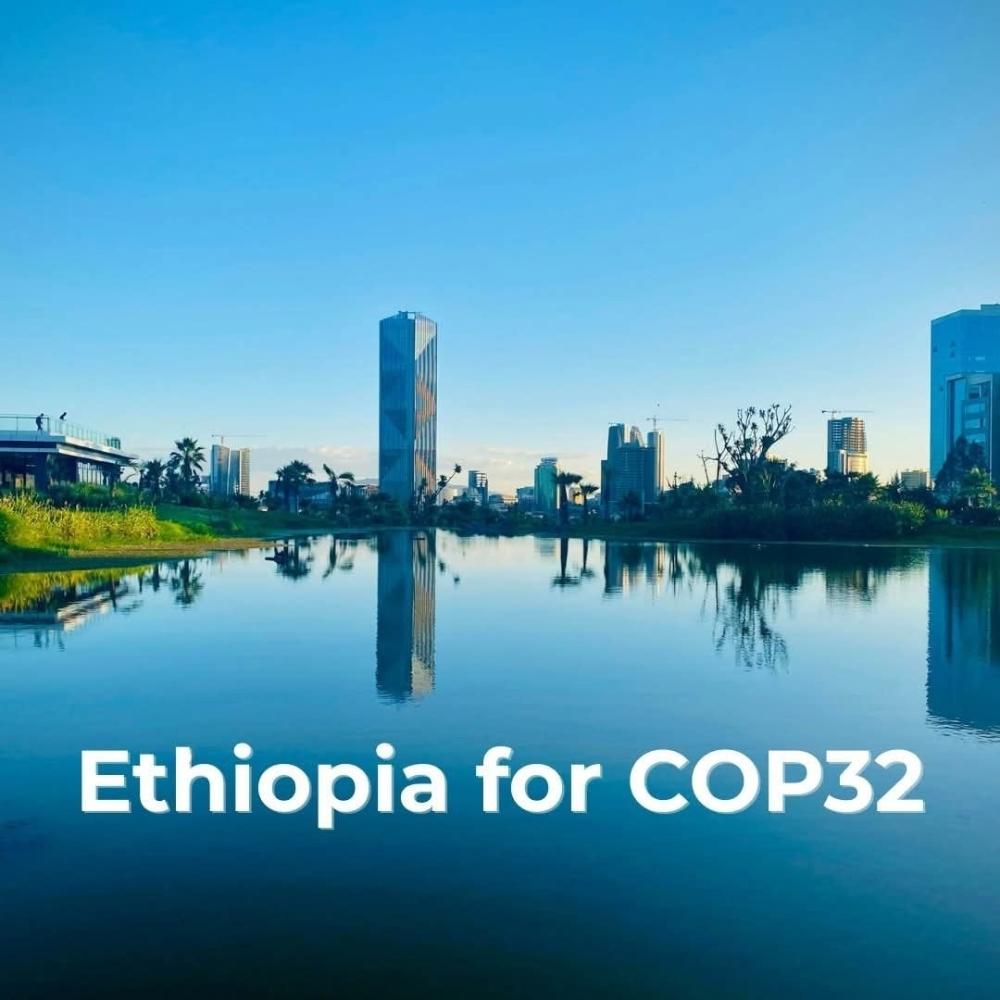
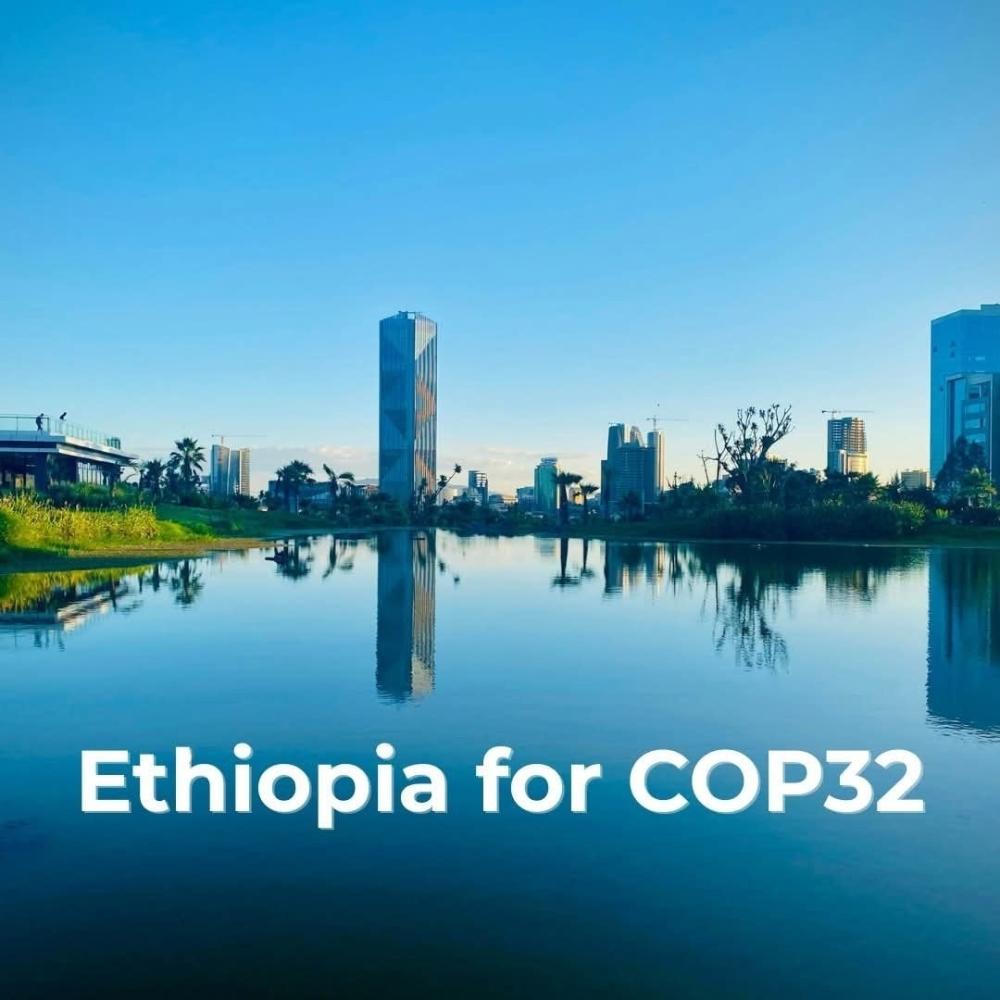
Addis Ababa, November 29, 2026 (ENA)— By hosting COP32 in 2027, Ethiopia aims to leverage its diplomatic standing to attract climate investment, expand green development partnerships and advance Africa’s priorities in global climate negotiations. Ethiopia is stepping up diplomatic and institutional preparations to host the 32nd United Nations Climate Change Conference (COP32) in November 2027, seeking to turn the global gathering into a platform for advancing Africa’s climate agenda, mobilizing investment and strengthening international cooperation. The Intergovernmental Authority on Development (IGAD) has pledged to work closely with the Ethiopian government throughout the preparatory process, as ENA learned. The regional body also recognized the upcoming consequential global climate summit as a significant opportunity to elevate Africa’s voice and priorities in global climate decision-making. Waqo Boru, Senior Medical Epidemiologist at the IGAD Centre of Excellence in Nutrition (ICEN), under the Health and Social Development Division, described COP32 as a historic opportunity for the continent to place its climate priorities at the center of international discussions. He noted that Ethiopia’s role as host, combined with Addis Ababa’s status as the headquarters of the African Union (AU), offers Africa an influential platform to articulate common positions, build partnerships and strengthen its representation in global climate negotiations. “It is quite timely that Africa is hosting COP32,” Boru told ENA. “Holding the summit in Addis Ababa in 2027 presents a major opportunity for the continent to advocate for its position and highlight the far-reaching impacts of climate change across various sectors.” Boru said IGAD would draw on its regional expertise in climate action, health programming and technical assistance to support Ethiopia’s preparations and contribute to the success of the conference. The regional bloc plans to intensify climate advocacy, facilitate policy dialogue and support member states in developing technical documents to inform COP32's thematic discussions and policy priorities. “With close to a year remaining until COP32, IGAD will continue working closely with member states, particularly the Ethiopian Federal Government, to ensure a successful summit that draws international attention to the challenges facing our continent,” he said. Beyond the diplomatic dimension, Dr. Boru highlighted the growing threat climate change poses to public health, livelihoods and human well-being, particularly in vulnerable communities across the IGAD region. He noted that recurring droughts, floods and extreme weather events are increasingly exposing populations to climate-related health risks, underscoring the need to integrate health resilience into broader climate adaptation efforts. He emphasized that building climate resilience must go hand in hand with strengthening healthcare systems to ensure communities and governments are better equipped to withstand climate-related shocks. As part of this effort, IGAD is deploying its pool of climate and health experts to provide technical assistance to governments and strengthen their capacity to respond to emerging climate-related challenges. “We are deploying our pool of climate and health experts to provide technical assistance to governments because the adverse effects of climate change ultimately affect human well-being,” Dr. Boru said. He added that IGAD is also supporting member states in developing country-specific adaptation plans to anticipate climate risks, strengthen preparedness and safeguard vulnerable communities. Ethiopia is expected to welcome more than 100,000 participants to Addis Ababa for COP32 in November 2027, bringing together world leaders, policymakers, climate negotiators, experts and development partners. The conference is expected to put Africa's climate challenges, financing needs and development priorities under the international spotlight, while providing Ethiopia with an opportunity to facilitate stronger partnerships and advance collective action on climate change.
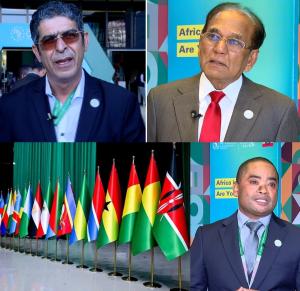
Ethiopia’s Health System Important Contribution to Continents’ Health Sovereignty: African Officials
Nov 29, 2026 2143
Addis Ababa, November 29, 2026 (ENA)— Mauritian Health and Wellness Minister Anil Kumar Bachoo, Madagascar’s Public Health Ministry Secretary-General Dr. Randrianambinina, and Libyan Health Deputy Minister Dr. Saeduldeen Saed have appreciated Ethiopia’s progress in strengthening its health system, describing the effort as an important contribution to Africa’s health sovereignty. Speaking exclusively to ENA, Mauritian Health and Wellness Minister Anil Kumar Bachoo said Ethiopia’s achievements in the health sector are admirable. He noted that Africa has the capacity to compete with other continents in the health sector in the coming years, adding that the continent could achieve rapid progress by overcoming dependency and strengthening ownership and transparency. He stressed that African countries need to coordinate their domestic capacities and work collaboratively to build a self-reliant health sector. Highlighting Mauritius’s commitment to healthcare, social security and education, the Minister said the government has established dedicated hospital units for diabetes prevention, alongside specialized centers providing cardiac, geriatric, emergency and stroke care. Bachoo expressed admiration for the large turnout at the 5th International Conference on Public Health in Africa (CPHIA 2026) held in Addis Ababa, saying the conference had brought together participants from across Africa to deliberate on the continent’s health future. The Minister finally commended the country's progress, noting that Ethiopia should continue developing its own approaches based on its unique national character. For his part, Dr. Ephraïm Stéphanson Randrianambinina, Secretary-General of Madagascar’s Ministry of Public Health commended Ethiopia’s efforts to manufacture pharmaceuticals, laboratory supplies and medical equipment domestically. He said the initiative contributes significantly to advancing Africa’s health sovereignty, expressing interest in cooperation between Madagascar and Ethiopia to exchange experience in technological advancement and medical equipment manufacturing. The Secretary-General also described Ethiopia as an emerging example for African countries in health-system leadership, highlighting its commitment to strengthening domestic manufacturing capacity. Similarly, Libya’s Deputy Health Minister Dr. Saeduldeen Saed has cited Ethiopia's public-health experience, emergency-response capacity, medical supply-chain opportunities, improved urban accessibility and renewable energy development as notable areas of progress. He noted that Ethiopia, with a population of approximately 130 million, has also experience dealing with major public-health challenges, including tuberculosis, yellow fever and malaria. Dr. Saed also identified Ethiopia's aviation infrastructure, particularly Ethiopian Airlines, as an important opportunity for strengthening medical supply chains and cold-chain distribution, which are essential to healthcare delivery. The Libyan Deputy Health Minister linked the environmental and infrastructure developments in the capital city Addis Ababa with the broader health agenda, emphasizing the importance of addressing climate change and its effects on public health across Africa. He said climate-related challenges, including drought and flooding, contributed to disease outbreaks on the continent, underscoring the need for African countries to strengthen cooperation through the One Health approach. Dr. Saed stressed that health security was closely connected with food security, water availability and disease prevention, calling for coordinated action at national, regional and continental levels. He further emphasized the importance of African countries building stronger health systems through local pharmaceutical manufacturing, primary healthcare development, digital transformation, improved health-data systems, cross-border disease control, migrant health services and vaccination. The deputy Health minister described the African Centres for Disease Control and Prevention (Africa CDC) as an important continental institution providing a framework for harmonizing health systems and strengthening cooperation among member states. He also called for greater African ownership of the continent's health agenda, arguing that African countries should take the lead in addressing their health challenges and shaping their healthcare future. The deputy health minister expressed optimism about Ethiopia's future, citing the country's longstanding historical relations with Libya and the broader Arab region.
' + getPhotos(pictures, true) + '
';
/*let navs = getNavs();
let lastNav = navs[navs.length - 1];
if (pictures.length > 10) {
getNav().classList.add("multiline");
}
for (let i = navs.length; i < pictures.length; i++) {
let newNav = lastNav.cloneNode(true);
lastNav.parentNode.insertBefore(newNav, lastNav.nextSibling);
lastNav = newNav;
}*/
let titleText = document.getElementById("ena_title_text")
if (titleText) {
setTimeout(titleText.scrollIntoView(), 100);
}
}
function getPhotos(pictures, pictureOnly) {
let result = "";
pictures.forEach(picture => {
result += '';
result += '
';
})
return result;
}
function getPhotoImage(picture, pictureOnly) {
let result = '';
if (!pictureOnly) {
result += '';
}
result += '';
result += getPhotoImage(picture, pictureOnly);
result += '
';
if (!pictureOnly) {
result += '';
result += getPhotoText(picture);
result += '
';
}
result += '';
result += '
';
if (!pictureOnly) {
result += '';
}
return result;
}
function getPhotoText(picture) {
let result = '';
result += '';
result += '';
result += '
';
result += '';
result += getPhotoTitle(picture);
result += '
';
result += '';
return result;
}
function getPhotoTitle(picture) {
let image = picture.getElementsByTagName("IMG")[0];
return image.alt;
}
function getPhotoLink(picture) {
let image = picture.getElementsByTagName("IMG")[0];
return image.src.replace("&download=true","");
}
let contents=Array.from(
fragmentElement.getElementsByClassName(
"ena_display_item_content"));
contents.forEach(item => {
item.innerHTML=item.innerHTML.replaceAll(" "," ")})
Array.from(fragmentElement.getElementsByClassName(
"ena_display_item_content")).forEach(item => {
if (item.innerHTML.length!=item.textContent.length) {
item.innerHTML=item.textContent;}});
if (checkModes(["headlines", "alertbar", "slider", "advertisement"])) {
if (checkModes(["headlines", "alertbar"])) {
moveTo(getItems().length > 1 ? 1 : 0);
} else {
moveTo(0);
}
if (checkModes(["slider"])) {
setTimeout(() => autoMove(), 1);
} else {
autoMove();
}
}
function checkModes(modes, prefix){
if (!prefix) prefix = "mode";
var display = fragmentElement.getElementsByClassName(
"ena_display")[0];
for (let i in modes) {
if (display.classList.contains(
"ena_display_" + prefix + "_" + modes[i])) {
return true;
}
}
return false;
}
function getAutoInterval(){
if (checkModes(["advertisement"])) {
return 10000;
}
else {
return 5000;
}
}
function getCarouselNavs(){
return fragmentElement.getElementsByClassName("ena_carousel_control_navs")[0]}
function getPort(){
return fragmentElement.getElementsByClassName("ena_display_port")[0]}
function getItems(){return Array.from(
getPort().getElementsByClassName("ena_display_item"))}
function getNav(){return document.getElementById("ena_display_control_nav")}
function getNavs() {
if (checkModes(["Photos"], "type")) {
return Array.from(
fragmentElement.getElementsByClassName("ena_display_item_picture"));
} else {
return Array.from(
fragmentElement.getElementsByClassName("ena_display_control_nav_item"));
}
}
function getPrev(){
return fragmentElement.getElementsByClassName(
"ena_display_control_arrow_prev")[0];
}
function getNext(){
return fragmentElement.getElementsByClassName(
"ena_display_control_arrow_next")[0];
}
/*function getArrows(){
return fragmentElement.getElementsByClassName(
"ena_display_control_arrows")[0];
}*/
function getCurrent(items){return items.indexOf(items.find(
item => item.classList.contains("ena_display_current")))}
function setCurrent(index, itemsArray){
let currents = [];
itemsArray.forEach((items, i) => {
currents[i] = getCurrent(items);
if (currents[i]>=0)items[currents[i]].classList.add("ena_display_visible");
items.forEach(
item => {
item.classList.remove("ena_display_a");
item.classList.remove("ena_display_b");
item.classList.remove("ena_display_c");
item.classList.remove("ena_display_current");
item.classList.remove("ena_display_backward");
item.classList.remove("ena_display_forward");
})});
/*setTimeout(()=>{*/
itemsArray.forEach((items, i) => {
if(index >= 0 && index < items.length) {
let current=currents[i];
items[index].classList.add("ena_display_current");
if (current<0 || index==current) {
/*if (index==0){
items[items.length-1].classList.add("ena_display_a");
} else {
items[index-1].classList.add("ena_display_a");
}*/
items[index].classList.add("ena_display_b");
/*if (index==items.length-1){
items[0].classList.add("ena_display_c");
} else {
items[index+1].classList.add("ena_display_c");
}*/
} else {
let direction="";
/*setTimeout(()=>{*/
if(isForward(index, current, items.length-1)){
items[index].classList.add("ena_display_c");
/*setTimeout(()=>{*/
items[current].classList.add("ena_display_b");
/*}, 1000);*/
direction="ena_display_forward";
} else {
items[index].classList.add("ena_display_a");
/*setTimeout(()=>{*/
items[current].classList.add("ena_display_b");
/*}, 1000);*/
direction="ena_display_backward";
}
setTimeout(function(){
items[current].classList.add(direction);
items[index].classList.add(direction);
items[current].classList.remove("ena_display_visible");
}, 100);
/*}, 2000);*/
}
}});
/*}, 2000);*/
/*getItems().filter(
item => item.classList.contains("ena_display_current")).forEach(
item => {if (getPort()) getPort().scrollLeft=item.offsetLeft});*/
}
function isForward(index, current, last){
if(index==0&¤t==last)return true;
if(index==last&¤t==0)return false;
return index>current;
}
function moveTo(index){setCurrent(index, [getItems(), getNavs()]);}
function prevIndex(){
var items = getItems();
var index = getCurrent(items) - 1;
if (index < 0) index = items.length - 1;
return index;
}
function nextIndex(){
var items = getItems();
var index = getCurrent(items) + 1;
if (index >= items.length) index = 0;
return index;
}
getNavs().forEach((item, index) => item.onclick = function(){
moveTo(index)});
getPrev().onclick = function(){moveTo(prevIndex())};
getNext().onclick = function(){moveTo(nextIndex())};
fragmentElement.onmouseenter = function(){
autoStop();
//getArrows().style.display="inline-flex";
}
fragmentElement.onmouseleave = function(){
autoMove();
//getArrows().style.display="none";
}
function autoMove(){
autoStop();
if (fragmentElement.getElementsByClassName("portlet-topper").length==0
&& !fragmentElement.ena_timer_display){
fragmentElement.ena_timer_display=setInterval(
() => {
fragmentChild = fragmentElement.children[0];
let visibility = window.getComputedStyle(fragmentChild, null).visibility;
if (visibility != "hidden") {
moveTo(nextIndex());
}
}, getAutoInterval());
}
}
function autoStop(){
clearInterval(fragmentElement.ena_timer_display);
fragmentElement.ena_timer_display = null;
};}());
Featured
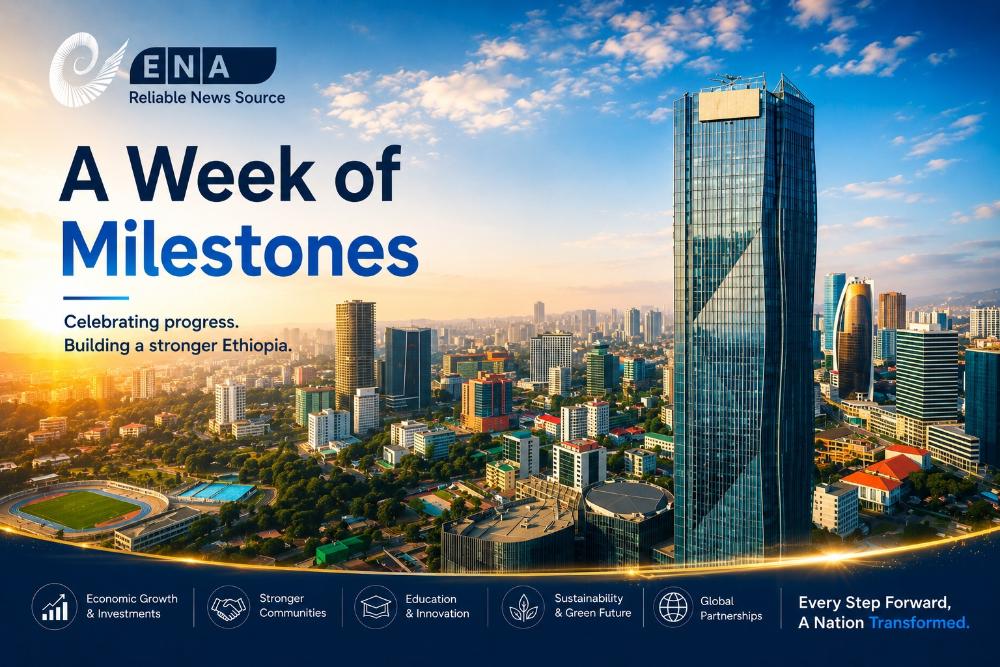
Ethiopia in the Global Spotlight: Health Leadership, Major Policy Briefing and a New Push for Sudanese Peace
Nov 29, 2026 1530
By Staff Writer November 29, 2026 (ENA) Ethiopia closed the final week of November with a series of major international and domestic engagements, bringing global health cooperation, national economic ambitions and regional peace diplomacy into sharp focus. From hosting tens of thousands of delegates at Africa’s flagship public health conference to presenting its economic and development priorities before Parliament and offering to facilitate an inclusive Sudanese national dialogue, Ethiopia featured prominently in discussions shaping the continent’s future. The week underscored Addis Ababa’s growing role as a hub for international engagement, while highlighting the Ethiopian government's stated priorities on economic transformation, national security, regional stability and African cooperation. Three major developments defined the week: the Fifth International Conference on Public Health in Africa (CPHIA 2026), Prime Minister Abiy Ahmed’s comprehensive parliamentary briefing on government performance, and Ethiopia’s renewed diplomatic initiative to help end the devastating war in neighboring Sudan. Addis Ababa Brings Africa’s Health Sovereignty into Global Focus Ethiopia placed Africa’s health sovereignty and the future of its public health systems at the center of international attention as it successfully hosted the Fifth International Conference on Public Health in Africa (CPHIA 2026) in Addis Ababa. Co-hosted by the Ethiopian government and the Africa Centres for Disease Control and Prevention (Africa CDC), the conference brought together more than 30,000 participants, including policymakers, health professionals, researchers, development partners and international delegates. The gathering demonstrated Addis Ababa’s capacity to convene major international events and provide a platform for addressing some of the continent’s most pressing development challenges. Opening the conference, Prime Minister Abiy Ahmed reaffirmed Ethiopia’s commitment to building a resilient, self-reliant African health system through investments in human capital, domestic pharmaceutical production, digital health technologies and artificial intelligence. Welcoming participants to Addis Ababa, home to both the African Union and Africa CDC, the Prime Minister emphasized the importance of strengthening Africa’s capacity to address its own health challenges through greater investment, innovation and institutional cooperation. The conference also brought renewed attention to the broader question of health sovereignty, particularly Africa’s need to strengthen local pharmaceutical manufacturing, expand access to essential healthcare services, develop its health workforce and reduce dependence on external supply chains. With thousands of participants converging on the Ethiopian capital, CPHIA 2026 further highlighted Addis Ababa’s growing significance as a continental center for policy dialogue, scientific exchange and international cooperation. PM Abiy’s Parliamentary Briefing Highlights Economic Transformation, Mega Projects and National Security While Addis Ababa hosted the international health gathering, Prime Minister Abiy Ahmed appeared before the House of Peoples’ Representatives on Thursday to present the federal government's performance during the first quarter of the 2026/27 Ethiopian fiscal year and respond to lawmakers' questions on major national and regional issues. The parliamentary briefing covered the government's economic performance, infrastructure development, national defense, domestic peace, regional diplomacy and Ethiopia's position on the utilization of the Abay (Blue Nile) River. Responding to questions and observations from lawmakers, the Prime Minister addressed progress against the 2019 Ethiopian fiscal year government plan presented by President Taye Atske Selassie during the joint opening session of the House of Peoples’ Representatives and the House of Federation on October 6, 2026. GDP Rebasing Puts Ethiopia’s Economic Size at 210 Billion USD One of the key economic issues raised during the parliamentary session was Ethiopia’s recent GDP rebasing exercise, undertaken after 11 years without a comprehensive revision of the country's national economic accounts. Prime Minister Abiy said the exercise had provided a more comprehensive picture of Ethiopia’s economic capacity, placing the country's economy at approximately 210 billion USD and making it the third-largest economy in Sub-Saharan Africa, after South Africa and Nigeria. He explained that the revision was necessary to reflect structural changes in the economy, including the emergence of new industries, expanding economic activities and changes in the contribution of existing sectors. International standards generally recommend rebasing national accounts approximately every five years to ensure that economic measurements reflect evolving market realities. However, Ethiopia had gone 11 years without undertaking the exercise, leaving several economic activities inadequately captured in its national accounts. According to the Prime Minister, the rebasing exercise produced three possible estimates, with the government adopting the most conservative assessment, which put the country's economic size at 210 billion USD. The updated figures, he said, offer a clearer understanding of the scale of Ethiopia's economy and provide a stronger statistical foundation for economic planning and policymaking. More Than 30 Billion USD in Guba Mega Projects Advance The Prime Minister also highlighted progress in Ethiopia's ambitious Guba mega-projects, a development package valued at more than 30 billion USD that he announced during the September 2025 inauguration of the Grand Ethiopian Renaissance Dam (GERD) in Guba, Benishangul-Gumuz Region. The projects span several strategic sectors, including housing, energy, natural gas, fertilizer production, petroleum refining and aviation infrastructure. PM Abiy cited progress in the 1.5 Million-Home Program, the Ogaden liquefied natural gas and gas infrastructure projects, the Gode urea fertilizer plant and oil refinery, Bishoftu International Airport and the country's nuclear energy development plans. The initiatives form part of Ethiopia's broader efforts to expand productive capacity, strengthen industrial development, improve infrastructure and diversify the national economy. Their implementation is expected to contribute to the country's long-term ambitions of increasing domestic production, creating employment opportunities and strengthening economic competitiveness. National Defense, Economic Strength and Regional Security On national security, Prime Minister Abiy emphasized that a sustainable and productive economy is fundamental to building a capable and enduring national defense force. He cautioned that military strength cannot be sustained through defense investment alone, stressing the need for a strong economic foundation to support national security. "Defense is like a house. If we build the defense force alone, it will not endure. We must ensure that the economy can sustain it," he said. Addressing regional security, the Prime Minister reaffirmed Ethiopia's stated commitment to peace and stability across the Horn of Africa and the wider continent, while emphasizing that the country would firmly defend its sovereignty and territorial integrity against any violation. He recalled Ethiopia's longstanding contributions to African peacekeeping and security operations, citing its involvement in Rwanda, Somalia, the Democratic Republic of Congo, Liberia and South Sudan. Ethiopian forces, he noted, have made significant sacrifices in support of regional peace and security. The Prime Minister maintained that Ethiopia has no intention of invading neighboring countries, while stressing that peaceful coexistence and respect for territorial integrity should guide relations among states. He also urged the Eritrean government to refrain from arming or cooperating with forces hostile to Ethiopia, renewing his call for peaceful coexistence and cooperation between the two neighboring countries. PM Abiy further recalled Ethiopia's diplomatic efforts to help Eritrea overcome international isolation and strengthen its relations with neighboring states. Abay River: Sovereign Development and Regional Cooperation The utilization of the Abay (Blue Nile) River also featured prominently in the Prime Minister's parliamentary address. Reaffirming Ethiopia's sovereign right to develop and utilize its water resources without external authorization, Abiy stressed that harnessing the river's potential is essential to overcoming poverty, expanding electricity generation, strengthening food security and improving citizens' livelihoods. Describing the Abay as a divine gift to Ethiopia, he reiterated that the country remains committed to pursuing regional cooperation and shared development with downstream countries. His remarks reinforced Ethiopia's longstanding position that the equitable utilization of transboundary water resources should be guided by cooperation, mutual benefit and the development aspirations of all riparian countries. Ethiopia Offers to Host Inclusive Sudanese Dialogue as Calls for Peace Intensify Beyond its domestic economic and development agenda, Ethiopia also placed regional peace diplomacy at the center of its international engagement during the week. Prime Minister Abiy Ahmed extended an open invitation to Sudanese military, political and civilian stakeholders to participate in an inclusive national dialogue to be hosted and facilitated by Ethiopia, calling for an end to the devastating conflict that has engulfed Sudan since April 15, 2023. In a statement issued in Arabic language, the Prime Minister described the proposed initiative as a sincere effort to bring all Sudanese parties together around a comprehensive, open and Sudanese-led dialogue aimed at finding a lasting political solution. "At this critical historical juncture, the Ethiopian government is putting forward a sincere and genuine initiative calling on all Sudanese parties, across their military, political, and civilian components, to participate in a comprehensive and open Sudanese dialogue to be hosted and facilitated by Ethiopia," he stated. Highlighting the deep historical, cultural and people-to-people ties between the two neighboring countries, the Premier described Sudan as a brotherly nation whose suffering resonates deeply with the Ethiopian people. He stressed that the ongoing war is not simply a political or security crisis confined to Sudan but a humanitarian tragedy with far-reaching consequences for neighboring countries and the wider Horn of Africa. Reaffirming Ethiopia's commitment to Sudan's unity, territorial integrity and stability, the Prime Minister emphasized that peace in Sudan is inseparable from the security and stability of the wider region. He also recalled Ethiopia's diplomatic engagement during Sudan's 2019 political transition, when Addis Ababa worked to bring civilian and military stakeholders closer together and facilitate an agreement reflecting the Sudanese people's aspirations for civilian rule. Sudanese Public and Political Groups Welcome Ethiopia’s Initiative The Ethiopian initiative has received positive reactions from Sudanese public figures, researchers and political groups, with calls for dialogue and an end to the war continuing to feature prominently in public discussions. Sara Al-Saeed, a Sudanese researcher and international relations analyst specializing in the Horn of Africa at Newcastle University in the United Kingdom, told ENA that the initiative had been widely welcomed by Sudanese people. "The Sudanese people have widely welcomed the Prime Minister's initiative. If you look at social media, you will find Sudanese expressing their support for Dr. Abiy Ahmed's initiative. The people want peace," she said. Al-Saeed described the initiative as an important diplomatic effort to bring Sudanese stakeholders together through dialogue and negotiations, emphasizing the need for a peaceful and lasting solution to the country's crisis. She added that public and political reactions had demonstrated considerable support for Ethiopia's proposed engagement. Political groups have also expressed support for the initiative. The Civil Democratic Alliance of Revolutionary Forces (Sumoud) and the Sudan Founding Alliance (Tasis) have both welcomed Ethiopia's proposal and indicated their readiness to participate in the proposed dialogue. The responses have brought renewed attention to the potential role of regional diplomacy in creating opportunities for Sudanese stakeholders to pursue a negotiated settlement to the conflict. A Week Reflecting Ethiopia’s Expanding Regional and International Engagement Taken together, the week's developments illustrate the breadth of Ethiopia's engagement across continental health cooperation, domestic economic transformation and regional peace initiatives. Hosting CPHIA 2026 brought thousands of international participants to Addis Ababa and placed African health sovereignty at the center of a major continental discussion. The Prime Minister's parliamentary address provided an overview of the government's economic ambitions, strategic infrastructure projects, national security priorities and approach to regional relations. Meanwhile, the offer to facilitate an inclusive Sudanese dialogue highlighted Ethiopia's continued diplomatic engagement in addressing instability in its neighborhood. As the Horn of Africa navigates complex political, economic and security challenges, these developments place Ethiopia's domestic transformation agenda and regional diplomatic initiatives within a broader continental context. The final week of November thus brought three interconnected priorities into focus: strengthening Africa's capacity to address its own development challenges, advancing Ethiopia's economic and institutional ambitions, and pursuing regional solutions to conflicts that threaten shared stability. For Addis Ababa, the week was not only marked by major international gatherings and parliamentary deliberations, but also by renewed diplomatic engagement on an issue with profound implications for the future of the Horn of Africa.
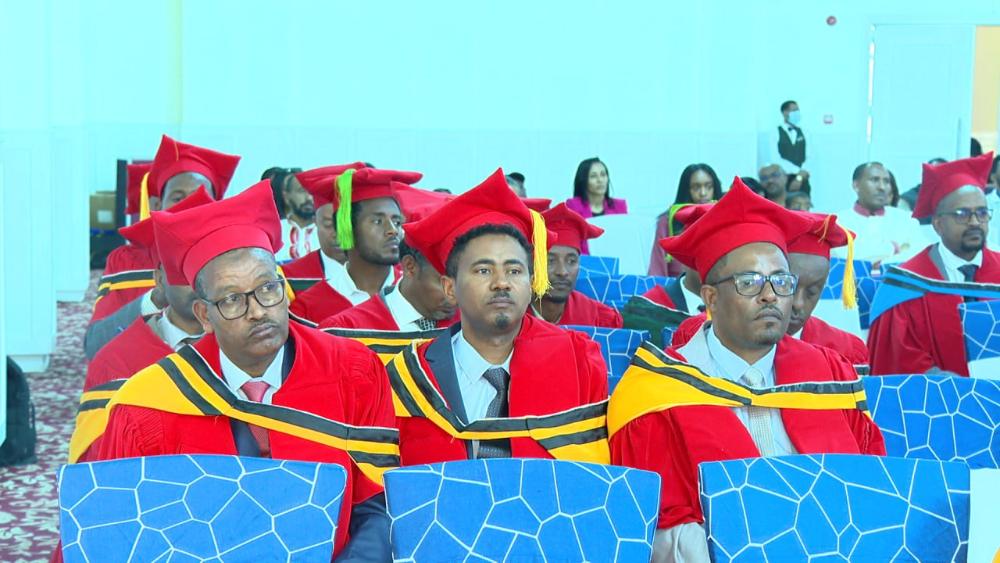
Ethiopia-South Africa Deepen Academic Ties as UNISA Marks 20 Years in Ethiopia
Nov 29, 2026 1571
Addis Ababa, November 29, 2026 (ENA)— Ethiopia and South Africa are deepening their longstanding partnership through expanding academic cooperation, with the University of South Africa (UNISA) marking two decades of contribution to higher education in Ethiopia. South Africa’s Ambassador to Ethiopia, Nonceba Losi, said UNISA’s presence in Ethiopia reflects the enduring friendship between the two countries and their growing commitment to advancing education, knowledge exchange and human capital development across Africa. She made the remarks as UNISA celebrated the graduation of 61 Ethiopian students, including 58 doctoral scholars, at a ceremony held on Saturday at Haile Grand Hotel in Addis Ababa, coinciding with the university’s 20th anniversary of operations in Ethiopia. Ambassador Losi said the graduates’ achievements represent more than individual academic success, underscoring the growing educational partnership and historical bonds between the two countries. She traced Ethiopia-South Africa relations to a shared history of solidarity, mutual respect and a common commitment to African liberation, unity and progress. Recalling a significant chapter in that history, Losi noted that Ethiopia provided a home to South Africa’s founding president, Nelson Mandela, during the 1960s, describing the connection as a lasting symbol of African solidarity. She said bilateral cooperation has continued to expand through institutional frameworks, particularly the Joint Ministerial Commission, and is underpinned by nearly 20 agreements and memoranda of understanding. The bilateral Memorandum of Understanding on Higher Education, she added, provides an important foundation for academic collaboration and further underscores the significance of UNISA’s longstanding presence in Ethiopia. Losi highlighted UNISA’s open and distance learning model for expanding access to higher education, enabling professionals to pursue advanced qualifications while maintaining their careers and continuing to serve their communities. She stressed that such cooperation is instrumental in producing skilled professionals, researchers and academics capable of responding to Ethiopia’s development priorities and contributing to Africa’s broader transformation. Speaking at the ceremony, Asegid Samuel, Lead Executive Officer for Human Resources Development and Improvement at the Ministry of Health, said the graduation demonstrates the growing pool of advanced academic talent needed to strengthen national institutions and improve public services. He described the UNISA Ethiopia Regional Learning Center as an expression of shared values embodied in South Africa’s Ubuntu philosophy and Ethiopia’s Medemer (Synergy) vision, both emphasizing collective responsibility, solidarity and shared progress. Asegid particularly highlighted the contribution of UNISA graduates specializing in public health and nursing to strengthening Ethiopia’s healthcare system. He cited improvements in maternal health, noting that maternal mortality declined from approximately 950 deaths per 100,000 live births in 2000 to about 195 in 2023. He attributed the progress largely to sustained investments in health infrastructure and human resources, including the deployment of nearly 43,000 health extension workers who deliver essential services at the community level. However, he emphasized that further investment in qualified health professionals, research and specialized training remains critical to advancing universal health coverage. He urged the graduates to translate their academic achievements into practical solutions, mentor emerging professionals and contribute meaningfully to national development and improved public service delivery. For his part, UNISA Vice Principal for Institutional Development and Transformation, Solomon R. Magano, commended the graduates for their perseverance in completing their studies while balancing professional and family responsibilities. He challenged them to turn their academic knowledge into practical responses to Africa’s pressing challenges, including poverty, unemployment, political instability and gender-based violence. Magano stressed that Africans must take the lead in generating solutions to the continent’s challenges, emphasizing the importance of applying research, innovation and professional expertise to drive sustainable development. Speaking on behalf of the graduating class, Solomon Abebe, a PhD graduate in Development Studies, said the academic journey had strengthened their discipline, resilience, critical thinking and capacity for evidence-based decision-making. He noted that the Ethiopia-South Africa academic partnership had enabled Ethiopian professionals to pursue advanced studies without stepping away from their institutional responsibilities and community service. Abebe described graduation as the beginning of a greater responsibility, calling on fellow graduates to transform their research and academic accomplishments into innovation, effective public service and tangible contributions to society. The university’s 20-year presence in Ethiopia highlights the growing role of cross-border academic partnerships in expanding access to advanced education, developing skilled human capital and strengthening cooperation among African institutions. The graduation of 61 Ethiopian scholars, including 58 doctoral graduates, further underscores the potential of sustained educational collaboration to build the expertise needed to address national and continental development challenges.
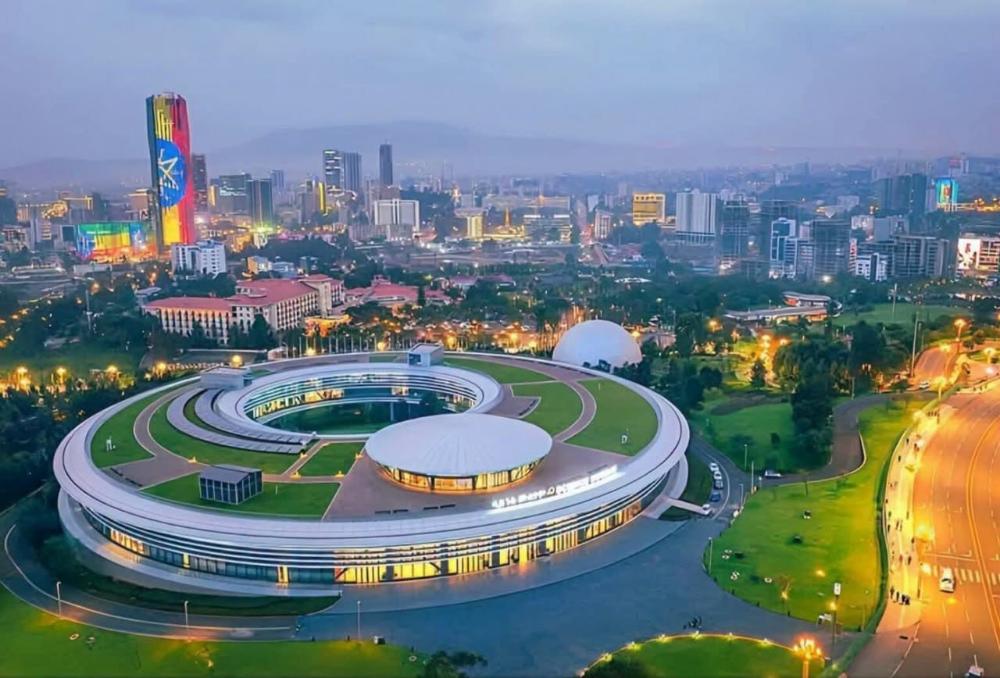
Gov’t Reaffirms Ethiopia’s Transformation, Sovereign Ambitions Under Medemer State
Nov 29, 2026 1961
Addis Ababa, November 29, 2026 (ENA)— Ethiopia has reaffirmed its commitment to national sovereignty, self-reliance and regional cooperation, highlighting wide-ranging economic, institutional and political transformations under the Medemer State vision. In its weekly statement issued today, the Government Communication Service (GCS) said Ethiopia would continue to pursue peaceful relations, cooperation and shared development with neighbouring countries without compromising its national interests or territorial integrity. Titled “From Recovery to Sovereign Heights: Ethiopia as a Regional Anchor under the Medemer Government,” the statement outlined the government's assessment of the country's recent economic progress, institutional reforms, major development projects and evolving regional engagement. It followed Prime Minister Abiy Ahmed's recent briefing to the House of Peoples' Representatives, which highlighted Ethiopia's efforts to build economic resilience and advance a sovereign and prosperous future amid geopolitical tensions, disruptions to international trade routes and global economic uncertainty. The GCS described the Medemer philosophy as a framework for mobilizing Ethiopia's natural resources and human potential, strengthening national capacity and building institutions capable of sustaining development across generations. “The core philosophy and role of the Medemer State vision is to connect our national gifts, build the capacity to deliver starting from our natural and human potential, and change that into strong national power and sovereign preeminence,” the statement said. On the economic front, the service cited Ethiopia's gross domestic product of 210 billion U.S. dollars, describing the country as the largest economy in East Africa and the third-largest in Sub-Saharan Africa. It further reported that the industrial sector had accounted for 31.8 percent of GDP, surpassing agriculture for the first time in the country's history. Foreign-exchange reserves have increased more than twentyfold, while export earnings reached 3.1 billion dollars in a single quarter. The government also said domestic production had replaced imports worth six billion dollars, underscoring efforts to expand productive capacity and reduce dependence on foreign goods. The statement also pointed to improved performance by state-owned enterprises as evidence of stronger domestic management and more effective utilization of national assets. The Ethiopian Railway Corporation, following its transition from foreign management to Ethiopian leadership, increased its annual profit from 3.4 billion birr to 43 billion birr. Meanwhile, Ethiopian Investment Holdings tripled its total assets to nine trillion birr, according to the GCS. Major infrastructure and industrial projects were also highlighted as central pillars of the country's transformation agenda. These include the Grand Ethiopian Renaissance Dam (GERD), Koysha hydropower project, Gode fertilizer plant, natural gas development initiatives and the Bishoftu International Airport project, alongside urban corridor development and the Green Legacy Initiative. The GCS said such investments are helping convert the country's natural and human resources into productive national assets while strengthening Ethiopia's development capacity and regional role. On domestic political affairs, the service underscored the importance of dialogue and reconciliation in overcoming longstanding divisions and building national consensus. It said the National Dialogue process had engaged hundreds of thousands of citizens over the past four years, seeking to move the country away from confrontation and resentment towards constructive engagement and lasting agreement. “By maintaining what is precious and repairing flaws through serious discussion, the national debate has replaced the previous political practice of ‘tearing down and destroying’ and created a historic bridge toward lasting agreement,” the statement read. The government also identified peace agreements, forgiveness and patience as important instruments for resolving internal conflicts and strengthening national cohesion. Turning to regional diplomacy, the GCS said Ethiopia's approach to neighbouring countries was guided by the principle that “a tree near its source of water always flourishes,” reflecting its belief that national progress and regional prosperity are closely interconnected. It emphasized that Ethiopia's commitment to peaceful coexistence and shared development should not be interpreted as a willingness to compromise its sovereignty or national interests. The statement described the country as one that does not seek to invade others but will not tolerate threats against itself. The service also underscored the role of the Ethiopian National Defense Force in protecting national sovereignty and contributing to regional peace and security, citing improvements in technology, human-resource development and domestic production. Regarding Ethiopia's pursuit of access to the Red Sea, the statement said the country was advancing its historical and geographical interests through peaceful dialogue and reciprocal engagement, presenting the issue as an opportunity to address the challenges of being landlocked while promoting shared regional prosperity. In its broader assessment, the GCS characterized Ethiopia's trajectory as a transition from recovery to reconstruction, dependence to self-reliance, and limited productive capacity to expanded production and exports. It also stressed that the country's development and sovereignty are collective responsibilities that transcend individual administrations. “Ethiopia is not the exclusive property of any one administration; it is our shared home and a sacred trust,” the statement declared, calling on citizens across the country to contribute through cooperation, solidarity and a shared sense of responsibility to building a stronger and more prosperous nation.
IGAD to Mobilize Climate, Health Expertise to Back Ethiopia-Hosted COP32
Nov 29, 2026 1412
Addis Ababa, November 29, 2026 (ENA)— By hosting COP32 in 2027, Ethiopia aims to leverage its diplomatic standing to attract climate investment, expand green development partnerships and advance Africa’s priorities in global climate negotiations. Ethiopia is stepping up diplomatic and institutional preparations to host the 32nd United Nations Climate Change Conference (COP32) in November 2027, seeking to turn the global gathering into a platform for advancing Africa’s climate agenda, mobilizing investment and strengthening international cooperation. The Intergovernmental Authority on Development (IGAD) has pledged to work closely with the Ethiopian government throughout the preparatory process, as ENA learned. The regional body also recognized the upcoming consequential global climate summit as a significant opportunity to elevate Africa’s voice and priorities in global climate decision-making. Waqo Boru, Senior Medical Epidemiologist at the IGAD Centre of Excellence in Nutrition (ICEN), under the Health and Social Development Division, described COP32 as a historic opportunity for the continent to place its climate priorities at the center of international discussions. He noted that Ethiopia’s role as host, combined with Addis Ababa’s status as the headquarters of the African Union (AU), offers Africa an influential platform to articulate common positions, build partnerships and strengthen its representation in global climate negotiations. “It is quite timely that Africa is hosting COP32,” Boru told ENA. “Holding the summit in Addis Ababa in 2027 presents a major opportunity for the continent to advocate for its position and highlight the far-reaching impacts of climate change across various sectors.” Boru said IGAD would draw on its regional expertise in climate action, health programming and technical assistance to support Ethiopia’s preparations and contribute to the success of the conference. The regional bloc plans to intensify climate advocacy, facilitate policy dialogue and support member states in developing technical documents to inform COP32's thematic discussions and policy priorities. “With close to a year remaining until COP32, IGAD will continue working closely with member states, particularly the Ethiopian Federal Government, to ensure a successful summit that draws international attention to the challenges facing our continent,” he said. Beyond the diplomatic dimension, Dr. Boru highlighted the growing threat climate change poses to public health, livelihoods and human well-being, particularly in vulnerable communities across the IGAD region. He noted that recurring droughts, floods and extreme weather events are increasingly exposing populations to climate-related health risks, underscoring the need to integrate health resilience into broader climate adaptation efforts. He emphasized that building climate resilience must go hand in hand with strengthening healthcare systems to ensure communities and governments are better equipped to withstand climate-related shocks. As part of this effort, IGAD is deploying its pool of climate and health experts to provide technical assistance to governments and strengthen their capacity to respond to emerging climate-related challenges. “We are deploying our pool of climate and health experts to provide technical assistance to governments because the adverse effects of climate change ultimately affect human well-being,” Dr. Boru said. He added that IGAD is also supporting member states in developing country-specific adaptation plans to anticipate climate risks, strengthen preparedness and safeguard vulnerable communities. Ethiopia is expected to welcome more than 100,000 participants to Addis Ababa for COP32 in November 2027, bringing together world leaders, policymakers, climate negotiators, experts and development partners. The conference is expected to put Africa's climate challenges, financing needs and development priorities under the international spotlight, while providing Ethiopia with an opportunity to facilitate stronger partnerships and advance collective action on climate change.
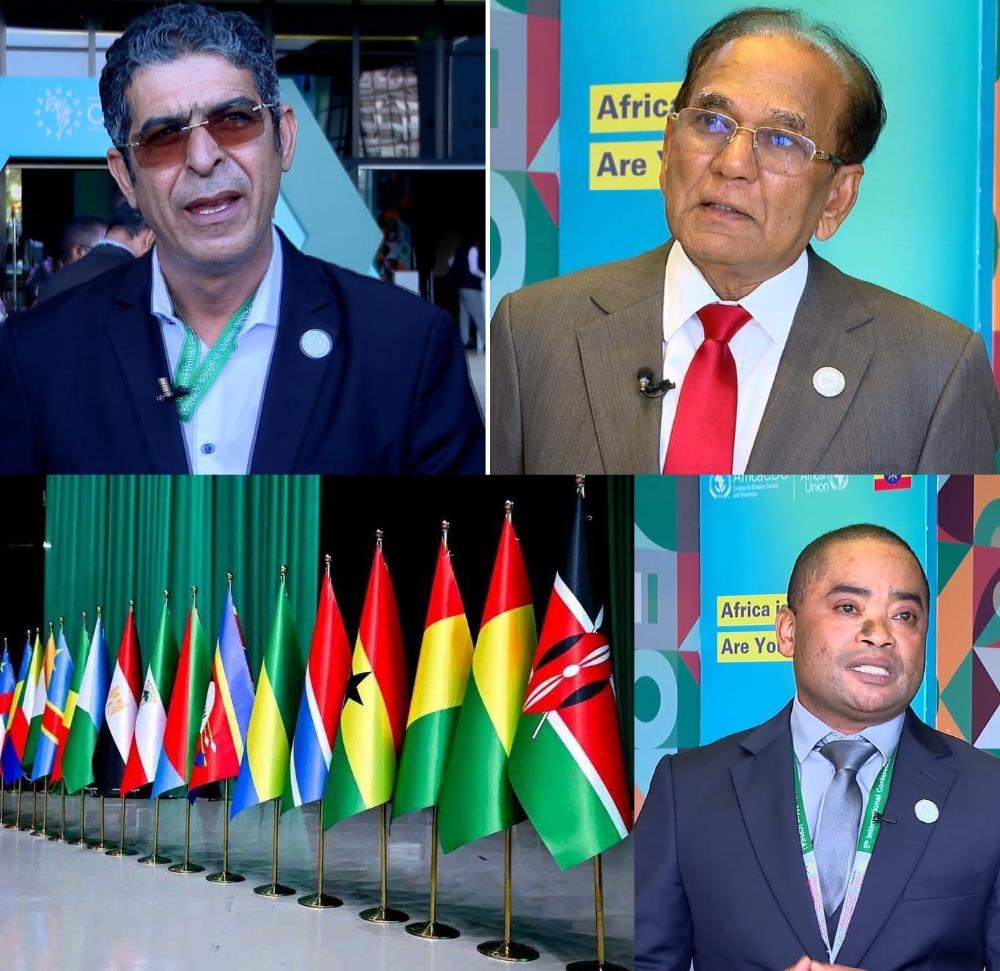
Ethiopia’s Health System Important Contribution to Continents’ Health Sovereignty: African Officials
Nov 29, 2026 2143
Addis Ababa, November 29, 2026 (ENA)— Mauritian Health and Wellness Minister Anil Kumar Bachoo, Madagascar’s Public Health Ministry Secretary-General Dr. Randrianambinina, and Libyan Health Deputy Minister Dr. Saeduldeen Saed have appreciated Ethiopia’s progress in strengthening its health system, describing the effort as an important contribution to Africa’s health sovereignty. Speaking exclusively to ENA, Mauritian Health and Wellness Minister Anil Kumar Bachoo said Ethiopia’s achievements in the health sector are admirable. He noted that Africa has the capacity to compete with other continents in the health sector in the coming years, adding that the continent could achieve rapid progress by overcoming dependency and strengthening ownership and transparency. He stressed that African countries need to coordinate their domestic capacities and work collaboratively to build a self-reliant health sector. Highlighting Mauritius’s commitment to healthcare, social security and education, the Minister said the government has established dedicated hospital units for diabetes prevention, alongside specialized centers providing cardiac, geriatric, emergency and stroke care. Bachoo expressed admiration for the large turnout at the 5th International Conference on Public Health in Africa (CPHIA 2026) held in Addis Ababa, saying the conference had brought together participants from across Africa to deliberate on the continent’s health future. The Minister finally commended the country's progress, noting that Ethiopia should continue developing its own approaches based on its unique national character. For his part, Dr. Ephraïm Stéphanson Randrianambinina, Secretary-General of Madagascar’s Ministry of Public Health commended Ethiopia’s efforts to manufacture pharmaceuticals, laboratory supplies and medical equipment domestically. He said the initiative contributes significantly to advancing Africa’s health sovereignty, expressing interest in cooperation between Madagascar and Ethiopia to exchange experience in technological advancement and medical equipment manufacturing. The Secretary-General also described Ethiopia as an emerging example for African countries in health-system leadership, highlighting its commitment to strengthening domestic manufacturing capacity. Similarly, Libya’s Deputy Health Minister Dr. Saeduldeen Saed has cited Ethiopia's public-health experience, emergency-response capacity, medical supply-chain opportunities, improved urban accessibility and renewable energy development as notable areas of progress. He noted that Ethiopia, with a population of approximately 130 million, has also experience dealing with major public-health challenges, including tuberculosis, yellow fever and malaria. Dr. Saed also identified Ethiopia's aviation infrastructure, particularly Ethiopian Airlines, as an important opportunity for strengthening medical supply chains and cold-chain distribution, which are essential to healthcare delivery. The Libyan Deputy Health Minister linked the environmental and infrastructure developments in the capital city Addis Ababa with the broader health agenda, emphasizing the importance of addressing climate change and its effects on public health across Africa. He said climate-related challenges, including drought and flooding, contributed to disease outbreaks on the continent, underscoring the need for African countries to strengthen cooperation through the One Health approach. Dr. Saed stressed that health security was closely connected with food security, water availability and disease prevention, calling for coordinated action at national, regional and continental levels. He further emphasized the importance of African countries building stronger health systems through local pharmaceutical manufacturing, primary healthcare development, digital transformation, improved health-data systems, cross-border disease control, migrant health services and vaccination. The deputy Health minister described the African Centres for Disease Control and Prevention (Africa CDC) as an important continental institution providing a framework for harmonizing health systems and strengthening cooperation among member states. He also called for greater African ownership of the continent's health agenda, arguing that African countries should take the lead in addressing their health challenges and shaping their healthcare future. The deputy health minister expressed optimism about Ethiopia's future, citing the country's longstanding historical relations with Libya and the broader Arab region.
' + getPhotos(pictures, true) + '
';
/*let navs = getNavs();
let lastNav = navs[navs.length - 1];
if (pictures.length > 10) {
getNav().classList.add("multiline");
}
for (let i = navs.length; i < pictures.length; i++) {
let newNav = lastNav.cloneNode(true);
lastNav.parentNode.insertBefore(newNav, lastNav.nextSibling);
lastNav = newNav;
}*/
let titleText = document.getElementById("ena_title_text")
if (titleText) {
setTimeout(titleText.scrollIntoView(), 100);
}
}
function getPhotos(pictures, pictureOnly) {
let result = "";
pictures.forEach(picture => {
result += '';
result += '
';
})
return result;
}
function getPhotoImage(picture, pictureOnly) {
let result = '';
if (!pictureOnly) {
result += '';
}
result += '';
result += getPhotoImage(picture, pictureOnly);
result += '
';
if (!pictureOnly) {
result += '';
result += getPhotoText(picture);
result += '
';
}
result += '';
result += '
';
if (!pictureOnly) {
result += '';
}
return result;
}
function getPhotoText(picture) {
let result = '';
result += '';
result += '';
result += '
';
result += '';
result += getPhotoTitle(picture);
result += '
';
result += '';
return result;
}
function getPhotoTitle(picture) {
let image = picture.getElementsByTagName("IMG")[0];
return image.alt;
}
function getPhotoLink(picture) {
let image = picture.getElementsByTagName("IMG")[0];
return image.src.replace("&download=true","");
}
let contents=Array.from(
fragmentElement.getElementsByClassName(
"ena_display_item_content"));
contents.forEach(item => {
item.innerHTML=item.innerHTML.replaceAll(" "," ")})
Array.from(fragmentElement.getElementsByClassName(
"ena_display_item_content")).forEach(item => {
if (item.innerHTML.length!=item.textContent.length) {
item.innerHTML=item.textContent;}});
if (checkModes(["headlines", "alertbar", "slider", "advertisement"])) {
if (checkModes(["headlines", "alertbar"])) {
moveTo(getItems().length > 1 ? 1 : 0);
} else {
moveTo(0);
}
if (checkModes(["slider"])) {
setTimeout(() => autoMove(), 1);
} else {
autoMove();
}
}
function checkModes(modes, prefix){
if (!prefix) prefix = "mode";
var display = fragmentElement.getElementsByClassName(
"ena_display")[0];
for (let i in modes) {
if (display.classList.contains(
"ena_display_" + prefix + "_" + modes[i])) {
return true;
}
}
return false;
}
function getAutoInterval(){
if (checkModes(["advertisement"])) {
return 10000;
}
else {
return 5000;
}
}
function getCarouselNavs(){
return fragmentElement.getElementsByClassName("ena_carousel_control_navs")[0]}
function getPort(){
return fragmentElement.getElementsByClassName("ena_display_port")[0]}
function getItems(){return Array.from(
getPort().getElementsByClassName("ena_display_item"))}
function getNav(){return document.getElementById("ena_display_control_nav")}
function getNavs() {
if (checkModes(["Photos"], "type")) {
return Array.from(
fragmentElement.getElementsByClassName("ena_display_item_picture"));
} else {
return Array.from(
fragmentElement.getElementsByClassName("ena_display_control_nav_item"));
}
}
function getPrev(){
return fragmentElement.getElementsByClassName(
"ena_display_control_arrow_prev")[0];
}
function getNext(){
return fragmentElement.getElementsByClassName(
"ena_display_control_arrow_next")[0];
}
/*function getArrows(){
return fragmentElement.getElementsByClassName(
"ena_display_control_arrows")[0];
}*/
function getCurrent(items){return items.indexOf(items.find(
item => item.classList.contains("ena_display_current")))}
function setCurrent(index, itemsArray){
let currents = [];
itemsArray.forEach((items, i) => {
currents[i] = getCurrent(items);
if (currents[i]>=0)items[currents[i]].classList.add("ena_display_visible");
items.forEach(
item => {
item.classList.remove("ena_display_a");
item.classList.remove("ena_display_b");
item.classList.remove("ena_display_c");
item.classList.remove("ena_display_current");
item.classList.remove("ena_display_backward");
item.classList.remove("ena_display_forward");
})});
/*setTimeout(()=>{*/
itemsArray.forEach((items, i) => {
if(index >= 0 && index < items.length) {
let current=currents[i];
items[index].classList.add("ena_display_current");
if (current<0 || index==current) {
/*if (index==0){
items[items.length-1].classList.add("ena_display_a");
} else {
items[index-1].classList.add("ena_display_a");
}*/
items[index].classList.add("ena_display_b");
/*if (index==items.length-1){
items[0].classList.add("ena_display_c");
} else {
items[index+1].classList.add("ena_display_c");
}*/
} else {
let direction="";
/*setTimeout(()=>{*/
if(isForward(index, current, items.length-1)){
items[index].classList.add("ena_display_c");
/*setTimeout(()=>{*/
items[current].classList.add("ena_display_b");
/*}, 1000);*/
direction="ena_display_forward";
} else {
items[index].classList.add("ena_display_a");
/*setTimeout(()=>{*/
items[current].classList.add("ena_display_b");
/*}, 1000);*/
direction="ena_display_backward";
}
setTimeout(function(){
items[current].classList.add(direction);
items[index].classList.add(direction);
items[current].classList.remove("ena_display_visible");
}, 100);
/*}, 2000);*/
}
}});
/*}, 2000);*/
/*getItems().filter(
item => item.classList.contains("ena_display_current")).forEach(
item => {if (getPort()) getPort().scrollLeft=item.offsetLeft});*/
}
function isForward(index, current, last){
if(index==0&¤t==last)return true;
if(index==last&¤t==0)return false;
return index>current;
}
function moveTo(index){setCurrent(index, [getItems(), getNavs()]);}
function prevIndex(){
var items = getItems();
var index = getCurrent(items) - 1;
if (index < 0) index = items.length - 1;
return index;
}
function nextIndex(){
var items = getItems();
var index = getCurrent(items) + 1;
if (index >= items.length) index = 0;
return index;
}
getNavs().forEach((item, index) => item.onclick = function(){
moveTo(index)});
getPrev().onclick = function(){moveTo(prevIndex())};
getNext().onclick = function(){moveTo(nextIndex())};
fragmentElement.onmouseenter = function(){
autoStop();
//getArrows().style.display="inline-flex";
}
fragmentElement.onmouseleave = function(){
autoMove();
//getArrows().style.display="none";
}
function autoMove(){
autoStop();
if (fragmentElement.getElementsByClassName("portlet-topper").length==0
&& !fragmentElement.ena_timer_display){
fragmentElement.ena_timer_display=setInterval(
() => {
fragmentChild = fragmentElement.children[0];
let visibility = window.getComputedStyle(fragmentChild, null).visibility;
if (visibility != "hidden") {
moveTo(nextIndex());
}
}, getAutoInterval());
}
}
function autoStop(){
clearInterval(fragmentElement.ena_timer_display);
fragmentElement.ena_timer_display = null;
};}());
';
let carouselNavs = getCarouselNavs();
carouselNavs.innerHTML = '

' + getPhotos(pictures, true) + '
';
/*let navs = getNavs();
let lastNav = navs[navs.length - 1];
if (pictures.length > 10) {
getNav().classList.add("multiline");
}
for (let i = navs.length; i < pictures.length; i++) {
let newNav = lastNav.cloneNode(true);
lastNav.parentNode.insertBefore(newNav, lastNav.nextSibling);
lastNav = newNav;
}*/
let titleText = document.getElementById("ena_title_text")
if (titleText) {
setTimeout(titleText.scrollIntoView(), 100);
}
}
function getPhotos(pictures, pictureOnly) {
let result = "";
pictures.forEach(picture => {
result += '';
result += '
';
})
return result;
}
function getPhotoImage(picture, pictureOnly) {
let result = '';
if (!pictureOnly) {
result += '';
}
result += '';
result += getPhotoImage(picture, pictureOnly);
result += '
';
if (!pictureOnly) {
result += '';
result += getPhotoText(picture);
result += '
';
}
result += '';
result += '
';
if (!pictureOnly) {
result += '';
}
return result;
}
function getPhotoText(picture) {
let result = '';
result += '';
result += '';
result += '
';
result += '';
result += getPhotoTitle(picture);
result += '
';
result += '';
return result;
}
function getPhotoTitle(picture) {
let image = picture.getElementsByTagName("IMG")[0];
return image.alt;
}
function getPhotoLink(picture) {
let image = picture.getElementsByTagName("IMG")[0];
return image.src.replace("&download=true","");
}
let contents=Array.from(
fragmentElement.getElementsByClassName(
"ena_display_item_content"));
contents.forEach(item => {
item.innerHTML=item.innerHTML.replaceAll(" "," ")})
Array.from(fragmentElement.getElementsByClassName(
"ena_display_item_content")).forEach(item => {
if (item.innerHTML.length!=item.textContent.length) {
item.innerHTML=item.textContent;}});
if (checkModes(["headlines", "alertbar", "slider", "advertisement"])) {
if (checkModes(["headlines", "alertbar"])) {
moveTo(getItems().length > 1 ? 1 : 0);
} else {
moveTo(0);
}
if (checkModes(["slider"])) {
setTimeout(() => autoMove(), 1);
} else {
autoMove();
}
}
function checkModes(modes, prefix){
if (!prefix) prefix = "mode";
var display = fragmentElement.getElementsByClassName(
"ena_display")[0];
for (let i in modes) {
if (display.classList.contains(
"ena_display_" + prefix + "_" + modes[i])) {
return true;
}
}
return false;
}
function getAutoInterval(){
if (checkModes(["advertisement"])) {
return 10000;
}
else {
return 5000;
}
}
function getCarouselNavs(){
return fragmentElement.getElementsByClassName("ena_carousel_control_navs")[0]}
function getPort(){
return fragmentElement.getElementsByClassName("ena_display_port")[0]}
function getItems(){return Array.from(
getPort().getElementsByClassName("ena_display_item"))}
function getNav(){return document.getElementById("ena_display_control_nav")}
function getNavs() {
if (checkModes(["Photos"], "type")) {
return Array.from(
fragmentElement.getElementsByClassName("ena_display_item_picture"));
} else {
return Array.from(
fragmentElement.getElementsByClassName("ena_display_control_nav_item"));
}
}
function getPrev(){
return fragmentElement.getElementsByClassName(
"ena_display_control_arrow_prev")[0];
}
function getNext(){
return fragmentElement.getElementsByClassName(
"ena_display_control_arrow_next")[0];
}
/*function getArrows(){
return fragmentElement.getElementsByClassName(
"ena_display_control_arrows")[0];
}*/
function getCurrent(items){return items.indexOf(items.find(
item => item.classList.contains("ena_display_current")))}
function setCurrent(index, itemsArray){
let currents = [];
itemsArray.forEach((items, i) => {
currents[i] = getCurrent(items);
if (currents[i]>=0)items[currents[i]].classList.add("ena_display_visible");
items.forEach(
item => {
item.classList.remove("ena_display_a");
item.classList.remove("ena_display_b");
item.classList.remove("ena_display_c");
item.classList.remove("ena_display_current");
item.classList.remove("ena_display_backward");
item.classList.remove("ena_display_forward");
})});
/*setTimeout(()=>{*/
itemsArray.forEach((items, i) => {
if(index >= 0 && index < items.length) {
let current=currents[i];
items[index].classList.add("ena_display_current");
if (current<0 || index==current) {
/*if (index==0){
items[items.length-1].classList.add("ena_display_a");
} else {
items[index-1].classList.add("ena_display_a");
}*/
items[index].classList.add("ena_display_b");
/*if (index==items.length-1){
items[0].classList.add("ena_display_c");
} else {
items[index+1].classList.add("ena_display_c");
}*/
} else {
let direction="";
/*setTimeout(()=>{*/
if(isForward(index, current, items.length-1)){
items[index].classList.add("ena_display_c");
/*setTimeout(()=>{*/
items[current].classList.add("ena_display_b");
/*}, 1000);*/
direction="ena_display_forward";
} else {
items[index].classList.add("ena_display_a");
/*setTimeout(()=>{*/
items[current].classList.add("ena_display_b");
/*}, 1000);*/
direction="ena_display_backward";
}
setTimeout(function(){
items[current].classList.add(direction);
items[index].classList.add(direction);
items[current].classList.remove("ena_display_visible");
}, 100);
/*}, 2000);*/
}
}});
/*}, 2000);*/
/*getItems().filter(
item => item.classList.contains("ena_display_current")).forEach(
item => {if (getPort()) getPort().scrollLeft=item.offsetLeft});*/
}
function isForward(index, current, last){
if(index==0&¤t==last)return true;
if(index==last&¤t==0)return false;
return index>current;
}
function moveTo(index){setCurrent(index, [getItems(), getNavs()]);}
function prevIndex(){
var items = getItems();
var index = getCurrent(items) - 1;
if (index < 0) index = items.length - 1;
return index;
}
function nextIndex(){
var items = getItems();
var index = getCurrent(items) + 1;
if (index >= items.length) index = 0;
return index;
}
getNavs().forEach((item, index) => item.onclick = function(){
moveTo(index)});
getPrev().onclick = function(){moveTo(prevIndex())};
getNext().onclick = function(){moveTo(nextIndex())};
fragmentElement.onmouseenter = function(){
autoStop();
//getArrows().style.display="inline-flex";
}
fragmentElement.onmouseleave = function(){
autoMove();
//getArrows().style.display="none";
}
function autoMove(){
autoStop();
if (fragmentElement.getElementsByClassName("portlet-topper").length==0
&& !fragmentElement.ena_timer_display){
fragmentElement.ena_timer_display=setInterval(
() => {
fragmentChild = fragmentElement.children[0];
let visibility = window.getComputedStyle(fragmentChild, null).visibility;
if (visibility != "hidden") {
moveTo(nextIndex());
}
}, getAutoInterval());
}
}
function autoStop(){
clearInterval(fragmentElement.ena_timer_display);
fragmentElement.ena_timer_display = null;
};}());
POA English
Pulse Of Africa - English Language
Leaks:
ud7lYOkAu55BIABOReuufKCVWcRkP7513WdPuUEiV1wqOvuqJUaMPUzFoP054h8eU06QVtNpER5uelvNFUvwofhLJAlq80m5kglj363HYZbU4nvVGdqkHU4ntjwy3a2TXqNfLa6PWkVOtbBtKeJIlFjCrklSk4i6C72V5BqDIlpMuRCxC10Vn4ZaLvKavM13Fb6v08iRDKQWqMKWRx6N8tSIRfVwyix5F76NSW5dGKfemYFUjAtjMbho1o15HWdbd7369iqv4qlGBDHOVLNACAsTpQHa0mYIMrYeUnlbXCIc1neGMe2loItYScKA2yVRWOHDYRZBLTDvWGFW7uyRZ4Yvc7AI8aplY2JWHtbpivuY8VQdFXiYLYaf0JPaQplsqVfu7qVPyxvSHw9ALtYaPMrBzvqmGNOUeydP9xxjKDaDLBIinubRkB7VVSnz486NIbCu4fFE3MbUe1IJIJkAqcuU7mYH1YqfDsAP5LgOJtb77YE4ZpuGLPdcb4InK4KsZxDlBVWZcKeufqxrTQWr7nGy5VzFT0JDvBD1Xamq5lmTh5Mvew4CMJiCMNLEKxTWt5BdvxR5X0JoLzHeVuoUqyEDdvyGMMF0QrloXYuUAD3g0KcvX8FXWuhMHKzoHiRmMPAZzD7O10ZPyCTDb4HkRq6Q6O7hknCpfl3wbeoU0bvYc7QUWCNEJRBwMYDrhpsuSrlBIsJv4Your news, current affairs and entertainment channel
Leaks:
8JjzMXxZZa9Ty9Au1EmkISLDGPgzhuZ37UatqLdfs7hxoudj6VCbAyrmpYtRRCN4BtQaoQnPWd1mbuBO8OR7OHrGR3CYBiN3yWZG0dfN31WLs6lyHAdXsW4w0MY3eGxFGjMb0lqDApbVHCKZ7H1nCb2I67cQoqmCWov062sMqbkdqYaf9zCCLRlHUNBrGne5N5TWzW0IC3poeCJT0zCQEtl3fGTfet3BvBbHStMrZyY0p83RPd5M1xF0RhrWSIOrlDXe7eHUlZLitfSm11xfqNI7dS8xCtV6iKhLWsFYtXlUECMXGJCjf5PxkmLfJFGSZsp9mtkfMIWOmiVHUUz1YM6ggnyZ32rC9tSEENde5DR4YlG97FH8bJCqMwnmL372B80sl90CB7jfrFvCPs9qUEGOBU22GLc3T8VIoHMTD3dqFAN11Y4rL0F808XmjKr1acvW6GepkQbRHl1XohHMAIl5TiB8BsvH9crjUaftxvy6eIxDTQf0EuPoaTzMq94UMa59iSLRCyHFI1a3yzRQCqbuK2lQ0zwW6Psb2KF2mcQSrjWzeEmg9BGeIy0xDdzPtsLX1uFb5GrtBBqG4DhXQ9lAfNxMfetMKM9EhVonkrYP3x4W6LoSPTxqnq96LWzHVZV0Kxb8AAvcE6uCwl7Gnd9eWnvl1jn4g0Mf2DuZBt150xjAZcDrox25vHbSf3FMaDtsYPEiSnlYBcHkou8xpJzqvUb6ZdSmLOaR6PgxOj3jRfIRqEP50FAiDCs1PtSGGcWNf3SmmfkS9stZro9fGehirm9QHPaoaGWGX9l99lb1V5yPYLGdEhbbL2UMqp8XHL0F8vOPmh3gjAUxzp2J1wMz6jmdJ8iYO90AMEyCaORDKjQwXU72YBD4h2oBmljCow7wALXuvgJw4Vt1drEbP42V9EDqFMbGZtX5EBOC0ygw0UBKGWzNlA4sgpWZKV2VevElZ3Bx8N5J4VYiZKdqYnxuTKwr9g8maTTIjC1U1oZ0U0du3bpkFwZBcV24iH2zlUzy8lIdJUFtQZHhM1NFkKMuusA2xTKOXxzOTZ00oudHoa3x39l8dBINwULebyU4uNJCXPWFWPq1zPXvbDdQcExIG5GX4LbPyHChgwj9SQNaDaexPEnjNl0mIqmPdcNAOqQAya3DZfGns6JOa7Q3pNrk76ct7rYFFP0wzfpUGnsd09EaU5keWA5yOc156bit9ygf44D9qjA7yIOD03CayQ4EpdQ03njsvYXExWr3kEAXUEKw5ZrhiiVoxP5NIqi1YVLBJxCS8yni1GmDV00ylebfsh0CoYkLbm8NSBbK3pZcCWUuI6grT9EFkS9a7Joj5TRBIPKj0CAEVdpKoF1Xu3KYkb3LCCMCQhwGIUaX2P75YHQJUzsW3Ma3JE5f3clzSggEbXO2HLpK4MRLEui1SuAzrX7Eqeqcd7ZmiA0AGY0XEoECfGTwD1MFGhuti63wXYWSJfGbsVYaxajMwhpzktaQ5enehd3UKNV8EFdDaNIpoSEqe6baEk7WdkMId8BeWWOCONwgrv5bKuz4wl7RtKeC48sYSQaA1f7TdGjsXSV4TxD516UZKP3JZDoXTwVpPhaRuw8e4LpDowPKqZlqgJYbZ5f2yOmDUo8JwTHVW4KyB6EwfIW7PbmeUfcFEnOJLQedFEyMzYLIsCaTFtzqHew7rGkuE7J0uZ0EQE63uIUnoqpc0DF2Pn4sEsHOSo3giNSmfweeNt79ENQpPU4MvavcasahbdWyXBYUS2cZb6vn0MgBfsuNronQlinpzPHvyXeP2TTSkRdb7f6FjdhFQ0ZRis7ktcHSnMLhpILvaAZy9gVHQcNuNwB5izCnTFzcwTZGykX2p6Qspo6EH21BrFYuMRCl0SLmdshjEiueGbjxC3W2TyPMV4POceFSRhx5wrRT9WKtJsbUcttI7LOAKC211IX6c0ZGZw0N0ngovpofPrs8f6NM4j4nh74uw2DsdGAbUo3oY60K7aUXqc4d6EigJdAFjp3krenyHAILocQOtbQj5r1lCPnevVjJGKJVftiI03iKQS41dSw8aEhGVwiX5AyrwFJhHqS7uo3n1lg5meD0mUXSW3d1xmgKb9l6FnFY5kNpscFCGCHY1PW39xUkeBLuTWv6mkG55s00x0ETLz48LsY5kVtEICThV3lDfMLr199HDCKunQi3PdjB9JBiHtBqNtQ144PWBkcfHABJVSUnWbVsSgxXw5rQSoOSlP4QiUZKWAaKrXeq7kw4oR2PYdTSEjBjigbickOyBJodUg5xWGnLAJHL6r9BI2GJ2KcAH9LhnSJKl8aau7xqLC5qzlQ0FSsWMkJnXmHClGSzCW6cxqYXgYG9QyPKUKXwGZCgUxIB561YEk4wXox9jnSp6gkZG8k9w8RdOFubYzSk02L5rO6ErOYnRahzcg2eCnRUfCHEQ6da1vwaN0pfoHeOve6QKtgQ6ADMutUycpjUmW0v5iVv4UQNiPfSIXILWlgPmgoW7OFYWA0HyDkAi5AlOqv1QZuKOyDWCDcVEnk4PIGd8gj9r34R8a6aan9TxHQ0TfNirS0ilLSXvrNSbXkSSnEepPQNJQkd5DSI4vtXLsdnbYPt9yoV0C4VtSquOKpMqR1REUXSVVqFfTAqcQpILv3aNwXPrlT3BjzH1XSSb4HSpxVuPR4vLimfqeljcRHX8xjN6zxnFyi6nBq84qiFrrfnoPhjbnJuRNtgwgxJRg2N8z90iJRctNxeIu3VpaziOBO2CXWsUgciEICHr988Keg87HUFI52stlyx5Yji4FRKiHMtYAPzxgUttD1WXEafMmZPq7LunkhmFOqeputBSDNL5fPzeKgyJ6sH0vtrfI9qtM1dKU8FFuxoEX4JhYUf2lD9IHuK5ipkufLzPmGDWzGyWtI6eDlwMpkHBMuhhFa2GkDh7piulogFjyb5fb1Lcow8Zbp86LV1mhOPb4P62RLXMH3nrVYXweG0OfxqN6nX7CNOvdnpPT1FZcJb3Tcwkg9QWxqZajK0a0gTAbciHXLcFZSMwSzRlFfDNSGYgcv41uODQIgUpdKx3nR2K0EZDCqhP8SqlwluriTbYACR9uY6Erq5gq3Lr9rtFqHbaOmXsOByuZ9DKU9F3SDKsb2rY38YeduBU2btQA3zqaRIqm4qDTlDddyqMgwxc05Ulr1AYM78MlbuTu04Y2QFL6LinbqpIts04zR9PDBRCLki7baCQq9rKiLqA7nba0KVkLSkV4aidisinaQBXWAuRoCRJFGuvsSd5ZnpI3af5h671MH2vqFCzqEvQNOwLYwnSm44wlNCQM3V7UM2CGoiixJiBO3oBHE2xQbmAC0yGgH8VHzaaqWptlZKNNZfbhetGus5aNdEGatCwutT5JKC6cvNotxn4QSUau7093Eh6cM9mtRxVxgi3BD6kw6XgZQlFe3DUQ1dBOIsXyUByLwTf8S8bWWyGGB6GRVjKr92mOOYoRo4LoH2zkLFxrqJjVqEHdAo1lg99fDReIbvIVVFyw621tWdHAn0MMs5PjATMUiWtH1Dtn3kMvFySAHreRaEuyikz54IBLRj4qUAb4rHSQY1UTCYHk6OmwXAEK7Y9VOtajiXshCLPhHcue9htPeWdPXHP9CR3EzqNSBuXaGep2xpVb0a8nmiWjDuuEjSKdb9cemy7tWpOU1ZSpu4cfrhA7rciCT3eLrRmEbRFBPTrnhDgoN2BKu94cwyit3M71EC4LSh6gs38qaI47dh88Pj7j8kE7VtinxKQASptbuzfdlnXRlfkMwvYMSn1EmQLHgNxQfXKZe1GYeMoaSCWnEDSdSTgsfsDuazjrqN5qJ0H7gvhpV7gZur2awxHZRF5Ge0w8EnmHOcqOylQGm51GLgkoMwV6hSaZ4470XPdbxYIFfdVn3Tg5gLwaSApkjHpS1owJbMYK3IuryJ5aHqi9fIJefW8VU3PMTQuv0kTIOqdxnr9W6EUU20PavDj4CvYEYtSAJc6ZXkpRvh0OlefA8niDV1NVu1IkbnyRwLJ9UPogVEDKOwDSNQrDMKe4xZq1OP6bqF7SS7H6xaCEj9X09dggbfZuhxaonWrTl1D3K69egvmlqLH1vSnujw8DSGCcrns2sOkVEilIs8jPzbdOliSUKRPFeWahebQQ6z1FYcLd42om9zQ3GfXGfxwF7ax9S8TgHGmZIQ4QjpDl2Bi57itBrsA72y31RIJtsJIWqtvq21KxxtbX7pb5mRUO8rB08SAzQ7za5SnIDfPvSmDcGPVNpdJuXyJyhr7WthbaLzci2iJyoVxaRpl81ldWTXPuS0msHTWfTNQAPLEWizz3Xt1tzRN6BWceX2o8BOW3f9Nl1HLVrlalQqo1GcUKQrsGIgbgnrOCbLMD0XKnO4WHkbolpvVsAZBxfowNJN0KaosSXkxwr9b3MzgrnfLdptMXYJWCu1SXZu0vvSbiEBV7uTA1zjb9z4BjXcXBJHGscvHvhu29mpHyCQGzROVzIgvVe2vQX266G6TM2SCGuRawFuoyMIgWYnbc2u7vK7M7x1dGlIOMA3alAmaaXXGE5HWH10s8gKoyK7qFBK5tjCIhn8FBzLoMB0204QylGCNXZAnPG8GIwtOC7RbxCYl6hfu4iEfBJY0gngAhF68iRjd7MUVX9gn79jgeAs4EGIbAguvBF5TPq0grhZSEIy1bJxSNfvSB4hm2ClvARzaik0mBtELrlgg18ZI0xmOkYNmtTn7Az7pWhWhO2a1WQRJ8cxSuMDCn3GExOENmBtcMcOMbGoUxp7qSGMNpMOUuVGuSPk7fxZwytCbBZP3voarptEKjdBZbrWlI2VdYqcUMA5iFeImxQkSvC1CduxwHGMevYNZUrczw3mB0rsTOOTYUZaCyGr8m2TVZn1hv0QbxSQggsc0yAiGVqAjU4W06Gn2iQAEBg7Ci7MgWCYsJFEKWEQCJoin us on
POA Arabic - عربي
Pulse Of Africa - Arabic Language
قناتكم الاخبارية و الترفيهية
Join us on
Politics
Ethiopia in the Global Spotlight: Health Leadership, Major Policy Briefing and a New Push for Sudanese Peace
Nov 29, 2026 1530
By Staff Writer November 29, 2026 (ENA) Ethiopia closed the final week of November with a series of major international and domestic engagements, bringing global health cooperation, national economic ambitions and regional peace diplomacy into sharp focus. From hosting tens of thousands of delegates at Africa’s flagship public health conference to presenting its economic and development priorities before Parliament and offering to facilitate an inclusive Sudanese national dialogue, Ethiopia featured prominently in discussions shaping the continent’s future. The week underscored Addis Ababa’s growing role as a hub for international engagement, while highlighting the Ethiopian government's stated priorities on economic transformation, national security, regional stability and African cooperation. Three major developments defined the week: the Fifth International Conference on Public Health in Africa (CPHIA 2026), Prime Minister Abiy Ahmed’s comprehensive parliamentary briefing on government performance, and Ethiopia’s renewed diplomatic initiative to help end the devastating war in neighboring Sudan. Addis Ababa Brings Africa’s Health Sovereignty into Global Focus Ethiopia placed Africa’s health sovereignty and the future of its public health systems at the center of international attention as it successfully hosted the Fifth International Conference on Public Health in Africa (CPHIA 2026) in Addis Ababa. Co-hosted by the Ethiopian government and the Africa Centres for Disease Control and Prevention (Africa CDC), the conference brought together more than 30,000 participants, including policymakers, health professionals, researchers, development partners and international delegates. The gathering demonstrated Addis Ababa’s capacity to convene major international events and provide a platform for addressing some of the continent’s most pressing development challenges. Opening the conference, Prime Minister Abiy Ahmed reaffirmed Ethiopia’s commitment to building a resilient, self-reliant African health system through investments in human capital, domestic pharmaceutical production, digital health technologies and artificial intelligence. Welcoming participants to Addis Ababa, home to both the African Union and Africa CDC, the Prime Minister emphasized the importance of strengthening Africa’s capacity to address its own health challenges through greater investment, innovation and institutional cooperation. The conference also brought renewed attention to the broader question of health sovereignty, particularly Africa’s need to strengthen local pharmaceutical manufacturing, expand access to essential healthcare services, develop its health workforce and reduce dependence on external supply chains. With thousands of participants converging on the Ethiopian capital, CPHIA 2026 further highlighted Addis Ababa’s growing significance as a continental center for policy dialogue, scientific exchange and international cooperation. PM Abiy’s Parliamentary Briefing Highlights Economic Transformation, Mega Projects and National Security While Addis Ababa hosted the international health gathering, Prime Minister Abiy Ahmed appeared before the House of Peoples’ Representatives on Thursday to present the federal government's performance during the first quarter of the 2026/27 Ethiopian fiscal year and respond to lawmakers' questions on major national and regional issues. The parliamentary briefing covered the government's economic performance, infrastructure development, national defense, domestic peace, regional diplomacy and Ethiopia's position on the utilization of the Abay (Blue Nile) River. Responding to questions and observations from lawmakers, the Prime Minister addressed progress against the 2019 Ethiopian fiscal year government plan presented by President Taye Atske Selassie during the joint opening session of the House of Peoples’ Representatives and the House of Federation on October 6, 2026. GDP Rebasing Puts Ethiopia’s Economic Size at 210 Billion USD One of the key economic issues raised during the parliamentary session was Ethiopia’s recent GDP rebasing exercise, undertaken after 11 years without a comprehensive revision of the country's national economic accounts. Prime Minister Abiy said the exercise had provided a more comprehensive picture of Ethiopia’s economic capacity, placing the country's economy at approximately 210 billion USD and making it the third-largest economy in Sub-Saharan Africa, after South Africa and Nigeria. He explained that the revision was necessary to reflect structural changes in the economy, including the emergence of new industries, expanding economic activities and changes in the contribution of existing sectors. International standards generally recommend rebasing national accounts approximately every five years to ensure that economic measurements reflect evolving market realities. However, Ethiopia had gone 11 years without undertaking the exercise, leaving several economic activities inadequately captured in its national accounts. According to the Prime Minister, the rebasing exercise produced three possible estimates, with the government adopting the most conservative assessment, which put the country's economic size at 210 billion USD. The updated figures, he said, offer a clearer understanding of the scale of Ethiopia's economy and provide a stronger statistical foundation for economic planning and policymaking. More Than 30 Billion USD in Guba Mega Projects Advance The Prime Minister also highlighted progress in Ethiopia's ambitious Guba mega-projects, a development package valued at more than 30 billion USD that he announced during the September 2025 inauguration of the Grand Ethiopian Renaissance Dam (GERD) in Guba, Benishangul-Gumuz Region. The projects span several strategic sectors, including housing, energy, natural gas, fertilizer production, petroleum refining and aviation infrastructure. PM Abiy cited progress in the 1.5 Million-Home Program, the Ogaden liquefied natural gas and gas infrastructure projects, the Gode urea fertilizer plant and oil refinery, Bishoftu International Airport and the country's nuclear energy development plans. The initiatives form part of Ethiopia's broader efforts to expand productive capacity, strengthen industrial development, improve infrastructure and diversify the national economy. Their implementation is expected to contribute to the country's long-term ambitions of increasing domestic production, creating employment opportunities and strengthening economic competitiveness. National Defense, Economic Strength and Regional Security On national security, Prime Minister Abiy emphasized that a sustainable and productive economy is fundamental to building a capable and enduring national defense force. He cautioned that military strength cannot be sustained through defense investment alone, stressing the need for a strong economic foundation to support national security. "Defense is like a house. If we build the defense force alone, it will not endure. We must ensure that the economy can sustain it," he said. Addressing regional security, the Prime Minister reaffirmed Ethiopia's stated commitment to peace and stability across the Horn of Africa and the wider continent, while emphasizing that the country would firmly defend its sovereignty and territorial integrity against any violation. He recalled Ethiopia's longstanding contributions to African peacekeeping and security operations, citing its involvement in Rwanda, Somalia, the Democratic Republic of Congo, Liberia and South Sudan. Ethiopian forces, he noted, have made significant sacrifices in support of regional peace and security. The Prime Minister maintained that Ethiopia has no intention of invading neighboring countries, while stressing that peaceful coexistence and respect for territorial integrity should guide relations among states. He also urged the Eritrean government to refrain from arming or cooperating with forces hostile to Ethiopia, renewing his call for peaceful coexistence and cooperation between the two neighboring countries. PM Abiy further recalled Ethiopia's diplomatic efforts to help Eritrea overcome international isolation and strengthen its relations with neighboring states. Abay River: Sovereign Development and Regional Cooperation The utilization of the Abay (Blue Nile) River also featured prominently in the Prime Minister's parliamentary address. Reaffirming Ethiopia's sovereign right to develop and utilize its water resources without external authorization, Abiy stressed that harnessing the river's potential is essential to overcoming poverty, expanding electricity generation, strengthening food security and improving citizens' livelihoods. Describing the Abay as a divine gift to Ethiopia, he reiterated that the country remains committed to pursuing regional cooperation and shared development with downstream countries. His remarks reinforced Ethiopia's longstanding position that the equitable utilization of transboundary water resources should be guided by cooperation, mutual benefit and the development aspirations of all riparian countries. Ethiopia Offers to Host Inclusive Sudanese Dialogue as Calls for Peace Intensify Beyond its domestic economic and development agenda, Ethiopia also placed regional peace diplomacy at the center of its international engagement during the week. Prime Minister Abiy Ahmed extended an open invitation to Sudanese military, political and civilian stakeholders to participate in an inclusive national dialogue to be hosted and facilitated by Ethiopia, calling for an end to the devastating conflict that has engulfed Sudan since April 15, 2023. In a statement issued in Arabic language, the Prime Minister described the proposed initiative as a sincere effort to bring all Sudanese parties together around a comprehensive, open and Sudanese-led dialogue aimed at finding a lasting political solution. "At this critical historical juncture, the Ethiopian government is putting forward a sincere and genuine initiative calling on all Sudanese parties, across their military, political, and civilian components, to participate in a comprehensive and open Sudanese dialogue to be hosted and facilitated by Ethiopia," he stated. Highlighting the deep historical, cultural and people-to-people ties between the two neighboring countries, the Premier described Sudan as a brotherly nation whose suffering resonates deeply with the Ethiopian people. He stressed that the ongoing war is not simply a political or security crisis confined to Sudan but a humanitarian tragedy with far-reaching consequences for neighboring countries and the wider Horn of Africa. Reaffirming Ethiopia's commitment to Sudan's unity, territorial integrity and stability, the Prime Minister emphasized that peace in Sudan is inseparable from the security and stability of the wider region. He also recalled Ethiopia's diplomatic engagement during Sudan's 2019 political transition, when Addis Ababa worked to bring civilian and military stakeholders closer together and facilitate an agreement reflecting the Sudanese people's aspirations for civilian rule. Sudanese Public and Political Groups Welcome Ethiopia’s Initiative The Ethiopian initiative has received positive reactions from Sudanese public figures, researchers and political groups, with calls for dialogue and an end to the war continuing to feature prominently in public discussions. Sara Al-Saeed, a Sudanese researcher and international relations analyst specializing in the Horn of Africa at Newcastle University in the United Kingdom, told ENA that the initiative had been widely welcomed by Sudanese people. "The Sudanese people have widely welcomed the Prime Minister's initiative. If you look at social media, you will find Sudanese expressing their support for Dr. Abiy Ahmed's initiative. The people want peace," she said. Al-Saeed described the initiative as an important diplomatic effort to bring Sudanese stakeholders together through dialogue and negotiations, emphasizing the need for a peaceful and lasting solution to the country's crisis. She added that public and political reactions had demonstrated considerable support for Ethiopia's proposed engagement. Political groups have also expressed support for the initiative. The Civil Democratic Alliance of Revolutionary Forces (Sumoud) and the Sudan Founding Alliance (Tasis) have both welcomed Ethiopia's proposal and indicated their readiness to participate in the proposed dialogue. The responses have brought renewed attention to the potential role of regional diplomacy in creating opportunities for Sudanese stakeholders to pursue a negotiated settlement to the conflict. A Week Reflecting Ethiopia’s Expanding Regional and International Engagement Taken together, the week's developments illustrate the breadth of Ethiopia's engagement across continental health cooperation, domestic economic transformation and regional peace initiatives. Hosting CPHIA 2026 brought thousands of international participants to Addis Ababa and placed African health sovereignty at the center of a major continental discussion. The Prime Minister's parliamentary address provided an overview of the government's economic ambitions, strategic infrastructure projects, national security priorities and approach to regional relations. Meanwhile, the offer to facilitate an inclusive Sudanese dialogue highlighted Ethiopia's continued diplomatic engagement in addressing instability in its neighborhood. As the Horn of Africa navigates complex political, economic and security challenges, these developments place Ethiopia's domestic transformation agenda and regional diplomatic initiatives within a broader continental context. The final week of November thus brought three interconnected priorities into focus: strengthening Africa's capacity to address its own development challenges, advancing Ethiopia's economic and institutional ambitions, and pursuing regional solutions to conflicts that threaten shared stability. For Addis Ababa, the week was not only marked by major international gatherings and parliamentary deliberations, but also by renewed diplomatic engagement on an issue with profound implications for the future of the Horn of Africa.
Ethiopia-South Africa Deepen Academic Ties as UNISA Marks 20 Years in Ethiopia
Nov 29, 2026 1571
Addis Ababa, November 29, 2026 (ENA)— Ethiopia and South Africa are deepening their longstanding partnership through expanding academic cooperation, with the University of South Africa (UNISA) marking two decades of contribution to higher education in Ethiopia. South Africa’s Ambassador to Ethiopia, Nonceba Losi, said UNISA’s presence in Ethiopia reflects the enduring friendship between the two countries and their growing commitment to advancing education, knowledge exchange and human capital development across Africa. She made the remarks as UNISA celebrated the graduation of 61 Ethiopian students, including 58 doctoral scholars, at a ceremony held on Saturday at Haile Grand Hotel in Addis Ababa, coinciding with the university’s 20th anniversary of operations in Ethiopia. Ambassador Losi said the graduates’ achievements represent more than individual academic success, underscoring the growing educational partnership and historical bonds between the two countries. She traced Ethiopia-South Africa relations to a shared history of solidarity, mutual respect and a common commitment to African liberation, unity and progress. Recalling a significant chapter in that history, Losi noted that Ethiopia provided a home to South Africa’s founding president, Nelson Mandela, during the 1960s, describing the connection as a lasting symbol of African solidarity. She said bilateral cooperation has continued to expand through institutional frameworks, particularly the Joint Ministerial Commission, and is underpinned by nearly 20 agreements and memoranda of understanding. The bilateral Memorandum of Understanding on Higher Education, she added, provides an important foundation for academic collaboration and further underscores the significance of UNISA’s longstanding presence in Ethiopia. Losi highlighted UNISA’s open and distance learning model for expanding access to higher education, enabling professionals to pursue advanced qualifications while maintaining their careers and continuing to serve their communities. She stressed that such cooperation is instrumental in producing skilled professionals, researchers and academics capable of responding to Ethiopia’s development priorities and contributing to Africa’s broader transformation. Speaking at the ceremony, Asegid Samuel, Lead Executive Officer for Human Resources Development and Improvement at the Ministry of Health, said the graduation demonstrates the growing pool of advanced academic talent needed to strengthen national institutions and improve public services. He described the UNISA Ethiopia Regional Learning Center as an expression of shared values embodied in South Africa’s Ubuntu philosophy and Ethiopia’s Medemer (Synergy) vision, both emphasizing collective responsibility, solidarity and shared progress. Asegid particularly highlighted the contribution of UNISA graduates specializing in public health and nursing to strengthening Ethiopia’s healthcare system. He cited improvements in maternal health, noting that maternal mortality declined from approximately 950 deaths per 100,000 live births in 2000 to about 195 in 2023. He attributed the progress largely to sustained investments in health infrastructure and human resources, including the deployment of nearly 43,000 health extension workers who deliver essential services at the community level. However, he emphasized that further investment in qualified health professionals, research and specialized training remains critical to advancing universal health coverage. He urged the graduates to translate their academic achievements into practical solutions, mentor emerging professionals and contribute meaningfully to national development and improved public service delivery. For his part, UNISA Vice Principal for Institutional Development and Transformation, Solomon R. Magano, commended the graduates for their perseverance in completing their studies while balancing professional and family responsibilities. He challenged them to turn their academic knowledge into practical responses to Africa’s pressing challenges, including poverty, unemployment, political instability and gender-based violence. Magano stressed that Africans must take the lead in generating solutions to the continent’s challenges, emphasizing the importance of applying research, innovation and professional expertise to drive sustainable development. Speaking on behalf of the graduating class, Solomon Abebe, a PhD graduate in Development Studies, said the academic journey had strengthened their discipline, resilience, critical thinking and capacity for evidence-based decision-making. He noted that the Ethiopia-South Africa academic partnership had enabled Ethiopian professionals to pursue advanced studies without stepping away from their institutional responsibilities and community service. Abebe described graduation as the beginning of a greater responsibility, calling on fellow graduates to transform their research and academic accomplishments into innovation, effective public service and tangible contributions to society. The university’s 20-year presence in Ethiopia highlights the growing role of cross-border academic partnerships in expanding access to advanced education, developing skilled human capital and strengthening cooperation among African institutions. The graduation of 61 Ethiopian scholars, including 58 doctoral graduates, further underscores the potential of sustained educational collaboration to build the expertise needed to address national and continental development challenges.
Gov’t Reaffirms Ethiopia’s Transformation, Sovereign Ambitions Under Medemer State
Nov 29, 2026 1961
Addis Ababa, November 29, 2026 (ENA)— Ethiopia has reaffirmed its commitment to national sovereignty, self-reliance and regional cooperation, highlighting wide-ranging economic, institutional and political transformations under the Medemer State vision. In its weekly statement issued today, the Government Communication Service (GCS) said Ethiopia would continue to pursue peaceful relations, cooperation and shared development with neighbouring countries without compromising its national interests or territorial integrity. Titled “From Recovery to Sovereign Heights: Ethiopia as a Regional Anchor under the Medemer Government,” the statement outlined the government's assessment of the country's recent economic progress, institutional reforms, major development projects and evolving regional engagement. It followed Prime Minister Abiy Ahmed's recent briefing to the House of Peoples' Representatives, which highlighted Ethiopia's efforts to build economic resilience and advance a sovereign and prosperous future amid geopolitical tensions, disruptions to international trade routes and global economic uncertainty. The GCS described the Medemer philosophy as a framework for mobilizing Ethiopia's natural resources and human potential, strengthening national capacity and building institutions capable of sustaining development across generations. “The core philosophy and role of the Medemer State vision is to connect our national gifts, build the capacity to deliver starting from our natural and human potential, and change that into strong national power and sovereign preeminence,” the statement said. On the economic front, the service cited Ethiopia's gross domestic product of 210 billion U.S. dollars, describing the country as the largest economy in East Africa and the third-largest in Sub-Saharan Africa. It further reported that the industrial sector had accounted for 31.8 percent of GDP, surpassing agriculture for the first time in the country's history. Foreign-exchange reserves have increased more than twentyfold, while export earnings reached 3.1 billion dollars in a single quarter. The government also said domestic production had replaced imports worth six billion dollars, underscoring efforts to expand productive capacity and reduce dependence on foreign goods. The statement also pointed to improved performance by state-owned enterprises as evidence of stronger domestic management and more effective utilization of national assets. The Ethiopian Railway Corporation, following its transition from foreign management to Ethiopian leadership, increased its annual profit from 3.4 billion birr to 43 billion birr. Meanwhile, Ethiopian Investment Holdings tripled its total assets to nine trillion birr, according to the GCS. Major infrastructure and industrial projects were also highlighted as central pillars of the country's transformation agenda. These include the Grand Ethiopian Renaissance Dam (GERD), Koysha hydropower project, Gode fertilizer plant, natural gas development initiatives and the Bishoftu International Airport project, alongside urban corridor development and the Green Legacy Initiative. The GCS said such investments are helping convert the country's natural and human resources into productive national assets while strengthening Ethiopia's development capacity and regional role. On domestic political affairs, the service underscored the importance of dialogue and reconciliation in overcoming longstanding divisions and building national consensus. It said the National Dialogue process had engaged hundreds of thousands of citizens over the past four years, seeking to move the country away from confrontation and resentment towards constructive engagement and lasting agreement. “By maintaining what is precious and repairing flaws through serious discussion, the national debate has replaced the previous political practice of ‘tearing down and destroying’ and created a historic bridge toward lasting agreement,” the statement read. The government also identified peace agreements, forgiveness and patience as important instruments for resolving internal conflicts and strengthening national cohesion. Turning to regional diplomacy, the GCS said Ethiopia's approach to neighbouring countries was guided by the principle that “a tree near its source of water always flourishes,” reflecting its belief that national progress and regional prosperity are closely interconnected. It emphasized that Ethiopia's commitment to peaceful coexistence and shared development should not be interpreted as a willingness to compromise its sovereignty or national interests. The statement described the country as one that does not seek to invade others but will not tolerate threats against itself. The service also underscored the role of the Ethiopian National Defense Force in protecting national sovereignty and contributing to regional peace and security, citing improvements in technology, human-resource development and domestic production. Regarding Ethiopia's pursuit of access to the Red Sea, the statement said the country was advancing its historical and geographical interests through peaceful dialogue and reciprocal engagement, presenting the issue as an opportunity to address the challenges of being landlocked while promoting shared regional prosperity. In its broader assessment, the GCS characterized Ethiopia's trajectory as a transition from recovery to reconstruction, dependence to self-reliance, and limited productive capacity to expanded production and exports. It also stressed that the country's development and sovereignty are collective responsibilities that transcend individual administrations. “Ethiopia is not the exclusive property of any one administration; it is our shared home and a sacred trust,” the statement declared, calling on citizens across the country to contribute through cooperation, solidarity and a shared sense of responsibility to building a stronger and more prosperous nation.
Sudanese Analyst Says PM Abiy’s Sudan Initiative Wins Considerable Support from Public, Parties
Nov 28, 2026 4712
Addis Ababa, November 28, 2026 (ENA)— The Sudanese people have widely welcomed Prime Minister Abiy Ahmed’s initiative to host an inclusive national dialogue among Sudanese parties, Sara Al-Saeed, a Sudanese researcher and analyst at Newcastle University told ENA. “The Sudanese people have widely welcomed the Prime Minister’s initiative. If you look at social media, you will find Sudanese expressing their support for Dr. Abiy Ahmed’s initiative. The people want peace,” she said. According to the Sudanese researcher and analyst specializing in international relations and the Horn of Africa at Newcastle University, U.K, the initiative has received broad support from the Sudanese public and political forces. Al-Saeed noted that the initiative represents one of the important efforts to end the war in Sudan by bringing the various Sudanese parties together for dialogue and negotiations and contribute to a lasting solution to the country’s crisis. She added that public and political reactions have demonstrated considerable support for Ethiopia’s initiative. Similarly, the Civil Democratic Alliance of Revolutionary Forces (Sumoud) and the Sudan Founding Alliance (Tasis) have both welcomed the initiative and expressed their readiness to participate in the proposed dialogue. The Ethiopian Prime Minister Abiy Ahmed had invited Sudanese military, political and civilian parties to participate in an inclusive national dialogue to be hosted and facilitated by Ethiopia with the aim of ending the war and achieving lasting peace. He underscored the deep historical ties between Ethiopia and Sudan, describing Sudan as a brotherly country and urging its various parties to place national interests above political and military considerations in order to restore the country’s unity and stability. The analyst and researcher Al-Saeed said Ethiopia’s move reflects Addis Ababa’s commitment to supporting stability in Sudan and safeguarding its unity and territorial integrity. She stated that Ethiopia has consistently demonstrated concern for preserving Sudan’s social fabric and establishing the foundations for peace, describing the proposed dialogue as an opportunity to advance the political process and bring the conflict to an end. The analyst argued that the continuation of the conflict is also linked to questions of accountability for violations committed in Sudan as well as responsibility for the outbreak of the war and its consequences for the Sudanese state. Al-Saeed explained that ending the war would open the way for fundamental questions about those responsible for triggering the conflict and the violations committed during the war. The analyst stressed the importance of responding positively to Ethiopia’s initiative, emphasizing that it offers an opportunity for Sudanese parties to pursue dialogue instead of continued military confrontation. She concluded by describing the initiative as also a call welcomed by all Sudanese parties, reaffirming the importance of Ethiopia’s efforts to support Sudan’s unity, territorial integrity and peace.

Russian Delegation Explores Ethiopia’s Nuclear Energy Vision for Peaceful Development
Nov 28, 2026 6251
Addis Ababa, November 28, 2026 (ENA) – A Russian delegation has explored Ethiopia’s growing ambitions in nuclear science and technology, including the country's vision for harnessing nuclear energy for peaceful development. The delegation, led by Russian Chargé d’Affaires Mikhail Borovkov, visited the Ethiopian Nuclear Energy Commission (ENEC) Museum, where members viewed exhibitions documenting Ethiopia’s progress in nuclear science and technology. The exhibits highlighted the country's journey in developing nuclear science capabilities and its long-term aspirations to harness nuclear energy for peaceful and development-oriented purposes. The visit provided the Russian delegation with an opportunity to gain insight into Ethiopia's nuclear energy ambitions and its efforts to advance scientific and technological capabilities as part of its broader development agenda. Ethiopia has been pursuing the development of nuclear energy for peaceful applications, viewing nuclear science and technology as potential contributors to its long-term development ambitions, it was learned.
PM Abiy Reviews Tigray Region Recovery Progress, Reaffirms Priorities with Caretaker Administration
Nov 28, 2026 5802
Addis Ababa, November 28, 2026 (ENA)— Prime Minister Abiy Ahmed has held a follow-up review meeting with the Tigray Region Caretaker Administration to assess progress in restoring regional governance, addressing outstanding challenges and advancing efforts to stabilize the region. In a social media post following the meeting, the Prime Minister said discussions focused on evaluating the administration’s progress, identifying issues requiring further attention and reaffirming the shared priorities guiding its work. The meeting comes as the six-month caretaker administration continues efforts to restore institutional capacity, revive public services and create conditions for lasting peace and stability in the region. Established by the Federal Government on October 16, 2026, following a decision by the House of Federation and a subsequent Council of Ministers regulation, the administration was mandated to restore peace and security, rebuild government institutions and damaged infrastructure, resume essential public services, facilitate the return of internally displaced people and prepare the region for free and transparent elections. Since assuming office, the administration has made progress in re-establishing regional governance structures, extending administrative arrangements from the regional level down to the kebele level. According to a November 18 briefing by the administration’s Communication Office, elected coordinators had resumed their regular duties, public consultations had been conducted across the region, and education services had resumed in all areas. The administration has also facilitated the return of government employees to their workplaces, resumed salary payments and undertaken efforts to reactivate public institutions and improve service delivery. These steps form part of broader efforts to rebuild administrative capacity, restore public confidence and accelerate the region’s institutional and social recovery. The caretaker administration is expected to sustain the recovery efforts while addressing remaining political and security challenges and laying the groundwork for elections within its six-month mandate.
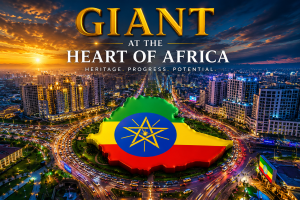
A Strong Ethiopia, A Stable Horn: The Strategic Vision for National Transformation
Nov 28, 2026 6994
By Staff Writer November 28, 2026 (ENA) Ethiopia’s pursuit of national transformation is increasingly shaped by a fundamental strategic question: how can a country with enormous human, economic and geopolitical potential translate its national aspirations into lasting stability, prosperity and regional influence? Prime Minister Abiy Ahmed’s recent address to the House of Peoples’ Representatives offers a broad perspective on this question, bringing together political unity, regional diplomacy, economic development, national sovereignty and institutional capacity as interconnected pillars of Ethiopia’s long-term national agenda. At the heart of the vision is a recognition that Ethiopia’s future cannot be secured through economic growth alone, military strength in isolation or diplomatic engagement detached from domestic realities. Rather, sustainable national progress requires a comprehensive approach in which political consensus strengthens institutions, economic development reinforces sovereignty, and regional peace creates opportunities for shared prosperity. The Prime Minister’s remarks on Sudan, Eritrea, the Ethiopian National Dialogue, the Medemer Grand Strategy and national defense therefore reflect more than separate government priorities. Together, they point to a broader ambition: building an internally cohesive, economically capable and sovereign Ethiopia that can play a constructive role in shaping the future of the Horn of Africa. Regional Peace: Ethiopia’s Security Begins Beyond Its Borders “Sudan’s peace is our peace.” Prime Minister Abiy’s statement captures a central principle underpinning Ethiopia’s approach to regional diplomacy: the security and stability of neighboring countries are inseparable from Ethiopia’s own long-term interests. The relationship between Ethiopia and Sudan extends beyond geographical proximity. Historical, social, economic and cultural connections have made the stability of one country an important consideration for the other. Sudan’s prolonged conflict consequently carries implications extending across borders, affecting trade, humanitarian conditions, population movements and the broader security environment of the Horn of Africa. Against this backdrop, the Prime Minister reaffirmed Ethiopia’s readiness to contribute diplomatic, financial and institutional resources to Sudan’s peace and recovery. He called on the warring parties to embrace dialogue and give Ethiopia’s proposed peace initiative an opportunity. The proposed initiative seeks to bring together Sudanese military, political and civilian stakeholders through an inclusive, Sudanese-led national dialogue facilitated by Ethiopia. Its underlying premise is that sustainable peace cannot be imposed from outside; it must emerge from political ownership, meaningful participation and an agreement among the country's principal stakeholders. This approach also reflects a broader strategic understanding: instability in the Horn of Africa cannot be addressed through isolated national responses. The region's interconnected security challenges require sustained diplomatic engagement, collective responsibility and practical cooperation among neighboring countries. Ethiopia’s relations with Eritrea present another important dimension of this regional vision. The Prime Minister reiterated Ethiopia’s preference for peaceful coexistence and mutually beneficial development while expressing concern over the deterioration of bilateral relations. Recalling the efforts made following the rapprochement between the two countries, he highlighted Ethiopia’s initiatives to facilitate Eritrea’s regional diplomatic engagement, offer electricity supplies at domestic Ethiopian rates and pursue joint infrastructure development, including roads and ports. These proposals reflected an understanding that geographical proximity and complementary economic resources could serve as foundations for shared prosperity rather than confrontation. The failure to translate these opportunities into sustained cooperation, as described by the Prime Minister, illustrates the challenges confronting relations between the two neighboring countries. It also underscores the importance of rebuilding confidence, maintaining diplomatic channels and addressing differences through peaceful engagement. For Ethiopia, constructive relations with Eritrea are particularly significant within the wider context of Horn of Africa stability, regional connectivity and economic integration. The broader strategic lesson is that lasting regional influence is built not simply on geographical position, population size or military capabilities, but also on the ability to establish trust, develop mutually beneficial partnerships and accommodate the legitimate interests of neighboring states. Sovereignty and Security: Strength Through Peace and Preparedness Ethiopia’s commitment to regional peace, as outlined in the parliamentary address, was accompanied by an equally firm emphasis on protecting national sovereignty and territorial integrity. The Prime Minister underscored that Ethiopia has no intention of invading other countries but remains determined to defend itself against external aggression. His remarks also recalled Ethiopia’s historical contributions to international and regional peacekeeping, including missions in Rwanda, Somalia, the Democratic Republic of Congo, Liberia and South Sudan. He acknowledged the sacrifices made by Ethiopian forces in supporting peace and stability beyond the country's borders. These contributions have helped establish Ethiopia as an important participant in African peace and security efforts. They also demonstrate the country's longstanding recognition that regional stability is a shared responsibility. At the same time, the Prime Minister’s invocation of the Battle of Adwa placed national sovereignty within Ethiopia’s historical experience. The victory of 1896 remains a powerful symbol of independence, resistance to colonial domination and the determination of Ethiopians to preserve their national identity. However, sovereignty in today's international environment requires more than historical pride and military preparedness. It depends on a combination of effective diplomacy, economic resilience, technological capabilities, strong institutions and credible defense systems. The Horn of Africa's evolving geopolitical environment, characterized by security challenges, competition over strategic infrastructure and growing interest in maritime connectivity, makes these capabilities particularly important. A capable defense system and a commitment to peaceful coexistence are not contradictory. Properly developed, they reinforce one another by protecting national interests while creating conditions for diplomacy and cooperation. Ethiopia’s National Dialogue in Building Unity Through Reconciliation While regional stability and national sovereignty define important aspects of Ethiopia’s external environment, the durability of its national transformation ultimately depends on its internal political foundations. This makes the Ethiopian National Dialogue one of the most consequential initiatives highlighted in the Prime Minister’s address. Ethiopia's political and social challenges cannot be resolved through administrative measures or security responses alone. They require a political environment in which different communities, political groups and social constituencies can express their grievances, aspirations and competing visions of the country's future. The National Dialogue seeks to provide such a platform. According to the Prime Minister, hundreds of thousands of Ethiopians, both inside the country and abroad, have participated in discussions throughout the four-year process. His reference to approximately 4,000 participants conducting discussions in one hall over 46 days illustrates the scale and complexity of the undertaking. The importance of this process, however, extends beyond the number of participants or the duration of discussions. Its real significance lies in its potential to transform political differences into constructive national engagement. Ethiopia's diversity is an essential part of its national identity. Building lasting unity does not mean eliminating differences or requiring uniform political perspectives. It means establishing credible institutions and mechanisms through which differences can be managed peacefully, constitutional rights protected and common national interests advanced. In this regard, the Prime Minister's reference to Article 39 of the Constitution is particularly significant. The constitutional recognition of the rights of nations, nationalities and peoples to use their languages, administer themselves and protect their rights remains a fundamental component of Ethiopia's federal framework. The broader challenge is to strengthen these constitutional guarantees while promoting national cohesion, equal citizenship, effective federal institutions and confidence in the country's constitutional order. These objectives should be mutually reinforcing. National unity becomes more sustainable when citizens feel represented, their rights are respected and public institutions respond equitably to their needs. Ultimately, the credibility of the National Dialogue will be determined by what follows the discussions. Its recommendations must translate into meaningful political, legislative and institutional reforms. Citizens must see that their participation contributes to addressing the structural challenges facing the country. The process therefore presents an opportunity to build a more inclusive political settlement and establish a stronger foundation for Ethiopia's long-term stability. Medemer: A Long-Term Framework for National Transformation The political foundations of national unity are closely connected to Ethiopia's broader economic and institutional ambitions. This is where the Medemer Grand Strategy assumes particular significance. At its core, Medemer advances the principles of cooperation, complementarity and the pooling of individual and collective capabilities. It seeks to translate Ethiopia's human, natural, geographical and economic resources into productive national strength. The underlying proposition is straightforward but strategically important: resources alone do not generate prosperity. Their value depends on the institutions, knowledge, technology, infrastructure and productive capabilities available to mobilize them. For a country with Ethiopia's population, agricultural potential, strategic location and expanding economic ambitions, this requires a sustained commitment to economic modernization, industrial development, infrastructure expansion, technological advancement and human capital investment. The Medemer framework also places considerable importance on institutional development and generational continuity. Ethiopia's transformation cannot depend exclusively on the priorities of individual political administrations. It requires long-term national frameworks capable of preserving achievements, correcting shortcomings and sustaining development beyond political transitions. This is particularly important in a country where the scale of development challenges demands consistency in economic planning, investment policy, institutional reform and public administration. The strategic value of a long-term national development framework lies in its ability to establish continuity while allowing policies to evolve in response to changing economic and social realities. For Medemer to achieve its broader ambitions, its principles must be reflected in effective institutions, measurable development outcomes, productive investment and tangible improvements in citizens' livelihoods. Its ultimate test is whether it can help transform national potential into sustainable and broadly shared prosperity. Economic Strength for the Foundation of National Sovereignty An important thread running through the Prime Minister's address is the relationship between economic development and national security. His observation that defense cannot be built independently of economic capacity highlights a fundamental reality of modern statecraft: a country's ability to safeguard its sovereignty is closely linked to the strength of its economy. Contemporary defense systems require far more than military personnel and conventional equipment. They depend on technological innovation, industrial capacity, skilled professionals, effective logistics, research and development, and sustainable financial resources. A strong economy enables a country to invest in these capabilities without undermining other national development priorities. This relationship is particularly important for Ethiopia as it seeks to expand its productive base, modernize its institutions and strengthen its strategic autonomy. Economic transformation, therefore, is not simply about increasing national output or attracting investment. It is also about building the capabilities that enable the country to make independent strategic decisions, withstand external pressures and protect its long-term national interests. The Prime Minister's references to air capabilities, ground forces and technological advancement reflect the importance attached to developing a comprehensive national defense system. However, sustainable defense modernization must be accompanied by professional standards, institutional accountability and continued attention to the welfare of the armed forces. The broader lesson is that national sovereignty is strongest when supported by a productive economy, capable institutions, technological advancement and responsible diplomacy. The Horn of Africa: From Geopolitical Competition to Shared Prosperity Ethiopia's national transformation agenda cannot be fully understood without considering its position in the Horn of Africa. As one of the region's largest countries by population and a major diplomatic and economic center, Ethiopia occupies a strategic position in shaping regional political and economic developments. Yet the Horn of Africa remains affected by protracted conflicts, political instability, limited economic integration, climate-related pressures, humanitarian emergencies and competition over strategic infrastructure and maritime connectivity. These challenges also present opportunities for a different regional future. Improved relations among neighboring countries could unlock significant economic potential through cross-border trade, electricity exchanges, transport infrastructure, logistics networks and coordinated development initiatives. For Ethiopia, stronger regional connectivity would expand access to markets, improve the movement of goods and services and create opportunities for investment and industrial development. Similarly, regional energy cooperation could allow countries to benefit from complementary resources, while coordinated infrastructure development could reduce economic fragmentation and strengthen commercial relations. The pursuit of these opportunities requires a regional environment founded on trust, predictable relations, respect for sovereignty and peaceful resolution of disagreements. Ethiopia's aspirations for greater regional engagement will therefore be most sustainable when its national development objectives are advanced alongside the legitimate interests of neighboring countries. Regional leadership in the contemporary international environment is not measured solely by national capabilities. It is demonstrated through the ability to generate shared benefits, facilitate dialogue and contribute to solutions to common challenges. In this sense, Ethiopia's national transformation and the future of the Horn of Africa are closely connected. Turning National Vision into Tangible Results Perhaps the most important analytical lesson from the Prime Minister's address is the interconnectedness of the priorities he outlined. Political dialogue, constitutional inclusion, regional diplomacy, economic transformation and defense modernization are not isolated policy areas. They constitute complementary dimensions of a broader national development and state-building project. Political consensus provides the foundation for stability. Effective institutions strengthen governance and public confidence. Economic development mobilizes human and financial resources. Defense capabilities safeguard sovereignty, while regional peace creates opportunities for trade, investment and connectivity. However, the success of this vision will ultimately depend not on the scale of its ambitions but on the effectiveness of its implementation. Three priorities will be particularly decisive. First, political inclusion must produce meaningful institutional outcomes. The National Dialogue needs to translate participation into credible reforms, strengthen constitutional legitimacy and build confidence across different political and social constituencies. Its success should be measured by its contribution to addressing underlying differences and strengthening national institutions. Second, regional diplomacy must prioritize trust and sustained cooperation. Ethiopia's engagement with Sudan and its pursuit of constructive relations with Eritrea require consistent diplomatic efforts, confidence-building measures and respect for the legitimate interests of all parties. Sustainable regional influence is achieved through partnerships and practical cooperation rather than confrontation. Third, economic transformation must improve the everyday lives of citizens. Development must generate employment, increase productivity, strengthen livelihoods, improve public services and expand opportunities for younger generations. National economic progress becomes a durable foundation for stability when its benefits are reflected in the lives of ordinary people. These priorities are essential to ensuring that the country's broader national vision translates into measurable and lasting achievements. In a nutshell, Prime Minister Abiy Ahmed's parliamentary address brings together some of the most consequential questions shaping Ethiopia's future: how to consolidate national unity, safeguard sovereignty, transform economic potential into prosperity, contribute to peace in Sudan, establish constructive relations with Eritrea and build institutions capable of sustaining progress across generations. The vision articulated in the address rests on a fundamental understanding that these objectives are inseparable. A politically cohesive Ethiopia is better positioned to pursue economic transformation. A stronger economy provides the resources and capabilities necessary to protect sovereignty. Effective institutions sustain development and strengthen public confidence. Constructive relations with neighboring countries create opportunities for regional peace, trade and shared prosperity. The challenge is to advance these priorities simultaneously while ensuring that national ambitions are matched by inclusive governance, institutional accountability and tangible results. Ethiopia's historical experience has demonstrated the importance of independence, resilience and collective responsibility. Its contemporary ambitions require these strengths to be complemented by modern institutions, technological innovation, economic competitiveness, political inclusion and constructive international partnerships. Ultimately, the measure of Ethiopia's national transformation will not be determined simply by the resources it possesses, the strategies it announces or the influence it seeks. It will be determined by the strength of the institutions it builds, the trust it establishes among its citizens, the prosperity it delivers and the contribution it makes to a more peaceful and economically integrated Horn of Africa. The strategic ambition is clear. It is an Ethiopia that is strong at home, sovereign in its decisions, prosperous in its economy and constructive in its engagement with the world.
IGAD Lauds Pulse of Africa for Amplifying Human Mobility Stories Across Horn of Africa
Nov 27, 2026 5707
Addis Ababa, November 27, 2026 (ENA)— The Intergovernmental Authority on Development (IGAD) has commended Pulse of Africa (POA), an Addis Ababa-based Pan-African media platform, for its valuable media partnership and extensive coverage of regional issues, particularly human mobility and the 2026 IGAD Media Awards. In a special message of appreciation shared on its social media platforms, the IGAD Secretariat described Pulse of Africa as a valued media partner, thanking the outlet for its contribution to amplifying important stories across the region. “A special thank you to Pulse of Africa, our valued Media Partner!” the Secretariat stated. IGAD further recognized POA's extensive coverage of the fourth edition of the IGAD Media Awards, held in Kampala, Uganda, last week. The Pulse of Africa’s support helped celebrate and recognize outstanding journalists and digital storytellers from across the region, the statement noted. “Your invaluable support helped us celebrate and recognise outstanding journalists and digital storytellers from across the IGAD region whose work shines a light on free movement of persons, labour migration, human mobility and displacement,” the Secretariat said. The recognition underscores Pulse of Africa's growing contribution to regional journalism, particularly its reporting on human mobility dynamics in the Greater Horn of Africa, a region facing complex challenges and opportunities related to migration, displacement, refugee protection and cross-border movement. The IGAD region is currently home to approximately 5.6 million refugees, making informed reporting and public awareness of human mobility issues increasingly important to regional cooperation and policy discussions. Through its regional reporting, POA has been amplifying the experiences of displaced communities, migration-related developments and broader efforts to advance safe, orderly and regular human mobility across the region. Its extensive coverage of the 2026 IGAD Media Awards also brought greater visibility to journalists and digital storytellers whose work is helping shape public understanding of free movement, labour migration and displacement across the Greater Horn of Africa. The fourth edition of the awards recognized approximately 20 outstanding journalists and storytellers for their contributions to journalism and digital storytelling, highlighting the media's role in informing public debate and transforming narratives across the region. IGAD also praised Pulse of Africa for its continued efforts to amplify stories that matter to communities across the region. “Thank you for being part of this remarkable journey and for your continued commitment to amplifying the stories that matter across our region,” the Secretariat added. The commendation further highlights the importance of media partnerships in strengthening regional awareness, promoting informed public discourse and bringing African stories and perspectives to wider audiences.
' + getPhotos(pictures, true) + '
';
/*let navs = getNavs();
let lastNav = navs[navs.length - 1];
if (pictures.length > 10) {
getNav().classList.add("multiline");
}
for (let i = navs.length; i < pictures.length; i++) {
let newNav = lastNav.cloneNode(true);
lastNav.parentNode.insertBefore(newNav, lastNav.nextSibling);
lastNav = newNav;
}*/
let titleText = document.getElementById("ena_title_text")
if (titleText) {
setTimeout(titleText.scrollIntoView(), 100);
}
}
function getPhotos(pictures, pictureOnly) {
let result = "";
pictures.forEach(picture => {
result += '';
result += '
';
})
return result;
}
function getPhotoImage(picture, pictureOnly) {
let result = '';
if (!pictureOnly) {
result += '';
}
result += '';
result += getPhotoImage(picture, pictureOnly);
result += '
';
if (!pictureOnly) {
result += '';
result += getPhotoText(picture);
result += '
';
}
result += '';
result += '
';
if (!pictureOnly) {
result += '';
}
return result;
}
function getPhotoText(picture) {
let result = '';
result += '';
result += '';
result += '
';
result += '';
result += getPhotoTitle(picture);
result += '
';
result += '';
return result;
}
function getPhotoTitle(picture) {
let image = picture.getElementsByTagName("IMG")[0];
return image.alt;
}
function getPhotoLink(picture) {
let image = picture.getElementsByTagName("IMG")[0];
return image.src.replace("&download=true","");
}
let contents=Array.from(
fragmentElement.getElementsByClassName(
"ena_display_item_content"));
contents.forEach(item => {
item.innerHTML=item.innerHTML.replaceAll(" "," ")})
Array.from(fragmentElement.getElementsByClassName(
"ena_display_item_content")).forEach(item => {
if (item.innerHTML.length!=item.textContent.length) {
item.innerHTML=item.textContent;}});
if (checkModes(["headlines", "alertbar", "slider", "advertisement"])) {
if (checkModes(["headlines", "alertbar"])) {
moveTo(getItems().length > 1 ? 1 : 0);
} else {
moveTo(0);
}
if (checkModes(["slider"])) {
setTimeout(() => autoMove(), 1);
} else {
autoMove();
}
}
function checkModes(modes, prefix){
if (!prefix) prefix = "mode";
var display = fragmentElement.getElementsByClassName(
"ena_display")[0];
for (let i in modes) {
if (display.classList.contains(
"ena_display_" + prefix + "_" + modes[i])) {
return true;
}
}
return false;
}
function getAutoInterval(){
if (checkModes(["advertisement"])) {
return 10000;
}
else {
return 5000;
}
}
function getCarouselNavs(){
return fragmentElement.getElementsByClassName("ena_carousel_control_navs")[0]}
function getPort(){
return fragmentElement.getElementsByClassName("ena_display_port")[0]}
function getItems(){return Array.from(
getPort().getElementsByClassName("ena_display_item"))}
function getNav(){return document.getElementById("ena_display_control_nav")}
function getNavs() {
if (checkModes(["Photos"], "type")) {
return Array.from(
fragmentElement.getElementsByClassName("ena_display_item_picture"));
} else {
return Array.from(
fragmentElement.getElementsByClassName("ena_display_control_nav_item"));
}
}
function getPrev(){
return fragmentElement.getElementsByClassName(
"ena_display_control_arrow_prev")[0];
}
function getNext(){
return fragmentElement.getElementsByClassName(
"ena_display_control_arrow_next")[0];
}
/*function getArrows(){
return fragmentElement.getElementsByClassName(
"ena_display_control_arrows")[0];
}*/
function getCurrent(items){return items.indexOf(items.find(
item => item.classList.contains("ena_display_current")))}
function setCurrent(index, itemsArray){
let currents = [];
itemsArray.forEach((items, i) => {
currents[i] = getCurrent(items);
if (currents[i]>=0)items[currents[i]].classList.add("ena_display_visible");
items.forEach(
item => {
item.classList.remove("ena_display_a");
item.classList.remove("ena_display_b");
item.classList.remove("ena_display_c");
item.classList.remove("ena_display_current");
item.classList.remove("ena_display_backward");
item.classList.remove("ena_display_forward");
})});
/*setTimeout(()=>{*/
itemsArray.forEach((items, i) => {
if(index >= 0 && index < items.length) {
let current=currents[i];
items[index].classList.add("ena_display_current");
if (current<0 || index==current) {
/*if (index==0){
items[items.length-1].classList.add("ena_display_a");
} else {
items[index-1].classList.add("ena_display_a");
}*/
items[index].classList.add("ena_display_b");
/*if (index==items.length-1){
items[0].classList.add("ena_display_c");
} else {
items[index+1].classList.add("ena_display_c");
}*/
} else {
let direction="";
/*setTimeout(()=>{*/
if(isForward(index, current, items.length-1)){
items[index].classList.add("ena_display_c");
/*setTimeout(()=>{*/
items[current].classList.add("ena_display_b");
/*}, 1000);*/
direction="ena_display_forward";
} else {
items[index].classList.add("ena_display_a");
/*setTimeout(()=>{*/
items[current].classList.add("ena_display_b");
/*}, 1000);*/
direction="ena_display_backward";
}
setTimeout(function(){
items[current].classList.add(direction);
items[index].classList.add(direction);
items[current].classList.remove("ena_display_visible");
}, 100);
/*}, 2000);*/
}
}});
/*}, 2000);*/
/*getItems().filter(
item => item.classList.contains("ena_display_current")).forEach(
item => {if (getPort()) getPort().scrollLeft=item.offsetLeft});*/
}
function isForward(index, current, last){
if(index==0&¤t==last)return true;
if(index==last&¤t==0)return false;
return index>current;
}
function moveTo(index){setCurrent(index, [getItems(), getNavs()]);}
function prevIndex(){
var items = getItems();
var index = getCurrent(items) - 1;
if (index < 0) index = items.length - 1;
return index;
}
function nextIndex(){
var items = getItems();
var index = getCurrent(items) + 1;
if (index >= items.length) index = 0;
return index;
}
getNavs().forEach((item, index) => item.onclick = function(){
moveTo(index)});
getPrev().onclick = function(){moveTo(prevIndex())};
getNext().onclick = function(){moveTo(nextIndex())};
fragmentElement.onmouseenter = function(){
autoStop();
//getArrows().style.display="inline-flex";
}
fragmentElement.onmouseleave = function(){
autoMove();
//getArrows().style.display="none";
}
function autoMove(){
autoStop();
if (fragmentElement.getElementsByClassName("portlet-topper").length==0
&& !fragmentElement.ena_timer_display){
fragmentElement.ena_timer_display=setInterval(
() => {
fragmentChild = fragmentElement.children[0];
let visibility = window.getComputedStyle(fragmentChild, null).visibility;
if (visibility != "hidden") {
moveTo(nextIndex());
}
}, getAutoInterval());
}
}
function autoStop(){
clearInterval(fragmentElement.ena_timer_display);
fragmentElement.ena_timer_display = null;
};}());
Politics
Ethiopia in the Global Spotlight: Health Leadership, Major Policy Briefing and a New Push for Sudanese Peace
Nov 29, 2026 1530
By Staff Writer November 29, 2026 (ENA) Ethiopia closed the final week of November with a series of major international and domestic engagements, bringing global health cooperation, national economic ambitions and regional peace diplomacy into sharp focus. From hosting tens of thousands of delegates at Africa’s flagship public health conference to presenting its economic and development priorities before Parliament and offering to facilitate an inclusive Sudanese national dialogue, Ethiopia featured prominently in discussions shaping the continent’s future. The week underscored Addis Ababa’s growing role as a hub for international engagement, while highlighting the Ethiopian government's stated priorities on economic transformation, national security, regional stability and African cooperation. Three major developments defined the week: the Fifth International Conference on Public Health in Africa (CPHIA 2026), Prime Minister Abiy Ahmed’s comprehensive parliamentary briefing on government performance, and Ethiopia’s renewed diplomatic initiative to help end the devastating war in neighboring Sudan. Addis Ababa Brings Africa’s Health Sovereignty into Global Focus Ethiopia placed Africa’s health sovereignty and the future of its public health systems at the center of international attention as it successfully hosted the Fifth International Conference on Public Health in Africa (CPHIA 2026) in Addis Ababa. Co-hosted by the Ethiopian government and the Africa Centres for Disease Control and Prevention (Africa CDC), the conference brought together more than 30,000 participants, including policymakers, health professionals, researchers, development partners and international delegates. The gathering demonstrated Addis Ababa’s capacity to convene major international events and provide a platform for addressing some of the continent’s most pressing development challenges. Opening the conference, Prime Minister Abiy Ahmed reaffirmed Ethiopia’s commitment to building a resilient, self-reliant African health system through investments in human capital, domestic pharmaceutical production, digital health technologies and artificial intelligence. Welcoming participants to Addis Ababa, home to both the African Union and Africa CDC, the Prime Minister emphasized the importance of strengthening Africa’s capacity to address its own health challenges through greater investment, innovation and institutional cooperation. The conference also brought renewed attention to the broader question of health sovereignty, particularly Africa’s need to strengthen local pharmaceutical manufacturing, expand access to essential healthcare services, develop its health workforce and reduce dependence on external supply chains. With thousands of participants converging on the Ethiopian capital, CPHIA 2026 further highlighted Addis Ababa’s growing significance as a continental center for policy dialogue, scientific exchange and international cooperation. PM Abiy’s Parliamentary Briefing Highlights Economic Transformation, Mega Projects and National Security While Addis Ababa hosted the international health gathering, Prime Minister Abiy Ahmed appeared before the House of Peoples’ Representatives on Thursday to present the federal government's performance during the first quarter of the 2026/27 Ethiopian fiscal year and respond to lawmakers' questions on major national and regional issues. The parliamentary briefing covered the government's economic performance, infrastructure development, national defense, domestic peace, regional diplomacy and Ethiopia's position on the utilization of the Abay (Blue Nile) River. Responding to questions and observations from lawmakers, the Prime Minister addressed progress against the 2019 Ethiopian fiscal year government plan presented by President Taye Atske Selassie during the joint opening session of the House of Peoples’ Representatives and the House of Federation on October 6, 2026. GDP Rebasing Puts Ethiopia’s Economic Size at 210 Billion USD One of the key economic issues raised during the parliamentary session was Ethiopia’s recent GDP rebasing exercise, undertaken after 11 years without a comprehensive revision of the country's national economic accounts. Prime Minister Abiy said the exercise had provided a more comprehensive picture of Ethiopia’s economic capacity, placing the country's economy at approximately 210 billion USD and making it the third-largest economy in Sub-Saharan Africa, after South Africa and Nigeria. He explained that the revision was necessary to reflect structural changes in the economy, including the emergence of new industries, expanding economic activities and changes in the contribution of existing sectors. International standards generally recommend rebasing national accounts approximately every five years to ensure that economic measurements reflect evolving market realities. However, Ethiopia had gone 11 years without undertaking the exercise, leaving several economic activities inadequately captured in its national accounts. According to the Prime Minister, the rebasing exercise produced three possible estimates, with the government adopting the most conservative assessment, which put the country's economic size at 210 billion USD. The updated figures, he said, offer a clearer understanding of the scale of Ethiopia's economy and provide a stronger statistical foundation for economic planning and policymaking. More Than 30 Billion USD in Guba Mega Projects Advance The Prime Minister also highlighted progress in Ethiopia's ambitious Guba mega-projects, a development package valued at more than 30 billion USD that he announced during the September 2025 inauguration of the Grand Ethiopian Renaissance Dam (GERD) in Guba, Benishangul-Gumuz Region. The projects span several strategic sectors, including housing, energy, natural gas, fertilizer production, petroleum refining and aviation infrastructure. PM Abiy cited progress in the 1.5 Million-Home Program, the Ogaden liquefied natural gas and gas infrastructure projects, the Gode urea fertilizer plant and oil refinery, Bishoftu International Airport and the country's nuclear energy development plans. The initiatives form part of Ethiopia's broader efforts to expand productive capacity, strengthen industrial development, improve infrastructure and diversify the national economy. Their implementation is expected to contribute to the country's long-term ambitions of increasing domestic production, creating employment opportunities and strengthening economic competitiveness. National Defense, Economic Strength and Regional Security On national security, Prime Minister Abiy emphasized that a sustainable and productive economy is fundamental to building a capable and enduring national defense force. He cautioned that military strength cannot be sustained through defense investment alone, stressing the need for a strong economic foundation to support national security. "Defense is like a house. If we build the defense force alone, it will not endure. We must ensure that the economy can sustain it," he said. Addressing regional security, the Prime Minister reaffirmed Ethiopia's stated commitment to peace and stability across the Horn of Africa and the wider continent, while emphasizing that the country would firmly defend its sovereignty and territorial integrity against any violation. He recalled Ethiopia's longstanding contributions to African peacekeeping and security operations, citing its involvement in Rwanda, Somalia, the Democratic Republic of Congo, Liberia and South Sudan. Ethiopian forces, he noted, have made significant sacrifices in support of regional peace and security. The Prime Minister maintained that Ethiopia has no intention of invading neighboring countries, while stressing that peaceful coexistence and respect for territorial integrity should guide relations among states. He also urged the Eritrean government to refrain from arming or cooperating with forces hostile to Ethiopia, renewing his call for peaceful coexistence and cooperation between the two neighboring countries. PM Abiy further recalled Ethiopia's diplomatic efforts to help Eritrea overcome international isolation and strengthen its relations with neighboring states. Abay River: Sovereign Development and Regional Cooperation The utilization of the Abay (Blue Nile) River also featured prominently in the Prime Minister's parliamentary address. Reaffirming Ethiopia's sovereign right to develop and utilize its water resources without external authorization, Abiy stressed that harnessing the river's potential is essential to overcoming poverty, expanding electricity generation, strengthening food security and improving citizens' livelihoods. Describing the Abay as a divine gift to Ethiopia, he reiterated that the country remains committed to pursuing regional cooperation and shared development with downstream countries. His remarks reinforced Ethiopia's longstanding position that the equitable utilization of transboundary water resources should be guided by cooperation, mutual benefit and the development aspirations of all riparian countries. Ethiopia Offers to Host Inclusive Sudanese Dialogue as Calls for Peace Intensify Beyond its domestic economic and development agenda, Ethiopia also placed regional peace diplomacy at the center of its international engagement during the week. Prime Minister Abiy Ahmed extended an open invitation to Sudanese military, political and civilian stakeholders to participate in an inclusive national dialogue to be hosted and facilitated by Ethiopia, calling for an end to the devastating conflict that has engulfed Sudan since April 15, 2023. In a statement issued in Arabic language, the Prime Minister described the proposed initiative as a sincere effort to bring all Sudanese parties together around a comprehensive, open and Sudanese-led dialogue aimed at finding a lasting political solution. "At this critical historical juncture, the Ethiopian government is putting forward a sincere and genuine initiative calling on all Sudanese parties, across their military, political, and civilian components, to participate in a comprehensive and open Sudanese dialogue to be hosted and facilitated by Ethiopia," he stated. Highlighting the deep historical, cultural and people-to-people ties between the two neighboring countries, the Premier described Sudan as a brotherly nation whose suffering resonates deeply with the Ethiopian people. He stressed that the ongoing war is not simply a political or security crisis confined to Sudan but a humanitarian tragedy with far-reaching consequences for neighboring countries and the wider Horn of Africa. Reaffirming Ethiopia's commitment to Sudan's unity, territorial integrity and stability, the Prime Minister emphasized that peace in Sudan is inseparable from the security and stability of the wider region. He also recalled Ethiopia's diplomatic engagement during Sudan's 2019 political transition, when Addis Ababa worked to bring civilian and military stakeholders closer together and facilitate an agreement reflecting the Sudanese people's aspirations for civilian rule. Sudanese Public and Political Groups Welcome Ethiopia’s Initiative The Ethiopian initiative has received positive reactions from Sudanese public figures, researchers and political groups, with calls for dialogue and an end to the war continuing to feature prominently in public discussions. Sara Al-Saeed, a Sudanese researcher and international relations analyst specializing in the Horn of Africa at Newcastle University in the United Kingdom, told ENA that the initiative had been widely welcomed by Sudanese people. "The Sudanese people have widely welcomed the Prime Minister's initiative. If you look at social media, you will find Sudanese expressing their support for Dr. Abiy Ahmed's initiative. The people want peace," she said. Al-Saeed described the initiative as an important diplomatic effort to bring Sudanese stakeholders together through dialogue and negotiations, emphasizing the need for a peaceful and lasting solution to the country's crisis. She added that public and political reactions had demonstrated considerable support for Ethiopia's proposed engagement. Political groups have also expressed support for the initiative. The Civil Democratic Alliance of Revolutionary Forces (Sumoud) and the Sudan Founding Alliance (Tasis) have both welcomed Ethiopia's proposal and indicated their readiness to participate in the proposed dialogue. The responses have brought renewed attention to the potential role of regional diplomacy in creating opportunities for Sudanese stakeholders to pursue a negotiated settlement to the conflict. A Week Reflecting Ethiopia’s Expanding Regional and International Engagement Taken together, the week's developments illustrate the breadth of Ethiopia's engagement across continental health cooperation, domestic economic transformation and regional peace initiatives. Hosting CPHIA 2026 brought thousands of international participants to Addis Ababa and placed African health sovereignty at the center of a major continental discussion. The Prime Minister's parliamentary address provided an overview of the government's economic ambitions, strategic infrastructure projects, national security priorities and approach to regional relations. Meanwhile, the offer to facilitate an inclusive Sudanese dialogue highlighted Ethiopia's continued diplomatic engagement in addressing instability in its neighborhood. As the Horn of Africa navigates complex political, economic and security challenges, these developments place Ethiopia's domestic transformation agenda and regional diplomatic initiatives within a broader continental context. The final week of November thus brought three interconnected priorities into focus: strengthening Africa's capacity to address its own development challenges, advancing Ethiopia's economic and institutional ambitions, and pursuing regional solutions to conflicts that threaten shared stability. For Addis Ababa, the week was not only marked by major international gatherings and parliamentary deliberations, but also by renewed diplomatic engagement on an issue with profound implications for the future of the Horn of Africa.
Ethiopia-South Africa Deepen Academic Ties as UNISA Marks 20 Years in Ethiopia
Nov 29, 2026 1571
Addis Ababa, November 29, 2026 (ENA)— Ethiopia and South Africa are deepening their longstanding partnership through expanding academic cooperation, with the University of South Africa (UNISA) marking two decades of contribution to higher education in Ethiopia. South Africa’s Ambassador to Ethiopia, Nonceba Losi, said UNISA’s presence in Ethiopia reflects the enduring friendship between the two countries and their growing commitment to advancing education, knowledge exchange and human capital development across Africa. She made the remarks as UNISA celebrated the graduation of 61 Ethiopian students, including 58 doctoral scholars, at a ceremony held on Saturday at Haile Grand Hotel in Addis Ababa, coinciding with the university’s 20th anniversary of operations in Ethiopia. Ambassador Losi said the graduates’ achievements represent more than individual academic success, underscoring the growing educational partnership and historical bonds between the two countries. She traced Ethiopia-South Africa relations to a shared history of solidarity, mutual respect and a common commitment to African liberation, unity and progress. Recalling a significant chapter in that history, Losi noted that Ethiopia provided a home to South Africa’s founding president, Nelson Mandela, during the 1960s, describing the connection as a lasting symbol of African solidarity. She said bilateral cooperation has continued to expand through institutional frameworks, particularly the Joint Ministerial Commission, and is underpinned by nearly 20 agreements and memoranda of understanding. The bilateral Memorandum of Understanding on Higher Education, she added, provides an important foundation for academic collaboration and further underscores the significance of UNISA’s longstanding presence in Ethiopia. Losi highlighted UNISA’s open and distance learning model for expanding access to higher education, enabling professionals to pursue advanced qualifications while maintaining their careers and continuing to serve their communities. She stressed that such cooperation is instrumental in producing skilled professionals, researchers and academics capable of responding to Ethiopia’s development priorities and contributing to Africa’s broader transformation. Speaking at the ceremony, Asegid Samuel, Lead Executive Officer for Human Resources Development and Improvement at the Ministry of Health, said the graduation demonstrates the growing pool of advanced academic talent needed to strengthen national institutions and improve public services. He described the UNISA Ethiopia Regional Learning Center as an expression of shared values embodied in South Africa’s Ubuntu philosophy and Ethiopia’s Medemer (Synergy) vision, both emphasizing collective responsibility, solidarity and shared progress. Asegid particularly highlighted the contribution of UNISA graduates specializing in public health and nursing to strengthening Ethiopia’s healthcare system. He cited improvements in maternal health, noting that maternal mortality declined from approximately 950 deaths per 100,000 live births in 2000 to about 195 in 2023. He attributed the progress largely to sustained investments in health infrastructure and human resources, including the deployment of nearly 43,000 health extension workers who deliver essential services at the community level. However, he emphasized that further investment in qualified health professionals, research and specialized training remains critical to advancing universal health coverage. He urged the graduates to translate their academic achievements into practical solutions, mentor emerging professionals and contribute meaningfully to national development and improved public service delivery. For his part, UNISA Vice Principal for Institutional Development and Transformation, Solomon R. Magano, commended the graduates for their perseverance in completing their studies while balancing professional and family responsibilities. He challenged them to turn their academic knowledge into practical responses to Africa’s pressing challenges, including poverty, unemployment, political instability and gender-based violence. Magano stressed that Africans must take the lead in generating solutions to the continent’s challenges, emphasizing the importance of applying research, innovation and professional expertise to drive sustainable development. Speaking on behalf of the graduating class, Solomon Abebe, a PhD graduate in Development Studies, said the academic journey had strengthened their discipline, resilience, critical thinking and capacity for evidence-based decision-making. He noted that the Ethiopia-South Africa academic partnership had enabled Ethiopian professionals to pursue advanced studies without stepping away from their institutional responsibilities and community service. Abebe described graduation as the beginning of a greater responsibility, calling on fellow graduates to transform their research and academic accomplishments into innovation, effective public service and tangible contributions to society. The university’s 20-year presence in Ethiopia highlights the growing role of cross-border academic partnerships in expanding access to advanced education, developing skilled human capital and strengthening cooperation among African institutions. The graduation of 61 Ethiopian scholars, including 58 doctoral graduates, further underscores the potential of sustained educational collaboration to build the expertise needed to address national and continental development challenges.
Gov’t Reaffirms Ethiopia’s Transformation, Sovereign Ambitions Under Medemer State
Nov 29, 2026 1961
Addis Ababa, November 29, 2026 (ENA)— Ethiopia has reaffirmed its commitment to national sovereignty, self-reliance and regional cooperation, highlighting wide-ranging economic, institutional and political transformations under the Medemer State vision. In its weekly statement issued today, the Government Communication Service (GCS) said Ethiopia would continue to pursue peaceful relations, cooperation and shared development with neighbouring countries without compromising its national interests or territorial integrity. Titled “From Recovery to Sovereign Heights: Ethiopia as a Regional Anchor under the Medemer Government,” the statement outlined the government's assessment of the country's recent economic progress, institutional reforms, major development projects and evolving regional engagement. It followed Prime Minister Abiy Ahmed's recent briefing to the House of Peoples' Representatives, which highlighted Ethiopia's efforts to build economic resilience and advance a sovereign and prosperous future amid geopolitical tensions, disruptions to international trade routes and global economic uncertainty. The GCS described the Medemer philosophy as a framework for mobilizing Ethiopia's natural resources and human potential, strengthening national capacity and building institutions capable of sustaining development across generations. “The core philosophy and role of the Medemer State vision is to connect our national gifts, build the capacity to deliver starting from our natural and human potential, and change that into strong national power and sovereign preeminence,” the statement said. On the economic front, the service cited Ethiopia's gross domestic product of 210 billion U.S. dollars, describing the country as the largest economy in East Africa and the third-largest in Sub-Saharan Africa. It further reported that the industrial sector had accounted for 31.8 percent of GDP, surpassing agriculture for the first time in the country's history. Foreign-exchange reserves have increased more than twentyfold, while export earnings reached 3.1 billion dollars in a single quarter. The government also said domestic production had replaced imports worth six billion dollars, underscoring efforts to expand productive capacity and reduce dependence on foreign goods. The statement also pointed to improved performance by state-owned enterprises as evidence of stronger domestic management and more effective utilization of national assets. The Ethiopian Railway Corporation, following its transition from foreign management to Ethiopian leadership, increased its annual profit from 3.4 billion birr to 43 billion birr. Meanwhile, Ethiopian Investment Holdings tripled its total assets to nine trillion birr, according to the GCS. Major infrastructure and industrial projects were also highlighted as central pillars of the country's transformation agenda. These include the Grand Ethiopian Renaissance Dam (GERD), Koysha hydropower project, Gode fertilizer plant, natural gas development initiatives and the Bishoftu International Airport project, alongside urban corridor development and the Green Legacy Initiative. The GCS said such investments are helping convert the country's natural and human resources into productive national assets while strengthening Ethiopia's development capacity and regional role. On domestic political affairs, the service underscored the importance of dialogue and reconciliation in overcoming longstanding divisions and building national consensus. It said the National Dialogue process had engaged hundreds of thousands of citizens over the past four years, seeking to move the country away from confrontation and resentment towards constructive engagement and lasting agreement. “By maintaining what is precious and repairing flaws through serious discussion, the national debate has replaced the previous political practice of ‘tearing down and destroying’ and created a historic bridge toward lasting agreement,” the statement read. The government also identified peace agreements, forgiveness and patience as important instruments for resolving internal conflicts and strengthening national cohesion. Turning to regional diplomacy, the GCS said Ethiopia's approach to neighbouring countries was guided by the principle that “a tree near its source of water always flourishes,” reflecting its belief that national progress and regional prosperity are closely interconnected. It emphasized that Ethiopia's commitment to peaceful coexistence and shared development should not be interpreted as a willingness to compromise its sovereignty or national interests. The statement described the country as one that does not seek to invade others but will not tolerate threats against itself. The service also underscored the role of the Ethiopian National Defense Force in protecting national sovereignty and contributing to regional peace and security, citing improvements in technology, human-resource development and domestic production. Regarding Ethiopia's pursuit of access to the Red Sea, the statement said the country was advancing its historical and geographical interests through peaceful dialogue and reciprocal engagement, presenting the issue as an opportunity to address the challenges of being landlocked while promoting shared regional prosperity. In its broader assessment, the GCS characterized Ethiopia's trajectory as a transition from recovery to reconstruction, dependence to self-reliance, and limited productive capacity to expanded production and exports. It also stressed that the country's development and sovereignty are collective responsibilities that transcend individual administrations. “Ethiopia is not the exclusive property of any one administration; it is our shared home and a sacred trust,” the statement declared, calling on citizens across the country to contribute through cooperation, solidarity and a shared sense of responsibility to building a stronger and more prosperous nation.
Sudanese Analyst Says PM Abiy’s Sudan Initiative Wins Considerable Support from Public, Parties
Nov 28, 2026 4712
Addis Ababa, November 28, 2026 (ENA)— The Sudanese people have widely welcomed Prime Minister Abiy Ahmed’s initiative to host an inclusive national dialogue among Sudanese parties, Sara Al-Saeed, a Sudanese researcher and analyst at Newcastle University told ENA. “The Sudanese people have widely welcomed the Prime Minister’s initiative. If you look at social media, you will find Sudanese expressing their support for Dr. Abiy Ahmed’s initiative. The people want peace,” she said. According to the Sudanese researcher and analyst specializing in international relations and the Horn of Africa at Newcastle University, U.K, the initiative has received broad support from the Sudanese public and political forces. Al-Saeed noted that the initiative represents one of the important efforts to end the war in Sudan by bringing the various Sudanese parties together for dialogue and negotiations and contribute to a lasting solution to the country’s crisis. She added that public and political reactions have demonstrated considerable support for Ethiopia’s initiative. Similarly, the Civil Democratic Alliance of Revolutionary Forces (Sumoud) and the Sudan Founding Alliance (Tasis) have both welcomed the initiative and expressed their readiness to participate in the proposed dialogue. The Ethiopian Prime Minister Abiy Ahmed had invited Sudanese military, political and civilian parties to participate in an inclusive national dialogue to be hosted and facilitated by Ethiopia with the aim of ending the war and achieving lasting peace. He underscored the deep historical ties between Ethiopia and Sudan, describing Sudan as a brotherly country and urging its various parties to place national interests above political and military considerations in order to restore the country’s unity and stability. The analyst and researcher Al-Saeed said Ethiopia’s move reflects Addis Ababa’s commitment to supporting stability in Sudan and safeguarding its unity and territorial integrity. She stated that Ethiopia has consistently demonstrated concern for preserving Sudan’s social fabric and establishing the foundations for peace, describing the proposed dialogue as an opportunity to advance the political process and bring the conflict to an end. The analyst argued that the continuation of the conflict is also linked to questions of accountability for violations committed in Sudan as well as responsibility for the outbreak of the war and its consequences for the Sudanese state. Al-Saeed explained that ending the war would open the way for fundamental questions about those responsible for triggering the conflict and the violations committed during the war. The analyst stressed the importance of responding positively to Ethiopia’s initiative, emphasizing that it offers an opportunity for Sudanese parties to pursue dialogue instead of continued military confrontation. She concluded by describing the initiative as also a call welcomed by all Sudanese parties, reaffirming the importance of Ethiopia’s efforts to support Sudan’s unity, territorial integrity and peace.
Russian Delegation Explores Ethiopia’s Nuclear Energy Vision for Peaceful Development
Nov 28, 2026 6251
Addis Ababa, November 28, 2026 (ENA) – A Russian delegation has explored Ethiopia’s growing ambitions in nuclear science and technology, including the country's vision for harnessing nuclear energy for peaceful development. The delegation, led by Russian Chargé d’Affaires Mikhail Borovkov, visited the Ethiopian Nuclear Energy Commission (ENEC) Museum, where members viewed exhibitions documenting Ethiopia’s progress in nuclear science and technology. The exhibits highlighted the country's journey in developing nuclear science capabilities and its long-term aspirations to harness nuclear energy for peaceful and development-oriented purposes. The visit provided the Russian delegation with an opportunity to gain insight into Ethiopia's nuclear energy ambitions and its efforts to advance scientific and technological capabilities as part of its broader development agenda. Ethiopia has been pursuing the development of nuclear energy for peaceful applications, viewing nuclear science and technology as potential contributors to its long-term development ambitions, it was learned.
PM Abiy Reviews Tigray Region Recovery Progress, Reaffirms Priorities with Caretaker Administration
Nov 28, 2026 5802
Addis Ababa, November 28, 2026 (ENA)— Prime Minister Abiy Ahmed has held a follow-up review meeting with the Tigray Region Caretaker Administration to assess progress in restoring regional governance, addressing outstanding challenges and advancing efforts to stabilize the region. In a social media post following the meeting, the Prime Minister said discussions focused on evaluating the administration’s progress, identifying issues requiring further attention and reaffirming the shared priorities guiding its work. The meeting comes as the six-month caretaker administration continues efforts to restore institutional capacity, revive public services and create conditions for lasting peace and stability in the region. Established by the Federal Government on October 16, 2026, following a decision by the House of Federation and a subsequent Council of Ministers regulation, the administration was mandated to restore peace and security, rebuild government institutions and damaged infrastructure, resume essential public services, facilitate the return of internally displaced people and prepare the region for free and transparent elections. Since assuming office, the administration has made progress in re-establishing regional governance structures, extending administrative arrangements from the regional level down to the kebele level. According to a November 18 briefing by the administration’s Communication Office, elected coordinators had resumed their regular duties, public consultations had been conducted across the region, and education services had resumed in all areas. The administration has also facilitated the return of government employees to their workplaces, resumed salary payments and undertaken efforts to reactivate public institutions and improve service delivery. These steps form part of broader efforts to rebuild administrative capacity, restore public confidence and accelerate the region’s institutional and social recovery. The caretaker administration is expected to sustain the recovery efforts while addressing remaining political and security challenges and laying the groundwork for elections within its six-month mandate.
A Strong Ethiopia, A Stable Horn: The Strategic Vision for National Transformation
Nov 28, 2026 6994
By Staff Writer November 28, 2026 (ENA) Ethiopia’s pursuit of national transformation is increasingly shaped by a fundamental strategic question: how can a country with enormous human, economic and geopolitical potential translate its national aspirations into lasting stability, prosperity and regional influence? Prime Minister Abiy Ahmed’s recent address to the House of Peoples’ Representatives offers a broad perspective on this question, bringing together political unity, regional diplomacy, economic development, national sovereignty and institutional capacity as interconnected pillars of Ethiopia’s long-term national agenda. At the heart of the vision is a recognition that Ethiopia’s future cannot be secured through economic growth alone, military strength in isolation or diplomatic engagement detached from domestic realities. Rather, sustainable national progress requires a comprehensive approach in which political consensus strengthens institutions, economic development reinforces sovereignty, and regional peace creates opportunities for shared prosperity. The Prime Minister’s remarks on Sudan, Eritrea, the Ethiopian National Dialogue, the Medemer Grand Strategy and national defense therefore reflect more than separate government priorities. Together, they point to a broader ambition: building an internally cohesive, economically capable and sovereign Ethiopia that can play a constructive role in shaping the future of the Horn of Africa. Regional Peace: Ethiopia’s Security Begins Beyond Its Borders “Sudan’s peace is our peace.” Prime Minister Abiy’s statement captures a central principle underpinning Ethiopia’s approach to regional diplomacy: the security and stability of neighboring countries are inseparable from Ethiopia’s own long-term interests. The relationship between Ethiopia and Sudan extends beyond geographical proximity. Historical, social, economic and cultural connections have made the stability of one country an important consideration for the other. Sudan’s prolonged conflict consequently carries implications extending across borders, affecting trade, humanitarian conditions, population movements and the broader security environment of the Horn of Africa. Against this backdrop, the Prime Minister reaffirmed Ethiopia’s readiness to contribute diplomatic, financial and institutional resources to Sudan’s peace and recovery. He called on the warring parties to embrace dialogue and give Ethiopia’s proposed peace initiative an opportunity. The proposed initiative seeks to bring together Sudanese military, political and civilian stakeholders through an inclusive, Sudanese-led national dialogue facilitated by Ethiopia. Its underlying premise is that sustainable peace cannot be imposed from outside; it must emerge from political ownership, meaningful participation and an agreement among the country's principal stakeholders. This approach also reflects a broader strategic understanding: instability in the Horn of Africa cannot be addressed through isolated national responses. The region's interconnected security challenges require sustained diplomatic engagement, collective responsibility and practical cooperation among neighboring countries. Ethiopia’s relations with Eritrea present another important dimension of this regional vision. The Prime Minister reiterated Ethiopia’s preference for peaceful coexistence and mutually beneficial development while expressing concern over the deterioration of bilateral relations. Recalling the efforts made following the rapprochement between the two countries, he highlighted Ethiopia’s initiatives to facilitate Eritrea’s regional diplomatic engagement, offer electricity supplies at domestic Ethiopian rates and pursue joint infrastructure development, including roads and ports. These proposals reflected an understanding that geographical proximity and complementary economic resources could serve as foundations for shared prosperity rather than confrontation. The failure to translate these opportunities into sustained cooperation, as described by the Prime Minister, illustrates the challenges confronting relations between the two neighboring countries. It also underscores the importance of rebuilding confidence, maintaining diplomatic channels and addressing differences through peaceful engagement. For Ethiopia, constructive relations with Eritrea are particularly significant within the wider context of Horn of Africa stability, regional connectivity and economic integration. The broader strategic lesson is that lasting regional influence is built not simply on geographical position, population size or military capabilities, but also on the ability to establish trust, develop mutually beneficial partnerships and accommodate the legitimate interests of neighboring states. Sovereignty and Security: Strength Through Peace and Preparedness Ethiopia’s commitment to regional peace, as outlined in the parliamentary address, was accompanied by an equally firm emphasis on protecting national sovereignty and territorial integrity. The Prime Minister underscored that Ethiopia has no intention of invading other countries but remains determined to defend itself against external aggression. His remarks also recalled Ethiopia’s historical contributions to international and regional peacekeeping, including missions in Rwanda, Somalia, the Democratic Republic of Congo, Liberia and South Sudan. He acknowledged the sacrifices made by Ethiopian forces in supporting peace and stability beyond the country's borders. These contributions have helped establish Ethiopia as an important participant in African peace and security efforts. They also demonstrate the country's longstanding recognition that regional stability is a shared responsibility. At the same time, the Prime Minister’s invocation of the Battle of Adwa placed national sovereignty within Ethiopia’s historical experience. The victory of 1896 remains a powerful symbol of independence, resistance to colonial domination and the determination of Ethiopians to preserve their national identity. However, sovereignty in today's international environment requires more than historical pride and military preparedness. It depends on a combination of effective diplomacy, economic resilience, technological capabilities, strong institutions and credible defense systems. The Horn of Africa's evolving geopolitical environment, characterized by security challenges, competition over strategic infrastructure and growing interest in maritime connectivity, makes these capabilities particularly important. A capable defense system and a commitment to peaceful coexistence are not contradictory. Properly developed, they reinforce one another by protecting national interests while creating conditions for diplomacy and cooperation. Ethiopia’s National Dialogue in Building Unity Through Reconciliation While regional stability and national sovereignty define important aspects of Ethiopia’s external environment, the durability of its national transformation ultimately depends on its internal political foundations. This makes the Ethiopian National Dialogue one of the most consequential initiatives highlighted in the Prime Minister’s address. Ethiopia's political and social challenges cannot be resolved through administrative measures or security responses alone. They require a political environment in which different communities, political groups and social constituencies can express their grievances, aspirations and competing visions of the country's future. The National Dialogue seeks to provide such a platform. According to the Prime Minister, hundreds of thousands of Ethiopians, both inside the country and abroad, have participated in discussions throughout the four-year process. His reference to approximately 4,000 participants conducting discussions in one hall over 46 days illustrates the scale and complexity of the undertaking. The importance of this process, however, extends beyond the number of participants or the duration of discussions. Its real significance lies in its potential to transform political differences into constructive national engagement. Ethiopia's diversity is an essential part of its national identity. Building lasting unity does not mean eliminating differences or requiring uniform political perspectives. It means establishing credible institutions and mechanisms through which differences can be managed peacefully, constitutional rights protected and common national interests advanced. In this regard, the Prime Minister's reference to Article 39 of the Constitution is particularly significant. The constitutional recognition of the rights of nations, nationalities and peoples to use their languages, administer themselves and protect their rights remains a fundamental component of Ethiopia's federal framework. The broader challenge is to strengthen these constitutional guarantees while promoting national cohesion, equal citizenship, effective federal institutions and confidence in the country's constitutional order. These objectives should be mutually reinforcing. National unity becomes more sustainable when citizens feel represented, their rights are respected and public institutions respond equitably to their needs. Ultimately, the credibility of the National Dialogue will be determined by what follows the discussions. Its recommendations must translate into meaningful political, legislative and institutional reforms. Citizens must see that their participation contributes to addressing the structural challenges facing the country. The process therefore presents an opportunity to build a more inclusive political settlement and establish a stronger foundation for Ethiopia's long-term stability. Medemer: A Long-Term Framework for National Transformation The political foundations of national unity are closely connected to Ethiopia's broader economic and institutional ambitions. This is where the Medemer Grand Strategy assumes particular significance. At its core, Medemer advances the principles of cooperation, complementarity and the pooling of individual and collective capabilities. It seeks to translate Ethiopia's human, natural, geographical and economic resources into productive national strength. The underlying proposition is straightforward but strategically important: resources alone do not generate prosperity. Their value depends on the institutions, knowledge, technology, infrastructure and productive capabilities available to mobilize them. For a country with Ethiopia's population, agricultural potential, strategic location and expanding economic ambitions, this requires a sustained commitment to economic modernization, industrial development, infrastructure expansion, technological advancement and human capital investment. The Medemer framework also places considerable importance on institutional development and generational continuity. Ethiopia's transformation cannot depend exclusively on the priorities of individual political administrations. It requires long-term national frameworks capable of preserving achievements, correcting shortcomings and sustaining development beyond political transitions. This is particularly important in a country where the scale of development challenges demands consistency in economic planning, investment policy, institutional reform and public administration. The strategic value of a long-term national development framework lies in its ability to establish continuity while allowing policies to evolve in response to changing economic and social realities. For Medemer to achieve its broader ambitions, its principles must be reflected in effective institutions, measurable development outcomes, productive investment and tangible improvements in citizens' livelihoods. Its ultimate test is whether it can help transform national potential into sustainable and broadly shared prosperity. Economic Strength for the Foundation of National Sovereignty An important thread running through the Prime Minister's address is the relationship between economic development and national security. His observation that defense cannot be built independently of economic capacity highlights a fundamental reality of modern statecraft: a country's ability to safeguard its sovereignty is closely linked to the strength of its economy. Contemporary defense systems require far more than military personnel and conventional equipment. They depend on technological innovation, industrial capacity, skilled professionals, effective logistics, research and development, and sustainable financial resources. A strong economy enables a country to invest in these capabilities without undermining other national development priorities. This relationship is particularly important for Ethiopia as it seeks to expand its productive base, modernize its institutions and strengthen its strategic autonomy. Economic transformation, therefore, is not simply about increasing national output or attracting investment. It is also about building the capabilities that enable the country to make independent strategic decisions, withstand external pressures and protect its long-term national interests. The Prime Minister's references to air capabilities, ground forces and technological advancement reflect the importance attached to developing a comprehensive national defense system. However, sustainable defense modernization must be accompanied by professional standards, institutional accountability and continued attention to the welfare of the armed forces. The broader lesson is that national sovereignty is strongest when supported by a productive economy, capable institutions, technological advancement and responsible diplomacy. The Horn of Africa: From Geopolitical Competition to Shared Prosperity Ethiopia's national transformation agenda cannot be fully understood without considering its position in the Horn of Africa. As one of the region's largest countries by population and a major diplomatic and economic center, Ethiopia occupies a strategic position in shaping regional political and economic developments. Yet the Horn of Africa remains affected by protracted conflicts, political instability, limited economic integration, climate-related pressures, humanitarian emergencies and competition over strategic infrastructure and maritime connectivity. These challenges also present opportunities for a different regional future. Improved relations among neighboring countries could unlock significant economic potential through cross-border trade, electricity exchanges, transport infrastructure, logistics networks and coordinated development initiatives. For Ethiopia, stronger regional connectivity would expand access to markets, improve the movement of goods and services and create opportunities for investment and industrial development. Similarly, regional energy cooperation could allow countries to benefit from complementary resources, while coordinated infrastructure development could reduce economic fragmentation and strengthen commercial relations. The pursuit of these opportunities requires a regional environment founded on trust, predictable relations, respect for sovereignty and peaceful resolution of disagreements. Ethiopia's aspirations for greater regional engagement will therefore be most sustainable when its national development objectives are advanced alongside the legitimate interests of neighboring countries. Regional leadership in the contemporary international environment is not measured solely by national capabilities. It is demonstrated through the ability to generate shared benefits, facilitate dialogue and contribute to solutions to common challenges. In this sense, Ethiopia's national transformation and the future of the Horn of Africa are closely connected. Turning National Vision into Tangible Results Perhaps the most important analytical lesson from the Prime Minister's address is the interconnectedness of the priorities he outlined. Political dialogue, constitutional inclusion, regional diplomacy, economic transformation and defense modernization are not isolated policy areas. They constitute complementary dimensions of a broader national development and state-building project. Political consensus provides the foundation for stability. Effective institutions strengthen governance and public confidence. Economic development mobilizes human and financial resources. Defense capabilities safeguard sovereignty, while regional peace creates opportunities for trade, investment and connectivity. However, the success of this vision will ultimately depend not on the scale of its ambitions but on the effectiveness of its implementation. Three priorities will be particularly decisive. First, political inclusion must produce meaningful institutional outcomes. The National Dialogue needs to translate participation into credible reforms, strengthen constitutional legitimacy and build confidence across different political and social constituencies. Its success should be measured by its contribution to addressing underlying differences and strengthening national institutions. Second, regional diplomacy must prioritize trust and sustained cooperation. Ethiopia's engagement with Sudan and its pursuit of constructive relations with Eritrea require consistent diplomatic efforts, confidence-building measures and respect for the legitimate interests of all parties. Sustainable regional influence is achieved through partnerships and practical cooperation rather than confrontation. Third, economic transformation must improve the everyday lives of citizens. Development must generate employment, increase productivity, strengthen livelihoods, improve public services and expand opportunities for younger generations. National economic progress becomes a durable foundation for stability when its benefits are reflected in the lives of ordinary people. These priorities are essential to ensuring that the country's broader national vision translates into measurable and lasting achievements. In a nutshell, Prime Minister Abiy Ahmed's parliamentary address brings together some of the most consequential questions shaping Ethiopia's future: how to consolidate national unity, safeguard sovereignty, transform economic potential into prosperity, contribute to peace in Sudan, establish constructive relations with Eritrea and build institutions capable of sustaining progress across generations. The vision articulated in the address rests on a fundamental understanding that these objectives are inseparable. A politically cohesive Ethiopia is better positioned to pursue economic transformation. A stronger economy provides the resources and capabilities necessary to protect sovereignty. Effective institutions sustain development and strengthen public confidence. Constructive relations with neighboring countries create opportunities for regional peace, trade and shared prosperity. The challenge is to advance these priorities simultaneously while ensuring that national ambitions are matched by inclusive governance, institutional accountability and tangible results. Ethiopia's historical experience has demonstrated the importance of independence, resilience and collective responsibility. Its contemporary ambitions require these strengths to be complemented by modern institutions, technological innovation, economic competitiveness, political inclusion and constructive international partnerships. Ultimately, the measure of Ethiopia's national transformation will not be determined simply by the resources it possesses, the strategies it announces or the influence it seeks. It will be determined by the strength of the institutions it builds, the trust it establishes among its citizens, the prosperity it delivers and the contribution it makes to a more peaceful and economically integrated Horn of Africa. The strategic ambition is clear. It is an Ethiopia that is strong at home, sovereign in its decisions, prosperous in its economy and constructive in its engagement with the world.
IGAD Lauds Pulse of Africa for Amplifying Human Mobility Stories Across Horn of Africa
Nov 27, 2026 5707
Addis Ababa, November 27, 2026 (ENA)— The Intergovernmental Authority on Development (IGAD) has commended Pulse of Africa (POA), an Addis Ababa-based Pan-African media platform, for its valuable media partnership and extensive coverage of regional issues, particularly human mobility and the 2026 IGAD Media Awards. In a special message of appreciation shared on its social media platforms, the IGAD Secretariat described Pulse of Africa as a valued media partner, thanking the outlet for its contribution to amplifying important stories across the region. “A special thank you to Pulse of Africa, our valued Media Partner!” the Secretariat stated. IGAD further recognized POA's extensive coverage of the fourth edition of the IGAD Media Awards, held in Kampala, Uganda, last week. The Pulse of Africa’s support helped celebrate and recognize outstanding journalists and digital storytellers from across the region, the statement noted. “Your invaluable support helped us celebrate and recognise outstanding journalists and digital storytellers from across the IGAD region whose work shines a light on free movement of persons, labour migration, human mobility and displacement,” the Secretariat said. The recognition underscores Pulse of Africa's growing contribution to regional journalism, particularly its reporting on human mobility dynamics in the Greater Horn of Africa, a region facing complex challenges and opportunities related to migration, displacement, refugee protection and cross-border movement. The IGAD region is currently home to approximately 5.6 million refugees, making informed reporting and public awareness of human mobility issues increasingly important to regional cooperation and policy discussions. Through its regional reporting, POA has been amplifying the experiences of displaced communities, migration-related developments and broader efforts to advance safe, orderly and regular human mobility across the region. Its extensive coverage of the 2026 IGAD Media Awards also brought greater visibility to journalists and digital storytellers whose work is helping shape public understanding of free movement, labour migration and displacement across the Greater Horn of Africa. The fourth edition of the awards recognized approximately 20 outstanding journalists and storytellers for their contributions to journalism and digital storytelling, highlighting the media's role in informing public debate and transforming narratives across the region. IGAD also praised Pulse of Africa for its continued efforts to amplify stories that matter to communities across the region. “Thank you for being part of this remarkable journey and for your continued commitment to amplifying the stories that matter across our region,” the Secretariat added. The commendation further highlights the importance of media partnerships in strengthening regional awareness, promoting informed public discourse and bringing African stories and perspectives to wider audiences.
' + getPhotos(pictures, true) + '
';
/*let navs = getNavs();
let lastNav = navs[navs.length - 1];
if (pictures.length > 10) {
getNav().classList.add("multiline");
}
for (let i = navs.length; i < pictures.length; i++) {
let newNav = lastNav.cloneNode(true);
lastNav.parentNode.insertBefore(newNav, lastNav.nextSibling);
lastNav = newNav;
}*/
let titleText = document.getElementById("ena_title_text")
if (titleText) {
setTimeout(titleText.scrollIntoView(), 100);
}
}
function getPhotos(pictures, pictureOnly) {
let result = "";
pictures.forEach(picture => {
result += '';
result += '
';
})
return result;
}
function getPhotoImage(picture, pictureOnly) {
let result = '';
if (!pictureOnly) {
result += '';
}
result += '';
result += getPhotoImage(picture, pictureOnly);
result += '
';
if (!pictureOnly) {
result += '';
result += getPhotoText(picture);
result += '
';
}
result += '';
result += '
';
if (!pictureOnly) {
result += '';
}
return result;
}
function getPhotoText(picture) {
let result = '';
result += '';
result += '';
result += '
';
result += '';
result += getPhotoTitle(picture);
result += '
';
result += '';
return result;
}
function getPhotoTitle(picture) {
let image = picture.getElementsByTagName("IMG")[0];
return image.alt;
}
function getPhotoLink(picture) {
let image = picture.getElementsByTagName("IMG")[0];
return image.src.replace("&download=true","");
}
let contents=Array.from(
fragmentElement.getElementsByClassName(
"ena_display_item_content"));
contents.forEach(item => {
item.innerHTML=item.innerHTML.replaceAll(" "," ")})
Array.from(fragmentElement.getElementsByClassName(
"ena_display_item_content")).forEach(item => {
if (item.innerHTML.length!=item.textContent.length) {
item.innerHTML=item.textContent;}});
if (checkModes(["headlines", "alertbar", "slider", "advertisement"])) {
if (checkModes(["headlines", "alertbar"])) {
moveTo(getItems().length > 1 ? 1 : 0);
} else {
moveTo(0);
}
if (checkModes(["slider"])) {
setTimeout(() => autoMove(), 1);
} else {
autoMove();
}
}
function checkModes(modes, prefix){
if (!prefix) prefix = "mode";
var display = fragmentElement.getElementsByClassName(
"ena_display")[0];
for (let i in modes) {
if (display.classList.contains(
"ena_display_" + prefix + "_" + modes[i])) {
return true;
}
}
return false;
}
function getAutoInterval(){
if (checkModes(["advertisement"])) {
return 10000;
}
else {
return 5000;
}
}
function getCarouselNavs(){
return fragmentElement.getElementsByClassName("ena_carousel_control_navs")[0]}
function getPort(){
return fragmentElement.getElementsByClassName("ena_display_port")[0]}
function getItems(){return Array.from(
getPort().getElementsByClassName("ena_display_item"))}
function getNav(){return document.getElementById("ena_display_control_nav")}
function getNavs() {
if (checkModes(["Photos"], "type")) {
return Array.from(
fragmentElement.getElementsByClassName("ena_display_item_picture"));
} else {
return Array.from(
fragmentElement.getElementsByClassName("ena_display_control_nav_item"));
}
}
function getPrev(){
return fragmentElement.getElementsByClassName(
"ena_display_control_arrow_prev")[0];
}
function getNext(){
return fragmentElement.getElementsByClassName(
"ena_display_control_arrow_next")[0];
}
/*function getArrows(){
return fragmentElement.getElementsByClassName(
"ena_display_control_arrows")[0];
}*/
function getCurrent(items){return items.indexOf(items.find(
item => item.classList.contains("ena_display_current")))}
function setCurrent(index, itemsArray){
let currents = [];
itemsArray.forEach((items, i) => {
currents[i] = getCurrent(items);
if (currents[i]>=0)items[currents[i]].classList.add("ena_display_visible");
items.forEach(
item => {
item.classList.remove("ena_display_a");
item.classList.remove("ena_display_b");
item.classList.remove("ena_display_c");
item.classList.remove("ena_display_current");
item.classList.remove("ena_display_backward");
item.classList.remove("ena_display_forward");
})});
/*setTimeout(()=>{*/
itemsArray.forEach((items, i) => {
if(index >= 0 && index < items.length) {
let current=currents[i];
items[index].classList.add("ena_display_current");
if (current<0 || index==current) {
/*if (index==0){
items[items.length-1].classList.add("ena_display_a");
} else {
items[index-1].classList.add("ena_display_a");
}*/
items[index].classList.add("ena_display_b");
/*if (index==items.length-1){
items[0].classList.add("ena_display_c");
} else {
items[index+1].classList.add("ena_display_c");
}*/
} else {
let direction="";
/*setTimeout(()=>{*/
if(isForward(index, current, items.length-1)){
items[index].classList.add("ena_display_c");
/*setTimeout(()=>{*/
items[current].classList.add("ena_display_b");
/*}, 1000);*/
direction="ena_display_forward";
} else {
items[index].classList.add("ena_display_a");
/*setTimeout(()=>{*/
items[current].classList.add("ena_display_b");
/*}, 1000);*/
direction="ena_display_backward";
}
setTimeout(function(){
items[current].classList.add(direction);
items[index].classList.add(direction);
items[current].classList.remove("ena_display_visible");
}, 100);
/*}, 2000);*/
}
}});
/*}, 2000);*/
/*getItems().filter(
item => item.classList.contains("ena_display_current")).forEach(
item => {if (getPort()) getPort().scrollLeft=item.offsetLeft});*/
}
function isForward(index, current, last){
if(index==0&¤t==last)return true;
if(index==last&¤t==0)return false;
return index>current;
}
function moveTo(index){setCurrent(index, [getItems(), getNavs()]);}
function prevIndex(){
var items = getItems();
var index = getCurrent(items) - 1;
if (index < 0) index = items.length - 1;
return index;
}
function nextIndex(){
var items = getItems();
var index = getCurrent(items) + 1;
if (index >= items.length) index = 0;
return index;
}
getNavs().forEach((item, index) => item.onclick = function(){
moveTo(index)});
getPrev().onclick = function(){moveTo(prevIndex())};
getNext().onclick = function(){moveTo(nextIndex())};
fragmentElement.onmouseenter = function(){
autoStop();
//getArrows().style.display="inline-flex";
}
fragmentElement.onmouseleave = function(){
autoMove();
//getArrows().style.display="none";
}
function autoMove(){
autoStop();
if (fragmentElement.getElementsByClassName("portlet-topper").length==0
&& !fragmentElement.ena_timer_display){
fragmentElement.ena_timer_display=setInterval(
() => {
fragmentChild = fragmentElement.children[0];
let visibility = window.getComputedStyle(fragmentChild, null).visibility;
if (visibility != "hidden") {
moveTo(nextIndex());
}
}, getAutoInterval());
}
}
function autoStop(){
clearInterval(fragmentElement.ena_timer_display);
fragmentElement.ena_timer_display = null;
};}());
Social
Ethiopia in the Global Spotlight: Health Leadership, Major Policy Briefing and a New Push for Sudanese Peace
Nov 29, 2026 1530
By Staff Writer November 29, 2026 (ENA) Ethiopia closed the final week of November with a series of major international and domestic engagements, bringing global health cooperation, national economic ambitions and regional peace diplomacy into sharp focus. From hosting tens of thousands of delegates at Africa’s flagship public health conference to presenting its economic and development priorities before Parliament and offering to facilitate an inclusive Sudanese national dialogue, Ethiopia featured prominently in discussions shaping the continent’s future. The week underscored Addis Ababa’s growing role as a hub for international engagement, while highlighting the Ethiopian government's stated priorities on economic transformation, national security, regional stability and African cooperation. Three major developments defined the week: the Fifth International Conference on Public Health in Africa (CPHIA 2026), Prime Minister Abiy Ahmed’s comprehensive parliamentary briefing on government performance, and Ethiopia’s renewed diplomatic initiative to help end the devastating war in neighboring Sudan. Addis Ababa Brings Africa’s Health Sovereignty into Global Focus Ethiopia placed Africa’s health sovereignty and the future of its public health systems at the center of international attention as it successfully hosted the Fifth International Conference on Public Health in Africa (CPHIA 2026) in Addis Ababa. Co-hosted by the Ethiopian government and the Africa Centres for Disease Control and Prevention (Africa CDC), the conference brought together more than 30,000 participants, including policymakers, health professionals, researchers, development partners and international delegates. The gathering demonstrated Addis Ababa’s capacity to convene major international events and provide a platform for addressing some of the continent’s most pressing development challenges. Opening the conference, Prime Minister Abiy Ahmed reaffirmed Ethiopia’s commitment to building a resilient, self-reliant African health system through investments in human capital, domestic pharmaceutical production, digital health technologies and artificial intelligence. Welcoming participants to Addis Ababa, home to both the African Union and Africa CDC, the Prime Minister emphasized the importance of strengthening Africa’s capacity to address its own health challenges through greater investment, innovation and institutional cooperation. The conference also brought renewed attention to the broader question of health sovereignty, particularly Africa’s need to strengthen local pharmaceutical manufacturing, expand access to essential healthcare services, develop its health workforce and reduce dependence on external supply chains. With thousands of participants converging on the Ethiopian capital, CPHIA 2026 further highlighted Addis Ababa’s growing significance as a continental center for policy dialogue, scientific exchange and international cooperation. PM Abiy’s Parliamentary Briefing Highlights Economic Transformation, Mega Projects and National Security While Addis Ababa hosted the international health gathering, Prime Minister Abiy Ahmed appeared before the House of Peoples’ Representatives on Thursday to present the federal government's performance during the first quarter of the 2026/27 Ethiopian fiscal year and respond to lawmakers' questions on major national and regional issues. The parliamentary briefing covered the government's economic performance, infrastructure development, national defense, domestic peace, regional diplomacy and Ethiopia's position on the utilization of the Abay (Blue Nile) River. Responding to questions and observations from lawmakers, the Prime Minister addressed progress against the 2019 Ethiopian fiscal year government plan presented by President Taye Atske Selassie during the joint opening session of the House of Peoples’ Representatives and the House of Federation on October 6, 2026. GDP Rebasing Puts Ethiopia’s Economic Size at 210 Billion USD One of the key economic issues raised during the parliamentary session was Ethiopia’s recent GDP rebasing exercise, undertaken after 11 years without a comprehensive revision of the country's national economic accounts. Prime Minister Abiy said the exercise had provided a more comprehensive picture of Ethiopia’s economic capacity, placing the country's economy at approximately 210 billion USD and making it the third-largest economy in Sub-Saharan Africa, after South Africa and Nigeria. He explained that the revision was necessary to reflect structural changes in the economy, including the emergence of new industries, expanding economic activities and changes in the contribution of existing sectors. International standards generally recommend rebasing national accounts approximately every five years to ensure that economic measurements reflect evolving market realities. However, Ethiopia had gone 11 years without undertaking the exercise, leaving several economic activities inadequately captured in its national accounts. According to the Prime Minister, the rebasing exercise produced three possible estimates, with the government adopting the most conservative assessment, which put the country's economic size at 210 billion USD. The updated figures, he said, offer a clearer understanding of the scale of Ethiopia's economy and provide a stronger statistical foundation for economic planning and policymaking. More Than 30 Billion USD in Guba Mega Projects Advance The Prime Minister also highlighted progress in Ethiopia's ambitious Guba mega-projects, a development package valued at more than 30 billion USD that he announced during the September 2025 inauguration of the Grand Ethiopian Renaissance Dam (GERD) in Guba, Benishangul-Gumuz Region. The projects span several strategic sectors, including housing, energy, natural gas, fertilizer production, petroleum refining and aviation infrastructure. PM Abiy cited progress in the 1.5 Million-Home Program, the Ogaden liquefied natural gas and gas infrastructure projects, the Gode urea fertilizer plant and oil refinery, Bishoftu International Airport and the country's nuclear energy development plans. The initiatives form part of Ethiopia's broader efforts to expand productive capacity, strengthen industrial development, improve infrastructure and diversify the national economy. Their implementation is expected to contribute to the country's long-term ambitions of increasing domestic production, creating employment opportunities and strengthening economic competitiveness. National Defense, Economic Strength and Regional Security On national security, Prime Minister Abiy emphasized that a sustainable and productive economy is fundamental to building a capable and enduring national defense force. He cautioned that military strength cannot be sustained through defense investment alone, stressing the need for a strong economic foundation to support national security. "Defense is like a house. If we build the defense force alone, it will not endure. We must ensure that the economy can sustain it," he said. Addressing regional security, the Prime Minister reaffirmed Ethiopia's stated commitment to peace and stability across the Horn of Africa and the wider continent, while emphasizing that the country would firmly defend its sovereignty and territorial integrity against any violation. He recalled Ethiopia's longstanding contributions to African peacekeeping and security operations, citing its involvement in Rwanda, Somalia, the Democratic Republic of Congo, Liberia and South Sudan. Ethiopian forces, he noted, have made significant sacrifices in support of regional peace and security. The Prime Minister maintained that Ethiopia has no intention of invading neighboring countries, while stressing that peaceful coexistence and respect for territorial integrity should guide relations among states. He also urged the Eritrean government to refrain from arming or cooperating with forces hostile to Ethiopia, renewing his call for peaceful coexistence and cooperation between the two neighboring countries. PM Abiy further recalled Ethiopia's diplomatic efforts to help Eritrea overcome international isolation and strengthen its relations with neighboring states. Abay River: Sovereign Development and Regional Cooperation The utilization of the Abay (Blue Nile) River also featured prominently in the Prime Minister's parliamentary address. Reaffirming Ethiopia's sovereign right to develop and utilize its water resources without external authorization, Abiy stressed that harnessing the river's potential is essential to overcoming poverty, expanding electricity generation, strengthening food security and improving citizens' livelihoods. Describing the Abay as a divine gift to Ethiopia, he reiterated that the country remains committed to pursuing regional cooperation and shared development with downstream countries. His remarks reinforced Ethiopia's longstanding position that the equitable utilization of transboundary water resources should be guided by cooperation, mutual benefit and the development aspirations of all riparian countries. Ethiopia Offers to Host Inclusive Sudanese Dialogue as Calls for Peace Intensify Beyond its domestic economic and development agenda, Ethiopia also placed regional peace diplomacy at the center of its international engagement during the week. Prime Minister Abiy Ahmed extended an open invitation to Sudanese military, political and civilian stakeholders to participate in an inclusive national dialogue to be hosted and facilitated by Ethiopia, calling for an end to the devastating conflict that has engulfed Sudan since April 15, 2023. In a statement issued in Arabic language, the Prime Minister described the proposed initiative as a sincere effort to bring all Sudanese parties together around a comprehensive, open and Sudanese-led dialogue aimed at finding a lasting political solution. "At this critical historical juncture, the Ethiopian government is putting forward a sincere and genuine initiative calling on all Sudanese parties, across their military, political, and civilian components, to participate in a comprehensive and open Sudanese dialogue to be hosted and facilitated by Ethiopia," he stated. Highlighting the deep historical, cultural and people-to-people ties between the two neighboring countries, the Premier described Sudan as a brotherly nation whose suffering resonates deeply with the Ethiopian people. He stressed that the ongoing war is not simply a political or security crisis confined to Sudan but a humanitarian tragedy with far-reaching consequences for neighboring countries and the wider Horn of Africa. Reaffirming Ethiopia's commitment to Sudan's unity, territorial integrity and stability, the Prime Minister emphasized that peace in Sudan is inseparable from the security and stability of the wider region. He also recalled Ethiopia's diplomatic engagement during Sudan's 2019 political transition, when Addis Ababa worked to bring civilian and military stakeholders closer together and facilitate an agreement reflecting the Sudanese people's aspirations for civilian rule. Sudanese Public and Political Groups Welcome Ethiopia’s Initiative The Ethiopian initiative has received positive reactions from Sudanese public figures, researchers and political groups, with calls for dialogue and an end to the war continuing to feature prominently in public discussions. Sara Al-Saeed, a Sudanese researcher and international relations analyst specializing in the Horn of Africa at Newcastle University in the United Kingdom, told ENA that the initiative had been widely welcomed by Sudanese people. "The Sudanese people have widely welcomed the Prime Minister's initiative. If you look at social media, you will find Sudanese expressing their support for Dr. Abiy Ahmed's initiative. The people want peace," she said. Al-Saeed described the initiative as an important diplomatic effort to bring Sudanese stakeholders together through dialogue and negotiations, emphasizing the need for a peaceful and lasting solution to the country's crisis. She added that public and political reactions had demonstrated considerable support for Ethiopia's proposed engagement. Political groups have also expressed support for the initiative. The Civil Democratic Alliance of Revolutionary Forces (Sumoud) and the Sudan Founding Alliance (Tasis) have both welcomed Ethiopia's proposal and indicated their readiness to participate in the proposed dialogue. The responses have brought renewed attention to the potential role of regional diplomacy in creating opportunities for Sudanese stakeholders to pursue a negotiated settlement to the conflict. A Week Reflecting Ethiopia’s Expanding Regional and International Engagement Taken together, the week's developments illustrate the breadth of Ethiopia's engagement across continental health cooperation, domestic economic transformation and regional peace initiatives. Hosting CPHIA 2026 brought thousands of international participants to Addis Ababa and placed African health sovereignty at the center of a major continental discussion. The Prime Minister's parliamentary address provided an overview of the government's economic ambitions, strategic infrastructure projects, national security priorities and approach to regional relations. Meanwhile, the offer to facilitate an inclusive Sudanese dialogue highlighted Ethiopia's continued diplomatic engagement in addressing instability in its neighborhood. As the Horn of Africa navigates complex political, economic and security challenges, these developments place Ethiopia's domestic transformation agenda and regional diplomatic initiatives within a broader continental context. The final week of November thus brought three interconnected priorities into focus: strengthening Africa's capacity to address its own development challenges, advancing Ethiopia's economic and institutional ambitions, and pursuing regional solutions to conflicts that threaten shared stability. For Addis Ababa, the week was not only marked by major international gatherings and parliamentary deliberations, but also by renewed diplomatic engagement on an issue with profound implications for the future of the Horn of Africa.
Ethiopia-South Africa Deepen Academic Ties as UNISA Marks 20 Years in Ethiopia
Nov 29, 2026 1571
Addis Ababa, November 29, 2026 (ENA)— Ethiopia and South Africa are deepening their longstanding partnership through expanding academic cooperation, with the University of South Africa (UNISA) marking two decades of contribution to higher education in Ethiopia. South Africa’s Ambassador to Ethiopia, Nonceba Losi, said UNISA’s presence in Ethiopia reflects the enduring friendship between the two countries and their growing commitment to advancing education, knowledge exchange and human capital development across Africa. She made the remarks as UNISA celebrated the graduation of 61 Ethiopian students, including 58 doctoral scholars, at a ceremony held on Saturday at Haile Grand Hotel in Addis Ababa, coinciding with the university’s 20th anniversary of operations in Ethiopia. Ambassador Losi said the graduates’ achievements represent more than individual academic success, underscoring the growing educational partnership and historical bonds between the two countries. She traced Ethiopia-South Africa relations to a shared history of solidarity, mutual respect and a common commitment to African liberation, unity and progress. Recalling a significant chapter in that history, Losi noted that Ethiopia provided a home to South Africa’s founding president, Nelson Mandela, during the 1960s, describing the connection as a lasting symbol of African solidarity. She said bilateral cooperation has continued to expand through institutional frameworks, particularly the Joint Ministerial Commission, and is underpinned by nearly 20 agreements and memoranda of understanding. The bilateral Memorandum of Understanding on Higher Education, she added, provides an important foundation for academic collaboration and further underscores the significance of UNISA’s longstanding presence in Ethiopia. Losi highlighted UNISA’s open and distance learning model for expanding access to higher education, enabling professionals to pursue advanced qualifications while maintaining their careers and continuing to serve their communities. She stressed that such cooperation is instrumental in producing skilled professionals, researchers and academics capable of responding to Ethiopia’s development priorities and contributing to Africa’s broader transformation. Speaking at the ceremony, Asegid Samuel, Lead Executive Officer for Human Resources Development and Improvement at the Ministry of Health, said the graduation demonstrates the growing pool of advanced academic talent needed to strengthen national institutions and improve public services. He described the UNISA Ethiopia Regional Learning Center as an expression of shared values embodied in South Africa’s Ubuntu philosophy and Ethiopia’s Medemer (Synergy) vision, both emphasizing collective responsibility, solidarity and shared progress. Asegid particularly highlighted the contribution of UNISA graduates specializing in public health and nursing to strengthening Ethiopia’s healthcare system. He cited improvements in maternal health, noting that maternal mortality declined from approximately 950 deaths per 100,000 live births in 2000 to about 195 in 2023. He attributed the progress largely to sustained investments in health infrastructure and human resources, including the deployment of nearly 43,000 health extension workers who deliver essential services at the community level. However, he emphasized that further investment in qualified health professionals, research and specialized training remains critical to advancing universal health coverage. He urged the graduates to translate their academic achievements into practical solutions, mentor emerging professionals and contribute meaningfully to national development and improved public service delivery. For his part, UNISA Vice Principal for Institutional Development and Transformation, Solomon R. Magano, commended the graduates for their perseverance in completing their studies while balancing professional and family responsibilities. He challenged them to turn their academic knowledge into practical responses to Africa’s pressing challenges, including poverty, unemployment, political instability and gender-based violence. Magano stressed that Africans must take the lead in generating solutions to the continent’s challenges, emphasizing the importance of applying research, innovation and professional expertise to drive sustainable development. Speaking on behalf of the graduating class, Solomon Abebe, a PhD graduate in Development Studies, said the academic journey had strengthened their discipline, resilience, critical thinking and capacity for evidence-based decision-making. He noted that the Ethiopia-South Africa academic partnership had enabled Ethiopian professionals to pursue advanced studies without stepping away from their institutional responsibilities and community service. Abebe described graduation as the beginning of a greater responsibility, calling on fellow graduates to transform their research and academic accomplishments into innovation, effective public service and tangible contributions to society. The university’s 20-year presence in Ethiopia highlights the growing role of cross-border academic partnerships in expanding access to advanced education, developing skilled human capital and strengthening cooperation among African institutions. The graduation of 61 Ethiopian scholars, including 58 doctoral graduates, further underscores the potential of sustained educational collaboration to build the expertise needed to address national and continental development challenges.
Gov’t Reaffirms Ethiopia’s Transformation, Sovereign Ambitions Under Medemer State
Nov 29, 2026 1961
Addis Ababa, November 29, 2026 (ENA)— Ethiopia has reaffirmed its commitment to national sovereignty, self-reliance and regional cooperation, highlighting wide-ranging economic, institutional and political transformations under the Medemer State vision. In its weekly statement issued today, the Government Communication Service (GCS) said Ethiopia would continue to pursue peaceful relations, cooperation and shared development with neighbouring countries without compromising its national interests or territorial integrity. Titled “From Recovery to Sovereign Heights: Ethiopia as a Regional Anchor under the Medemer Government,” the statement outlined the government's assessment of the country's recent economic progress, institutional reforms, major development projects and evolving regional engagement. It followed Prime Minister Abiy Ahmed's recent briefing to the House of Peoples' Representatives, which highlighted Ethiopia's efforts to build economic resilience and advance a sovereign and prosperous future amid geopolitical tensions, disruptions to international trade routes and global economic uncertainty. The GCS described the Medemer philosophy as a framework for mobilizing Ethiopia's natural resources and human potential, strengthening national capacity and building institutions capable of sustaining development across generations. “The core philosophy and role of the Medemer State vision is to connect our national gifts, build the capacity to deliver starting from our natural and human potential, and change that into strong national power and sovereign preeminence,” the statement said. On the economic front, the service cited Ethiopia's gross domestic product of 210 billion U.S. dollars, describing the country as the largest economy in East Africa and the third-largest in Sub-Saharan Africa. It further reported that the industrial sector had accounted for 31.8 percent of GDP, surpassing agriculture for the first time in the country's history. Foreign-exchange reserves have increased more than twentyfold, while export earnings reached 3.1 billion dollars in a single quarter. The government also said domestic production had replaced imports worth six billion dollars, underscoring efforts to expand productive capacity and reduce dependence on foreign goods. The statement also pointed to improved performance by state-owned enterprises as evidence of stronger domestic management and more effective utilization of national assets. The Ethiopian Railway Corporation, following its transition from foreign management to Ethiopian leadership, increased its annual profit from 3.4 billion birr to 43 billion birr. Meanwhile, Ethiopian Investment Holdings tripled its total assets to nine trillion birr, according to the GCS. Major infrastructure and industrial projects were also highlighted as central pillars of the country's transformation agenda. These include the Grand Ethiopian Renaissance Dam (GERD), Koysha hydropower project, Gode fertilizer plant, natural gas development initiatives and the Bishoftu International Airport project, alongside urban corridor development and the Green Legacy Initiative. The GCS said such investments are helping convert the country's natural and human resources into productive national assets while strengthening Ethiopia's development capacity and regional role. On domestic political affairs, the service underscored the importance of dialogue and reconciliation in overcoming longstanding divisions and building national consensus. It said the National Dialogue process had engaged hundreds of thousands of citizens over the past four years, seeking to move the country away from confrontation and resentment towards constructive engagement and lasting agreement. “By maintaining what is precious and repairing flaws through serious discussion, the national debate has replaced the previous political practice of ‘tearing down and destroying’ and created a historic bridge toward lasting agreement,” the statement read. The government also identified peace agreements, forgiveness and patience as important instruments for resolving internal conflicts and strengthening national cohesion. Turning to regional diplomacy, the GCS said Ethiopia's approach to neighbouring countries was guided by the principle that “a tree near its source of water always flourishes,” reflecting its belief that national progress and regional prosperity are closely interconnected. It emphasized that Ethiopia's commitment to peaceful coexistence and shared development should not be interpreted as a willingness to compromise its sovereignty or national interests. The statement described the country as one that does not seek to invade others but will not tolerate threats against itself. The service also underscored the role of the Ethiopian National Defense Force in protecting national sovereignty and contributing to regional peace and security, citing improvements in technology, human-resource development and domestic production. Regarding Ethiopia's pursuit of access to the Red Sea, the statement said the country was advancing its historical and geographical interests through peaceful dialogue and reciprocal engagement, presenting the issue as an opportunity to address the challenges of being landlocked while promoting shared regional prosperity. In its broader assessment, the GCS characterized Ethiopia's trajectory as a transition from recovery to reconstruction, dependence to self-reliance, and limited productive capacity to expanded production and exports. It also stressed that the country's development and sovereignty are collective responsibilities that transcend individual administrations. “Ethiopia is not the exclusive property of any one administration; it is our shared home and a sacred trust,” the statement declared, calling on citizens across the country to contribute through cooperation, solidarity and a shared sense of responsibility to building a stronger and more prosperous nation.
Ethiopia’s Health System Important Contribution to Continents’ Health Sovereignty: African Officials
Nov 29, 2026 2143
Addis Ababa, November 29, 2026 (ENA)— Mauritian Health and Wellness Minister Anil Kumar Bachoo, Madagascar’s Public Health Ministry Secretary-General Dr. Randrianambinina, and Libyan Health Deputy Minister Dr. Saeduldeen Saed have appreciated Ethiopia’s progress in strengthening its health system, describing the effort as an important contribution to Africa’s health sovereignty. Speaking exclusively to ENA, Mauritian Health and Wellness Minister Anil Kumar Bachoo said Ethiopia’s achievements in the health sector are admirable. He noted that Africa has the capacity to compete with other continents in the health sector in the coming years, adding that the continent could achieve rapid progress by overcoming dependency and strengthening ownership and transparency. He stressed that African countries need to coordinate their domestic capacities and work collaboratively to build a self-reliant health sector. Highlighting Mauritius’s commitment to healthcare, social security and education, the Minister said the government has established dedicated hospital units for diabetes prevention, alongside specialized centers providing cardiac, geriatric, emergency and stroke care. Bachoo expressed admiration for the large turnout at the 5th International Conference on Public Health in Africa (CPHIA 2026) held in Addis Ababa, saying the conference had brought together participants from across Africa to deliberate on the continent’s health future. The Minister finally commended the country's progress, noting that Ethiopia should continue developing its own approaches based on its unique national character. For his part, Dr. Ephraïm Stéphanson Randrianambinina, Secretary-General of Madagascar’s Ministry of Public Health commended Ethiopia’s efforts to manufacture pharmaceuticals, laboratory supplies and medical equipment domestically. He said the initiative contributes significantly to advancing Africa’s health sovereignty, expressing interest in cooperation between Madagascar and Ethiopia to exchange experience in technological advancement and medical equipment manufacturing. The Secretary-General also described Ethiopia as an emerging example for African countries in health-system leadership, highlighting its commitment to strengthening domestic manufacturing capacity. Similarly, Libya’s Deputy Health Minister Dr. Saeduldeen Saed has cited Ethiopia's public-health experience, emergency-response capacity, medical supply-chain opportunities, improved urban accessibility and renewable energy development as notable areas of progress. He noted that Ethiopia, with a population of approximately 130 million, has also experience dealing with major public-health challenges, including tuberculosis, yellow fever and malaria. Dr. Saed also identified Ethiopia's aviation infrastructure, particularly Ethiopian Airlines, as an important opportunity for strengthening medical supply chains and cold-chain distribution, which are essential to healthcare delivery. The Libyan Deputy Health Minister linked the environmental and infrastructure developments in the capital city Addis Ababa with the broader health agenda, emphasizing the importance of addressing climate change and its effects on public health across Africa. He said climate-related challenges, including drought and flooding, contributed to disease outbreaks on the continent, underscoring the need for African countries to strengthen cooperation through the One Health approach. Dr. Saed stressed that health security was closely connected with food security, water availability and disease prevention, calling for coordinated action at national, regional and continental levels. He further emphasized the importance of African countries building stronger health systems through local pharmaceutical manufacturing, primary healthcare development, digital transformation, improved health-data systems, cross-border disease control, migrant health services and vaccination. The deputy Health minister described the African Centres for Disease Control and Prevention (Africa CDC) as an important continental institution providing a framework for harmonizing health systems and strengthening cooperation among member states. He also called for greater African ownership of the continent's health agenda, arguing that African countries should take the lead in addressing their health challenges and shaping their healthcare future. The deputy health minister expressed optimism about Ethiopia's future, citing the country's longstanding historical relations with Libya and the broader Arab region.
' + getPhotos(pictures, true) + '
';
/*let navs = getNavs();
let lastNav = navs[navs.length - 1];
if (pictures.length > 10) {
getNav().classList.add("multiline");
}
for (let i = navs.length; i < pictures.length; i++) {
let newNav = lastNav.cloneNode(true);
lastNav.parentNode.insertBefore(newNav, lastNav.nextSibling);
lastNav = newNav;
}*/
let titleText = document.getElementById("ena_title_text")
if (titleText) {
setTimeout(titleText.scrollIntoView(), 100);
}
}
function getPhotos(pictures, pictureOnly) {
let result = "";
pictures.forEach(picture => {
result += '';
result += '
';
})
return result;
}
function getPhotoImage(picture, pictureOnly) {
let result = '';
if (!pictureOnly) {
result += '';
}
result += '';
result += getPhotoImage(picture, pictureOnly);
result += '
';
if (!pictureOnly) {
result += '';
result += getPhotoText(picture);
result += '
';
}
result += '';
result += '
';
if (!pictureOnly) {
result += '';
}
return result;
}
function getPhotoText(picture) {
let result = '';
result += '';
result += '';
result += '
';
result += '';
result += getPhotoTitle(picture);
result += '
';
result += '';
return result;
}
function getPhotoTitle(picture) {
let image = picture.getElementsByTagName("IMG")[0];
return image.alt;
}
function getPhotoLink(picture) {
let image = picture.getElementsByTagName("IMG")[0];
return image.src.replace("&download=true","");
}
let contents=Array.from(
fragmentElement.getElementsByClassName(
"ena_display_item_content"));
contents.forEach(item => {
item.innerHTML=item.innerHTML.replaceAll(" "," ")})
Array.from(fragmentElement.getElementsByClassName(
"ena_display_item_content")).forEach(item => {
if (item.innerHTML.length!=item.textContent.length) {
item.innerHTML=item.textContent;}});
if (checkModes(["headlines", "alertbar", "slider", "advertisement"])) {
if (checkModes(["headlines", "alertbar"])) {
moveTo(getItems().length > 1 ? 1 : 0);
} else {
moveTo(0);
}
if (checkModes(["slider"])) {
setTimeout(() => autoMove(), 1);
} else {
autoMove();
}
}
function checkModes(modes, prefix){
if (!prefix) prefix = "mode";
var display = fragmentElement.getElementsByClassName(
"ena_display")[0];
for (let i in modes) {
if (display.classList.contains(
"ena_display_" + prefix + "_" + modes[i])) {
return true;
}
}
return false;
}
function getAutoInterval(){
if (checkModes(["advertisement"])) {
return 10000;
}
else {
return 5000;
}
}
function getCarouselNavs(){
return fragmentElement.getElementsByClassName("ena_carousel_control_navs")[0]}
function getPort(){
return fragmentElement.getElementsByClassName("ena_display_port")[0]}
function getItems(){return Array.from(
getPort().getElementsByClassName("ena_display_item"))}
function getNav(){return document.getElementById("ena_display_control_nav")}
function getNavs() {
if (checkModes(["Photos"], "type")) {
return Array.from(
fragmentElement.getElementsByClassName("ena_display_item_picture"));
} else {
return Array.from(
fragmentElement.getElementsByClassName("ena_display_control_nav_item"));
}
}
function getPrev(){
return fragmentElement.getElementsByClassName(
"ena_display_control_arrow_prev")[0];
}
function getNext(){
return fragmentElement.getElementsByClassName(
"ena_display_control_arrow_next")[0];
}
/*function getArrows(){
return fragmentElement.getElementsByClassName(
"ena_display_control_arrows")[0];
}*/
function getCurrent(items){return items.indexOf(items.find(
item => item.classList.contains("ena_display_current")))}
function setCurrent(index, itemsArray){
let currents = [];
itemsArray.forEach((items, i) => {
currents[i] = getCurrent(items);
if (currents[i]>=0)items[currents[i]].classList.add("ena_display_visible");
items.forEach(
item => {
item.classList.remove("ena_display_a");
item.classList.remove("ena_display_b");
item.classList.remove("ena_display_c");
item.classList.remove("ena_display_current");
item.classList.remove("ena_display_backward");
item.classList.remove("ena_display_forward");
})});
/*setTimeout(()=>{*/
itemsArray.forEach((items, i) => {
if(index >= 0 && index < items.length) {
let current=currents[i];
items[index].classList.add("ena_display_current");
if (current<0 || index==current) {
/*if (index==0){
items[items.length-1].classList.add("ena_display_a");
} else {
items[index-1].classList.add("ena_display_a");
}*/
items[index].classList.add("ena_display_b");
/*if (index==items.length-1){
items[0].classList.add("ena_display_c");
} else {
items[index+1].classList.add("ena_display_c");
}*/
} else {
let direction="";
/*setTimeout(()=>{*/
if(isForward(index, current, items.length-1)){
items[index].classList.add("ena_display_c");
/*setTimeout(()=>{*/
items[current].classList.add("ena_display_b");
/*}, 1000);*/
direction="ena_display_forward";
} else {
items[index].classList.add("ena_display_a");
/*setTimeout(()=>{*/
items[current].classList.add("ena_display_b");
/*}, 1000);*/
direction="ena_display_backward";
}
setTimeout(function(){
items[current].classList.add(direction);
items[index].classList.add(direction);
items[current].classList.remove("ena_display_visible");
}, 100);
/*}, 2000);*/
}
}});
/*}, 2000);*/
/*getItems().filter(
item => item.classList.contains("ena_display_current")).forEach(
item => {if (getPort()) getPort().scrollLeft=item.offsetLeft});*/
}
function isForward(index, current, last){
if(index==0&¤t==last)return true;
if(index==last&¤t==0)return false;
return index>current;
}
function moveTo(index){setCurrent(index, [getItems(), getNavs()]);}
function prevIndex(){
var items = getItems();
var index = getCurrent(items) - 1;
if (index < 0) index = items.length - 1;
return index;
}
function nextIndex(){
var items = getItems();
var index = getCurrent(items) + 1;
if (index >= items.length) index = 0;
return index;
}
getNavs().forEach((item, index) => item.onclick = function(){
moveTo(index)});
getPrev().onclick = function(){moveTo(prevIndex())};
getNext().onclick = function(){moveTo(nextIndex())};
fragmentElement.onmouseenter = function(){
autoStop();
//getArrows().style.display="inline-flex";
}
fragmentElement.onmouseleave = function(){
autoMove();
//getArrows().style.display="none";
}
function autoMove(){
autoStop();
if (fragmentElement.getElementsByClassName("portlet-topper").length==0
&& !fragmentElement.ena_timer_display){
fragmentElement.ena_timer_display=setInterval(
() => {
fragmentChild = fragmentElement.children[0];
let visibility = window.getComputedStyle(fragmentChild, null).visibility;
if (visibility != "hidden") {
moveTo(nextIndex());
}
}, getAutoInterval());
}
}
function autoStop(){
clearInterval(fragmentElement.ena_timer_display);
fragmentElement.ena_timer_display = null;
};}());
Economy
Ethiopia in the Global Spotlight: Health Leadership, Major Policy Briefing and a New Push for Sudanese Peace
Nov 29, 2026 1530
By Staff Writer November 29, 2026 (ENA) Ethiopia closed the final week of November with a series of major international and domestic engagements, bringing global health cooperation, national economic ambitions and regional peace diplomacy into sharp focus. From hosting tens of thousands of delegates at Africa’s flagship public health conference to presenting its economic and development priorities before Parliament and offering to facilitate an inclusive Sudanese national dialogue, Ethiopia featured prominently in discussions shaping the continent’s future. The week underscored Addis Ababa’s growing role as a hub for international engagement, while highlighting the Ethiopian government's stated priorities on economic transformation, national security, regional stability and African cooperation. Three major developments defined the week: the Fifth International Conference on Public Health in Africa (CPHIA 2026), Prime Minister Abiy Ahmed’s comprehensive parliamentary briefing on government performance, and Ethiopia’s renewed diplomatic initiative to help end the devastating war in neighboring Sudan. Addis Ababa Brings Africa’s Health Sovereignty into Global Focus Ethiopia placed Africa’s health sovereignty and the future of its public health systems at the center of international attention as it successfully hosted the Fifth International Conference on Public Health in Africa (CPHIA 2026) in Addis Ababa. Co-hosted by the Ethiopian government and the Africa Centres for Disease Control and Prevention (Africa CDC), the conference brought together more than 30,000 participants, including policymakers, health professionals, researchers, development partners and international delegates. The gathering demonstrated Addis Ababa’s capacity to convene major international events and provide a platform for addressing some of the continent’s most pressing development challenges. Opening the conference, Prime Minister Abiy Ahmed reaffirmed Ethiopia’s commitment to building a resilient, self-reliant African health system through investments in human capital, domestic pharmaceutical production, digital health technologies and artificial intelligence. Welcoming participants to Addis Ababa, home to both the African Union and Africa CDC, the Prime Minister emphasized the importance of strengthening Africa’s capacity to address its own health challenges through greater investment, innovation and institutional cooperation. The conference also brought renewed attention to the broader question of health sovereignty, particularly Africa’s need to strengthen local pharmaceutical manufacturing, expand access to essential healthcare services, develop its health workforce and reduce dependence on external supply chains. With thousands of participants converging on the Ethiopian capital, CPHIA 2026 further highlighted Addis Ababa’s growing significance as a continental center for policy dialogue, scientific exchange and international cooperation. PM Abiy’s Parliamentary Briefing Highlights Economic Transformation, Mega Projects and National Security While Addis Ababa hosted the international health gathering, Prime Minister Abiy Ahmed appeared before the House of Peoples’ Representatives on Thursday to present the federal government's performance during the first quarter of the 2026/27 Ethiopian fiscal year and respond to lawmakers' questions on major national and regional issues. The parliamentary briefing covered the government's economic performance, infrastructure development, national defense, domestic peace, regional diplomacy and Ethiopia's position on the utilization of the Abay (Blue Nile) River. Responding to questions and observations from lawmakers, the Prime Minister addressed progress against the 2019 Ethiopian fiscal year government plan presented by President Taye Atske Selassie during the joint opening session of the House of Peoples’ Representatives and the House of Federation on October 6, 2026. GDP Rebasing Puts Ethiopia’s Economic Size at 210 Billion USD One of the key economic issues raised during the parliamentary session was Ethiopia’s recent GDP rebasing exercise, undertaken after 11 years without a comprehensive revision of the country's national economic accounts. Prime Minister Abiy said the exercise had provided a more comprehensive picture of Ethiopia’s economic capacity, placing the country's economy at approximately 210 billion USD and making it the third-largest economy in Sub-Saharan Africa, after South Africa and Nigeria. He explained that the revision was necessary to reflect structural changes in the economy, including the emergence of new industries, expanding economic activities and changes in the contribution of existing sectors. International standards generally recommend rebasing national accounts approximately every five years to ensure that economic measurements reflect evolving market realities. However, Ethiopia had gone 11 years without undertaking the exercise, leaving several economic activities inadequately captured in its national accounts. According to the Prime Minister, the rebasing exercise produced three possible estimates, with the government adopting the most conservative assessment, which put the country's economic size at 210 billion USD. The updated figures, he said, offer a clearer understanding of the scale of Ethiopia's economy and provide a stronger statistical foundation for economic planning and policymaking. More Than 30 Billion USD in Guba Mega Projects Advance The Prime Minister also highlighted progress in Ethiopia's ambitious Guba mega-projects, a development package valued at more than 30 billion USD that he announced during the September 2025 inauguration of the Grand Ethiopian Renaissance Dam (GERD) in Guba, Benishangul-Gumuz Region. The projects span several strategic sectors, including housing, energy, natural gas, fertilizer production, petroleum refining and aviation infrastructure. PM Abiy cited progress in the 1.5 Million-Home Program, the Ogaden liquefied natural gas and gas infrastructure projects, the Gode urea fertilizer plant and oil refinery, Bishoftu International Airport and the country's nuclear energy development plans. The initiatives form part of Ethiopia's broader efforts to expand productive capacity, strengthen industrial development, improve infrastructure and diversify the national economy. Their implementation is expected to contribute to the country's long-term ambitions of increasing domestic production, creating employment opportunities and strengthening economic competitiveness. National Defense, Economic Strength and Regional Security On national security, Prime Minister Abiy emphasized that a sustainable and productive economy is fundamental to building a capable and enduring national defense force. He cautioned that military strength cannot be sustained through defense investment alone, stressing the need for a strong economic foundation to support national security. "Defense is like a house. If we build the defense force alone, it will not endure. We must ensure that the economy can sustain it," he said. Addressing regional security, the Prime Minister reaffirmed Ethiopia's stated commitment to peace and stability across the Horn of Africa and the wider continent, while emphasizing that the country would firmly defend its sovereignty and territorial integrity against any violation. He recalled Ethiopia's longstanding contributions to African peacekeeping and security operations, citing its involvement in Rwanda, Somalia, the Democratic Republic of Congo, Liberia and South Sudan. Ethiopian forces, he noted, have made significant sacrifices in support of regional peace and security. The Prime Minister maintained that Ethiopia has no intention of invading neighboring countries, while stressing that peaceful coexistence and respect for territorial integrity should guide relations among states. He also urged the Eritrean government to refrain from arming or cooperating with forces hostile to Ethiopia, renewing his call for peaceful coexistence and cooperation between the two neighboring countries. PM Abiy further recalled Ethiopia's diplomatic efforts to help Eritrea overcome international isolation and strengthen its relations with neighboring states. Abay River: Sovereign Development and Regional Cooperation The utilization of the Abay (Blue Nile) River also featured prominently in the Prime Minister's parliamentary address. Reaffirming Ethiopia's sovereign right to develop and utilize its water resources without external authorization, Abiy stressed that harnessing the river's potential is essential to overcoming poverty, expanding electricity generation, strengthening food security and improving citizens' livelihoods. Describing the Abay as a divine gift to Ethiopia, he reiterated that the country remains committed to pursuing regional cooperation and shared development with downstream countries. His remarks reinforced Ethiopia's longstanding position that the equitable utilization of transboundary water resources should be guided by cooperation, mutual benefit and the development aspirations of all riparian countries. Ethiopia Offers to Host Inclusive Sudanese Dialogue as Calls for Peace Intensify Beyond its domestic economic and development agenda, Ethiopia also placed regional peace diplomacy at the center of its international engagement during the week. Prime Minister Abiy Ahmed extended an open invitation to Sudanese military, political and civilian stakeholders to participate in an inclusive national dialogue to be hosted and facilitated by Ethiopia, calling for an end to the devastating conflict that has engulfed Sudan since April 15, 2023. In a statement issued in Arabic language, the Prime Minister described the proposed initiative as a sincere effort to bring all Sudanese parties together around a comprehensive, open and Sudanese-led dialogue aimed at finding a lasting political solution. "At this critical historical juncture, the Ethiopian government is putting forward a sincere and genuine initiative calling on all Sudanese parties, across their military, political, and civilian components, to participate in a comprehensive and open Sudanese dialogue to be hosted and facilitated by Ethiopia," he stated. Highlighting the deep historical, cultural and people-to-people ties between the two neighboring countries, the Premier described Sudan as a brotherly nation whose suffering resonates deeply with the Ethiopian people. He stressed that the ongoing war is not simply a political or security crisis confined to Sudan but a humanitarian tragedy with far-reaching consequences for neighboring countries and the wider Horn of Africa. Reaffirming Ethiopia's commitment to Sudan's unity, territorial integrity and stability, the Prime Minister emphasized that peace in Sudan is inseparable from the security and stability of the wider region. He also recalled Ethiopia's diplomatic engagement during Sudan's 2019 political transition, when Addis Ababa worked to bring civilian and military stakeholders closer together and facilitate an agreement reflecting the Sudanese people's aspirations for civilian rule. Sudanese Public and Political Groups Welcome Ethiopia’s Initiative The Ethiopian initiative has received positive reactions from Sudanese public figures, researchers and political groups, with calls for dialogue and an end to the war continuing to feature prominently in public discussions. Sara Al-Saeed, a Sudanese researcher and international relations analyst specializing in the Horn of Africa at Newcastle University in the United Kingdom, told ENA that the initiative had been widely welcomed by Sudanese people. "The Sudanese people have widely welcomed the Prime Minister's initiative. If you look at social media, you will find Sudanese expressing their support for Dr. Abiy Ahmed's initiative. The people want peace," she said. Al-Saeed described the initiative as an important diplomatic effort to bring Sudanese stakeholders together through dialogue and negotiations, emphasizing the need for a peaceful and lasting solution to the country's crisis. She added that public and political reactions had demonstrated considerable support for Ethiopia's proposed engagement. Political groups have also expressed support for the initiative. The Civil Democratic Alliance of Revolutionary Forces (Sumoud) and the Sudan Founding Alliance (Tasis) have both welcomed Ethiopia's proposal and indicated their readiness to participate in the proposed dialogue. The responses have brought renewed attention to the potential role of regional diplomacy in creating opportunities for Sudanese stakeholders to pursue a negotiated settlement to the conflict. A Week Reflecting Ethiopia’s Expanding Regional and International Engagement Taken together, the week's developments illustrate the breadth of Ethiopia's engagement across continental health cooperation, domestic economic transformation and regional peace initiatives. Hosting CPHIA 2026 brought thousands of international participants to Addis Ababa and placed African health sovereignty at the center of a major continental discussion. The Prime Minister's parliamentary address provided an overview of the government's economic ambitions, strategic infrastructure projects, national security priorities and approach to regional relations. Meanwhile, the offer to facilitate an inclusive Sudanese dialogue highlighted Ethiopia's continued diplomatic engagement in addressing instability in its neighborhood. As the Horn of Africa navigates complex political, economic and security challenges, these developments place Ethiopia's domestic transformation agenda and regional diplomatic initiatives within a broader continental context. The final week of November thus brought three interconnected priorities into focus: strengthening Africa's capacity to address its own development challenges, advancing Ethiopia's economic and institutional ambitions, and pursuing regional solutions to conflicts that threaten shared stability. For Addis Ababa, the week was not only marked by major international gatherings and parliamentary deliberations, but also by renewed diplomatic engagement on an issue with profound implications for the future of the Horn of Africa.
Gov’t Reaffirms Ethiopia’s Transformation, Sovereign Ambitions Under Medemer State
Nov 29, 2026 1961
Addis Ababa, November 29, 2026 (ENA)— Ethiopia has reaffirmed its commitment to national sovereignty, self-reliance and regional cooperation, highlighting wide-ranging economic, institutional and political transformations under the Medemer State vision. In its weekly statement issued today, the Government Communication Service (GCS) said Ethiopia would continue to pursue peaceful relations, cooperation and shared development with neighbouring countries without compromising its national interests or territorial integrity. Titled “From Recovery to Sovereign Heights: Ethiopia as a Regional Anchor under the Medemer Government,” the statement outlined the government's assessment of the country's recent economic progress, institutional reforms, major development projects and evolving regional engagement. It followed Prime Minister Abiy Ahmed's recent briefing to the House of Peoples' Representatives, which highlighted Ethiopia's efforts to build economic resilience and advance a sovereign and prosperous future amid geopolitical tensions, disruptions to international trade routes and global economic uncertainty. The GCS described the Medemer philosophy as a framework for mobilizing Ethiopia's natural resources and human potential, strengthening national capacity and building institutions capable of sustaining development across generations. “The core philosophy and role of the Medemer State vision is to connect our national gifts, build the capacity to deliver starting from our natural and human potential, and change that into strong national power and sovereign preeminence,” the statement said. On the economic front, the service cited Ethiopia's gross domestic product of 210 billion U.S. dollars, describing the country as the largest economy in East Africa and the third-largest in Sub-Saharan Africa. It further reported that the industrial sector had accounted for 31.8 percent of GDP, surpassing agriculture for the first time in the country's history. Foreign-exchange reserves have increased more than twentyfold, while export earnings reached 3.1 billion dollars in a single quarter. The government also said domestic production had replaced imports worth six billion dollars, underscoring efforts to expand productive capacity and reduce dependence on foreign goods. The statement also pointed to improved performance by state-owned enterprises as evidence of stronger domestic management and more effective utilization of national assets. The Ethiopian Railway Corporation, following its transition from foreign management to Ethiopian leadership, increased its annual profit from 3.4 billion birr to 43 billion birr. Meanwhile, Ethiopian Investment Holdings tripled its total assets to nine trillion birr, according to the GCS. Major infrastructure and industrial projects were also highlighted as central pillars of the country's transformation agenda. These include the Grand Ethiopian Renaissance Dam (GERD), Koysha hydropower project, Gode fertilizer plant, natural gas development initiatives and the Bishoftu International Airport project, alongside urban corridor development and the Green Legacy Initiative. The GCS said such investments are helping convert the country's natural and human resources into productive national assets while strengthening Ethiopia's development capacity and regional role. On domestic political affairs, the service underscored the importance of dialogue and reconciliation in overcoming longstanding divisions and building national consensus. It said the National Dialogue process had engaged hundreds of thousands of citizens over the past four years, seeking to move the country away from confrontation and resentment towards constructive engagement and lasting agreement. “By maintaining what is precious and repairing flaws through serious discussion, the national debate has replaced the previous political practice of ‘tearing down and destroying’ and created a historic bridge toward lasting agreement,” the statement read. The government also identified peace agreements, forgiveness and patience as important instruments for resolving internal conflicts and strengthening national cohesion. Turning to regional diplomacy, the GCS said Ethiopia's approach to neighbouring countries was guided by the principle that “a tree near its source of water always flourishes,” reflecting its belief that national progress and regional prosperity are closely interconnected. It emphasized that Ethiopia's commitment to peaceful coexistence and shared development should not be interpreted as a willingness to compromise its sovereignty or national interests. The statement described the country as one that does not seek to invade others but will not tolerate threats against itself. The service also underscored the role of the Ethiopian National Defense Force in protecting national sovereignty and contributing to regional peace and security, citing improvements in technology, human-resource development and domestic production. Regarding Ethiopia's pursuit of access to the Red Sea, the statement said the country was advancing its historical and geographical interests through peaceful dialogue and reciprocal engagement, presenting the issue as an opportunity to address the challenges of being landlocked while promoting shared regional prosperity. In its broader assessment, the GCS characterized Ethiopia's trajectory as a transition from recovery to reconstruction, dependence to self-reliance, and limited productive capacity to expanded production and exports. It also stressed that the country's development and sovereignty are collective responsibilities that transcend individual administrations. “Ethiopia is not the exclusive property of any one administration; it is our shared home and a sacred trust,” the statement declared, calling on citizens across the country to contribute through cooperation, solidarity and a shared sense of responsibility to building a stronger and more prosperous nation.
Russian Delegation Explores Ethiopia’s Nuclear Energy Vision for Peaceful Development
Nov 28, 2026 6251
Addis Ababa, November 28, 2026 (ENA) – A Russian delegation has explored Ethiopia’s growing ambitions in nuclear science and technology, including the country's vision for harnessing nuclear energy for peaceful development. The delegation, led by Russian Chargé d’Affaires Mikhail Borovkov, visited the Ethiopian Nuclear Energy Commission (ENEC) Museum, where members viewed exhibitions documenting Ethiopia’s progress in nuclear science and technology. The exhibits highlighted the country's journey in developing nuclear science capabilities and its long-term aspirations to harness nuclear energy for peaceful and development-oriented purposes. The visit provided the Russian delegation with an opportunity to gain insight into Ethiopia's nuclear energy ambitions and its efforts to advance scientific and technological capabilities as part of its broader development agenda. Ethiopia has been pursuing the development of nuclear energy for peaceful applications, viewing nuclear science and technology as potential contributors to its long-term development ambitions, it was learned.
A Strong Ethiopia, A Stable Horn: The Strategic Vision for National Transformation
Nov 28, 2026 6994
By Staff Writer November 28, 2026 (ENA) Ethiopia’s pursuit of national transformation is increasingly shaped by a fundamental strategic question: how can a country with enormous human, economic and geopolitical potential translate its national aspirations into lasting stability, prosperity and regional influence? Prime Minister Abiy Ahmed’s recent address to the House of Peoples’ Representatives offers a broad perspective on this question, bringing together political unity, regional diplomacy, economic development, national sovereignty and institutional capacity as interconnected pillars of Ethiopia’s long-term national agenda. At the heart of the vision is a recognition that Ethiopia’s future cannot be secured through economic growth alone, military strength in isolation or diplomatic engagement detached from domestic realities. Rather, sustainable national progress requires a comprehensive approach in which political consensus strengthens institutions, economic development reinforces sovereignty, and regional peace creates opportunities for shared prosperity. The Prime Minister’s remarks on Sudan, Eritrea, the Ethiopian National Dialogue, the Medemer Grand Strategy and national defense therefore reflect more than separate government priorities. Together, they point to a broader ambition: building an internally cohesive, economically capable and sovereign Ethiopia that can play a constructive role in shaping the future of the Horn of Africa. Regional Peace: Ethiopia’s Security Begins Beyond Its Borders “Sudan’s peace is our peace.” Prime Minister Abiy’s statement captures a central principle underpinning Ethiopia’s approach to regional diplomacy: the security and stability of neighboring countries are inseparable from Ethiopia’s own long-term interests. The relationship between Ethiopia and Sudan extends beyond geographical proximity. Historical, social, economic and cultural connections have made the stability of one country an important consideration for the other. Sudan’s prolonged conflict consequently carries implications extending across borders, affecting trade, humanitarian conditions, population movements and the broader security environment of the Horn of Africa. Against this backdrop, the Prime Minister reaffirmed Ethiopia’s readiness to contribute diplomatic, financial and institutional resources to Sudan’s peace and recovery. He called on the warring parties to embrace dialogue and give Ethiopia’s proposed peace initiative an opportunity. The proposed initiative seeks to bring together Sudanese military, political and civilian stakeholders through an inclusive, Sudanese-led national dialogue facilitated by Ethiopia. Its underlying premise is that sustainable peace cannot be imposed from outside; it must emerge from political ownership, meaningful participation and an agreement among the country's principal stakeholders. This approach also reflects a broader strategic understanding: instability in the Horn of Africa cannot be addressed through isolated national responses. The region's interconnected security challenges require sustained diplomatic engagement, collective responsibility and practical cooperation among neighboring countries. Ethiopia’s relations with Eritrea present another important dimension of this regional vision. The Prime Minister reiterated Ethiopia’s preference for peaceful coexistence and mutually beneficial development while expressing concern over the deterioration of bilateral relations. Recalling the efforts made following the rapprochement between the two countries, he highlighted Ethiopia’s initiatives to facilitate Eritrea’s regional diplomatic engagement, offer electricity supplies at domestic Ethiopian rates and pursue joint infrastructure development, including roads and ports. These proposals reflected an understanding that geographical proximity and complementary economic resources could serve as foundations for shared prosperity rather than confrontation. The failure to translate these opportunities into sustained cooperation, as described by the Prime Minister, illustrates the challenges confronting relations between the two neighboring countries. It also underscores the importance of rebuilding confidence, maintaining diplomatic channels and addressing differences through peaceful engagement. For Ethiopia, constructive relations with Eritrea are particularly significant within the wider context of Horn of Africa stability, regional connectivity and economic integration. The broader strategic lesson is that lasting regional influence is built not simply on geographical position, population size or military capabilities, but also on the ability to establish trust, develop mutually beneficial partnerships and accommodate the legitimate interests of neighboring states. Sovereignty and Security: Strength Through Peace and Preparedness Ethiopia’s commitment to regional peace, as outlined in the parliamentary address, was accompanied by an equally firm emphasis on protecting national sovereignty and territorial integrity. The Prime Minister underscored that Ethiopia has no intention of invading other countries but remains determined to defend itself against external aggression. His remarks also recalled Ethiopia’s historical contributions to international and regional peacekeeping, including missions in Rwanda, Somalia, the Democratic Republic of Congo, Liberia and South Sudan. He acknowledged the sacrifices made by Ethiopian forces in supporting peace and stability beyond the country's borders. These contributions have helped establish Ethiopia as an important participant in African peace and security efforts. They also demonstrate the country's longstanding recognition that regional stability is a shared responsibility. At the same time, the Prime Minister’s invocation of the Battle of Adwa placed national sovereignty within Ethiopia’s historical experience. The victory of 1896 remains a powerful symbol of independence, resistance to colonial domination and the determination of Ethiopians to preserve their national identity. However, sovereignty in today's international environment requires more than historical pride and military preparedness. It depends on a combination of effective diplomacy, economic resilience, technological capabilities, strong institutions and credible defense systems. The Horn of Africa's evolving geopolitical environment, characterized by security challenges, competition over strategic infrastructure and growing interest in maritime connectivity, makes these capabilities particularly important. A capable defense system and a commitment to peaceful coexistence are not contradictory. Properly developed, they reinforce one another by protecting national interests while creating conditions for diplomacy and cooperation. Ethiopia’s National Dialogue in Building Unity Through Reconciliation While regional stability and national sovereignty define important aspects of Ethiopia’s external environment, the durability of its national transformation ultimately depends on its internal political foundations. This makes the Ethiopian National Dialogue one of the most consequential initiatives highlighted in the Prime Minister’s address. Ethiopia's political and social challenges cannot be resolved through administrative measures or security responses alone. They require a political environment in which different communities, political groups and social constituencies can express their grievances, aspirations and competing visions of the country's future. The National Dialogue seeks to provide such a platform. According to the Prime Minister, hundreds of thousands of Ethiopians, both inside the country and abroad, have participated in discussions throughout the four-year process. His reference to approximately 4,000 participants conducting discussions in one hall over 46 days illustrates the scale and complexity of the undertaking. The importance of this process, however, extends beyond the number of participants or the duration of discussions. Its real significance lies in its potential to transform political differences into constructive national engagement. Ethiopia's diversity is an essential part of its national identity. Building lasting unity does not mean eliminating differences or requiring uniform political perspectives. It means establishing credible institutions and mechanisms through which differences can be managed peacefully, constitutional rights protected and common national interests advanced. In this regard, the Prime Minister's reference to Article 39 of the Constitution is particularly significant. The constitutional recognition of the rights of nations, nationalities and peoples to use their languages, administer themselves and protect their rights remains a fundamental component of Ethiopia's federal framework. The broader challenge is to strengthen these constitutional guarantees while promoting national cohesion, equal citizenship, effective federal institutions and confidence in the country's constitutional order. These objectives should be mutually reinforcing. National unity becomes more sustainable when citizens feel represented, their rights are respected and public institutions respond equitably to their needs. Ultimately, the credibility of the National Dialogue will be determined by what follows the discussions. Its recommendations must translate into meaningful political, legislative and institutional reforms. Citizens must see that their participation contributes to addressing the structural challenges facing the country. The process therefore presents an opportunity to build a more inclusive political settlement and establish a stronger foundation for Ethiopia's long-term stability. Medemer: A Long-Term Framework for National Transformation The political foundations of national unity are closely connected to Ethiopia's broader economic and institutional ambitions. This is where the Medemer Grand Strategy assumes particular significance. At its core, Medemer advances the principles of cooperation, complementarity and the pooling of individual and collective capabilities. It seeks to translate Ethiopia's human, natural, geographical and economic resources into productive national strength. The underlying proposition is straightforward but strategically important: resources alone do not generate prosperity. Their value depends on the institutions, knowledge, technology, infrastructure and productive capabilities available to mobilize them. For a country with Ethiopia's population, agricultural potential, strategic location and expanding economic ambitions, this requires a sustained commitment to economic modernization, industrial development, infrastructure expansion, technological advancement and human capital investment. The Medemer framework also places considerable importance on institutional development and generational continuity. Ethiopia's transformation cannot depend exclusively on the priorities of individual political administrations. It requires long-term national frameworks capable of preserving achievements, correcting shortcomings and sustaining development beyond political transitions. This is particularly important in a country where the scale of development challenges demands consistency in economic planning, investment policy, institutional reform and public administration. The strategic value of a long-term national development framework lies in its ability to establish continuity while allowing policies to evolve in response to changing economic and social realities. For Medemer to achieve its broader ambitions, its principles must be reflected in effective institutions, measurable development outcomes, productive investment and tangible improvements in citizens' livelihoods. Its ultimate test is whether it can help transform national potential into sustainable and broadly shared prosperity. Economic Strength for the Foundation of National Sovereignty An important thread running through the Prime Minister's address is the relationship between economic development and national security. His observation that defense cannot be built independently of economic capacity highlights a fundamental reality of modern statecraft: a country's ability to safeguard its sovereignty is closely linked to the strength of its economy. Contemporary defense systems require far more than military personnel and conventional equipment. They depend on technological innovation, industrial capacity, skilled professionals, effective logistics, research and development, and sustainable financial resources. A strong economy enables a country to invest in these capabilities without undermining other national development priorities. This relationship is particularly important for Ethiopia as it seeks to expand its productive base, modernize its institutions and strengthen its strategic autonomy. Economic transformation, therefore, is not simply about increasing national output or attracting investment. It is also about building the capabilities that enable the country to make independent strategic decisions, withstand external pressures and protect its long-term national interests. The Prime Minister's references to air capabilities, ground forces and technological advancement reflect the importance attached to developing a comprehensive national defense system. However, sustainable defense modernization must be accompanied by professional standards, institutional accountability and continued attention to the welfare of the armed forces. The broader lesson is that national sovereignty is strongest when supported by a productive economy, capable institutions, technological advancement and responsible diplomacy. The Horn of Africa: From Geopolitical Competition to Shared Prosperity Ethiopia's national transformation agenda cannot be fully understood without considering its position in the Horn of Africa. As one of the region's largest countries by population and a major diplomatic and economic center, Ethiopia occupies a strategic position in shaping regional political and economic developments. Yet the Horn of Africa remains affected by protracted conflicts, political instability, limited economic integration, climate-related pressures, humanitarian emergencies and competition over strategic infrastructure and maritime connectivity. These challenges also present opportunities for a different regional future. Improved relations among neighboring countries could unlock significant economic potential through cross-border trade, electricity exchanges, transport infrastructure, logistics networks and coordinated development initiatives. For Ethiopia, stronger regional connectivity would expand access to markets, improve the movement of goods and services and create opportunities for investment and industrial development. Similarly, regional energy cooperation could allow countries to benefit from complementary resources, while coordinated infrastructure development could reduce economic fragmentation and strengthen commercial relations. The pursuit of these opportunities requires a regional environment founded on trust, predictable relations, respect for sovereignty and peaceful resolution of disagreements. Ethiopia's aspirations for greater regional engagement will therefore be most sustainable when its national development objectives are advanced alongside the legitimate interests of neighboring countries. Regional leadership in the contemporary international environment is not measured solely by national capabilities. It is demonstrated through the ability to generate shared benefits, facilitate dialogue and contribute to solutions to common challenges. In this sense, Ethiopia's national transformation and the future of the Horn of Africa are closely connected. Turning National Vision into Tangible Results Perhaps the most important analytical lesson from the Prime Minister's address is the interconnectedness of the priorities he outlined. Political dialogue, constitutional inclusion, regional diplomacy, economic transformation and defense modernization are not isolated policy areas. They constitute complementary dimensions of a broader national development and state-building project. Political consensus provides the foundation for stability. Effective institutions strengthen governance and public confidence. Economic development mobilizes human and financial resources. Defense capabilities safeguard sovereignty, while regional peace creates opportunities for trade, investment and connectivity. However, the success of this vision will ultimately depend not on the scale of its ambitions but on the effectiveness of its implementation. Three priorities will be particularly decisive. First, political inclusion must produce meaningful institutional outcomes. The National Dialogue needs to translate participation into credible reforms, strengthen constitutional legitimacy and build confidence across different political and social constituencies. Its success should be measured by its contribution to addressing underlying differences and strengthening national institutions. Second, regional diplomacy must prioritize trust and sustained cooperation. Ethiopia's engagement with Sudan and its pursuit of constructive relations with Eritrea require consistent diplomatic efforts, confidence-building measures and respect for the legitimate interests of all parties. Sustainable regional influence is achieved through partnerships and practical cooperation rather than confrontation. Third, economic transformation must improve the everyday lives of citizens. Development must generate employment, increase productivity, strengthen livelihoods, improve public services and expand opportunities for younger generations. National economic progress becomes a durable foundation for stability when its benefits are reflected in the lives of ordinary people. These priorities are essential to ensuring that the country's broader national vision translates into measurable and lasting achievements. In a nutshell, Prime Minister Abiy Ahmed's parliamentary address brings together some of the most consequential questions shaping Ethiopia's future: how to consolidate national unity, safeguard sovereignty, transform economic potential into prosperity, contribute to peace in Sudan, establish constructive relations with Eritrea and build institutions capable of sustaining progress across generations. The vision articulated in the address rests on a fundamental understanding that these objectives are inseparable. A politically cohesive Ethiopia is better positioned to pursue economic transformation. A stronger economy provides the resources and capabilities necessary to protect sovereignty. Effective institutions sustain development and strengthen public confidence. Constructive relations with neighboring countries create opportunities for regional peace, trade and shared prosperity. The challenge is to advance these priorities simultaneously while ensuring that national ambitions are matched by inclusive governance, institutional accountability and tangible results. Ethiopia's historical experience has demonstrated the importance of independence, resilience and collective responsibility. Its contemporary ambitions require these strengths to be complemented by modern institutions, technological innovation, economic competitiveness, political inclusion and constructive international partnerships. Ultimately, the measure of Ethiopia's national transformation will not be determined simply by the resources it possesses, the strategies it announces or the influence it seeks. It will be determined by the strength of the institutions it builds, the trust it establishes among its citizens, the prosperity it delivers and the contribution it makes to a more peaceful and economically integrated Horn of Africa. The strategic ambition is clear. It is an Ethiopia that is strong at home, sovereign in its decisions, prosperous in its economy and constructive in its engagement with the world.
' + getPhotos(pictures, true) + '
';
/*let navs = getNavs();
let lastNav = navs[navs.length - 1];
if (pictures.length > 10) {
getNav().classList.add("multiline");
}
for (let i = navs.length; i < pictures.length; i++) {
let newNav = lastNav.cloneNode(true);
lastNav.parentNode.insertBefore(newNav, lastNav.nextSibling);
lastNav = newNav;
}*/
let titleText = document.getElementById("ena_title_text")
if (titleText) {
setTimeout(titleText.scrollIntoView(), 100);
}
}
function getPhotos(pictures, pictureOnly) {
let result = "";
pictures.forEach(picture => {
result += '';
result += '
';
})
return result;
}
function getPhotoImage(picture, pictureOnly) {
let result = '';
if (!pictureOnly) {
result += '';
}
result += '';
result += getPhotoImage(picture, pictureOnly);
result += '
';
if (!pictureOnly) {
result += '';
result += getPhotoText(picture);
result += '
';
}
result += '';
result += '
';
if (!pictureOnly) {
result += '';
}
return result;
}
function getPhotoText(picture) {
let result = '';
result += '';
result += '';
result += '
';
result += '';
result += getPhotoTitle(picture);
result += '
';
result += '';
return result;
}
function getPhotoTitle(picture) {
let image = picture.getElementsByTagName("IMG")[0];
return image.alt;
}
function getPhotoLink(picture) {
let image = picture.getElementsByTagName("IMG")[0];
return image.src.replace("&download=true","");
}
let contents=Array.from(
fragmentElement.getElementsByClassName(
"ena_display_item_content"));
contents.forEach(item => {
item.innerHTML=item.innerHTML.replaceAll(" "," ")})
Array.from(fragmentElement.getElementsByClassName(
"ena_display_item_content")).forEach(item => {
if (item.innerHTML.length!=item.textContent.length) {
item.innerHTML=item.textContent;}});
if (checkModes(["headlines", "alertbar", "slider", "advertisement"])) {
if (checkModes(["headlines", "alertbar"])) {
moveTo(getItems().length > 1 ? 1 : 0);
} else {
moveTo(0);
}
if (checkModes(["slider"])) {
setTimeout(() => autoMove(), 1);
} else {
autoMove();
}
}
function checkModes(modes, prefix){
if (!prefix) prefix = "mode";
var display = fragmentElement.getElementsByClassName(
"ena_display")[0];
for (let i in modes) {
if (display.classList.contains(
"ena_display_" + prefix + "_" + modes[i])) {
return true;
}
}
return false;
}
function getAutoInterval(){
if (checkModes(["advertisement"])) {
return 10000;
}
else {
return 5000;
}
}
function getCarouselNavs(){
return fragmentElement.getElementsByClassName("ena_carousel_control_navs")[0]}
function getPort(){
return fragmentElement.getElementsByClassName("ena_display_port")[0]}
function getItems(){return Array.from(
getPort().getElementsByClassName("ena_display_item"))}
function getNav(){return document.getElementById("ena_display_control_nav")}
function getNavs() {
if (checkModes(["Photos"], "type")) {
return Array.from(
fragmentElement.getElementsByClassName("ena_display_item_picture"));
} else {
return Array.from(
fragmentElement.getElementsByClassName("ena_display_control_nav_item"));
}
}
function getPrev(){
return fragmentElement.getElementsByClassName(
"ena_display_control_arrow_prev")[0];
}
function getNext(){
return fragmentElement.getElementsByClassName(
"ena_display_control_arrow_next")[0];
}
/*function getArrows(){
return fragmentElement.getElementsByClassName(
"ena_display_control_arrows")[0];
}*/
function getCurrent(items){return items.indexOf(items.find(
item => item.classList.contains("ena_display_current")))}
function setCurrent(index, itemsArray){
let currents = [];
itemsArray.forEach((items, i) => {
currents[i] = getCurrent(items);
if (currents[i]>=0)items[currents[i]].classList.add("ena_display_visible");
items.forEach(
item => {
item.classList.remove("ena_display_a");
item.classList.remove("ena_display_b");
item.classList.remove("ena_display_c");
item.classList.remove("ena_display_current");
item.classList.remove("ena_display_backward");
item.classList.remove("ena_display_forward");
})});
/*setTimeout(()=>{*/
itemsArray.forEach((items, i) => {
if(index >= 0 && index < items.length) {
let current=currents[i];
items[index].classList.add("ena_display_current");
if (current<0 || index==current) {
/*if (index==0){
items[items.length-1].classList.add("ena_display_a");
} else {
items[index-1].classList.add("ena_display_a");
}*/
items[index].classList.add("ena_display_b");
/*if (index==items.length-1){
items[0].classList.add("ena_display_c");
} else {
items[index+1].classList.add("ena_display_c");
}*/
} else {
let direction="";
/*setTimeout(()=>{*/
if(isForward(index, current, items.length-1)){
items[index].classList.add("ena_display_c");
/*setTimeout(()=>{*/
items[current].classList.add("ena_display_b");
/*}, 1000);*/
direction="ena_display_forward";
} else {
items[index].classList.add("ena_display_a");
/*setTimeout(()=>{*/
items[current].classList.add("ena_display_b");
/*}, 1000);*/
direction="ena_display_backward";
}
setTimeout(function(){
items[current].classList.add(direction);
items[index].classList.add(direction);
items[current].classList.remove("ena_display_visible");
}, 100);
/*}, 2000);*/
}
}});
/*}, 2000);*/
/*getItems().filter(
item => item.classList.contains("ena_display_current")).forEach(
item => {if (getPort()) getPort().scrollLeft=item.offsetLeft});*/
}
function isForward(index, current, last){
if(index==0&¤t==last)return true;
if(index==last&¤t==0)return false;
return index>current;
}
function moveTo(index){setCurrent(index, [getItems(), getNavs()]);}
function prevIndex(){
var items = getItems();
var index = getCurrent(items) - 1;
if (index < 0) index = items.length - 1;
return index;
}
function nextIndex(){
var items = getItems();
var index = getCurrent(items) + 1;
if (index >= items.length) index = 0;
return index;
}
getNavs().forEach((item, index) => item.onclick = function(){
moveTo(index)});
getPrev().onclick = function(){moveTo(prevIndex())};
getNext().onclick = function(){moveTo(nextIndex())};
fragmentElement.onmouseenter = function(){
autoStop();
//getArrows().style.display="inline-flex";
}
fragmentElement.onmouseleave = function(){
autoMove();
//getArrows().style.display="none";
}
function autoMove(){
autoStop();
if (fragmentElement.getElementsByClassName("portlet-topper").length==0
&& !fragmentElement.ena_timer_display){
fragmentElement.ena_timer_display=setInterval(
() => {
fragmentChild = fragmentElement.children[0];
let visibility = window.getComputedStyle(fragmentChild, null).visibility;
if (visibility != "hidden") {
moveTo(nextIndex());
}
}, getAutoInterval());
}
}
function autoStop(){
clearInterval(fragmentElement.ena_timer_display);
fragmentElement.ena_timer_display = null;
};}());
Videos



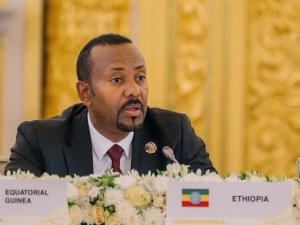
' + getPhotos(pictures, true) + '
';
/*let navs = getNavs();
let lastNav = navs[navs.length - 1];
if (pictures.length > 10) {
getNav().classList.add("multiline");
}
for (let i = navs.length; i < pictures.length; i++) {
let newNav = lastNav.cloneNode(true);
lastNav.parentNode.insertBefore(newNav, lastNav.nextSibling);
lastNav = newNav;
}*/
let titleText = document.getElementById("ena_title_text")
if (titleText) {
setTimeout(titleText.scrollIntoView(), 100);
}
}
function getPhotos(pictures, pictureOnly) {
let result = "";
pictures.forEach(picture => {
result += '';
result += '
';
})
return result;
}
function getPhotoImage(picture, pictureOnly) {
let result = '';
if (!pictureOnly) {
result += '';
}
result += '';
result += getPhotoImage(picture, pictureOnly);
result += '
';
if (!pictureOnly) {
result += '';
result += getPhotoText(picture);
result += '
';
}
result += '';
result += '
';
if (!pictureOnly) {
result += '';
}
return result;
}
function getPhotoText(picture) {
let result = '';
result += '';
result += '';
result += '
';
result += '';
result += getPhotoTitle(picture);
result += '
';
result += '';
return result;
}
function getPhotoTitle(picture) {
let image = picture.getElementsByTagName("IMG")[0];
return image.alt;
}
function getPhotoLink(picture) {
let image = picture.getElementsByTagName("IMG")[0];
return image.src.replace("&download=true","");
}
let contents=Array.from(
fragmentElement.getElementsByClassName(
"ena_display_item_content"));
contents.forEach(item => {
item.innerHTML=item.innerHTML.replaceAll(" "," ")})
Array.from(fragmentElement.getElementsByClassName(
"ena_display_item_content")).forEach(item => {
if (item.innerHTML.length!=item.textContent.length) {
item.innerHTML=item.textContent;}});
if (checkModes(["headlines", "alertbar", "slider", "advertisement"])) {
if (checkModes(["headlines", "alertbar"])) {
moveTo(getItems().length > 1 ? 1 : 0);
} else {
moveTo(0);
}
if (checkModes(["slider"])) {
setTimeout(() => autoMove(), 1);
} else {
autoMove();
}
}
function checkModes(modes, prefix){
if (!prefix) prefix = "mode";
var display = fragmentElement.getElementsByClassName(
"ena_display")[0];
for (let i in modes) {
if (display.classList.contains(
"ena_display_" + prefix + "_" + modes[i])) {
return true;
}
}
return false;
}
function getAutoInterval(){
if (checkModes(["advertisement"])) {
return 10000;
}
else {
return 5000;
}
}
function getCarouselNavs(){
return fragmentElement.getElementsByClassName("ena_carousel_control_navs")[0]}
function getPort(){
return fragmentElement.getElementsByClassName("ena_display_port")[0]}
function getItems(){return Array.from(
getPort().getElementsByClassName("ena_display_item"))}
function getNav(){return document.getElementById("ena_display_control_nav")}
function getNavs() {
if (checkModes(["Photos"], "type")) {
return Array.from(
fragmentElement.getElementsByClassName("ena_display_item_picture"));
} else {
return Array.from(
fragmentElement.getElementsByClassName("ena_display_control_nav_item"));
}
}
function getPrev(){
return fragmentElement.getElementsByClassName(
"ena_display_control_arrow_prev")[0];
}
function getNext(){
return fragmentElement.getElementsByClassName(
"ena_display_control_arrow_next")[0];
}
/*function getArrows(){
return fragmentElement.getElementsByClassName(
"ena_display_control_arrows")[0];
}*/
function getCurrent(items){return items.indexOf(items.find(
item => item.classList.contains("ena_display_current")))}
function setCurrent(index, itemsArray){
let currents = [];
itemsArray.forEach((items, i) => {
currents[i] = getCurrent(items);
if (currents[i]>=0)items[currents[i]].classList.add("ena_display_visible");
items.forEach(
item => {
item.classList.remove("ena_display_a");
item.classList.remove("ena_display_b");
item.classList.remove("ena_display_c");
item.classList.remove("ena_display_current");
item.classList.remove("ena_display_backward");
item.classList.remove("ena_display_forward");
})});
/*setTimeout(()=>{*/
itemsArray.forEach((items, i) => {
if(index >= 0 && index < items.length) {
let current=currents[i];
items[index].classList.add("ena_display_current");
if (current<0 || index==current) {
/*if (index==0){
items[items.length-1].classList.add("ena_display_a");
} else {
items[index-1].classList.add("ena_display_a");
}*/
items[index].classList.add("ena_display_b");
/*if (index==items.length-1){
items[0].classList.add("ena_display_c");
} else {
items[index+1].classList.add("ena_display_c");
}*/
} else {
let direction="";
/*setTimeout(()=>{*/
if(isForward(index, current, items.length-1)){
items[index].classList.add("ena_display_c");
/*setTimeout(()=>{*/
items[current].classList.add("ena_display_b");
/*}, 1000);*/
direction="ena_display_forward";
} else {
items[index].classList.add("ena_display_a");
/*setTimeout(()=>{*/
items[current].classList.add("ena_display_b");
/*}, 1000);*/
direction="ena_display_backward";
}
setTimeout(function(){
items[current].classList.add(direction);
items[index].classList.add(direction);
items[current].classList.remove("ena_display_visible");
}, 100);
/*}, 2000);*/
}
}});
/*}, 2000);*/
/*getItems().filter(
item => item.classList.contains("ena_display_current")).forEach(
item => {if (getPort()) getPort().scrollLeft=item.offsetLeft});*/
}
function isForward(index, current, last){
if(index==0&¤t==last)return true;
if(index==last&¤t==0)return false;
return index>current;
}
function moveTo(index){setCurrent(index, [getItems(), getNavs()]);}
function prevIndex(){
var items = getItems();
var index = getCurrent(items) - 1;
if (index < 0) index = items.length - 1;
return index;
}
function nextIndex(){
var items = getItems();
var index = getCurrent(items) + 1;
if (index >= items.length) index = 0;
return index;
}
getNavs().forEach((item, index) => item.onclick = function(){
moveTo(index)});
getPrev().onclick = function(){moveTo(prevIndex())};
getNext().onclick = function(){moveTo(nextIndex())};
fragmentElement.onmouseenter = function(){
autoStop();
//getArrows().style.display="inline-flex";
}
fragmentElement.onmouseleave = function(){
autoMove();
//getArrows().style.display="none";
}
function autoMove(){
autoStop();
if (fragmentElement.getElementsByClassName("portlet-topper").length==0
&& !fragmentElement.ena_timer_display){
fragmentElement.ena_timer_display=setInterval(
() => {
fragmentChild = fragmentElement.children[0];
let visibility = window.getComputedStyle(fragmentChild, null).visibility;
if (visibility != "hidden") {
moveTo(nextIndex());
}
}, getAutoInterval());
}
}
function autoStop(){
clearInterval(fragmentElement.ena_timer_display);
fragmentElement.ena_timer_display = null;
};}());