ENA - ENA English
Live:
' + getPhotos(pictures, true) + '
';
/*let navs = getNavs();
let lastNav = navs[navs.length - 1];
if (pictures.length > 10) {
getNav().classList.add("multiline");
}
for (let i = navs.length; i < pictures.length; i++) {
let newNav = lastNav.cloneNode(true);
lastNav.parentNode.insertBefore(newNav, lastNav.nextSibling);
lastNav = newNav;
}*/
let titleText = document.getElementById("ena_title_text")
if (titleText) {
setTimeout(titleText.scrollIntoView(), 100);
}
}
function getPhotos(pictures, pictureOnly) {
let result = "";
pictures.forEach(picture => {
result += '';
result += '
';
})
return result;
}
function getPhotoImage(picture, pictureOnly) {
let result = '';
if (!pictureOnly) {
result += '';
}
result += '';
result += getPhotoImage(picture, pictureOnly);
result += '
';
if (!pictureOnly) {
result += '';
result += getPhotoText(picture);
result += '
';
}
result += '';
result += '
';
if (!pictureOnly) {
result += '';
}
return result;
}
function getPhotoText(picture) {
let result = '';
result += '';
result += ' ';
result += '
';
result += '';
result += getPhotoTitle(picture);
result += '
';
result += '';
return result;
}
function getPhotoTitle(picture) {
let image = picture.getElementsByTagName("IMG")[0];
return image.alt;
}
function getPhotoLink(picture) {
let image = picture.getElementsByTagName("IMG")[0];
return image.src.replace("&download=true","");
}
let contents=Array.from(
fragmentElement.getElementsByClassName(
"ena_display_item_content"));
contents.forEach(item => {
item.innerHTML=item.innerHTML.replaceAll(" "," ")})
Array.from(fragmentElement.getElementsByClassName(
"ena_display_item_content")).forEach(item => {
if (item.innerHTML.length!=item.textContent.length) {
item.innerHTML=item.textContent;}});
if (checkModes(["headlines", "alertbar", "slider", "advertisement"])) {
if (checkModes(["headlines", "alertbar"])) {
moveTo(getItems().length > 1 ? 1 : 0);
} else {
moveTo(0);
}
if (checkModes(["slider"])) {
setTimeout(() => autoMove(), 1);
} else {
autoMove();
}
}
function checkModes(modes, prefix){
if (!prefix) prefix = "mode";
var display = fragmentElement.getElementsByClassName(
"ena_display")[0];
for (let i in modes) {
if (display.classList.contains(
"ena_display_" + prefix + "_" + modes[i])) {
return true;
}
}
return false;
}
function getAutoInterval(){
if (checkModes(["advertisement"])) {
return 10000;
}
else {
return 5000;
}
}
function getCarouselNavs(){
return fragmentElement.getElementsByClassName("ena_carousel_control_navs")[0]}
function getPort(){
return fragmentElement.getElementsByClassName("ena_display_port")[0]}
function getItems(){return Array.from(
getPort().getElementsByClassName("ena_display_item"))}
function getNav(){return document.getElementById("ena_display_control_nav")}
function getNavs() {
if (checkModes(["Photos"], "type")) {
return Array.from(
fragmentElement.getElementsByClassName("ena_display_item_picture"));
} else {
return Array.from(
fragmentElement.getElementsByClassName("ena_display_control_nav_item"));
}
}
function getPrev(){
return fragmentElement.getElementsByClassName(
"ena_display_control_arrow_prev")[0];
}
function getNext(){
return fragmentElement.getElementsByClassName(
"ena_display_control_arrow_next")[0];
}
/*function getArrows(){
return fragmentElement.getElementsByClassName(
"ena_display_control_arrows")[0];
}*/
function getCurrent(items){return items.indexOf(items.find(
item => item.classList.contains("ena_display_current")))}
function setCurrent(index, itemsArray){
let currents = [];
itemsArray.forEach((items, i) => {
currents[i] = getCurrent(items);
if (currents[i]>=0)items[currents[i]].classList.add("ena_display_visible");
items.forEach(
item => {
item.classList.remove("ena_display_a");
item.classList.remove("ena_display_b");
item.classList.remove("ena_display_c");
item.classList.remove("ena_display_current");
item.classList.remove("ena_display_backward");
item.classList.remove("ena_display_forward");
})});
/*setTimeout(()=>{*/
itemsArray.forEach((items, i) => {
if(index >= 0 && index < items.length) {
let current=currents[i];
items[index].classList.add("ena_display_current");
if (current<0 || index==current) {
/*if (index==0){
items[items.length-1].classList.add("ena_display_a");
} else {
items[index-1].classList.add("ena_display_a");
}*/
items[index].classList.add("ena_display_b");
/*if (index==items.length-1){
items[0].classList.add("ena_display_c");
} else {
items[index+1].classList.add("ena_display_c");
}*/
} else {
let direction="";
/*setTimeout(()=>{*/
if(isForward(index, current, items.length-1)){
items[index].classList.add("ena_display_c");
/*setTimeout(()=>{*/
items[current].classList.add("ena_display_b");
/*}, 1000);*/
direction="ena_display_forward";
} else {
items[index].classList.add("ena_display_a");
/*setTimeout(()=>{*/
items[current].classList.add("ena_display_b");
/*}, 1000);*/
direction="ena_display_backward";
}
setTimeout(function(){
items[current].classList.add(direction);
items[index].classList.add(direction);
items[current].classList.remove("ena_display_visible");
}, 100);
/*}, 2000);*/
}
}});
/*}, 2000);*/
/*getItems().filter(
item => item.classList.contains("ena_display_current")).forEach(
item => {if (getPort()) getPort().scrollLeft=item.offsetLeft});*/
}
function isForward(index, current, last){
if(index==0&¤t==last)return true;
if(index==last&¤t==0)return false;
return index>current;
}
function moveTo(index){setCurrent(index, [getItems(), getNavs()]);}
function prevIndex(){
var items = getItems();
var index = getCurrent(items) - 1;
if (index < 0) index = items.length - 1;
return index;
}
function nextIndex(){
var items = getItems();
var index = getCurrent(items) + 1;
if (index >= items.length) index = 0;
return index;
}
getNavs().forEach((item, index) => item.onclick = function(){
moveTo(index)});
getPrev().onclick = function(){moveTo(prevIndex())};
getNext().onclick = function(){moveTo(nextIndex())};
fragmentElement.onmouseenter = function(){
autoStop();
//getArrows().style.display="inline-flex";
}
fragmentElement.onmouseleave = function(){
autoMove();
//getArrows().style.display="none";
}
function autoMove(){
autoStop();
if (fragmentElement.getElementsByClassName("portlet-topper").length==0
&& !fragmentElement.ena_timer_display){
fragmentElement.ena_timer_display=setInterval(
() => {
fragmentChild = fragmentElement.children[0];
let visibility = window.getComputedStyle(fragmentChild, null).visibility;
if (visibility != "hidden") {
moveTo(nextIndex());
}
}, getAutoInterval());
}
}
function autoStop(){
clearInterval(fragmentElement.ena_timer_display);
fragmentElement.ena_timer_display = null;
};}());


Headlines
Sudanese Analyst Says PM Abiy’s Sudan Initiative Wins Considerable Support from Public, Parties
Nov 28, 2026 1470
Addis Ababa, November 28, 2026 (ENA)— The Sudanese people have widely welcomed Prime Minister Abiy Ahmed’s initiative to host an inclusive national dialogue among Sudanese parties, Sara Al-Saeed, a Sudanese researcher and analyst at Newcastle University told ENA. “The Sudanese people have widely welcomed the Prime Minister’s initiative. If you look at social media, you will find Sudanese expressing their support for Dr. Abiy Ahmed’s initiative. The people want peace,” she said. According to the Sudanese researcher and analyst specializing in international relations and the Horn of Africa at Newcastle University, U.K, the initiative has received broad support from the Sudanese public and political forces. Al-Saeed noted that the initiative represents one of the important efforts to end the war in Sudan by bringing the various Sudanese parties together for dialogue and negotiations and contribute to a lasting solution to the country’s crisis. She added that public and political reactions have demonstrated considerable support for Ethiopia’s initiative. Similarly, the Civil Democratic Alliance of Revolutionary Forces (Sumoud) and the Sudan Founding Alliance (Tasis) have both welcomed the initiative and expressed their readiness to participate in the proposed dialogue. The Ethiopian Prime Minister Abiy Ahmed had invited Sudanese military, political and civilian parties to participate in an inclusive national dialogue to be hosted and facilitated by Ethiopia with the aim of ending the war and achieving lasting peace. He underscored the deep historical ties between Ethiopia and Sudan, describing Sudan as a brotherly country and urging its various parties to place national interests above political and military considerations in order to restore the country’s unity and stability. The analyst and researcher Al-Saeed said Ethiopia’s move reflects Addis Ababa’s commitment to supporting stability in Sudan and safeguarding its unity and territorial integrity. She stated that Ethiopia has consistently demonstrated concern for preserving Sudan’s social fabric and establishing the foundations for peace, describing the proposed dialogue as an opportunity to advance the political process and bring the conflict to an end. The analyst argued that the continuation of the conflict is also linked to questions of accountability for violations committed in Sudan as well as responsibility for the outbreak of the war and its consequences for the Sudanese state. Al-Saeed explained that ending the war would open the way for fundamental questions about those responsible for triggering the conflict and the violations committed during the war. The analyst stressed the importance of responding positively to Ethiopia’s initiative, emphasizing that it offers an opportunity for Sudanese parties to pursue dialogue instead of continued military confrontation. She concluded by describing the initiative as also a call welcomed by all Sudanese parties, reaffirming the importance of Ethiopia’s efforts to support Sudan’s unity, territorial integrity and peace.

Russian Delegation Explores Ethiopia’s Nuclear Energy Vision for Peaceful Development
Nov 28, 2026 2062
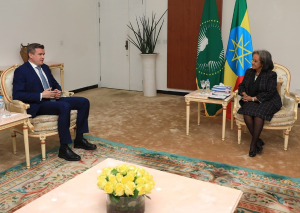
Addis Ababa, November 28, 2026 (ENA) – A Russian delegation has explored Ethiopia’s growing ambitions in nuclear science and technology, including the country's vision for harnessing nuclear energy for peaceful development. The delegation, led by Russian Chargé d’Affaires Mikhail Borovkov, visited the Ethiopian Nuclear Energy Commission (ENEC) Museum, where members viewed exhibitions documenting Ethiopia’s progress in nuclear science and technology. The exhibits highlighted the country's journey in developing nuclear science capabilities and its long-term aspirations to harness nuclear energy for peaceful and development-oriented purposes. The visit provided the Russian delegation with an opportunity to gain insight into Ethiopia's nuclear energy ambitions and its efforts to advance scientific and technological capabilities as part of its broader development agenda. Ethiopia has been pursuing the development of nuclear energy for peaceful applications, viewing nuclear science and technology as potential contributors to its long-term development ambitions, it was learned.
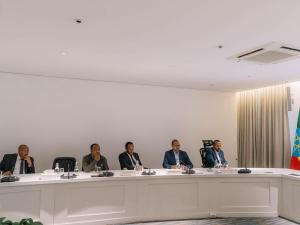
PM Abiy Reviews Tigray Region Recovery Progress, Reaffirms Priorities with Caretaker Administration
Nov 28, 2026 2074
Addis Ababa, November 28, 2026 (ENA)— Prime Minister Abiy Ahmed has held a follow-up review meeting with the Tigray Region Caretaker Administration to assess progress in restoring regional governance, addressing outstanding challenges and advancing efforts to stabilize the region. In a social media post following the meeting, the Prime Minister said discussions focused on evaluating the administration’s progress, identifying issues requiring further attention and reaffirming the shared priorities guiding its work. The meeting comes as the six-month caretaker administration continues efforts to restore institutional capacity, revive public services and create conditions for lasting peace and stability in the region. Established by the Federal Government on October 16, 2026, following a decision by the House of Federation and a subsequent Council of Ministers regulation, the administration was mandated to restore peace and security, rebuild government institutions and damaged infrastructure, resume essential public services, facilitate the return of internally displaced people and prepare the region for free and transparent elections. Since assuming office, the administration has made progress in re-establishing regional governance structures, extending administrative arrangements from the regional level down to the kebele level. According to a November 18 briefing by the administration’s Communication Office, elected coordinators had resumed their regular duties, public consultations had been conducted across the region, and education services had resumed in all areas. The administration has also facilitated the return of government employees to their workplaces, resumed salary payments and undertaken efforts to reactivate public institutions and improve service delivery. These steps form part of broader efforts to rebuild administrative capacity, restore public confidence and accelerate the region’s institutional and social recovery. The caretaker administration is expected to sustain the recovery efforts while addressing remaining political and security challenges and laying the groundwork for elections within its six-month mandate.
A Strong Ethiopia, A Stable Horn: The Strategic Vision for National Transformation
Nov 28, 2026 3229
By Staff Writer November 28, 2026 (ENA) Ethiopia’s pursuit of national transformation is increasingly shaped by a fundamental strategic question: how can a country with enormous human, economic and geopolitical potential translate its national aspirations into lasting stability, prosperity and regional influence? Prime Minister Abiy Ahmed’s recent address to the House of Peoples’ Representatives offers a broad perspective on this question, bringing together political unity, regional diplomacy, economic development, national sovereignty and institutional capacity as interconnected pillars of Ethiopia’s long-term national agenda. At the heart of the vision is a recognition that Ethiopia’s future cannot be secured through economic growth alone, military strength in isolation or diplomatic engagement detached from domestic realities. Rather, sustainable national progress requires a comprehensive approach in which political consensus strengthens institutions, economic development reinforces sovereignty, and regional peace creates opportunities for shared prosperity. The Prime Minister’s remarks on Sudan, Eritrea, the Ethiopian National Dialogue, the Medemer Grand Strategy and national defense therefore reflect more than separate government priorities. Together, they point to a broader ambition: building an internally cohesive, economically capable and sovereign Ethiopia that can play a constructive role in shaping the future of the Horn of Africa. Regional Peace: Ethiopia’s Security Begins Beyond Its Borders “Sudan’s peace is our peace.” Prime Minister Abiy’s statement captures a central principle underpinning Ethiopia’s approach to regional diplomacy: the security and stability of neighboring countries are inseparable from Ethiopia’s own long-term interests. The relationship between Ethiopia and Sudan extends beyond geographical proximity. Historical, social, economic and cultural connections have made the stability of one country an important consideration for the other. Sudan’s prolonged conflict consequently carries implications extending across borders, affecting trade, humanitarian conditions, population movements and the broader security environment of the Horn of Africa. Against this backdrop, the Prime Minister reaffirmed Ethiopia’s readiness to contribute diplomatic, financial and institutional resources to Sudan’s peace and recovery. He called on the warring parties to embrace dialogue and give Ethiopia’s proposed peace initiative an opportunity. The proposed initiative seeks to bring together Sudanese military, political and civilian stakeholders through an inclusive, Sudanese-led national dialogue facilitated by Ethiopia. Its underlying premise is that sustainable peace cannot be imposed from outside; it must emerge from political ownership, meaningful participation and an agreement among the country's principal stakeholders. This approach also reflects a broader strategic understanding: instability in the Horn of Africa cannot be addressed through isolated national responses. The region's interconnected security challenges require sustained diplomatic engagement, collective responsibility and practical cooperation among neighboring countries. Ethiopia’s relations with Eritrea present another important dimension of this regional vision. The Prime Minister reiterated Ethiopia’s preference for peaceful coexistence and mutually beneficial development while expressing concern over the deterioration of bilateral relations. Recalling the efforts made following the rapprochement between the two countries, he highlighted Ethiopia’s initiatives to facilitate Eritrea’s regional diplomatic engagement, offer electricity supplies at domestic Ethiopian rates and pursue joint infrastructure development, including roads and ports. These proposals reflected an understanding that geographical proximity and complementary economic resources could serve as foundations for shared prosperity rather than confrontation. The failure to translate these opportunities into sustained cooperation, as described by the Prime Minister, illustrates the challenges confronting relations between the two neighboring countries. It also underscores the importance of rebuilding confidence, maintaining diplomatic channels and addressing differences through peaceful engagement. For Ethiopia, constructive relations with Eritrea are particularly significant within the wider context of Horn of Africa stability, regional connectivity and economic integration. The broader strategic lesson is that lasting regional influence is built not simply on geographical position, population size or military capabilities, but also on the ability to establish trust, develop mutually beneficial partnerships and accommodate the legitimate interests of neighboring states. Sovereignty and Security: Strength Through Peace and Preparedness Ethiopia’s commitment to regional peace, as outlined in the parliamentary address, was accompanied by an equally firm emphasis on protecting national sovereignty and territorial integrity. The Prime Minister underscored that Ethiopia has no intention of invading other countries but remains determined to defend itself against external aggression. His remarks also recalled Ethiopia’s historical contributions to international and regional peacekeeping, including missions in Rwanda, Somalia, the Democratic Republic of Congo, Liberia and South Sudan. He acknowledged the sacrifices made by Ethiopian forces in supporting peace and stability beyond the country's borders. These contributions have helped establish Ethiopia as an important participant in African peace and security efforts. They also demonstrate the country's longstanding recognition that regional stability is a shared responsibility. At the same time, the Prime Minister’s invocation of the Battle of Adwa placed national sovereignty within Ethiopia’s historical experience. The victory of 1896 remains a powerful symbol of independence, resistance to colonial domination and the determination of Ethiopians to preserve their national identity. However, sovereignty in today's international environment requires more than historical pride and military preparedness. It depends on a combination of effective diplomacy, economic resilience, technological capabilities, strong institutions and credible defense systems. The Horn of Africa's evolving geopolitical environment, characterized by security challenges, competition over strategic infrastructure and growing interest in maritime connectivity, makes these capabilities particularly important. A capable defense system and a commitment to peaceful coexistence are not contradictory. Properly developed, they reinforce one another by protecting national interests while creating conditions for diplomacy and cooperation. Ethiopia’s National Dialogue in Building Unity Through Reconciliation While regional stability and national sovereignty define important aspects of Ethiopia’s external environment, the durability of its national transformation ultimately depends on its internal political foundations. This makes the Ethiopian National Dialogue one of the most consequential initiatives highlighted in the Prime Minister’s address. Ethiopia's political and social challenges cannot be resolved through administrative measures or security responses alone. They require a political environment in which different communities, political groups and social constituencies can express their grievances, aspirations and competing visions of the country's future. The National Dialogue seeks to provide such a platform. According to the Prime Minister, hundreds of thousands of Ethiopians, both inside the country and abroad, have participated in discussions throughout the four-year process. His reference to approximately 4,000 participants conducting discussions in one hall over 46 days illustrates the scale and complexity of the undertaking. The importance of this process, however, extends beyond the number of participants or the duration of discussions. Its real significance lies in its potential to transform political differences into constructive national engagement. Ethiopia's diversity is an essential part of its national identity. Building lasting unity does not mean eliminating differences or requiring uniform political perspectives. It means establishing credible institutions and mechanisms through which differences can be managed peacefully, constitutional rights protected and common national interests advanced. In this regard, the Prime Minister's reference to Article 39 of the Constitution is particularly significant. The constitutional recognition of the rights of nations, nationalities and peoples to use their languages, administer themselves and protect their rights remains a fundamental component of Ethiopia's federal framework. The broader challenge is to strengthen these constitutional guarantees while promoting national cohesion, equal citizenship, effective federal institutions and confidence in the country's constitutional order. These objectives should be mutually reinforcing. National unity becomes more sustainable when citizens feel represented, their rights are respected and public institutions respond equitably to their needs. Ultimately, the credibility of the National Dialogue will be determined by what follows the discussions. Its recommendations must translate into meaningful political, legislative and institutional reforms. Citizens must see that their participation contributes to addressing the structural challenges facing the country. The process therefore presents an opportunity to build a more inclusive political settlement and establish a stronger foundation for Ethiopia's long-term stability. Medemer: A Long-Term Framework for National Transformation The political foundations of national unity are closely connected to Ethiopia's broader economic and institutional ambitions. This is where the Medemer Grand Strategy assumes particular significance. At its core, Medemer advances the principles of cooperation, complementarity and the pooling of individual and collective capabilities. It seeks to translate Ethiopia's human, natural, geographical and economic resources into productive national strength. The underlying proposition is straightforward but strategically important: resources alone do not generate prosperity. Their value depends on the institutions, knowledge, technology, infrastructure and productive capabilities available to mobilize them. For a country with Ethiopia's population, agricultural potential, strategic location and expanding economic ambitions, this requires a sustained commitment to economic modernization, industrial development, infrastructure expansion, technological advancement and human capital investment. The Medemer framework also places considerable importance on institutional development and generational continuity. Ethiopia's transformation cannot depend exclusively on the priorities of individual political administrations. It requires long-term national frameworks capable of preserving achievements, correcting shortcomings and sustaining development beyond political transitions. This is particularly important in a country where the scale of development challenges demands consistency in economic planning, investment policy, institutional reform and public administration. The strategic value of a long-term national development framework lies in its ability to establish continuity while allowing policies to evolve in response to changing economic and social realities. For Medemer to achieve its broader ambitions, its principles must be reflected in effective institutions, measurable development outcomes, productive investment and tangible improvements in citizens' livelihoods. Its ultimate test is whether it can help transform national potential into sustainable and broadly shared prosperity. Economic Strength for the Foundation of National Sovereignty An important thread running through the Prime Minister's address is the relationship between economic development and national security. His observation that defense cannot be built independently of economic capacity highlights a fundamental reality of modern statecraft: a country's ability to safeguard its sovereignty is closely linked to the strength of its economy. Contemporary defense systems require far more than military personnel and conventional equipment. They depend on technological innovation, industrial capacity, skilled professionals, effective logistics, research and development, and sustainable financial resources. A strong economy enables a country to invest in these capabilities without undermining other national development priorities. This relationship is particularly important for Ethiopia as it seeks to expand its productive base, modernize its institutions and strengthen its strategic autonomy. Economic transformation, therefore, is not simply about increasing national output or attracting investment. It is also about building the capabilities that enable the country to make independent strategic decisions, withstand external pressures and protect its long-term national interests. The Prime Minister's references to air capabilities, ground forces and technological advancement reflect the importance attached to developing a comprehensive national defense system. However, sustainable defense modernization must be accompanied by professional standards, institutional accountability and continued attention to the welfare of the armed forces. The broader lesson is that national sovereignty is strongest when supported by a productive economy, capable institutions, technological advancement and responsible diplomacy. The Horn of Africa: From Geopolitical Competition to Shared Prosperity Ethiopia's national transformation agenda cannot be fully understood without considering its position in the Horn of Africa. As one of the region's largest countries by population and a major diplomatic and economic center, Ethiopia occupies a strategic position in shaping regional political and economic developments. Yet the Horn of Africa remains affected by protracted conflicts, political instability, limited economic integration, climate-related pressures, humanitarian emergencies and competition over strategic infrastructure and maritime connectivity. These challenges also present opportunities for a different regional future. Improved relations among neighboring countries could unlock significant economic potential through cross-border trade, electricity exchanges, transport infrastructure, logistics networks and coordinated development initiatives. For Ethiopia, stronger regional connectivity would expand access to markets, improve the movement of goods and services and create opportunities for investment and industrial development. Similarly, regional energy cooperation could allow countries to benefit from complementary resources, while coordinated infrastructure development could reduce economic fragmentation and strengthen commercial relations. The pursuit of these opportunities requires a regional environment founded on trust, predictable relations, respect for sovereignty and peaceful resolution of disagreements. Ethiopia's aspirations for greater regional engagement will therefore be most sustainable when its national development objectives are advanced alongside the legitimate interests of neighboring countries. Regional leadership in the contemporary international environment is not measured solely by national capabilities. It is demonstrated through the ability to generate shared benefits, facilitate dialogue and contribute to solutions to common challenges. In this sense, Ethiopia's national transformation and the future of the Horn of Africa are closely connected. Turning National Vision into Tangible Results Perhaps the most important analytical lesson from the Prime Minister's address is the interconnectedness of the priorities he outlined. Political dialogue, constitutional inclusion, regional diplomacy, economic transformation and defense modernization are not isolated policy areas. They constitute complementary dimensions of a broader national development and state-building project. Political consensus provides the foundation for stability. Effective institutions strengthen governance and public confidence. Economic development mobilizes human and financial resources. Defense capabilities safeguard sovereignty, while regional peace creates opportunities for trade, investment and connectivity. However, the success of this vision will ultimately depend not on the scale of its ambitions but on the effectiveness of its implementation. Three priorities will be particularly decisive. First, political inclusion must produce meaningful institutional outcomes. The National Dialogue needs to translate participation into credible reforms, strengthen constitutional legitimacy and build confidence across different political and social constituencies. Its success should be measured by its contribution to addressing underlying differences and strengthening national institutions. Second, regional diplomacy must prioritize trust and sustained cooperation. Ethiopia's engagement with Sudan and its pursuit of constructive relations with Eritrea require consistent diplomatic efforts, confidence-building measures and respect for the legitimate interests of all parties. Sustainable regional influence is achieved through partnerships and practical cooperation rather than confrontation. Third, economic transformation must improve the everyday lives of citizens. Development must generate employment, increase productivity, strengthen livelihoods, improve public services and expand opportunities for younger generations. National economic progress becomes a durable foundation for stability when its benefits are reflected in the lives of ordinary people. These priorities are essential to ensuring that the country's broader national vision translates into measurable and lasting achievements. In a nutshell, Prime Minister Abiy Ahmed's parliamentary address brings together some of the most consequential questions shaping Ethiopia's future: how to consolidate national unity, safeguard sovereignty, transform economic potential into prosperity, contribute to peace in Sudan, establish constructive relations with Eritrea and build institutions capable of sustaining progress across generations. The vision articulated in the address rests on a fundamental understanding that these objectives are inseparable. A politically cohesive Ethiopia is better positioned to pursue economic transformation. A stronger economy provides the resources and capabilities necessary to protect sovereignty. Effective institutions sustain development and strengthen public confidence. Constructive relations with neighboring countries create opportunities for regional peace, trade and shared prosperity. The challenge is to advance these priorities simultaneously while ensuring that national ambitions are matched by inclusive governance, institutional accountability and tangible results. Ethiopia's historical experience has demonstrated the importance of independence, resilience and collective responsibility. Its contemporary ambitions require these strengths to be complemented by modern institutions, technological innovation, economic competitiveness, political inclusion and constructive international partnerships. Ultimately, the measure of Ethiopia's national transformation will not be determined simply by the resources it possesses, the strategies it announces or the influence it seeks. It will be determined by the strength of the institutions it builds, the trust it establishes among its citizens, the prosperity it delivers and the contribution it makes to a more peaceful and economically integrated Horn of Africa. The strategic ambition is clear. It is an Ethiopia that is strong at home, sovereign in its decisions, prosperous in its economy and constructive in its engagement with the world.
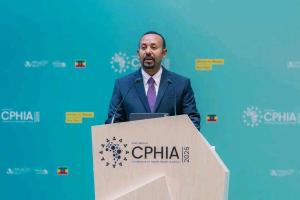
Addis Ababa Gears Up to Welcome Over 100,000 Global Participants for COP32, Says Mayor Adanech
Nov 28, 2026 4864
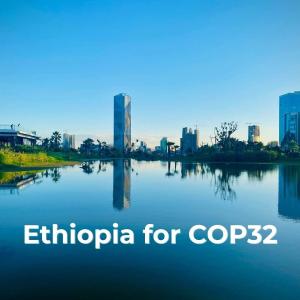
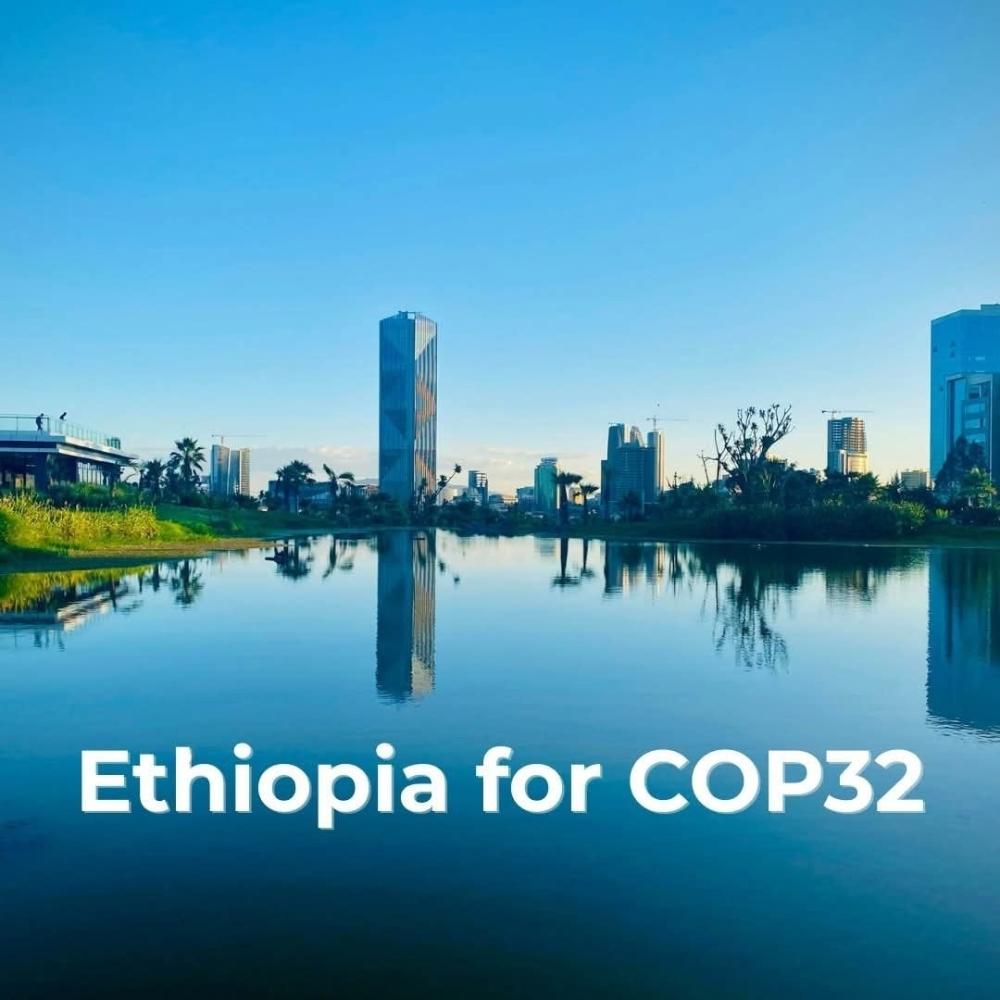
Addis Ababa, November 28, 2026 (ENA)— Addis Ababa is intensifying preparations to welcome more than 100,000 participants for the 32nd UN Climate Change Conference (COP32) in 2027, building on its successful hosting of a major international public health conference that demonstrated the capital's capacity to accommodate large-scale international gatherings. Mayor of the capital, Adanech Abiebie announced the preparations in a message shared on her social media pages, describing the successful hosting of the 2026 International Conference on Public Health in Africa (CPHIA). The Conference attracted more than 30,000 participants, as a demonstration of the city's growing ability to organize major international events with confidence and professionalism, it was pointed out. She noted that over the six days of the conference, participants experienced not only the conference facilities but also different parts of the capital, exploring its streets, hospitality, and vibrant urban atmosphere during the day and into the evening. The positive feedback from visitors, she said, underscored Addis Ababa's capacity to deliver major international gatherings while providing a welcoming environment and quality services. The Mayor credited the achievement to the leadership and coordination of the Africa Centres for Disease Control and Prevention (Africa CDC) and the Ministry of Health, alongside the dedicated contributions of institutions and professionals responsible for transportation, accommodation, utilities, security, tourism, sanitation, hospitality, and other essential services. Expressing appreciation to all stakeholders, Adanech said the experience had provided a valuable foundation for preparing the capital to host an even larger global gathering. Building on this success, Addis Ababa is now gearing up to welcome more than 100,000 participants for COP32, with plans to further enhance its capacity, service delivery, and organizational standards. The upcoming conference is a major opportunity to showcase Ethiopia's hospitality, institutional capacity, creativity, and development potential to the world, she revealed. Adanech urged all stakeholders to intensify their efforts, complete preparations on schedule, and ensure that every aspect of the event meets the highest standards. The Mayor stressed that COP32 should go beyond hosting an international conference and become a platform for elevating Ethiopia's global profile while creating a lasting legacy for Addis Ababa and the country. "Let us welcome the world to our capital and show what Ethiopia can achieve," she said. Ethiopia is scheduled to host COP32 in Addis Ababa in November 2027, bringing together world leaders, climate negotiators, policymakers, scientists, investors, and development partners to advance discussions on global climate action.
' + getPhotos(pictures, true) + '
';
/*let navs = getNavs();
let lastNav = navs[navs.length - 1];
if (pictures.length > 10) {
getNav().classList.add("multiline");
}
for (let i = navs.length; i < pictures.length; i++) {
let newNav = lastNav.cloneNode(true);
lastNav.parentNode.insertBefore(newNav, lastNav.nextSibling);
lastNav = newNav;
}*/
let titleText = document.getElementById("ena_title_text")
if (titleText) {
setTimeout(titleText.scrollIntoView(), 100);
}
}
function getPhotos(pictures, pictureOnly) {
let result = "";
pictures.forEach(picture => {
result += '';
result += '
';
})
return result;
}
function getPhotoImage(picture, pictureOnly) {
let result = '';
if (!pictureOnly) {
result += '';
}
result += '';
result += getPhotoImage(picture, pictureOnly);
result += '
';
if (!pictureOnly) {
result += '';
result += getPhotoText(picture);
result += '
';
}
result += '';
result += '
';
if (!pictureOnly) {
result += '';
}
return result;
}
function getPhotoText(picture) {
let result = '';
result += '';
result += '';
result += '
';
result += '';
result += getPhotoTitle(picture);
result += '
';
result += '';
return result;
}
function getPhotoTitle(picture) {
let image = picture.getElementsByTagName("IMG")[0];
return image.alt;
}
function getPhotoLink(picture) {
let image = picture.getElementsByTagName("IMG")[0];
return image.src.replace("&download=true","");
}
let contents=Array.from(
fragmentElement.getElementsByClassName(
"ena_display_item_content"));
contents.forEach(item => {
item.innerHTML=item.innerHTML.replaceAll(" "," ")})
Array.from(fragmentElement.getElementsByClassName(
"ena_display_item_content")).forEach(item => {
if (item.innerHTML.length!=item.textContent.length) {
item.innerHTML=item.textContent;}});
if (checkModes(["headlines", "alertbar", "slider", "advertisement"])) {
if (checkModes(["headlines", "alertbar"])) {
moveTo(getItems().length > 1 ? 1 : 0);
} else {
moveTo(0);
}
if (checkModes(["slider"])) {
setTimeout(() => autoMove(), 1);
} else {
autoMove();
}
}
function checkModes(modes, prefix){
if (!prefix) prefix = "mode";
var display = fragmentElement.getElementsByClassName(
"ena_display")[0];
for (let i in modes) {
if (display.classList.contains(
"ena_display_" + prefix + "_" + modes[i])) {
return true;
}
}
return false;
}
function getAutoInterval(){
if (checkModes(["advertisement"])) {
return 10000;
}
else {
return 5000;
}
}
function getCarouselNavs(){
return fragmentElement.getElementsByClassName("ena_carousel_control_navs")[0]}
function getPort(){
return fragmentElement.getElementsByClassName("ena_display_port")[0]}
function getItems(){return Array.from(
getPort().getElementsByClassName("ena_display_item"))}
function getNav(){return document.getElementById("ena_display_control_nav")}
function getNavs() {
if (checkModes(["Photos"], "type")) {
return Array.from(
fragmentElement.getElementsByClassName("ena_display_item_picture"));
} else {
return Array.from(
fragmentElement.getElementsByClassName("ena_display_control_nav_item"));
}
}
function getPrev(){
return fragmentElement.getElementsByClassName(
"ena_display_control_arrow_prev")[0];
}
function getNext(){
return fragmentElement.getElementsByClassName(
"ena_display_control_arrow_next")[0];
}
/*function getArrows(){
return fragmentElement.getElementsByClassName(
"ena_display_control_arrows")[0];
}*/
function getCurrent(items){return items.indexOf(items.find(
item => item.classList.contains("ena_display_current")))}
function setCurrent(index, itemsArray){
let currents = [];
itemsArray.forEach((items, i) => {
currents[i] = getCurrent(items);
if (currents[i]>=0)items[currents[i]].classList.add("ena_display_visible");
items.forEach(
item => {
item.classList.remove("ena_display_a");
item.classList.remove("ena_display_b");
item.classList.remove("ena_display_c");
item.classList.remove("ena_display_current");
item.classList.remove("ena_display_backward");
item.classList.remove("ena_display_forward");
})});
/*setTimeout(()=>{*/
itemsArray.forEach((items, i) => {
if(index >= 0 && index < items.length) {
let current=currents[i];
items[index].classList.add("ena_display_current");
if (current<0 || index==current) {
/*if (index==0){
items[items.length-1].classList.add("ena_display_a");
} else {
items[index-1].classList.add("ena_display_a");
}*/
items[index].classList.add("ena_display_b");
/*if (index==items.length-1){
items[0].classList.add("ena_display_c");
} else {
items[index+1].classList.add("ena_display_c");
}*/
} else {
let direction="";
/*setTimeout(()=>{*/
if(isForward(index, current, items.length-1)){
items[index].classList.add("ena_display_c");
/*setTimeout(()=>{*/
items[current].classList.add("ena_display_b");
/*}, 1000);*/
direction="ena_display_forward";
} else {
items[index].classList.add("ena_display_a");
/*setTimeout(()=>{*/
items[current].classList.add("ena_display_b");
/*}, 1000);*/
direction="ena_display_backward";
}
setTimeout(function(){
items[current].classList.add(direction);
items[index].classList.add(direction);
items[current].classList.remove("ena_display_visible");
}, 100);
/*}, 2000);*/
}
}});
/*}, 2000);*/
/*getItems().filter(
item => item.classList.contains("ena_display_current")).forEach(
item => {if (getPort()) getPort().scrollLeft=item.offsetLeft});*/
}
function isForward(index, current, last){
if(index==0&¤t==last)return true;
if(index==last&¤t==0)return false;
return index>current;
}
function moveTo(index){setCurrent(index, [getItems(), getNavs()]);}
function prevIndex(){
var items = getItems();
var index = getCurrent(items) - 1;
if (index < 0) index = items.length - 1;
return index;
}
function nextIndex(){
var items = getItems();
var index = getCurrent(items) + 1;
if (index >= items.length) index = 0;
return index;
}
getNavs().forEach((item, index) => item.onclick = function(){
moveTo(index)});
getPrev().onclick = function(){moveTo(prevIndex())};
getNext().onclick = function(){moveTo(nextIndex())};
fragmentElement.onmouseenter = function(){
autoStop();
//getArrows().style.display="inline-flex";
}
fragmentElement.onmouseleave = function(){
autoMove();
//getArrows().style.display="none";
}
function autoMove(){
autoStop();
if (fragmentElement.getElementsByClassName("portlet-topper").length==0
&& !fragmentElement.ena_timer_display){
fragmentElement.ena_timer_display=setInterval(
() => {
fragmentChild = fragmentElement.children[0];
let visibility = window.getComputedStyle(fragmentChild, null).visibility;
if (visibility != "hidden") {
moveTo(nextIndex());
}
}, getAutoInterval());
}
}
function autoStop(){
clearInterval(fragmentElement.ena_timer_display);
fragmentElement.ena_timer_display = null;
};}());
Featured
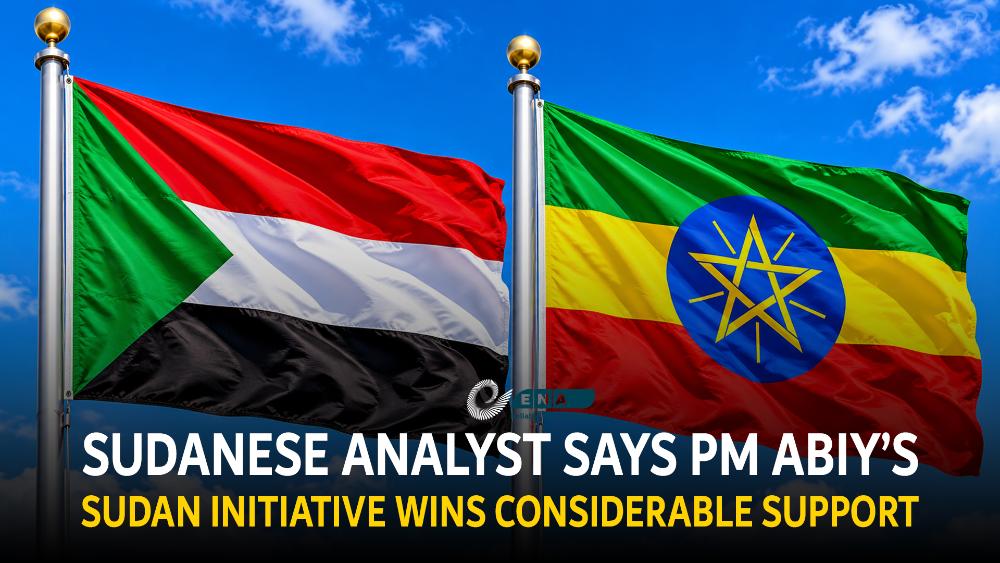
Sudanese Analyst Says PM Abiy’s Sudan Initiative Wins Considerable Support from Public, Parties
Nov 28, 2026 1470
Addis Ababa, November 28, 2026 (ENA)— The Sudanese people have widely welcomed Prime Minister Abiy Ahmed’s initiative to host an inclusive national dialogue among Sudanese parties, Sara Al-Saeed, a Sudanese researcher and analyst at Newcastle University told ENA. “The Sudanese people have widely welcomed the Prime Minister’s initiative. If you look at social media, you will find Sudanese expressing their support for Dr. Abiy Ahmed’s initiative. The people want peace,” she said. According to the Sudanese researcher and analyst specializing in international relations and the Horn of Africa at Newcastle University, U.K, the initiative has received broad support from the Sudanese public and political forces. Al-Saeed noted that the initiative represents one of the important efforts to end the war in Sudan by bringing the various Sudanese parties together for dialogue and negotiations and contribute to a lasting solution to the country’s crisis. She added that public and political reactions have demonstrated considerable support for Ethiopia’s initiative. Similarly, the Civil Democratic Alliance of Revolutionary Forces (Sumoud) and the Sudan Founding Alliance (Tasis) have both welcomed the initiative and expressed their readiness to participate in the proposed dialogue. The Ethiopian Prime Minister Abiy Ahmed had invited Sudanese military, political and civilian parties to participate in an inclusive national dialogue to be hosted and facilitated by Ethiopia with the aim of ending the war and achieving lasting peace. He underscored the deep historical ties between Ethiopia and Sudan, describing Sudan as a brotherly country and urging its various parties to place national interests above political and military considerations in order to restore the country’s unity and stability. The analyst and researcher Al-Saeed said Ethiopia’s move reflects Addis Ababa’s commitment to supporting stability in Sudan and safeguarding its unity and territorial integrity. She stated that Ethiopia has consistently demonstrated concern for preserving Sudan’s social fabric and establishing the foundations for peace, describing the proposed dialogue as an opportunity to advance the political process and bring the conflict to an end. The analyst argued that the continuation of the conflict is also linked to questions of accountability for violations committed in Sudan as well as responsibility for the outbreak of the war and its consequences for the Sudanese state. Al-Saeed explained that ending the war would open the way for fundamental questions about those responsible for triggering the conflict and the violations committed during the war. The analyst stressed the importance of responding positively to Ethiopia’s initiative, emphasizing that it offers an opportunity for Sudanese parties to pursue dialogue instead of continued military confrontation. She concluded by describing the initiative as also a call welcomed by all Sudanese parties, reaffirming the importance of Ethiopia’s efforts to support Sudan’s unity, territorial integrity and peace.
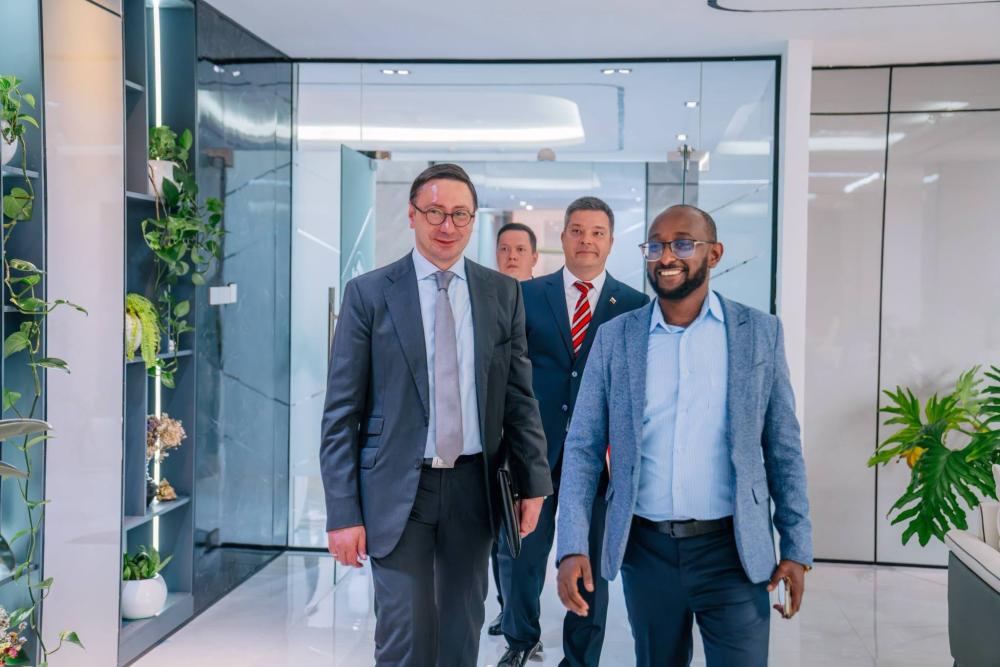
Russian Delegation Explores Ethiopia’s Nuclear Energy Vision for Peaceful Development
Nov 28, 2026 2062
Addis Ababa, November 28, 2026 (ENA) – A Russian delegation has explored Ethiopia’s growing ambitions in nuclear science and technology, including the country's vision for harnessing nuclear energy for peaceful development. The delegation, led by Russian Chargé d’Affaires Mikhail Borovkov, visited the Ethiopian Nuclear Energy Commission (ENEC) Museum, where members viewed exhibitions documenting Ethiopia’s progress in nuclear science and technology. The exhibits highlighted the country's journey in developing nuclear science capabilities and its long-term aspirations to harness nuclear energy for peaceful and development-oriented purposes. The visit provided the Russian delegation with an opportunity to gain insight into Ethiopia's nuclear energy ambitions and its efforts to advance scientific and technological capabilities as part of its broader development agenda. Ethiopia has been pursuing the development of nuclear energy for peaceful applications, viewing nuclear science and technology as potential contributors to its long-term development ambitions, it was learned.
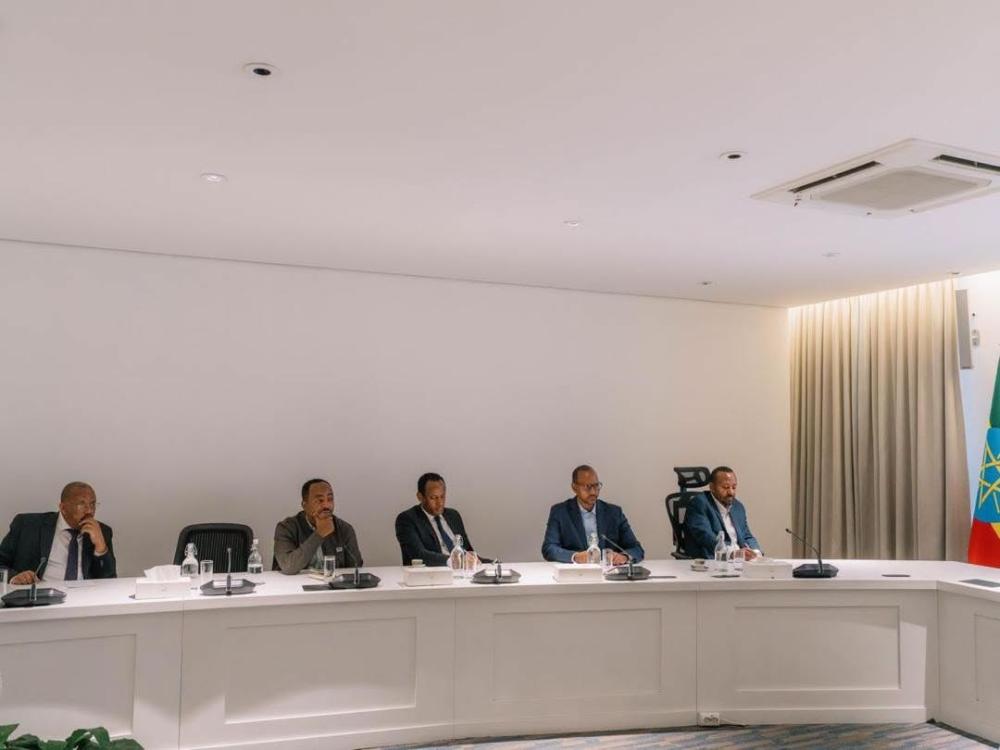
PM Abiy Reviews Tigray Region Recovery Progress, Reaffirms Priorities with Caretaker Administration
Nov 28, 2026 2074
Addis Ababa, November 28, 2026 (ENA)— Prime Minister Abiy Ahmed has held a follow-up review meeting with the Tigray Region Caretaker Administration to assess progress in restoring regional governance, addressing outstanding challenges and advancing efforts to stabilize the region. In a social media post following the meeting, the Prime Minister said discussions focused on evaluating the administration’s progress, identifying issues requiring further attention and reaffirming the shared priorities guiding its work. The meeting comes as the six-month caretaker administration continues efforts to restore institutional capacity, revive public services and create conditions for lasting peace and stability in the region. Established by the Federal Government on October 16, 2026, following a decision by the House of Federation and a subsequent Council of Ministers regulation, the administration was mandated to restore peace and security, rebuild government institutions and damaged infrastructure, resume essential public services, facilitate the return of internally displaced people and prepare the region for free and transparent elections. Since assuming office, the administration has made progress in re-establishing regional governance structures, extending administrative arrangements from the regional level down to the kebele level. According to a November 18 briefing by the administration’s Communication Office, elected coordinators had resumed their regular duties, public consultations had been conducted across the region, and education services had resumed in all areas. The administration has also facilitated the return of government employees to their workplaces, resumed salary payments and undertaken efforts to reactivate public institutions and improve service delivery. These steps form part of broader efforts to rebuild administrative capacity, restore public confidence and accelerate the region’s institutional and social recovery. The caretaker administration is expected to sustain the recovery efforts while addressing remaining political and security challenges and laying the groundwork for elections within its six-month mandate.
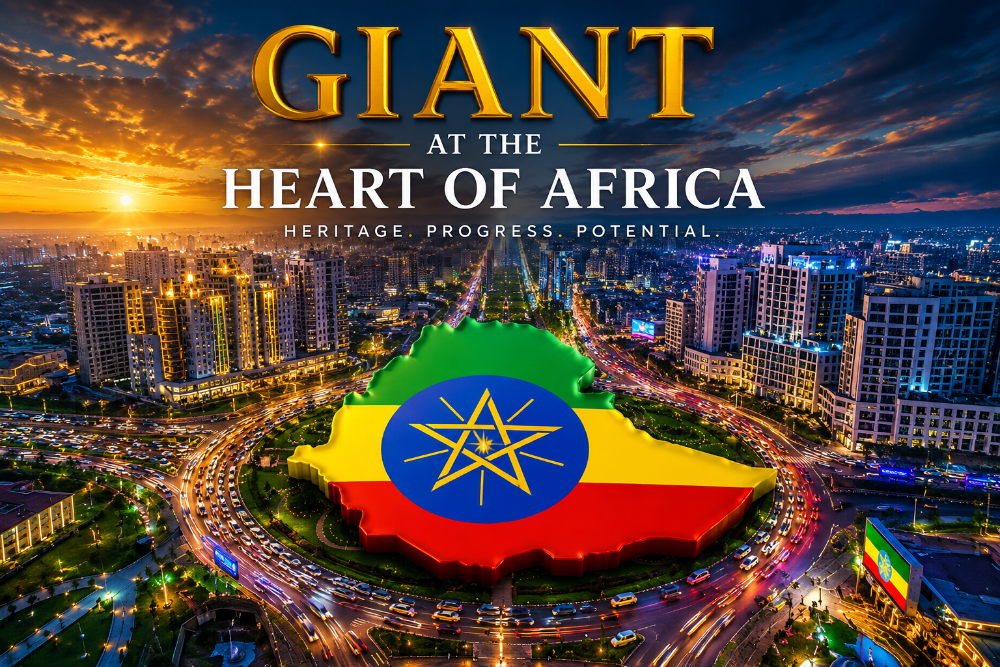
A Strong Ethiopia, A Stable Horn: The Strategic Vision for National Transformation
Nov 28, 2026 3229
By Staff Writer November 28, 2026 (ENA) Ethiopia’s pursuit of national transformation is increasingly shaped by a fundamental strategic question: how can a country with enormous human, economic and geopolitical potential translate its national aspirations into lasting stability, prosperity and regional influence? Prime Minister Abiy Ahmed’s recent address to the House of Peoples’ Representatives offers a broad perspective on this question, bringing together political unity, regional diplomacy, economic development, national sovereignty and institutional capacity as interconnected pillars of Ethiopia’s long-term national agenda. At the heart of the vision is a recognition that Ethiopia’s future cannot be secured through economic growth alone, military strength in isolation or diplomatic engagement detached from domestic realities. Rather, sustainable national progress requires a comprehensive approach in which political consensus strengthens institutions, economic development reinforces sovereignty, and regional peace creates opportunities for shared prosperity. The Prime Minister’s remarks on Sudan, Eritrea, the Ethiopian National Dialogue, the Medemer Grand Strategy and national defense therefore reflect more than separate government priorities. Together, they point to a broader ambition: building an internally cohesive, economically capable and sovereign Ethiopia that can play a constructive role in shaping the future of the Horn of Africa. Regional Peace: Ethiopia’s Security Begins Beyond Its Borders “Sudan’s peace is our peace.” Prime Minister Abiy’s statement captures a central principle underpinning Ethiopia’s approach to regional diplomacy: the security and stability of neighboring countries are inseparable from Ethiopia’s own long-term interests. The relationship between Ethiopia and Sudan extends beyond geographical proximity. Historical, social, economic and cultural connections have made the stability of one country an important consideration for the other. Sudan’s prolonged conflict consequently carries implications extending across borders, affecting trade, humanitarian conditions, population movements and the broader security environment of the Horn of Africa. Against this backdrop, the Prime Minister reaffirmed Ethiopia’s readiness to contribute diplomatic, financial and institutional resources to Sudan’s peace and recovery. He called on the warring parties to embrace dialogue and give Ethiopia’s proposed peace initiative an opportunity. The proposed initiative seeks to bring together Sudanese military, political and civilian stakeholders through an inclusive, Sudanese-led national dialogue facilitated by Ethiopia. Its underlying premise is that sustainable peace cannot be imposed from outside; it must emerge from political ownership, meaningful participation and an agreement among the country's principal stakeholders. This approach also reflects a broader strategic understanding: instability in the Horn of Africa cannot be addressed through isolated national responses. The region's interconnected security challenges require sustained diplomatic engagement, collective responsibility and practical cooperation among neighboring countries. Ethiopia’s relations with Eritrea present another important dimension of this regional vision. The Prime Minister reiterated Ethiopia’s preference for peaceful coexistence and mutually beneficial development while expressing concern over the deterioration of bilateral relations. Recalling the efforts made following the rapprochement between the two countries, he highlighted Ethiopia’s initiatives to facilitate Eritrea’s regional diplomatic engagement, offer electricity supplies at domestic Ethiopian rates and pursue joint infrastructure development, including roads and ports. These proposals reflected an understanding that geographical proximity and complementary economic resources could serve as foundations for shared prosperity rather than confrontation. The failure to translate these opportunities into sustained cooperation, as described by the Prime Minister, illustrates the challenges confronting relations between the two neighboring countries. It also underscores the importance of rebuilding confidence, maintaining diplomatic channels and addressing differences through peaceful engagement. For Ethiopia, constructive relations with Eritrea are particularly significant within the wider context of Horn of Africa stability, regional connectivity and economic integration. The broader strategic lesson is that lasting regional influence is built not simply on geographical position, population size or military capabilities, but also on the ability to establish trust, develop mutually beneficial partnerships and accommodate the legitimate interests of neighboring states. Sovereignty and Security: Strength Through Peace and Preparedness Ethiopia’s commitment to regional peace, as outlined in the parliamentary address, was accompanied by an equally firm emphasis on protecting national sovereignty and territorial integrity. The Prime Minister underscored that Ethiopia has no intention of invading other countries but remains determined to defend itself against external aggression. His remarks also recalled Ethiopia’s historical contributions to international and regional peacekeeping, including missions in Rwanda, Somalia, the Democratic Republic of Congo, Liberia and South Sudan. He acknowledged the sacrifices made by Ethiopian forces in supporting peace and stability beyond the country's borders. These contributions have helped establish Ethiopia as an important participant in African peace and security efforts. They also demonstrate the country's longstanding recognition that regional stability is a shared responsibility. At the same time, the Prime Minister’s invocation of the Battle of Adwa placed national sovereignty within Ethiopia’s historical experience. The victory of 1896 remains a powerful symbol of independence, resistance to colonial domination and the determination of Ethiopians to preserve their national identity. However, sovereignty in today's international environment requires more than historical pride and military preparedness. It depends on a combination of effective diplomacy, economic resilience, technological capabilities, strong institutions and credible defense systems. The Horn of Africa's evolving geopolitical environment, characterized by security challenges, competition over strategic infrastructure and growing interest in maritime connectivity, makes these capabilities particularly important. A capable defense system and a commitment to peaceful coexistence are not contradictory. Properly developed, they reinforce one another by protecting national interests while creating conditions for diplomacy and cooperation. Ethiopia’s National Dialogue in Building Unity Through Reconciliation While regional stability and national sovereignty define important aspects of Ethiopia’s external environment, the durability of its national transformation ultimately depends on its internal political foundations. This makes the Ethiopian National Dialogue one of the most consequential initiatives highlighted in the Prime Minister’s address. Ethiopia's political and social challenges cannot be resolved through administrative measures or security responses alone. They require a political environment in which different communities, political groups and social constituencies can express their grievances, aspirations and competing visions of the country's future. The National Dialogue seeks to provide such a platform. According to the Prime Minister, hundreds of thousands of Ethiopians, both inside the country and abroad, have participated in discussions throughout the four-year process. His reference to approximately 4,000 participants conducting discussions in one hall over 46 days illustrates the scale and complexity of the undertaking. The importance of this process, however, extends beyond the number of participants or the duration of discussions. Its real significance lies in its potential to transform political differences into constructive national engagement. Ethiopia's diversity is an essential part of its national identity. Building lasting unity does not mean eliminating differences or requiring uniform political perspectives. It means establishing credible institutions and mechanisms through which differences can be managed peacefully, constitutional rights protected and common national interests advanced. In this regard, the Prime Minister's reference to Article 39 of the Constitution is particularly significant. The constitutional recognition of the rights of nations, nationalities and peoples to use their languages, administer themselves and protect their rights remains a fundamental component of Ethiopia's federal framework. The broader challenge is to strengthen these constitutional guarantees while promoting national cohesion, equal citizenship, effective federal institutions and confidence in the country's constitutional order. These objectives should be mutually reinforcing. National unity becomes more sustainable when citizens feel represented, their rights are respected and public institutions respond equitably to their needs. Ultimately, the credibility of the National Dialogue will be determined by what follows the discussions. Its recommendations must translate into meaningful political, legislative and institutional reforms. Citizens must see that their participation contributes to addressing the structural challenges facing the country. The process therefore presents an opportunity to build a more inclusive political settlement and establish a stronger foundation for Ethiopia's long-term stability. Medemer: A Long-Term Framework for National Transformation The political foundations of national unity are closely connected to Ethiopia's broader economic and institutional ambitions. This is where the Medemer Grand Strategy assumes particular significance. At its core, Medemer advances the principles of cooperation, complementarity and the pooling of individual and collective capabilities. It seeks to translate Ethiopia's human, natural, geographical and economic resources into productive national strength. The underlying proposition is straightforward but strategically important: resources alone do not generate prosperity. Their value depends on the institutions, knowledge, technology, infrastructure and productive capabilities available to mobilize them. For a country with Ethiopia's population, agricultural potential, strategic location and expanding economic ambitions, this requires a sustained commitment to economic modernization, industrial development, infrastructure expansion, technological advancement and human capital investment. The Medemer framework also places considerable importance on institutional development and generational continuity. Ethiopia's transformation cannot depend exclusively on the priorities of individual political administrations. It requires long-term national frameworks capable of preserving achievements, correcting shortcomings and sustaining development beyond political transitions. This is particularly important in a country where the scale of development challenges demands consistency in economic planning, investment policy, institutional reform and public administration. The strategic value of a long-term national development framework lies in its ability to establish continuity while allowing policies to evolve in response to changing economic and social realities. For Medemer to achieve its broader ambitions, its principles must be reflected in effective institutions, measurable development outcomes, productive investment and tangible improvements in citizens' livelihoods. Its ultimate test is whether it can help transform national potential into sustainable and broadly shared prosperity. Economic Strength for the Foundation of National Sovereignty An important thread running through the Prime Minister's address is the relationship between economic development and national security. His observation that defense cannot be built independently of economic capacity highlights a fundamental reality of modern statecraft: a country's ability to safeguard its sovereignty is closely linked to the strength of its economy. Contemporary defense systems require far more than military personnel and conventional equipment. They depend on technological innovation, industrial capacity, skilled professionals, effective logistics, research and development, and sustainable financial resources. A strong economy enables a country to invest in these capabilities without undermining other national development priorities. This relationship is particularly important for Ethiopia as it seeks to expand its productive base, modernize its institutions and strengthen its strategic autonomy. Economic transformation, therefore, is not simply about increasing national output or attracting investment. It is also about building the capabilities that enable the country to make independent strategic decisions, withstand external pressures and protect its long-term national interests. The Prime Minister's references to air capabilities, ground forces and technological advancement reflect the importance attached to developing a comprehensive national defense system. However, sustainable defense modernization must be accompanied by professional standards, institutional accountability and continued attention to the welfare of the armed forces. The broader lesson is that national sovereignty is strongest when supported by a productive economy, capable institutions, technological advancement and responsible diplomacy. The Horn of Africa: From Geopolitical Competition to Shared Prosperity Ethiopia's national transformation agenda cannot be fully understood without considering its position in the Horn of Africa. As one of the region's largest countries by population and a major diplomatic and economic center, Ethiopia occupies a strategic position in shaping regional political and economic developments. Yet the Horn of Africa remains affected by protracted conflicts, political instability, limited economic integration, climate-related pressures, humanitarian emergencies and competition over strategic infrastructure and maritime connectivity. These challenges also present opportunities for a different regional future. Improved relations among neighboring countries could unlock significant economic potential through cross-border trade, electricity exchanges, transport infrastructure, logistics networks and coordinated development initiatives. For Ethiopia, stronger regional connectivity would expand access to markets, improve the movement of goods and services and create opportunities for investment and industrial development. Similarly, regional energy cooperation could allow countries to benefit from complementary resources, while coordinated infrastructure development could reduce economic fragmentation and strengthen commercial relations. The pursuit of these opportunities requires a regional environment founded on trust, predictable relations, respect for sovereignty and peaceful resolution of disagreements. Ethiopia's aspirations for greater regional engagement will therefore be most sustainable when its national development objectives are advanced alongside the legitimate interests of neighboring countries. Regional leadership in the contemporary international environment is not measured solely by national capabilities. It is demonstrated through the ability to generate shared benefits, facilitate dialogue and contribute to solutions to common challenges. In this sense, Ethiopia's national transformation and the future of the Horn of Africa are closely connected. Turning National Vision into Tangible Results Perhaps the most important analytical lesson from the Prime Minister's address is the interconnectedness of the priorities he outlined. Political dialogue, constitutional inclusion, regional diplomacy, economic transformation and defense modernization are not isolated policy areas. They constitute complementary dimensions of a broader national development and state-building project. Political consensus provides the foundation for stability. Effective institutions strengthen governance and public confidence. Economic development mobilizes human and financial resources. Defense capabilities safeguard sovereignty, while regional peace creates opportunities for trade, investment and connectivity. However, the success of this vision will ultimately depend not on the scale of its ambitions but on the effectiveness of its implementation. Three priorities will be particularly decisive. First, political inclusion must produce meaningful institutional outcomes. The National Dialogue needs to translate participation into credible reforms, strengthen constitutional legitimacy and build confidence across different political and social constituencies. Its success should be measured by its contribution to addressing underlying differences and strengthening national institutions. Second, regional diplomacy must prioritize trust and sustained cooperation. Ethiopia's engagement with Sudan and its pursuit of constructive relations with Eritrea require consistent diplomatic efforts, confidence-building measures and respect for the legitimate interests of all parties. Sustainable regional influence is achieved through partnerships and practical cooperation rather than confrontation. Third, economic transformation must improve the everyday lives of citizens. Development must generate employment, increase productivity, strengthen livelihoods, improve public services and expand opportunities for younger generations. National economic progress becomes a durable foundation for stability when its benefits are reflected in the lives of ordinary people. These priorities are essential to ensuring that the country's broader national vision translates into measurable and lasting achievements. In a nutshell, Prime Minister Abiy Ahmed's parliamentary address brings together some of the most consequential questions shaping Ethiopia's future: how to consolidate national unity, safeguard sovereignty, transform economic potential into prosperity, contribute to peace in Sudan, establish constructive relations with Eritrea and build institutions capable of sustaining progress across generations. The vision articulated in the address rests on a fundamental understanding that these objectives are inseparable. A politically cohesive Ethiopia is better positioned to pursue economic transformation. A stronger economy provides the resources and capabilities necessary to protect sovereignty. Effective institutions sustain development and strengthen public confidence. Constructive relations with neighboring countries create opportunities for regional peace, trade and shared prosperity. The challenge is to advance these priorities simultaneously while ensuring that national ambitions are matched by inclusive governance, institutional accountability and tangible results. Ethiopia's historical experience has demonstrated the importance of independence, resilience and collective responsibility. Its contemporary ambitions require these strengths to be complemented by modern institutions, technological innovation, economic competitiveness, political inclusion and constructive international partnerships. Ultimately, the measure of Ethiopia's national transformation will not be determined simply by the resources it possesses, the strategies it announces or the influence it seeks. It will be determined by the strength of the institutions it builds, the trust it establishes among its citizens, the prosperity it delivers and the contribution it makes to a more peaceful and economically integrated Horn of Africa. The strategic ambition is clear. It is an Ethiopia that is strong at home, sovereign in its decisions, prosperous in its economy and constructive in its engagement with the world.
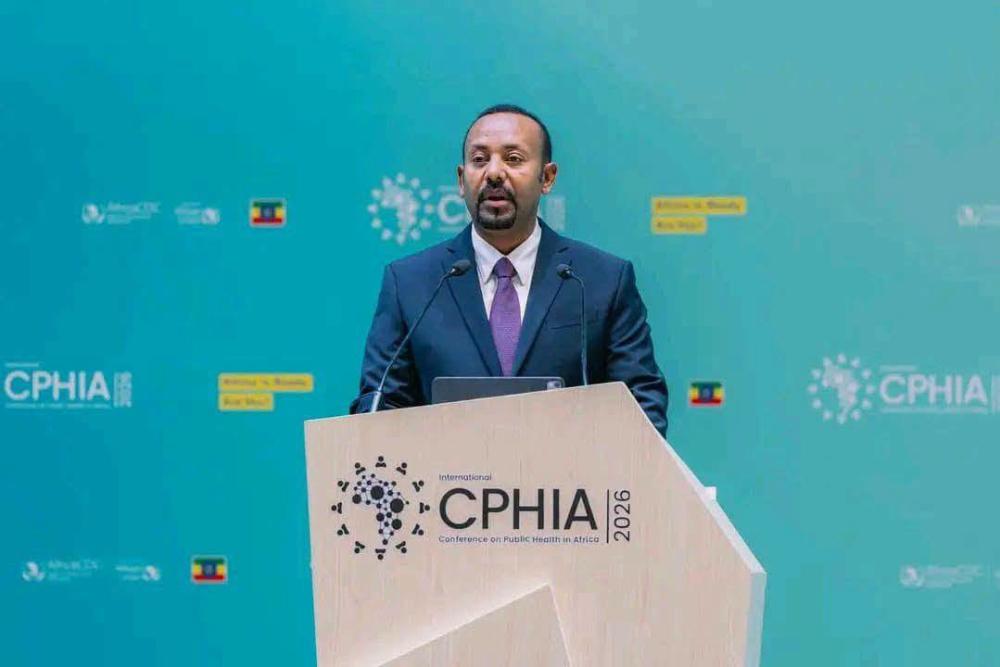
Addis Ababa Gears Up to Welcome Over 100,000 Global Participants for COP32, Says Mayor Adanech
Nov 28, 2026 4864
Addis Ababa, November 28, 2026 (ENA)— Addis Ababa is intensifying preparations to welcome more than 100,000 participants for the 32nd UN Climate Change Conference (COP32) in 2027, building on its successful hosting of a major international public health conference that demonstrated the capital's capacity to accommodate large-scale international gatherings. Mayor of the capital, Adanech Abiebie announced the preparations in a message shared on her social media pages, describing the successful hosting of the 2026 International Conference on Public Health in Africa (CPHIA). The Conference attracted more than 30,000 participants, as a demonstration of the city's growing ability to organize major international events with confidence and professionalism, it was pointed out. She noted that over the six days of the conference, participants experienced not only the conference facilities but also different parts of the capital, exploring its streets, hospitality, and vibrant urban atmosphere during the day and into the evening. The positive feedback from visitors, she said, underscored Addis Ababa's capacity to deliver major international gatherings while providing a welcoming environment and quality services. The Mayor credited the achievement to the leadership and coordination of the Africa Centres for Disease Control and Prevention (Africa CDC) and the Ministry of Health, alongside the dedicated contributions of institutions and professionals responsible for transportation, accommodation, utilities, security, tourism, sanitation, hospitality, and other essential services. Expressing appreciation to all stakeholders, Adanech said the experience had provided a valuable foundation for preparing the capital to host an even larger global gathering. Building on this success, Addis Ababa is now gearing up to welcome more than 100,000 participants for COP32, with plans to further enhance its capacity, service delivery, and organizational standards. The upcoming conference is a major opportunity to showcase Ethiopia's hospitality, institutional capacity, creativity, and development potential to the world, she revealed. Adanech urged all stakeholders to intensify their efforts, complete preparations on schedule, and ensure that every aspect of the event meets the highest standards. The Mayor stressed that COP32 should go beyond hosting an international conference and become a platform for elevating Ethiopia's global profile while creating a lasting legacy for Addis Ababa and the country. "Let us welcome the world to our capital and show what Ethiopia can achieve," she said. Ethiopia is scheduled to host COP32 in Addis Ababa in November 2027, bringing together world leaders, climate negotiators, policymakers, scientists, investors, and development partners to advance discussions on global climate action.
' + getPhotos(pictures, true) + '
';
/*let navs = getNavs();
let lastNav = navs[navs.length - 1];
if (pictures.length > 10) {
getNav().classList.add("multiline");
}
for (let i = navs.length; i < pictures.length; i++) {
let newNav = lastNav.cloneNode(true);
lastNav.parentNode.insertBefore(newNav, lastNav.nextSibling);
lastNav = newNav;
}*/
let titleText = document.getElementById("ena_title_text")
if (titleText) {
setTimeout(titleText.scrollIntoView(), 100);
}
}
function getPhotos(pictures, pictureOnly) {
let result = "";
pictures.forEach(picture => {
result += '';
result += '
';
})
return result;
}
function getPhotoImage(picture, pictureOnly) {
let result = '';
if (!pictureOnly) {
result += '';
}
result += '';
result += getPhotoImage(picture, pictureOnly);
result += '
';
if (!pictureOnly) {
result += '';
result += getPhotoText(picture);
result += '
';
}
result += '';
result += '
';
if (!pictureOnly) {
result += '';
}
return result;
}
function getPhotoText(picture) {
let result = '';
result += '';
result += '';
result += '
';
result += '';
result += getPhotoTitle(picture);
result += '
';
result += '';
return result;
}
function getPhotoTitle(picture) {
let image = picture.getElementsByTagName("IMG")[0];
return image.alt;
}
function getPhotoLink(picture) {
let image = picture.getElementsByTagName("IMG")[0];
return image.src.replace("&download=true","");
}
let contents=Array.from(
fragmentElement.getElementsByClassName(
"ena_display_item_content"));
contents.forEach(item => {
item.innerHTML=item.innerHTML.replaceAll(" "," ")})
Array.from(fragmentElement.getElementsByClassName(
"ena_display_item_content")).forEach(item => {
if (item.innerHTML.length!=item.textContent.length) {
item.innerHTML=item.textContent;}});
if (checkModes(["headlines", "alertbar", "slider", "advertisement"])) {
if (checkModes(["headlines", "alertbar"])) {
moveTo(getItems().length > 1 ? 1 : 0);
} else {
moveTo(0);
}
if (checkModes(["slider"])) {
setTimeout(() => autoMove(), 1);
} else {
autoMove();
}
}
function checkModes(modes, prefix){
if (!prefix) prefix = "mode";
var display = fragmentElement.getElementsByClassName(
"ena_display")[0];
for (let i in modes) {
if (display.classList.contains(
"ena_display_" + prefix + "_" + modes[i])) {
return true;
}
}
return false;
}
function getAutoInterval(){
if (checkModes(["advertisement"])) {
return 10000;
}
else {
return 5000;
}
}
function getCarouselNavs(){
return fragmentElement.getElementsByClassName("ena_carousel_control_navs")[0]}
function getPort(){
return fragmentElement.getElementsByClassName("ena_display_port")[0]}
function getItems(){return Array.from(
getPort().getElementsByClassName("ena_display_item"))}
function getNav(){return document.getElementById("ena_display_control_nav")}
function getNavs() {
if (checkModes(["Photos"], "type")) {
return Array.from(
fragmentElement.getElementsByClassName("ena_display_item_picture"));
} else {
return Array.from(
fragmentElement.getElementsByClassName("ena_display_control_nav_item"));
}
}
function getPrev(){
return fragmentElement.getElementsByClassName(
"ena_display_control_arrow_prev")[0];
}
function getNext(){
return fragmentElement.getElementsByClassName(
"ena_display_control_arrow_next")[0];
}
/*function getArrows(){
return fragmentElement.getElementsByClassName(
"ena_display_control_arrows")[0];
}*/
function getCurrent(items){return items.indexOf(items.find(
item => item.classList.contains("ena_display_current")))}
function setCurrent(index, itemsArray){
let currents = [];
itemsArray.forEach((items, i) => {
currents[i] = getCurrent(items);
if (currents[i]>=0)items[currents[i]].classList.add("ena_display_visible");
items.forEach(
item => {
item.classList.remove("ena_display_a");
item.classList.remove("ena_display_b");
item.classList.remove("ena_display_c");
item.classList.remove("ena_display_current");
item.classList.remove("ena_display_backward");
item.classList.remove("ena_display_forward");
})});
/*setTimeout(()=>{*/
itemsArray.forEach((items, i) => {
if(index >= 0 && index < items.length) {
let current=currents[i];
items[index].classList.add("ena_display_current");
if (current<0 || index==current) {
/*if (index==0){
items[items.length-1].classList.add("ena_display_a");
} else {
items[index-1].classList.add("ena_display_a");
}*/
items[index].classList.add("ena_display_b");
/*if (index==items.length-1){
items[0].classList.add("ena_display_c");
} else {
items[index+1].classList.add("ena_display_c");
}*/
} else {
let direction="";
/*setTimeout(()=>{*/
if(isForward(index, current, items.length-1)){
items[index].classList.add("ena_display_c");
/*setTimeout(()=>{*/
items[current].classList.add("ena_display_b");
/*}, 1000);*/
direction="ena_display_forward";
} else {
items[index].classList.add("ena_display_a");
/*setTimeout(()=>{*/
items[current].classList.add("ena_display_b");
/*}, 1000);*/
direction="ena_display_backward";
}
setTimeout(function(){
items[current].classList.add(direction);
items[index].classList.add(direction);
items[current].classList.remove("ena_display_visible");
}, 100);
/*}, 2000);*/
}
}});
/*}, 2000);*/
/*getItems().filter(
item => item.classList.contains("ena_display_current")).forEach(
item => {if (getPort()) getPort().scrollLeft=item.offsetLeft});*/
}
function isForward(index, current, last){
if(index==0&¤t==last)return true;
if(index==last&¤t==0)return false;
return index>current;
}
function moveTo(index){setCurrent(index, [getItems(), getNavs()]);}
function prevIndex(){
var items = getItems();
var index = getCurrent(items) - 1;
if (index < 0) index = items.length - 1;
return index;
}
function nextIndex(){
var items = getItems();
var index = getCurrent(items) + 1;
if (index >= items.length) index = 0;
return index;
}
getNavs().forEach((item, index) => item.onclick = function(){
moveTo(index)});
getPrev().onclick = function(){moveTo(prevIndex())};
getNext().onclick = function(){moveTo(nextIndex())};
fragmentElement.onmouseenter = function(){
autoStop();
//getArrows().style.display="inline-flex";
}
fragmentElement.onmouseleave = function(){
autoMove();
//getArrows().style.display="none";
}
function autoMove(){
autoStop();
if (fragmentElement.getElementsByClassName("portlet-topper").length==0
&& !fragmentElement.ena_timer_display){
fragmentElement.ena_timer_display=setInterval(
() => {
fragmentChild = fragmentElement.children[0];
let visibility = window.getComputedStyle(fragmentChild, null).visibility;
if (visibility != "hidden") {
moveTo(nextIndex());
}
}, getAutoInterval());
}
}
function autoStop(){
clearInterval(fragmentElement.ena_timer_display);
fragmentElement.ena_timer_display = null;
};}());
';
let carouselNavs = getCarouselNavs();
carouselNavs.innerHTML = '

' + getPhotos(pictures, true) + '
';
/*let navs = getNavs();
let lastNav = navs[navs.length - 1];
if (pictures.length > 10) {
getNav().classList.add("multiline");
}
for (let i = navs.length; i < pictures.length; i++) {
let newNav = lastNav.cloneNode(true);
lastNav.parentNode.insertBefore(newNav, lastNav.nextSibling);
lastNav = newNav;
}*/
let titleText = document.getElementById("ena_title_text")
if (titleText) {
setTimeout(titleText.scrollIntoView(), 100);
}
}
function getPhotos(pictures, pictureOnly) {
let result = "";
pictures.forEach(picture => {
result += '';
result += '
';
})
return result;
}
function getPhotoImage(picture, pictureOnly) {
let result = '';
if (!pictureOnly) {
result += '';
}
result += '';
result += getPhotoImage(picture, pictureOnly);
result += '
';
if (!pictureOnly) {
result += '';
result += getPhotoText(picture);
result += '
';
}
result += '';
result += '
';
if (!pictureOnly) {
result += '';
}
return result;
}
function getPhotoText(picture) {
let result = '';
result += '';
result += '';
result += '
';
result += '';
result += getPhotoTitle(picture);
result += '
';
result += '';
return result;
}
function getPhotoTitle(picture) {
let image = picture.getElementsByTagName("IMG")[0];
return image.alt;
}
function getPhotoLink(picture) {
let image = picture.getElementsByTagName("IMG")[0];
return image.src.replace("&download=true","");
}
let contents=Array.from(
fragmentElement.getElementsByClassName(
"ena_display_item_content"));
contents.forEach(item => {
item.innerHTML=item.innerHTML.replaceAll(" "," ")})
Array.from(fragmentElement.getElementsByClassName(
"ena_display_item_content")).forEach(item => {
if (item.innerHTML.length!=item.textContent.length) {
item.innerHTML=item.textContent;}});
if (checkModes(["headlines", "alertbar", "slider", "advertisement"])) {
if (checkModes(["headlines", "alertbar"])) {
moveTo(getItems().length > 1 ? 1 : 0);
} else {
moveTo(0);
}
if (checkModes(["slider"])) {
setTimeout(() => autoMove(), 1);
} else {
autoMove();
}
}
function checkModes(modes, prefix){
if (!prefix) prefix = "mode";
var display = fragmentElement.getElementsByClassName(
"ena_display")[0];
for (let i in modes) {
if (display.classList.contains(
"ena_display_" + prefix + "_" + modes[i])) {
return true;
}
}
return false;
}
function getAutoInterval(){
if (checkModes(["advertisement"])) {
return 10000;
}
else {
return 5000;
}
}
function getCarouselNavs(){
return fragmentElement.getElementsByClassName("ena_carousel_control_navs")[0]}
function getPort(){
return fragmentElement.getElementsByClassName("ena_display_port")[0]}
function getItems(){return Array.from(
getPort().getElementsByClassName("ena_display_item"))}
function getNav(){return document.getElementById("ena_display_control_nav")}
function getNavs() {
if (checkModes(["Photos"], "type")) {
return Array.from(
fragmentElement.getElementsByClassName("ena_display_item_picture"));
} else {
return Array.from(
fragmentElement.getElementsByClassName("ena_display_control_nav_item"));
}
}
function getPrev(){
return fragmentElement.getElementsByClassName(
"ena_display_control_arrow_prev")[0];
}
function getNext(){
return fragmentElement.getElementsByClassName(
"ena_display_control_arrow_next")[0];
}
/*function getArrows(){
return fragmentElement.getElementsByClassName(
"ena_display_control_arrows")[0];
}*/
function getCurrent(items){return items.indexOf(items.find(
item => item.classList.contains("ena_display_current")))}
function setCurrent(index, itemsArray){
let currents = [];
itemsArray.forEach((items, i) => {
currents[i] = getCurrent(items);
if (currents[i]>=0)items[currents[i]].classList.add("ena_display_visible");
items.forEach(
item => {
item.classList.remove("ena_display_a");
item.classList.remove("ena_display_b");
item.classList.remove("ena_display_c");
item.classList.remove("ena_display_current");
item.classList.remove("ena_display_backward");
item.classList.remove("ena_display_forward");
})});
/*setTimeout(()=>{*/
itemsArray.forEach((items, i) => {
if(index >= 0 && index < items.length) {
let current=currents[i];
items[index].classList.add("ena_display_current");
if (current<0 || index==current) {
/*if (index==0){
items[items.length-1].classList.add("ena_display_a");
} else {
items[index-1].classList.add("ena_display_a");
}*/
items[index].classList.add("ena_display_b");
/*if (index==items.length-1){
items[0].classList.add("ena_display_c");
} else {
items[index+1].classList.add("ena_display_c");
}*/
} else {
let direction="";
/*setTimeout(()=>{*/
if(isForward(index, current, items.length-1)){
items[index].classList.add("ena_display_c");
/*setTimeout(()=>{*/
items[current].classList.add("ena_display_b");
/*}, 1000);*/
direction="ena_display_forward";
} else {
items[index].classList.add("ena_display_a");
/*setTimeout(()=>{*/
items[current].classList.add("ena_display_b");
/*}, 1000);*/
direction="ena_display_backward";
}
setTimeout(function(){
items[current].classList.add(direction);
items[index].classList.add(direction);
items[current].classList.remove("ena_display_visible");
}, 100);
/*}, 2000);*/
}
}});
/*}, 2000);*/
/*getItems().filter(
item => item.classList.contains("ena_display_current")).forEach(
item => {if (getPort()) getPort().scrollLeft=item.offsetLeft});*/
}
function isForward(index, current, last){
if(index==0&¤t==last)return true;
if(index==last&¤t==0)return false;
return index>current;
}
function moveTo(index){setCurrent(index, [getItems(), getNavs()]);}
function prevIndex(){
var items = getItems();
var index = getCurrent(items) - 1;
if (index < 0) index = items.length - 1;
return index;
}
function nextIndex(){
var items = getItems();
var index = getCurrent(items) + 1;
if (index >= items.length) index = 0;
return index;
}
getNavs().forEach((item, index) => item.onclick = function(){
moveTo(index)});
getPrev().onclick = function(){moveTo(prevIndex())};
getNext().onclick = function(){moveTo(nextIndex())};
fragmentElement.onmouseenter = function(){
autoStop();
//getArrows().style.display="inline-flex";
}
fragmentElement.onmouseleave = function(){
autoMove();
//getArrows().style.display="none";
}
function autoMove(){
autoStop();
if (fragmentElement.getElementsByClassName("portlet-topper").length==0
&& !fragmentElement.ena_timer_display){
fragmentElement.ena_timer_display=setInterval(
() => {
fragmentChild = fragmentElement.children[0];
let visibility = window.getComputedStyle(fragmentChild, null).visibility;
if (visibility != "hidden") {
moveTo(nextIndex());
}
}, getAutoInterval());
}
}
function autoStop(){
clearInterval(fragmentElement.ena_timer_display);
fragmentElement.ena_timer_display = null;
};}());
POA English
Pulse Of Africa - English Language
Leaks:
8QLojuXMu86Q9P6V0Q175xNoUyO3kNtwM13xxaTAJCkcCNQylpjjC8nHHkQkmV8PnqhSHXI5AgogVkeJSyWFN5tiBDhEXCEyTMIPIZcKHBwprbq4uAWWSS4oulxHICmpyapBOK3Kt3cMvNWohw5PcGkTgCVWKgEzH0dYhToKPtFcfc2bfVvnonecMYqOEiBOHdRgjnbqgTm0TnRZXfEqVe0riq8RsqEDdC56JpnwtCJoMerdkL7doH88fwXk7t54mBTmzezBCMQJoirKvYlQYMyvcybY88MAJFQcM111lpZAvZUa45MwD34iRq8PZINanJs97SYiBPbhtT6ZCVUA2cWY3LK96OXQPJ6E5dx3eeIinu7LtaMWYhVJagb355o2vHQRi7p5dazQaCH3xMmXOgzLJtQ7aQvoyXA9uIFdpd1XRZ2icQVbSc1jdi3xSANDSqfDAq1TX818Ga2xME3vw16R9pXHln9yGEeC4IyKxAa98TReYGNdaDBitPpVwmvQuLZ8qF4FgIjxFzUzGWAT9EvLFT1lVwIqVMq8gUW3S63612BaJSdQC2MN6EHC02SinChshFwK1wzFA7MN70RVLzsrIXYUy7MskkeRUwGrBU884TLAo7lIOmBmsvb74JUYTxz4iNMsISmJ4pBkqMiHpQOnwMOXUghtrdZMstzztUiWx6g6CCbjPrOQVCg7FVFppCzW6j3ipxm5ssxBjoGgqYour news, current affairs and entertainment channel
Leaks:
VL52c8cWRJVcs4K0ZhiKGxXRmZQOKBC5GVy9i7dVj2nTDFknRD5eEtbiaefl2SbHjEMqK33JESqMM4qCluuGxdRGGubALT7X0BuNiDwO2jWfxAdkpcZLfdAFXiBh7SKVXvjITL40t8a9fes4Ye3T4btsemmEH4fimwnQ65Nhsp6FS8ggfkj2tTSNLhDRAUVDL8xtbBoKtJsRp7zfEX63ExGoZNT1AcvMzAr5JNjnED6wS6gVuF5ef2IqVS9URaWWPz9uSQ9hCau5BdZqnalClVayvjBV9HgdMFmIUAoMHOHAkMJqDzzExBs3oJh7adti9HrwSAaYgeaahuaz4My34xqyW34BV2YbM8w7jbwGmIw3rNLpG8BoQuexzO31191P9bQgHjdoWR1gB7wnw5G0ZAHYuYKCDpMP3gZ5W1CVxy6nOEoC6gklAGJuzxFfpvaLUUytwpxUINFJsaTUwMryR9s8jHzWLOFWxEHkxy5MSPTnaqEwQP9z0aN2ltgXOzcGa8b567hNfjwCtzodHcBxUKD7bRmXw33qVt9yguAArvwKAdUeTMDpiEXb7J8ZfrmxN7IkirmGRRq3U8lhjtSUnuH7HITgyabEICC6ZV0aAL0WF3ImZIcLI6ZU51OmWbW3xf3hICnVVLQxYj3KBdWcZabkRdL9wYRNwJnLshZWF5Ew99KIhpMuflxjpE9d9nzC3ALiOL6Bsdp1jMV2d0HdHXVGdgNvwVpwsfe5DhMJelmygmVZZXQjoDgPEMnlz7DT0lk2D1HhIOSraasleQdCh34gZYXv7EOsGL87kpcF0EIGHVnRhB5R4BpOYM0TwRadSSv2FzL2bd1kXXXIdonGJ6IYeWY33zaRqANXOdEOD0RBQ3REcoZbHU9yYArl8X7efawAKtWYOsZY6s9zuxXmtNV5WtkgDmhvQRgbfGNZl5cnMJYQHqV0h6u5NIvwcNUak0T4EHDZ8eGHm8EBgT9NlM7KvQQKTWSllxlaMARhdY3OCZY2jTLnoGPUuVjoWmTxaQZIoPx6kBww7ZAoonUxynRMdEIY59iy4yM1KS7HhJ7RBfitTkVnEmCWSUJtEoVBLeKqUViXigk28FJ0ACBVFoTE3k6u5tA0PBtMGh1XqugEQMHw9daI3q3SFRHVLIGHIoOw9G2cxlCXgVkMAwupXow890w8b4i4Os0IN1SLTLpyCGUtSA6IOeywPeAtR8NNUUDBNqygU4UZ88xNXYBdhS2K7690d9jlrVrjhXvi1xSvHytdgFgQU7VvUvXNUPoHOMzPVSugx2PLoDpkIM3iOzZm1mSowfJLJVLPrPeZgwDFF6IgKWLTAL698DD8QmVjnwhoVqZrr9v91HR376LCWRwk1cfmDX5rteULoMyaLC7RFmi44oziR8q7ALYPE8vmGBoTEgf2ec6OL2VfHMxDs7m2ZS4iDZkawB0I4NTPS44RNGnN5QPPJb2kkoEeHj7fAcRqfmrs0fcRGbhhCR9iKrD2s7f7xJgA2WFGbsu0jYss76j0wxxMdjpuIUzErskUEM6Klny9vNDhREJ74ogIE9vK19JojbeqEKS4StptSIm6j8fqv4VwsxbuzakGSpeN2HAKojP7KXyl9Acj9eopQfYK4D5wD7nlhjmXrs1bC1TG50CRBWTOrI8cbyt5HgqDL0hYXjNdmoEhXTjUDMepHozYJSQ7r2iUWEXHBrpnFrEViqXUN63pVNREMeKXJJbbxEFkpqCFolmeAojGkcTgilggauoLXWgyVOSQm1vesfxT3OSWfZi6IIOxx0pXABU3xeKTDslYoUONTYzEpSCNNmhZUWhjkJmMVTqZnBTE8Fno6dRe4I0dz2AlVfh46eJpMjDyQuTGSBgVLAMfoqKVTHWkxidb5Li3ylFsFeJPgDFfRfCyLditAKvfnqAccEf6UJmC6n0lMlYUoLAoPHix5HHuOk49EOJn2TQ2kuT6wpUaVa06lCkoSJNbOPjHJ9twCNnJyHXwBZMvLDSjCDVT1FSckXYdfXxc6T1IOxR2fPdvqujnLPJqzc5KJ8R8Bpk3iAP32GgklY4fyz9dbOXhS34xcq0IKmnr9Wn4dJrTAvKSsWDSdpCLqWUK6InFbgSOh02jkWqtdF0CVPMAvAKO6pkcds1WXDJOjq3HWp6HiPBTCyt8xffa9fEo8oo9CcsJD6fERgBGkNAJ3CdesLFo7xsaLPj8laDOLaZAUEU0WJ3fNChp5pGZrMKXuRFcAOzCSnw2AJ947rDVxnXCMKM2HOuJjzTY8qiZoOjVofdUC0SnoMGvdkFyHhyCwa5dCC9yuAJ9rlPJpVZsSHJF67wav7tJm2nvxlT8RG06rfL41MHZKXZ1YT0yj33yqcwlODZWNoxBJhQL2Vx21M2LmcXpDs5W1JFiioGxOmzRd3kNAJoh8meSGlULeFQGE4VIVKJc5Uz8Bwe95nb3vEJfB4sZw7q2s1ZXdKuNOvXkjXNSBGrE4B2yX9FnKdkLozZuEutWTBIKqZc6h9OhIkffTkPcI1PgXhjHw51CMqEjlxwCP4uVQZgwtJ4T6vx3i36cigJ628Qir8UEGZscxk4xxypCG8FQeWYY8uj9P7XBmAbHGyyhOOIeY6HL9Lj93RbRxJuDSwepSVVX66jL4r6aHtJR5dgrcRnLU1Z0qrgQLjEF3YUgTE7NVPyG54sWNsIqWRheA8gXB44X6HCzMvv0aaCJLcQB8fEAvLgo4tSYx77lEfBE9WZ1XaGSvGOZw5aViCaAnMxDbcNqm8KgNsZJQRUW3jBjRfgdKmUieMdkYoflsowsnrwluz271fpkDmi6VbjTzbTmYfG1b6iB9uIULYkAbV3SmfgFpyuSDpDAHFqDUrB6GBV3M1gi4NLRjwkKZbh6XrWCs96m9zvuKe3mZiaGGmk0zyoIvS7oleDAF1IBqdYJsPKOkvKskrI2OgyaJS3VrKYMv0BrloWNChGr7cXbYbLSGnelM8Y84JinokjoJGgRky2V8pESYzGhzI4Ui1mXbaw0xkBmOojjJ6hTlLtQBkXgQ9yVJr8fk4Lo04aYgda2SorAjNgPATiTpQZLhbjjupV4yo6LtBBNFWRk6VkJIPyJahZBkR79eyFgT97d23E5DMOfxdw1JoSbpPwTmTgtg90z7r4kcjcfnfV61Cnt2jpY4wUbvIUMvSIOAOFvELqFsQpkIjehVioMDNv4VFr0YK3xU20tIqMZmJHhcl8l8IrDRRl4QlpJpGnU1Yo2GHie8YchFGZoNugTR8dHCDiIg2RDaRkomuhvLkqJ0fymqWF1ohEcA7KqwIwTaGfhvupLeMW1x7vNcnAzdTx0HTUvhVDXyt90IPBBWeeT5L4fqpspRu9MHvIRnaiE8o4IDJJoin us on
POA Arabic - عربي
Pulse Of Africa - Arabic Language
قناتكم الاخبارية و الترفيهية
Join us on
Politics
Sudanese Analyst Says PM Abiy’s Sudan Initiative Wins Considerable Support from Public, Parties
Nov 28, 2026 1470
Addis Ababa, November 28, 2026 (ENA)— The Sudanese people have widely welcomed Prime Minister Abiy Ahmed’s initiative to host an inclusive national dialogue among Sudanese parties, Sara Al-Saeed, a Sudanese researcher and analyst at Newcastle University told ENA. “The Sudanese people have widely welcomed the Prime Minister’s initiative. If you look at social media, you will find Sudanese expressing their support for Dr. Abiy Ahmed’s initiative. The people want peace,” she said. According to the Sudanese researcher and analyst specializing in international relations and the Horn of Africa at Newcastle University, U.K, the initiative has received broad support from the Sudanese public and political forces. Al-Saeed noted that the initiative represents one of the important efforts to end the war in Sudan by bringing the various Sudanese parties together for dialogue and negotiations and contribute to a lasting solution to the country’s crisis. She added that public and political reactions have demonstrated considerable support for Ethiopia’s initiative. Similarly, the Civil Democratic Alliance of Revolutionary Forces (Sumoud) and the Sudan Founding Alliance (Tasis) have both welcomed the initiative and expressed their readiness to participate in the proposed dialogue. The Ethiopian Prime Minister Abiy Ahmed had invited Sudanese military, political and civilian parties to participate in an inclusive national dialogue to be hosted and facilitated by Ethiopia with the aim of ending the war and achieving lasting peace. He underscored the deep historical ties between Ethiopia and Sudan, describing Sudan as a brotherly country and urging its various parties to place national interests above political and military considerations in order to restore the country’s unity and stability. The analyst and researcher Al-Saeed said Ethiopia’s move reflects Addis Ababa’s commitment to supporting stability in Sudan and safeguarding its unity and territorial integrity. She stated that Ethiopia has consistently demonstrated concern for preserving Sudan’s social fabric and establishing the foundations for peace, describing the proposed dialogue as an opportunity to advance the political process and bring the conflict to an end. The analyst argued that the continuation of the conflict is also linked to questions of accountability for violations committed in Sudan as well as responsibility for the outbreak of the war and its consequences for the Sudanese state. Al-Saeed explained that ending the war would open the way for fundamental questions about those responsible for triggering the conflict and the violations committed during the war. The analyst stressed the importance of responding positively to Ethiopia’s initiative, emphasizing that it offers an opportunity for Sudanese parties to pursue dialogue instead of continued military confrontation. She concluded by describing the initiative as also a call welcomed by all Sudanese parties, reaffirming the importance of Ethiopia’s efforts to support Sudan’s unity, territorial integrity and peace.
Russian Delegation Explores Ethiopia’s Nuclear Energy Vision for Peaceful Development
Nov 28, 2026 2062
Addis Ababa, November 28, 2026 (ENA) – A Russian delegation has explored Ethiopia’s growing ambitions in nuclear science and technology, including the country's vision for harnessing nuclear energy for peaceful development. The delegation, led by Russian Chargé d’Affaires Mikhail Borovkov, visited the Ethiopian Nuclear Energy Commission (ENEC) Museum, where members viewed exhibitions documenting Ethiopia’s progress in nuclear science and technology. The exhibits highlighted the country's journey in developing nuclear science capabilities and its long-term aspirations to harness nuclear energy for peaceful and development-oriented purposes. The visit provided the Russian delegation with an opportunity to gain insight into Ethiopia's nuclear energy ambitions and its efforts to advance scientific and technological capabilities as part of its broader development agenda. Ethiopia has been pursuing the development of nuclear energy for peaceful applications, viewing nuclear science and technology as potential contributors to its long-term development ambitions, it was learned.
PM Abiy Reviews Tigray Region Recovery Progress, Reaffirms Priorities with Caretaker Administration
Nov 28, 2026 2074
Addis Ababa, November 28, 2026 (ENA)— Prime Minister Abiy Ahmed has held a follow-up review meeting with the Tigray Region Caretaker Administration to assess progress in restoring regional governance, addressing outstanding challenges and advancing efforts to stabilize the region. In a social media post following the meeting, the Prime Minister said discussions focused on evaluating the administration’s progress, identifying issues requiring further attention and reaffirming the shared priorities guiding its work. The meeting comes as the six-month caretaker administration continues efforts to restore institutional capacity, revive public services and create conditions for lasting peace and stability in the region. Established by the Federal Government on October 16, 2026, following a decision by the House of Federation and a subsequent Council of Ministers regulation, the administration was mandated to restore peace and security, rebuild government institutions and damaged infrastructure, resume essential public services, facilitate the return of internally displaced people and prepare the region for free and transparent elections. Since assuming office, the administration has made progress in re-establishing regional governance structures, extending administrative arrangements from the regional level down to the kebele level. According to a November 18 briefing by the administration’s Communication Office, elected coordinators had resumed their regular duties, public consultations had been conducted across the region, and education services had resumed in all areas. The administration has also facilitated the return of government employees to their workplaces, resumed salary payments and undertaken efforts to reactivate public institutions and improve service delivery. These steps form part of broader efforts to rebuild administrative capacity, restore public confidence and accelerate the region’s institutional and social recovery. The caretaker administration is expected to sustain the recovery efforts while addressing remaining political and security challenges and laying the groundwork for elections within its six-month mandate.
A Strong Ethiopia, A Stable Horn: The Strategic Vision for National Transformation
Nov 28, 2026 3229
By Staff Writer November 28, 2026 (ENA) Ethiopia’s pursuit of national transformation is increasingly shaped by a fundamental strategic question: how can a country with enormous human, economic and geopolitical potential translate its national aspirations into lasting stability, prosperity and regional influence? Prime Minister Abiy Ahmed’s recent address to the House of Peoples’ Representatives offers a broad perspective on this question, bringing together political unity, regional diplomacy, economic development, national sovereignty and institutional capacity as interconnected pillars of Ethiopia’s long-term national agenda. At the heart of the vision is a recognition that Ethiopia’s future cannot be secured through economic growth alone, military strength in isolation or diplomatic engagement detached from domestic realities. Rather, sustainable national progress requires a comprehensive approach in which political consensus strengthens institutions, economic development reinforces sovereignty, and regional peace creates opportunities for shared prosperity. The Prime Minister’s remarks on Sudan, Eritrea, the Ethiopian National Dialogue, the Medemer Grand Strategy and national defense therefore reflect more than separate government priorities. Together, they point to a broader ambition: building an internally cohesive, economically capable and sovereign Ethiopia that can play a constructive role in shaping the future of the Horn of Africa. Regional Peace: Ethiopia’s Security Begins Beyond Its Borders “Sudan’s peace is our peace.” Prime Minister Abiy’s statement captures a central principle underpinning Ethiopia’s approach to regional diplomacy: the security and stability of neighboring countries are inseparable from Ethiopia’s own long-term interests. The relationship between Ethiopia and Sudan extends beyond geographical proximity. Historical, social, economic and cultural connections have made the stability of one country an important consideration for the other. Sudan’s prolonged conflict consequently carries implications extending across borders, affecting trade, humanitarian conditions, population movements and the broader security environment of the Horn of Africa. Against this backdrop, the Prime Minister reaffirmed Ethiopia’s readiness to contribute diplomatic, financial and institutional resources to Sudan’s peace and recovery. He called on the warring parties to embrace dialogue and give Ethiopia’s proposed peace initiative an opportunity. The proposed initiative seeks to bring together Sudanese military, political and civilian stakeholders through an inclusive, Sudanese-led national dialogue facilitated by Ethiopia. Its underlying premise is that sustainable peace cannot be imposed from outside; it must emerge from political ownership, meaningful participation and an agreement among the country's principal stakeholders. This approach also reflects a broader strategic understanding: instability in the Horn of Africa cannot be addressed through isolated national responses. The region's interconnected security challenges require sustained diplomatic engagement, collective responsibility and practical cooperation among neighboring countries. Ethiopia’s relations with Eritrea present another important dimension of this regional vision. The Prime Minister reiterated Ethiopia’s preference for peaceful coexistence and mutually beneficial development while expressing concern over the deterioration of bilateral relations. Recalling the efforts made following the rapprochement between the two countries, he highlighted Ethiopia’s initiatives to facilitate Eritrea’s regional diplomatic engagement, offer electricity supplies at domestic Ethiopian rates and pursue joint infrastructure development, including roads and ports. These proposals reflected an understanding that geographical proximity and complementary economic resources could serve as foundations for shared prosperity rather than confrontation. The failure to translate these opportunities into sustained cooperation, as described by the Prime Minister, illustrates the challenges confronting relations between the two neighboring countries. It also underscores the importance of rebuilding confidence, maintaining diplomatic channels and addressing differences through peaceful engagement. For Ethiopia, constructive relations with Eritrea are particularly significant within the wider context of Horn of Africa stability, regional connectivity and economic integration. The broader strategic lesson is that lasting regional influence is built not simply on geographical position, population size or military capabilities, but also on the ability to establish trust, develop mutually beneficial partnerships and accommodate the legitimate interests of neighboring states. Sovereignty and Security: Strength Through Peace and Preparedness Ethiopia’s commitment to regional peace, as outlined in the parliamentary address, was accompanied by an equally firm emphasis on protecting national sovereignty and territorial integrity. The Prime Minister underscored that Ethiopia has no intention of invading other countries but remains determined to defend itself against external aggression. His remarks also recalled Ethiopia’s historical contributions to international and regional peacekeeping, including missions in Rwanda, Somalia, the Democratic Republic of Congo, Liberia and South Sudan. He acknowledged the sacrifices made by Ethiopian forces in supporting peace and stability beyond the country's borders. These contributions have helped establish Ethiopia as an important participant in African peace and security efforts. They also demonstrate the country's longstanding recognition that regional stability is a shared responsibility. At the same time, the Prime Minister’s invocation of the Battle of Adwa placed national sovereignty within Ethiopia’s historical experience. The victory of 1896 remains a powerful symbol of independence, resistance to colonial domination and the determination of Ethiopians to preserve their national identity. However, sovereignty in today's international environment requires more than historical pride and military preparedness. It depends on a combination of effective diplomacy, economic resilience, technological capabilities, strong institutions and credible defense systems. The Horn of Africa's evolving geopolitical environment, characterized by security challenges, competition over strategic infrastructure and growing interest in maritime connectivity, makes these capabilities particularly important. A capable defense system and a commitment to peaceful coexistence are not contradictory. Properly developed, they reinforce one another by protecting national interests while creating conditions for diplomacy and cooperation. Ethiopia’s National Dialogue in Building Unity Through Reconciliation While regional stability and national sovereignty define important aspects of Ethiopia’s external environment, the durability of its national transformation ultimately depends on its internal political foundations. This makes the Ethiopian National Dialogue one of the most consequential initiatives highlighted in the Prime Minister’s address. Ethiopia's political and social challenges cannot be resolved through administrative measures or security responses alone. They require a political environment in which different communities, political groups and social constituencies can express their grievances, aspirations and competing visions of the country's future. The National Dialogue seeks to provide such a platform. According to the Prime Minister, hundreds of thousands of Ethiopians, both inside the country and abroad, have participated in discussions throughout the four-year process. His reference to approximately 4,000 participants conducting discussions in one hall over 46 days illustrates the scale and complexity of the undertaking. The importance of this process, however, extends beyond the number of participants or the duration of discussions. Its real significance lies in its potential to transform political differences into constructive national engagement. Ethiopia's diversity is an essential part of its national identity. Building lasting unity does not mean eliminating differences or requiring uniform political perspectives. It means establishing credible institutions and mechanisms through which differences can be managed peacefully, constitutional rights protected and common national interests advanced. In this regard, the Prime Minister's reference to Article 39 of the Constitution is particularly significant. The constitutional recognition of the rights of nations, nationalities and peoples to use their languages, administer themselves and protect their rights remains a fundamental component of Ethiopia's federal framework. The broader challenge is to strengthen these constitutional guarantees while promoting national cohesion, equal citizenship, effective federal institutions and confidence in the country's constitutional order. These objectives should be mutually reinforcing. National unity becomes more sustainable when citizens feel represented, their rights are respected and public institutions respond equitably to their needs. Ultimately, the credibility of the National Dialogue will be determined by what follows the discussions. Its recommendations must translate into meaningful political, legislative and institutional reforms. Citizens must see that their participation contributes to addressing the structural challenges facing the country. The process therefore presents an opportunity to build a more inclusive political settlement and establish a stronger foundation for Ethiopia's long-term stability. Medemer: A Long-Term Framework for National Transformation The political foundations of national unity are closely connected to Ethiopia's broader economic and institutional ambitions. This is where the Medemer Grand Strategy assumes particular significance. At its core, Medemer advances the principles of cooperation, complementarity and the pooling of individual and collective capabilities. It seeks to translate Ethiopia's human, natural, geographical and economic resources into productive national strength. The underlying proposition is straightforward but strategically important: resources alone do not generate prosperity. Their value depends on the institutions, knowledge, technology, infrastructure and productive capabilities available to mobilize them. For a country with Ethiopia's population, agricultural potential, strategic location and expanding economic ambitions, this requires a sustained commitment to economic modernization, industrial development, infrastructure expansion, technological advancement and human capital investment. The Medemer framework also places considerable importance on institutional development and generational continuity. Ethiopia's transformation cannot depend exclusively on the priorities of individual political administrations. It requires long-term national frameworks capable of preserving achievements, correcting shortcomings and sustaining development beyond political transitions. This is particularly important in a country where the scale of development challenges demands consistency in economic planning, investment policy, institutional reform and public administration. The strategic value of a long-term national development framework lies in its ability to establish continuity while allowing policies to evolve in response to changing economic and social realities. For Medemer to achieve its broader ambitions, its principles must be reflected in effective institutions, measurable development outcomes, productive investment and tangible improvements in citizens' livelihoods. Its ultimate test is whether it can help transform national potential into sustainable and broadly shared prosperity. Economic Strength for the Foundation of National Sovereignty An important thread running through the Prime Minister's address is the relationship between economic development and national security. His observation that defense cannot be built independently of economic capacity highlights a fundamental reality of modern statecraft: a country's ability to safeguard its sovereignty is closely linked to the strength of its economy. Contemporary defense systems require far more than military personnel and conventional equipment. They depend on technological innovation, industrial capacity, skilled professionals, effective logistics, research and development, and sustainable financial resources. A strong economy enables a country to invest in these capabilities without undermining other national development priorities. This relationship is particularly important for Ethiopia as it seeks to expand its productive base, modernize its institutions and strengthen its strategic autonomy. Economic transformation, therefore, is not simply about increasing national output or attracting investment. It is also about building the capabilities that enable the country to make independent strategic decisions, withstand external pressures and protect its long-term national interests. The Prime Minister's references to air capabilities, ground forces and technological advancement reflect the importance attached to developing a comprehensive national defense system. However, sustainable defense modernization must be accompanied by professional standards, institutional accountability and continued attention to the welfare of the armed forces. The broader lesson is that national sovereignty is strongest when supported by a productive economy, capable institutions, technological advancement and responsible diplomacy. The Horn of Africa: From Geopolitical Competition to Shared Prosperity Ethiopia's national transformation agenda cannot be fully understood without considering its position in the Horn of Africa. As one of the region's largest countries by population and a major diplomatic and economic center, Ethiopia occupies a strategic position in shaping regional political and economic developments. Yet the Horn of Africa remains affected by protracted conflicts, political instability, limited economic integration, climate-related pressures, humanitarian emergencies and competition over strategic infrastructure and maritime connectivity. These challenges also present opportunities for a different regional future. Improved relations among neighboring countries could unlock significant economic potential through cross-border trade, electricity exchanges, transport infrastructure, logistics networks and coordinated development initiatives. For Ethiopia, stronger regional connectivity would expand access to markets, improve the movement of goods and services and create opportunities for investment and industrial development. Similarly, regional energy cooperation could allow countries to benefit from complementary resources, while coordinated infrastructure development could reduce economic fragmentation and strengthen commercial relations. The pursuit of these opportunities requires a regional environment founded on trust, predictable relations, respect for sovereignty and peaceful resolution of disagreements. Ethiopia's aspirations for greater regional engagement will therefore be most sustainable when its national development objectives are advanced alongside the legitimate interests of neighboring countries. Regional leadership in the contemporary international environment is not measured solely by national capabilities. It is demonstrated through the ability to generate shared benefits, facilitate dialogue and contribute to solutions to common challenges. In this sense, Ethiopia's national transformation and the future of the Horn of Africa are closely connected. Turning National Vision into Tangible Results Perhaps the most important analytical lesson from the Prime Minister's address is the interconnectedness of the priorities he outlined. Political dialogue, constitutional inclusion, regional diplomacy, economic transformation and defense modernization are not isolated policy areas. They constitute complementary dimensions of a broader national development and state-building project. Political consensus provides the foundation for stability. Effective institutions strengthen governance and public confidence. Economic development mobilizes human and financial resources. Defense capabilities safeguard sovereignty, while regional peace creates opportunities for trade, investment and connectivity. However, the success of this vision will ultimately depend not on the scale of its ambitions but on the effectiveness of its implementation. Three priorities will be particularly decisive. First, political inclusion must produce meaningful institutional outcomes. The National Dialogue needs to translate participation into credible reforms, strengthen constitutional legitimacy and build confidence across different political and social constituencies. Its success should be measured by its contribution to addressing underlying differences and strengthening national institutions. Second, regional diplomacy must prioritize trust and sustained cooperation. Ethiopia's engagement with Sudan and its pursuit of constructive relations with Eritrea require consistent diplomatic efforts, confidence-building measures and respect for the legitimate interests of all parties. Sustainable regional influence is achieved through partnerships and practical cooperation rather than confrontation. Third, economic transformation must improve the everyday lives of citizens. Development must generate employment, increase productivity, strengthen livelihoods, improve public services and expand opportunities for younger generations. National economic progress becomes a durable foundation for stability when its benefits are reflected in the lives of ordinary people. These priorities are essential to ensuring that the country's broader national vision translates into measurable and lasting achievements. In a nutshell, Prime Minister Abiy Ahmed's parliamentary address brings together some of the most consequential questions shaping Ethiopia's future: how to consolidate national unity, safeguard sovereignty, transform economic potential into prosperity, contribute to peace in Sudan, establish constructive relations with Eritrea and build institutions capable of sustaining progress across generations. The vision articulated in the address rests on a fundamental understanding that these objectives are inseparable. A politically cohesive Ethiopia is better positioned to pursue economic transformation. A stronger economy provides the resources and capabilities necessary to protect sovereignty. Effective institutions sustain development and strengthen public confidence. Constructive relations with neighboring countries create opportunities for regional peace, trade and shared prosperity. The challenge is to advance these priorities simultaneously while ensuring that national ambitions are matched by inclusive governance, institutional accountability and tangible results. Ethiopia's historical experience has demonstrated the importance of independence, resilience and collective responsibility. Its contemporary ambitions require these strengths to be complemented by modern institutions, technological innovation, economic competitiveness, political inclusion and constructive international partnerships. Ultimately, the measure of Ethiopia's national transformation will not be determined simply by the resources it possesses, the strategies it announces or the influence it seeks. It will be determined by the strength of the institutions it builds, the trust it establishes among its citizens, the prosperity it delivers and the contribution it makes to a more peaceful and economically integrated Horn of Africa. The strategic ambition is clear. It is an Ethiopia that is strong at home, sovereign in its decisions, prosperous in its economy and constructive in its engagement with the world.
IGAD Lauds Pulse of Africa for Amplifying Human Mobility Stories Across Horn of Africa
Nov 27, 2026 3686
Addis Ababa, November 27, 2026 (ENA)— The Intergovernmental Authority on Development (IGAD) has commended Pulse of Africa (POA), an Addis Ababa-based Pan-African media platform, for its valuable media partnership and extensive coverage of regional issues, particularly human mobility and the 2026 IGAD Media Awards. In a special message of appreciation shared on its social media platforms, the IGAD Secretariat described Pulse of Africa as a valued media partner, thanking the outlet for its contribution to amplifying important stories across the region. “A special thank you to Pulse of Africa, our valued Media Partner!” the Secretariat stated. IGAD further recognized POA's extensive coverage of the fourth edition of the IGAD Media Awards, held in Kampala, Uganda, last week. The Pulse of Africa’s support helped celebrate and recognize outstanding journalists and digital storytellers from across the region, the statement noted. “Your invaluable support helped us celebrate and recognise outstanding journalists and digital storytellers from across the IGAD region whose work shines a light on free movement of persons, labour migration, human mobility and displacement,” the Secretariat said. The recognition underscores Pulse of Africa's growing contribution to regional journalism, particularly its reporting on human mobility dynamics in the Greater Horn of Africa, a region facing complex challenges and opportunities related to migration, displacement, refugee protection and cross-border movement. The IGAD region is currently home to approximately 5.6 million refugees, making informed reporting and public awareness of human mobility issues increasingly important to regional cooperation and policy discussions. Through its regional reporting, POA has been amplifying the experiences of displaced communities, migration-related developments and broader efforts to advance safe, orderly and regular human mobility across the region. Its extensive coverage of the 2026 IGAD Media Awards also brought greater visibility to journalists and digital storytellers whose work is helping shape public understanding of free movement, labour migration and displacement across the Greater Horn of Africa. The fourth edition of the awards recognized approximately 20 outstanding journalists and storytellers for their contributions to journalism and digital storytelling, highlighting the media's role in informing public debate and transforming narratives across the region. IGAD also praised Pulse of Africa for its continued efforts to amplify stories that matter to communities across the region. “Thank you for being part of this remarkable journey and for your continued commitment to amplifying the stories that matter across our region,” the Secretariat added. The commendation further highlights the importance of media partnerships in strengthening regional awareness, promoting informed public discourse and bringing African stories and perspectives to wider audiences.
PM Abiy Pledges Continued Abay River Development, Regional Cooperation
Nov 27, 2026 5180
Addis Ababa, November 27, 2026 (ENA)— Prime Minister Abiy Ahmed has reaffirmed Ethiopia’s sovereign right to develop and utilize the Abay River without external authorization, while pledging to pursue shared regional development through cooperation with downstream countries. The Prime Minister made the remarks while responding to Members of the House of Peoples’ Representatives’ questions on regional diplomacy and water resources during the fourth regular session of the first year of the house. Describing the Abay as a divine gift to Ethiopia, PM Abiy stressed that harnessing the river’s potential is essential to overcoming poverty, expanding energy production, strengthening food security, and improving the livelihoods of citizens. “Abay is a potent remedy given to us by the grace of God, and we will use it. We do not need anyone’s permission for that,” he told parliamentarians. He said Ethiopia’s development ambitions are inseparable from its sovereign right to utilize its natural resources. The PM added that the country’s approach to the river is grounded in shared responsibility rather than unilateral exploitation. “Abay does not belong to us alone; it is also the rightful share of our neighbors, which we respect and protect for them,” the Prime Minister said. PM Abiy emphasized that Ethiopia has no intention of monopolizing the river and remains committed to cooperation with downstream countries, particularly Egypt and Sudan, to advance equitable and responsible water utilization. “We have no desire to use it exclusively; we will use it lawfully, assist, and cooperate,” he stated. The Prime Minister also welcomed reports of agricultural expansion in Egypt, expressing Ethiopia’s desire to see Egyptian agriculture flourish alongside Ethiopia’s own efforts to expand energy production. He said the two countries’ development aspirations could advance together through cooperation. Addressing environmental concerns and the long-term sustainability of the river, the Premier highlighted the role of Ethiopia’s Green Legacy Initiative, particularly tree planting, reforestation, and soil conservation, in protecting the Abay basin. “We plant trees so that the Abay does not diminish; and we responsibly uphold our neighbors' rightful share,” he said. He underscored the importance of protecting the river’s source and addressing environmental pressures, including deforestation, soil erosion, and siltation, as part of responsible water-resource management. PM Abiy also challenged the zero-sum narrative surrounding the Abay, arguing that Ethiopia’s development should not be viewed as coming at the expense of downstream countries. He stressed that the expansion of Ethiopia’s energy capacity and agricultural development in neighboring countries could complement one another through dialogue and cooperation. Beyond the Abay basin, the Prime Minister highlighted Ethiopia’s role as a source of freshwater for neighboring countries, including Eritrea, Somalia, Kenya, Sudan, and Djibouti, stressing that Ethiopia has no intention of obstructing shared water resources. He further called for educational and public narratives that promote brotherhood and cooperation among the peoples of Ethiopia, Egypt, Sudan, Djibouti, and Eritrea rather than hostility. Emphasizing the regional benefits of Ethiopia’s prosperity and stability, Prime Minister Abiy likened a prosperous Ethiopia to a shade-giving sycamore tree beside a spring, offering vitality and relief to neighboring countries. He said the central challenge was to transform Ethiopia’s abundant natural resources into tangible economic benefits while strengthening good-neighborly relations and advancing mutually beneficial development across the region.
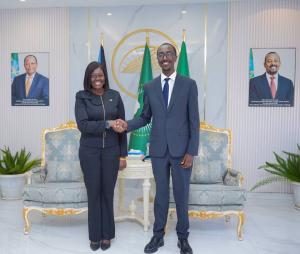
Ethiopian, South Sudanese Foreign Ministers Discuss Bilateral Ties, Electoral Support
Nov 27, 2026 3709
Addis Ababa, November 27, 2026 (ENA)— Ethiopia and South Sudan have reaffirmed their commitment to strengthening bilateral relations, with discussions focusing on continued cooperation, high-level engagement, and support for South Sudan’s upcoming elections. Minister of Foreign Affairs Gedion Timothewos held talks today with Ambassador Cecilia Adut Manyok Adeng, Caretaker Minister of Foreign Affairs and International Cooperation of the Republic of South Sudan, at his office. In its social media post, the Ministry of Foreign Affairs said Foreign Minister Gedion highlighted the longstanding friendship between the two countries and underscored the importance of further deepening bilateral cooperation. He emphasized that sustained engagement and regular high-level exchanges would help maintain momentum in relations and expand areas of cooperation. On South Sudan’s upcoming elections, Gedion said the Ethiopian Government was closely following developments and reaffirmed Ethiopia’s commitment to supporting the electoral process. For her part, Minister Adeng appreciated Ethiopia’s contributions to peace and security in South Sudan and expressed her country’s interest in continued Ethiopian support. She also commended Ethiopia’s assistance to South Sudanese students, recognizing their contributions to institutions and professional fields in their home country.
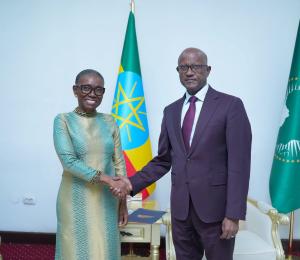
Ethiopia Reaffirms Commitment to Peace and Security in South Sudan
Nov 27, 2026 3201
Addis Ababa, November 27, 2026 (ENA)— Ethiopia has reiterated its commitment to supporting lasting peace, stability, and security in South Sudan. The commitment was reiterated today by State Minister of Foreign Affairs Ambassador Hadera Abera during talks with Anita Kiki Gbeho, Special Representative of the United Nations Secretary-General for South Sudan and Head of the United Nations Mission in South Sudan (UNMISS). According to the Ministry of Foreign Affairs, the two sides exchanged views on South Sudan’s upcoming elections, the prevailing political and security situation, and the implementation of the Revitalized Agreement on the Resolution of the Conflict in South Sudan (R-ARCSS). They also discussed the operational challenges facing UNMISS and the activities of the AU–IGAD–UN Task Force. During the meeting, Ambassador Hadera reiterated Ethiopia’s full support for UNMISS and its mandate. He further emphasized the country’s commitment to working closely with South Sudanese stakeholders, as well as regional and international partners, to advance sustainable peace and security in the nation.
' + getPhotos(pictures, true) + '
';
/*let navs = getNavs();
let lastNav = navs[navs.length - 1];
if (pictures.length > 10) {
getNav().classList.add("multiline");
}
for (let i = navs.length; i < pictures.length; i++) {
let newNav = lastNav.cloneNode(true);
lastNav.parentNode.insertBefore(newNav, lastNav.nextSibling);
lastNav = newNav;
}*/
let titleText = document.getElementById("ena_title_text")
if (titleText) {
setTimeout(titleText.scrollIntoView(), 100);
}
}
function getPhotos(pictures, pictureOnly) {
let result = "";
pictures.forEach(picture => {
result += '';
result += '
';
})
return result;
}
function getPhotoImage(picture, pictureOnly) {
let result = '';
if (!pictureOnly) {
result += '';
}
result += '';
result += getPhotoImage(picture, pictureOnly);
result += '
';
if (!pictureOnly) {
result += '';
result += getPhotoText(picture);
result += '
';
}
result += '';
result += '
';
if (!pictureOnly) {
result += '';
}
return result;
}
function getPhotoText(picture) {
let result = '';
result += '';
result += '';
result += '
';
result += '';
result += getPhotoTitle(picture);
result += '
';
result += '';
return result;
}
function getPhotoTitle(picture) {
let image = picture.getElementsByTagName("IMG")[0];
return image.alt;
}
function getPhotoLink(picture) {
let image = picture.getElementsByTagName("IMG")[0];
return image.src.replace("&download=true","");
}
let contents=Array.from(
fragmentElement.getElementsByClassName(
"ena_display_item_content"));
contents.forEach(item => {
item.innerHTML=item.innerHTML.replaceAll(" "," ")})
Array.from(fragmentElement.getElementsByClassName(
"ena_display_item_content")).forEach(item => {
if (item.innerHTML.length!=item.textContent.length) {
item.innerHTML=item.textContent;}});
if (checkModes(["headlines", "alertbar", "slider", "advertisement"])) {
if (checkModes(["headlines", "alertbar"])) {
moveTo(getItems().length > 1 ? 1 : 0);
} else {
moveTo(0);
}
if (checkModes(["slider"])) {
setTimeout(() => autoMove(), 1);
} else {
autoMove();
}
}
function checkModes(modes, prefix){
if (!prefix) prefix = "mode";
var display = fragmentElement.getElementsByClassName(
"ena_display")[0];
for (let i in modes) {
if (display.classList.contains(
"ena_display_" + prefix + "_" + modes[i])) {
return true;
}
}
return false;
}
function getAutoInterval(){
if (checkModes(["advertisement"])) {
return 10000;
}
else {
return 5000;
}
}
function getCarouselNavs(){
return fragmentElement.getElementsByClassName("ena_carousel_control_navs")[0]}
function getPort(){
return fragmentElement.getElementsByClassName("ena_display_port")[0]}
function getItems(){return Array.from(
getPort().getElementsByClassName("ena_display_item"))}
function getNav(){return document.getElementById("ena_display_control_nav")}
function getNavs() {
if (checkModes(["Photos"], "type")) {
return Array.from(
fragmentElement.getElementsByClassName("ena_display_item_picture"));
} else {
return Array.from(
fragmentElement.getElementsByClassName("ena_display_control_nav_item"));
}
}
function getPrev(){
return fragmentElement.getElementsByClassName(
"ena_display_control_arrow_prev")[0];
}
function getNext(){
return fragmentElement.getElementsByClassName(
"ena_display_control_arrow_next")[0];
}
/*function getArrows(){
return fragmentElement.getElementsByClassName(
"ena_display_control_arrows")[0];
}*/
function getCurrent(items){return items.indexOf(items.find(
item => item.classList.contains("ena_display_current")))}
function setCurrent(index, itemsArray){
let currents = [];
itemsArray.forEach((items, i) => {
currents[i] = getCurrent(items);
if (currents[i]>=0)items[currents[i]].classList.add("ena_display_visible");
items.forEach(
item => {
item.classList.remove("ena_display_a");
item.classList.remove("ena_display_b");
item.classList.remove("ena_display_c");
item.classList.remove("ena_display_current");
item.classList.remove("ena_display_backward");
item.classList.remove("ena_display_forward");
})});
/*setTimeout(()=>{*/
itemsArray.forEach((items, i) => {
if(index >= 0 && index < items.length) {
let current=currents[i];
items[index].classList.add("ena_display_current");
if (current<0 || index==current) {
/*if (index==0){
items[items.length-1].classList.add("ena_display_a");
} else {
items[index-1].classList.add("ena_display_a");
}*/
items[index].classList.add("ena_display_b");
/*if (index==items.length-1){
items[0].classList.add("ena_display_c");
} else {
items[index+1].classList.add("ena_display_c");
}*/
} else {
let direction="";
/*setTimeout(()=>{*/
if(isForward(index, current, items.length-1)){
items[index].classList.add("ena_display_c");
/*setTimeout(()=>{*/
items[current].classList.add("ena_display_b");
/*}, 1000);*/
direction="ena_display_forward";
} else {
items[index].classList.add("ena_display_a");
/*setTimeout(()=>{*/
items[current].classList.add("ena_display_b");
/*}, 1000);*/
direction="ena_display_backward";
}
setTimeout(function(){
items[current].classList.add(direction);
items[index].classList.add(direction);
items[current].classList.remove("ena_display_visible");
}, 100);
/*}, 2000);*/
}
}});
/*}, 2000);*/
/*getItems().filter(
item => item.classList.contains("ena_display_current")).forEach(
item => {if (getPort()) getPort().scrollLeft=item.offsetLeft});*/
}
function isForward(index, current, last){
if(index==0&¤t==last)return true;
if(index==last&¤t==0)return false;
return index>current;
}
function moveTo(index){setCurrent(index, [getItems(), getNavs()]);}
function prevIndex(){
var items = getItems();
var index = getCurrent(items) - 1;
if (index < 0) index = items.length - 1;
return index;
}
function nextIndex(){
var items = getItems();
var index = getCurrent(items) + 1;
if (index >= items.length) index = 0;
return index;
}
getNavs().forEach((item, index) => item.onclick = function(){
moveTo(index)});
getPrev().onclick = function(){moveTo(prevIndex())};
getNext().onclick = function(){moveTo(nextIndex())};
fragmentElement.onmouseenter = function(){
autoStop();
//getArrows().style.display="inline-flex";
}
fragmentElement.onmouseleave = function(){
autoMove();
//getArrows().style.display="none";
}
function autoMove(){
autoStop();
if (fragmentElement.getElementsByClassName("portlet-topper").length==0
&& !fragmentElement.ena_timer_display){
fragmentElement.ena_timer_display=setInterval(
() => {
fragmentChild = fragmentElement.children[0];
let visibility = window.getComputedStyle(fragmentChild, null).visibility;
if (visibility != "hidden") {
moveTo(nextIndex());
}
}, getAutoInterval());
}
}
function autoStop(){
clearInterval(fragmentElement.ena_timer_display);
fragmentElement.ena_timer_display = null;
};}());
Politics
Sudanese Analyst Says PM Abiy’s Sudan Initiative Wins Considerable Support from Public, Parties
Nov 28, 2026 1470
Addis Ababa, November 28, 2026 (ENA)— The Sudanese people have widely welcomed Prime Minister Abiy Ahmed’s initiative to host an inclusive national dialogue among Sudanese parties, Sara Al-Saeed, a Sudanese researcher and analyst at Newcastle University told ENA. “The Sudanese people have widely welcomed the Prime Minister’s initiative. If you look at social media, you will find Sudanese expressing their support for Dr. Abiy Ahmed’s initiative. The people want peace,” she said. According to the Sudanese researcher and analyst specializing in international relations and the Horn of Africa at Newcastle University, U.K, the initiative has received broad support from the Sudanese public and political forces. Al-Saeed noted that the initiative represents one of the important efforts to end the war in Sudan by bringing the various Sudanese parties together for dialogue and negotiations and contribute to a lasting solution to the country’s crisis. She added that public and political reactions have demonstrated considerable support for Ethiopia’s initiative. Similarly, the Civil Democratic Alliance of Revolutionary Forces (Sumoud) and the Sudan Founding Alliance (Tasis) have both welcomed the initiative and expressed their readiness to participate in the proposed dialogue. The Ethiopian Prime Minister Abiy Ahmed had invited Sudanese military, political and civilian parties to participate in an inclusive national dialogue to be hosted and facilitated by Ethiopia with the aim of ending the war and achieving lasting peace. He underscored the deep historical ties between Ethiopia and Sudan, describing Sudan as a brotherly country and urging its various parties to place national interests above political and military considerations in order to restore the country’s unity and stability. The analyst and researcher Al-Saeed said Ethiopia’s move reflects Addis Ababa’s commitment to supporting stability in Sudan and safeguarding its unity and territorial integrity. She stated that Ethiopia has consistently demonstrated concern for preserving Sudan’s social fabric and establishing the foundations for peace, describing the proposed dialogue as an opportunity to advance the political process and bring the conflict to an end. The analyst argued that the continuation of the conflict is also linked to questions of accountability for violations committed in Sudan as well as responsibility for the outbreak of the war and its consequences for the Sudanese state. Al-Saeed explained that ending the war would open the way for fundamental questions about those responsible for triggering the conflict and the violations committed during the war. The analyst stressed the importance of responding positively to Ethiopia’s initiative, emphasizing that it offers an opportunity for Sudanese parties to pursue dialogue instead of continued military confrontation. She concluded by describing the initiative as also a call welcomed by all Sudanese parties, reaffirming the importance of Ethiopia’s efforts to support Sudan’s unity, territorial integrity and peace.
Russian Delegation Explores Ethiopia’s Nuclear Energy Vision for Peaceful Development
Nov 28, 2026 2062
Addis Ababa, November 28, 2026 (ENA) – A Russian delegation has explored Ethiopia’s growing ambitions in nuclear science and technology, including the country's vision for harnessing nuclear energy for peaceful development. The delegation, led by Russian Chargé d’Affaires Mikhail Borovkov, visited the Ethiopian Nuclear Energy Commission (ENEC) Museum, where members viewed exhibitions documenting Ethiopia’s progress in nuclear science and technology. The exhibits highlighted the country's journey in developing nuclear science capabilities and its long-term aspirations to harness nuclear energy for peaceful and development-oriented purposes. The visit provided the Russian delegation with an opportunity to gain insight into Ethiopia's nuclear energy ambitions and its efforts to advance scientific and technological capabilities as part of its broader development agenda. Ethiopia has been pursuing the development of nuclear energy for peaceful applications, viewing nuclear science and technology as potential contributors to its long-term development ambitions, it was learned.
PM Abiy Reviews Tigray Region Recovery Progress, Reaffirms Priorities with Caretaker Administration
Nov 28, 2026 2074
Addis Ababa, November 28, 2026 (ENA)— Prime Minister Abiy Ahmed has held a follow-up review meeting with the Tigray Region Caretaker Administration to assess progress in restoring regional governance, addressing outstanding challenges and advancing efforts to stabilize the region. In a social media post following the meeting, the Prime Minister said discussions focused on evaluating the administration’s progress, identifying issues requiring further attention and reaffirming the shared priorities guiding its work. The meeting comes as the six-month caretaker administration continues efforts to restore institutional capacity, revive public services and create conditions for lasting peace and stability in the region. Established by the Federal Government on October 16, 2026, following a decision by the House of Federation and a subsequent Council of Ministers regulation, the administration was mandated to restore peace and security, rebuild government institutions and damaged infrastructure, resume essential public services, facilitate the return of internally displaced people and prepare the region for free and transparent elections. Since assuming office, the administration has made progress in re-establishing regional governance structures, extending administrative arrangements from the regional level down to the kebele level. According to a November 18 briefing by the administration’s Communication Office, elected coordinators had resumed their regular duties, public consultations had been conducted across the region, and education services had resumed in all areas. The administration has also facilitated the return of government employees to their workplaces, resumed salary payments and undertaken efforts to reactivate public institutions and improve service delivery. These steps form part of broader efforts to rebuild administrative capacity, restore public confidence and accelerate the region’s institutional and social recovery. The caretaker administration is expected to sustain the recovery efforts while addressing remaining political and security challenges and laying the groundwork for elections within its six-month mandate.
A Strong Ethiopia, A Stable Horn: The Strategic Vision for National Transformation
Nov 28, 2026 3229
By Staff Writer November 28, 2026 (ENA) Ethiopia’s pursuit of national transformation is increasingly shaped by a fundamental strategic question: how can a country with enormous human, economic and geopolitical potential translate its national aspirations into lasting stability, prosperity and regional influence? Prime Minister Abiy Ahmed’s recent address to the House of Peoples’ Representatives offers a broad perspective on this question, bringing together political unity, regional diplomacy, economic development, national sovereignty and institutional capacity as interconnected pillars of Ethiopia’s long-term national agenda. At the heart of the vision is a recognition that Ethiopia’s future cannot be secured through economic growth alone, military strength in isolation or diplomatic engagement detached from domestic realities. Rather, sustainable national progress requires a comprehensive approach in which political consensus strengthens institutions, economic development reinforces sovereignty, and regional peace creates opportunities for shared prosperity. The Prime Minister’s remarks on Sudan, Eritrea, the Ethiopian National Dialogue, the Medemer Grand Strategy and national defense therefore reflect more than separate government priorities. Together, they point to a broader ambition: building an internally cohesive, economically capable and sovereign Ethiopia that can play a constructive role in shaping the future of the Horn of Africa. Regional Peace: Ethiopia’s Security Begins Beyond Its Borders “Sudan’s peace is our peace.” Prime Minister Abiy’s statement captures a central principle underpinning Ethiopia’s approach to regional diplomacy: the security and stability of neighboring countries are inseparable from Ethiopia’s own long-term interests. The relationship between Ethiopia and Sudan extends beyond geographical proximity. Historical, social, economic and cultural connections have made the stability of one country an important consideration for the other. Sudan’s prolonged conflict consequently carries implications extending across borders, affecting trade, humanitarian conditions, population movements and the broader security environment of the Horn of Africa. Against this backdrop, the Prime Minister reaffirmed Ethiopia’s readiness to contribute diplomatic, financial and institutional resources to Sudan’s peace and recovery. He called on the warring parties to embrace dialogue and give Ethiopia’s proposed peace initiative an opportunity. The proposed initiative seeks to bring together Sudanese military, political and civilian stakeholders through an inclusive, Sudanese-led national dialogue facilitated by Ethiopia. Its underlying premise is that sustainable peace cannot be imposed from outside; it must emerge from political ownership, meaningful participation and an agreement among the country's principal stakeholders. This approach also reflects a broader strategic understanding: instability in the Horn of Africa cannot be addressed through isolated national responses. The region's interconnected security challenges require sustained diplomatic engagement, collective responsibility and practical cooperation among neighboring countries. Ethiopia’s relations with Eritrea present another important dimension of this regional vision. The Prime Minister reiterated Ethiopia’s preference for peaceful coexistence and mutually beneficial development while expressing concern over the deterioration of bilateral relations. Recalling the efforts made following the rapprochement between the two countries, he highlighted Ethiopia’s initiatives to facilitate Eritrea’s regional diplomatic engagement, offer electricity supplies at domestic Ethiopian rates and pursue joint infrastructure development, including roads and ports. These proposals reflected an understanding that geographical proximity and complementary economic resources could serve as foundations for shared prosperity rather than confrontation. The failure to translate these opportunities into sustained cooperation, as described by the Prime Minister, illustrates the challenges confronting relations between the two neighboring countries. It also underscores the importance of rebuilding confidence, maintaining diplomatic channels and addressing differences through peaceful engagement. For Ethiopia, constructive relations with Eritrea are particularly significant within the wider context of Horn of Africa stability, regional connectivity and economic integration. The broader strategic lesson is that lasting regional influence is built not simply on geographical position, population size or military capabilities, but also on the ability to establish trust, develop mutually beneficial partnerships and accommodate the legitimate interests of neighboring states. Sovereignty and Security: Strength Through Peace and Preparedness Ethiopia’s commitment to regional peace, as outlined in the parliamentary address, was accompanied by an equally firm emphasis on protecting national sovereignty and territorial integrity. The Prime Minister underscored that Ethiopia has no intention of invading other countries but remains determined to defend itself against external aggression. His remarks also recalled Ethiopia’s historical contributions to international and regional peacekeeping, including missions in Rwanda, Somalia, the Democratic Republic of Congo, Liberia and South Sudan. He acknowledged the sacrifices made by Ethiopian forces in supporting peace and stability beyond the country's borders. These contributions have helped establish Ethiopia as an important participant in African peace and security efforts. They also demonstrate the country's longstanding recognition that regional stability is a shared responsibility. At the same time, the Prime Minister’s invocation of the Battle of Adwa placed national sovereignty within Ethiopia’s historical experience. The victory of 1896 remains a powerful symbol of independence, resistance to colonial domination and the determination of Ethiopians to preserve their national identity. However, sovereignty in today's international environment requires more than historical pride and military preparedness. It depends on a combination of effective diplomacy, economic resilience, technological capabilities, strong institutions and credible defense systems. The Horn of Africa's evolving geopolitical environment, characterized by security challenges, competition over strategic infrastructure and growing interest in maritime connectivity, makes these capabilities particularly important. A capable defense system and a commitment to peaceful coexistence are not contradictory. Properly developed, they reinforce one another by protecting national interests while creating conditions for diplomacy and cooperation. Ethiopia’s National Dialogue in Building Unity Through Reconciliation While regional stability and national sovereignty define important aspects of Ethiopia’s external environment, the durability of its national transformation ultimately depends on its internal political foundations. This makes the Ethiopian National Dialogue one of the most consequential initiatives highlighted in the Prime Minister’s address. Ethiopia's political and social challenges cannot be resolved through administrative measures or security responses alone. They require a political environment in which different communities, political groups and social constituencies can express their grievances, aspirations and competing visions of the country's future. The National Dialogue seeks to provide such a platform. According to the Prime Minister, hundreds of thousands of Ethiopians, both inside the country and abroad, have participated in discussions throughout the four-year process. His reference to approximately 4,000 participants conducting discussions in one hall over 46 days illustrates the scale and complexity of the undertaking. The importance of this process, however, extends beyond the number of participants or the duration of discussions. Its real significance lies in its potential to transform political differences into constructive national engagement. Ethiopia's diversity is an essential part of its national identity. Building lasting unity does not mean eliminating differences or requiring uniform political perspectives. It means establishing credible institutions and mechanisms through which differences can be managed peacefully, constitutional rights protected and common national interests advanced. In this regard, the Prime Minister's reference to Article 39 of the Constitution is particularly significant. The constitutional recognition of the rights of nations, nationalities and peoples to use their languages, administer themselves and protect their rights remains a fundamental component of Ethiopia's federal framework. The broader challenge is to strengthen these constitutional guarantees while promoting national cohesion, equal citizenship, effective federal institutions and confidence in the country's constitutional order. These objectives should be mutually reinforcing. National unity becomes more sustainable when citizens feel represented, their rights are respected and public institutions respond equitably to their needs. Ultimately, the credibility of the National Dialogue will be determined by what follows the discussions. Its recommendations must translate into meaningful political, legislative and institutional reforms. Citizens must see that their participation contributes to addressing the structural challenges facing the country. The process therefore presents an opportunity to build a more inclusive political settlement and establish a stronger foundation for Ethiopia's long-term stability. Medemer: A Long-Term Framework for National Transformation The political foundations of national unity are closely connected to Ethiopia's broader economic and institutional ambitions. This is where the Medemer Grand Strategy assumes particular significance. At its core, Medemer advances the principles of cooperation, complementarity and the pooling of individual and collective capabilities. It seeks to translate Ethiopia's human, natural, geographical and economic resources into productive national strength. The underlying proposition is straightforward but strategically important: resources alone do not generate prosperity. Their value depends on the institutions, knowledge, technology, infrastructure and productive capabilities available to mobilize them. For a country with Ethiopia's population, agricultural potential, strategic location and expanding economic ambitions, this requires a sustained commitment to economic modernization, industrial development, infrastructure expansion, technological advancement and human capital investment. The Medemer framework also places considerable importance on institutional development and generational continuity. Ethiopia's transformation cannot depend exclusively on the priorities of individual political administrations. It requires long-term national frameworks capable of preserving achievements, correcting shortcomings and sustaining development beyond political transitions. This is particularly important in a country where the scale of development challenges demands consistency in economic planning, investment policy, institutional reform and public administration. The strategic value of a long-term national development framework lies in its ability to establish continuity while allowing policies to evolve in response to changing economic and social realities. For Medemer to achieve its broader ambitions, its principles must be reflected in effective institutions, measurable development outcomes, productive investment and tangible improvements in citizens' livelihoods. Its ultimate test is whether it can help transform national potential into sustainable and broadly shared prosperity. Economic Strength for the Foundation of National Sovereignty An important thread running through the Prime Minister's address is the relationship between economic development and national security. His observation that defense cannot be built independently of economic capacity highlights a fundamental reality of modern statecraft: a country's ability to safeguard its sovereignty is closely linked to the strength of its economy. Contemporary defense systems require far more than military personnel and conventional equipment. They depend on technological innovation, industrial capacity, skilled professionals, effective logistics, research and development, and sustainable financial resources. A strong economy enables a country to invest in these capabilities without undermining other national development priorities. This relationship is particularly important for Ethiopia as it seeks to expand its productive base, modernize its institutions and strengthen its strategic autonomy. Economic transformation, therefore, is not simply about increasing national output or attracting investment. It is also about building the capabilities that enable the country to make independent strategic decisions, withstand external pressures and protect its long-term national interests. The Prime Minister's references to air capabilities, ground forces and technological advancement reflect the importance attached to developing a comprehensive national defense system. However, sustainable defense modernization must be accompanied by professional standards, institutional accountability and continued attention to the welfare of the armed forces. The broader lesson is that national sovereignty is strongest when supported by a productive economy, capable institutions, technological advancement and responsible diplomacy. The Horn of Africa: From Geopolitical Competition to Shared Prosperity Ethiopia's national transformation agenda cannot be fully understood without considering its position in the Horn of Africa. As one of the region's largest countries by population and a major diplomatic and economic center, Ethiopia occupies a strategic position in shaping regional political and economic developments. Yet the Horn of Africa remains affected by protracted conflicts, political instability, limited economic integration, climate-related pressures, humanitarian emergencies and competition over strategic infrastructure and maritime connectivity. These challenges also present opportunities for a different regional future. Improved relations among neighboring countries could unlock significant economic potential through cross-border trade, electricity exchanges, transport infrastructure, logistics networks and coordinated development initiatives. For Ethiopia, stronger regional connectivity would expand access to markets, improve the movement of goods and services and create opportunities for investment and industrial development. Similarly, regional energy cooperation could allow countries to benefit from complementary resources, while coordinated infrastructure development could reduce economic fragmentation and strengthen commercial relations. The pursuit of these opportunities requires a regional environment founded on trust, predictable relations, respect for sovereignty and peaceful resolution of disagreements. Ethiopia's aspirations for greater regional engagement will therefore be most sustainable when its national development objectives are advanced alongside the legitimate interests of neighboring countries. Regional leadership in the contemporary international environment is not measured solely by national capabilities. It is demonstrated through the ability to generate shared benefits, facilitate dialogue and contribute to solutions to common challenges. In this sense, Ethiopia's national transformation and the future of the Horn of Africa are closely connected. Turning National Vision into Tangible Results Perhaps the most important analytical lesson from the Prime Minister's address is the interconnectedness of the priorities he outlined. Political dialogue, constitutional inclusion, regional diplomacy, economic transformation and defense modernization are not isolated policy areas. They constitute complementary dimensions of a broader national development and state-building project. Political consensus provides the foundation for stability. Effective institutions strengthen governance and public confidence. Economic development mobilizes human and financial resources. Defense capabilities safeguard sovereignty, while regional peace creates opportunities for trade, investment and connectivity. However, the success of this vision will ultimately depend not on the scale of its ambitions but on the effectiveness of its implementation. Three priorities will be particularly decisive. First, political inclusion must produce meaningful institutional outcomes. The National Dialogue needs to translate participation into credible reforms, strengthen constitutional legitimacy and build confidence across different political and social constituencies. Its success should be measured by its contribution to addressing underlying differences and strengthening national institutions. Second, regional diplomacy must prioritize trust and sustained cooperation. Ethiopia's engagement with Sudan and its pursuit of constructive relations with Eritrea require consistent diplomatic efforts, confidence-building measures and respect for the legitimate interests of all parties. Sustainable regional influence is achieved through partnerships and practical cooperation rather than confrontation. Third, economic transformation must improve the everyday lives of citizens. Development must generate employment, increase productivity, strengthen livelihoods, improve public services and expand opportunities for younger generations. National economic progress becomes a durable foundation for stability when its benefits are reflected in the lives of ordinary people. These priorities are essential to ensuring that the country's broader national vision translates into measurable and lasting achievements. In a nutshell, Prime Minister Abiy Ahmed's parliamentary address brings together some of the most consequential questions shaping Ethiopia's future: how to consolidate national unity, safeguard sovereignty, transform economic potential into prosperity, contribute to peace in Sudan, establish constructive relations with Eritrea and build institutions capable of sustaining progress across generations. The vision articulated in the address rests on a fundamental understanding that these objectives are inseparable. A politically cohesive Ethiopia is better positioned to pursue economic transformation. A stronger economy provides the resources and capabilities necessary to protect sovereignty. Effective institutions sustain development and strengthen public confidence. Constructive relations with neighboring countries create opportunities for regional peace, trade and shared prosperity. The challenge is to advance these priorities simultaneously while ensuring that national ambitions are matched by inclusive governance, institutional accountability and tangible results. Ethiopia's historical experience has demonstrated the importance of independence, resilience and collective responsibility. Its contemporary ambitions require these strengths to be complemented by modern institutions, technological innovation, economic competitiveness, political inclusion and constructive international partnerships. Ultimately, the measure of Ethiopia's national transformation will not be determined simply by the resources it possesses, the strategies it announces or the influence it seeks. It will be determined by the strength of the institutions it builds, the trust it establishes among its citizens, the prosperity it delivers and the contribution it makes to a more peaceful and economically integrated Horn of Africa. The strategic ambition is clear. It is an Ethiopia that is strong at home, sovereign in its decisions, prosperous in its economy and constructive in its engagement with the world.
IGAD Lauds Pulse of Africa for Amplifying Human Mobility Stories Across Horn of Africa
Nov 27, 2026 3686
Addis Ababa, November 27, 2026 (ENA)— The Intergovernmental Authority on Development (IGAD) has commended Pulse of Africa (POA), an Addis Ababa-based Pan-African media platform, for its valuable media partnership and extensive coverage of regional issues, particularly human mobility and the 2026 IGAD Media Awards. In a special message of appreciation shared on its social media platforms, the IGAD Secretariat described Pulse of Africa as a valued media partner, thanking the outlet for its contribution to amplifying important stories across the region. “A special thank you to Pulse of Africa, our valued Media Partner!” the Secretariat stated. IGAD further recognized POA's extensive coverage of the fourth edition of the IGAD Media Awards, held in Kampala, Uganda, last week. The Pulse of Africa’s support helped celebrate and recognize outstanding journalists and digital storytellers from across the region, the statement noted. “Your invaluable support helped us celebrate and recognise outstanding journalists and digital storytellers from across the IGAD region whose work shines a light on free movement of persons, labour migration, human mobility and displacement,” the Secretariat said. The recognition underscores Pulse of Africa's growing contribution to regional journalism, particularly its reporting on human mobility dynamics in the Greater Horn of Africa, a region facing complex challenges and opportunities related to migration, displacement, refugee protection and cross-border movement. The IGAD region is currently home to approximately 5.6 million refugees, making informed reporting and public awareness of human mobility issues increasingly important to regional cooperation and policy discussions. Through its regional reporting, POA has been amplifying the experiences of displaced communities, migration-related developments and broader efforts to advance safe, orderly and regular human mobility across the region. Its extensive coverage of the 2026 IGAD Media Awards also brought greater visibility to journalists and digital storytellers whose work is helping shape public understanding of free movement, labour migration and displacement across the Greater Horn of Africa. The fourth edition of the awards recognized approximately 20 outstanding journalists and storytellers for their contributions to journalism and digital storytelling, highlighting the media's role in informing public debate and transforming narratives across the region. IGAD also praised Pulse of Africa for its continued efforts to amplify stories that matter to communities across the region. “Thank you for being part of this remarkable journey and for your continued commitment to amplifying the stories that matter across our region,” the Secretariat added. The commendation further highlights the importance of media partnerships in strengthening regional awareness, promoting informed public discourse and bringing African stories and perspectives to wider audiences.
PM Abiy Pledges Continued Abay River Development, Regional Cooperation
Nov 27, 2026 5180
Addis Ababa, November 27, 2026 (ENA)— Prime Minister Abiy Ahmed has reaffirmed Ethiopia’s sovereign right to develop and utilize the Abay River without external authorization, while pledging to pursue shared regional development through cooperation with downstream countries. The Prime Minister made the remarks while responding to Members of the House of Peoples’ Representatives’ questions on regional diplomacy and water resources during the fourth regular session of the first year of the house. Describing the Abay as a divine gift to Ethiopia, PM Abiy stressed that harnessing the river’s potential is essential to overcoming poverty, expanding energy production, strengthening food security, and improving the livelihoods of citizens. “Abay is a potent remedy given to us by the grace of God, and we will use it. We do not need anyone’s permission for that,” he told parliamentarians. He said Ethiopia’s development ambitions are inseparable from its sovereign right to utilize its natural resources. The PM added that the country’s approach to the river is grounded in shared responsibility rather than unilateral exploitation. “Abay does not belong to us alone; it is also the rightful share of our neighbors, which we respect and protect for them,” the Prime Minister said. PM Abiy emphasized that Ethiopia has no intention of monopolizing the river and remains committed to cooperation with downstream countries, particularly Egypt and Sudan, to advance equitable and responsible water utilization. “We have no desire to use it exclusively; we will use it lawfully, assist, and cooperate,” he stated. The Prime Minister also welcomed reports of agricultural expansion in Egypt, expressing Ethiopia’s desire to see Egyptian agriculture flourish alongside Ethiopia’s own efforts to expand energy production. He said the two countries’ development aspirations could advance together through cooperation. Addressing environmental concerns and the long-term sustainability of the river, the Premier highlighted the role of Ethiopia’s Green Legacy Initiative, particularly tree planting, reforestation, and soil conservation, in protecting the Abay basin. “We plant trees so that the Abay does not diminish; and we responsibly uphold our neighbors' rightful share,” he said. He underscored the importance of protecting the river’s source and addressing environmental pressures, including deforestation, soil erosion, and siltation, as part of responsible water-resource management. PM Abiy also challenged the zero-sum narrative surrounding the Abay, arguing that Ethiopia’s development should not be viewed as coming at the expense of downstream countries. He stressed that the expansion of Ethiopia’s energy capacity and agricultural development in neighboring countries could complement one another through dialogue and cooperation. Beyond the Abay basin, the Prime Minister highlighted Ethiopia’s role as a source of freshwater for neighboring countries, including Eritrea, Somalia, Kenya, Sudan, and Djibouti, stressing that Ethiopia has no intention of obstructing shared water resources. He further called for educational and public narratives that promote brotherhood and cooperation among the peoples of Ethiopia, Egypt, Sudan, Djibouti, and Eritrea rather than hostility. Emphasizing the regional benefits of Ethiopia’s prosperity and stability, Prime Minister Abiy likened a prosperous Ethiopia to a shade-giving sycamore tree beside a spring, offering vitality and relief to neighboring countries. He said the central challenge was to transform Ethiopia’s abundant natural resources into tangible economic benefits while strengthening good-neighborly relations and advancing mutually beneficial development across the region.
Ethiopian, South Sudanese Foreign Ministers Discuss Bilateral Ties, Electoral Support
Nov 27, 2026 3709
Addis Ababa, November 27, 2026 (ENA)— Ethiopia and South Sudan have reaffirmed their commitment to strengthening bilateral relations, with discussions focusing on continued cooperation, high-level engagement, and support for South Sudan’s upcoming elections. Minister of Foreign Affairs Gedion Timothewos held talks today with Ambassador Cecilia Adut Manyok Adeng, Caretaker Minister of Foreign Affairs and International Cooperation of the Republic of South Sudan, at his office. In its social media post, the Ministry of Foreign Affairs said Foreign Minister Gedion highlighted the longstanding friendship between the two countries and underscored the importance of further deepening bilateral cooperation. He emphasized that sustained engagement and regular high-level exchanges would help maintain momentum in relations and expand areas of cooperation. On South Sudan’s upcoming elections, Gedion said the Ethiopian Government was closely following developments and reaffirmed Ethiopia’s commitment to supporting the electoral process. For her part, Minister Adeng appreciated Ethiopia’s contributions to peace and security in South Sudan and expressed her country’s interest in continued Ethiopian support. She also commended Ethiopia’s assistance to South Sudanese students, recognizing their contributions to institutions and professional fields in their home country.
Ethiopia Reaffirms Commitment to Peace and Security in South Sudan
Nov 27, 2026 3201
Addis Ababa, November 27, 2026 (ENA)— Ethiopia has reiterated its commitment to supporting lasting peace, stability, and security in South Sudan. The commitment was reiterated today by State Minister of Foreign Affairs Ambassador Hadera Abera during talks with Anita Kiki Gbeho, Special Representative of the United Nations Secretary-General for South Sudan and Head of the United Nations Mission in South Sudan (UNMISS). According to the Ministry of Foreign Affairs, the two sides exchanged views on South Sudan’s upcoming elections, the prevailing political and security situation, and the implementation of the Revitalized Agreement on the Resolution of the Conflict in South Sudan (R-ARCSS). They also discussed the operational challenges facing UNMISS and the activities of the AU–IGAD–UN Task Force. During the meeting, Ambassador Hadera reiterated Ethiopia’s full support for UNMISS and its mandate. He further emphasized the country’s commitment to working closely with South Sudanese stakeholders, as well as regional and international partners, to advance sustainable peace and security in the nation.
' + getPhotos(pictures, true) + '
';
/*let navs = getNavs();
let lastNav = navs[navs.length - 1];
if (pictures.length > 10) {
getNav().classList.add("multiline");
}
for (let i = navs.length; i < pictures.length; i++) {
let newNav = lastNav.cloneNode(true);
lastNav.parentNode.insertBefore(newNav, lastNav.nextSibling);
lastNav = newNav;
}*/
let titleText = document.getElementById("ena_title_text")
if (titleText) {
setTimeout(titleText.scrollIntoView(), 100);
}
}
function getPhotos(pictures, pictureOnly) {
let result = "";
pictures.forEach(picture => {
result += '';
result += '
';
})
return result;
}
function getPhotoImage(picture, pictureOnly) {
let result = '';
if (!pictureOnly) {
result += '';
}
result += '';
result += getPhotoImage(picture, pictureOnly);
result += '
';
if (!pictureOnly) {
result += '';
result += getPhotoText(picture);
result += '
';
}
result += '';
result += '
';
if (!pictureOnly) {
result += '';
}
return result;
}
function getPhotoText(picture) {
let result = '';
result += '';
result += '';
result += '
';
result += '';
result += getPhotoTitle(picture);
result += '
';
result += '';
return result;
}
function getPhotoTitle(picture) {
let image = picture.getElementsByTagName("IMG")[0];
return image.alt;
}
function getPhotoLink(picture) {
let image = picture.getElementsByTagName("IMG")[0];
return image.src.replace("&download=true","");
}
let contents=Array.from(
fragmentElement.getElementsByClassName(
"ena_display_item_content"));
contents.forEach(item => {
item.innerHTML=item.innerHTML.replaceAll(" "," ")})
Array.from(fragmentElement.getElementsByClassName(
"ena_display_item_content")).forEach(item => {
if (item.innerHTML.length!=item.textContent.length) {
item.innerHTML=item.textContent;}});
if (checkModes(["headlines", "alertbar", "slider", "advertisement"])) {
if (checkModes(["headlines", "alertbar"])) {
moveTo(getItems().length > 1 ? 1 : 0);
} else {
moveTo(0);
}
if (checkModes(["slider"])) {
setTimeout(() => autoMove(), 1);
} else {
autoMove();
}
}
function checkModes(modes, prefix){
if (!prefix) prefix = "mode";
var display = fragmentElement.getElementsByClassName(
"ena_display")[0];
for (let i in modes) {
if (display.classList.contains(
"ena_display_" + prefix + "_" + modes[i])) {
return true;
}
}
return false;
}
function getAutoInterval(){
if (checkModes(["advertisement"])) {
return 10000;
}
else {
return 5000;
}
}
function getCarouselNavs(){
return fragmentElement.getElementsByClassName("ena_carousel_control_navs")[0]}
function getPort(){
return fragmentElement.getElementsByClassName("ena_display_port")[0]}
function getItems(){return Array.from(
getPort().getElementsByClassName("ena_display_item"))}
function getNav(){return document.getElementById("ena_display_control_nav")}
function getNavs() {
if (checkModes(["Photos"], "type")) {
return Array.from(
fragmentElement.getElementsByClassName("ena_display_item_picture"));
} else {
return Array.from(
fragmentElement.getElementsByClassName("ena_display_control_nav_item"));
}
}
function getPrev(){
return fragmentElement.getElementsByClassName(
"ena_display_control_arrow_prev")[0];
}
function getNext(){
return fragmentElement.getElementsByClassName(
"ena_display_control_arrow_next")[0];
}
/*function getArrows(){
return fragmentElement.getElementsByClassName(
"ena_display_control_arrows")[0];
}*/
function getCurrent(items){return items.indexOf(items.find(
item => item.classList.contains("ena_display_current")))}
function setCurrent(index, itemsArray){
let currents = [];
itemsArray.forEach((items, i) => {
currents[i] = getCurrent(items);
if (currents[i]>=0)items[currents[i]].classList.add("ena_display_visible");
items.forEach(
item => {
item.classList.remove("ena_display_a");
item.classList.remove("ena_display_b");
item.classList.remove("ena_display_c");
item.classList.remove("ena_display_current");
item.classList.remove("ena_display_backward");
item.classList.remove("ena_display_forward");
})});
/*setTimeout(()=>{*/
itemsArray.forEach((items, i) => {
if(index >= 0 && index < items.length) {
let current=currents[i];
items[index].classList.add("ena_display_current");
if (current<0 || index==current) {
/*if (index==0){
items[items.length-1].classList.add("ena_display_a");
} else {
items[index-1].classList.add("ena_display_a");
}*/
items[index].classList.add("ena_display_b");
/*if (index==items.length-1){
items[0].classList.add("ena_display_c");
} else {
items[index+1].classList.add("ena_display_c");
}*/
} else {
let direction="";
/*setTimeout(()=>{*/
if(isForward(index, current, items.length-1)){
items[index].classList.add("ena_display_c");
/*setTimeout(()=>{*/
items[current].classList.add("ena_display_b");
/*}, 1000);*/
direction="ena_display_forward";
} else {
items[index].classList.add("ena_display_a");
/*setTimeout(()=>{*/
items[current].classList.add("ena_display_b");
/*}, 1000);*/
direction="ena_display_backward";
}
setTimeout(function(){
items[current].classList.add(direction);
items[index].classList.add(direction);
items[current].classList.remove("ena_display_visible");
}, 100);
/*}, 2000);*/
}
}});
/*}, 2000);*/
/*getItems().filter(
item => item.classList.contains("ena_display_current")).forEach(
item => {if (getPort()) getPort().scrollLeft=item.offsetLeft});*/
}
function isForward(index, current, last){
if(index==0&¤t==last)return true;
if(index==last&¤t==0)return false;
return index>current;
}
function moveTo(index){setCurrent(index, [getItems(), getNavs()]);}
function prevIndex(){
var items = getItems();
var index = getCurrent(items) - 1;
if (index < 0) index = items.length - 1;
return index;
}
function nextIndex(){
var items = getItems();
var index = getCurrent(items) + 1;
if (index >= items.length) index = 0;
return index;
}
getNavs().forEach((item, index) => item.onclick = function(){
moveTo(index)});
getPrev().onclick = function(){moveTo(prevIndex())};
getNext().onclick = function(){moveTo(nextIndex())};
fragmentElement.onmouseenter = function(){
autoStop();
//getArrows().style.display="inline-flex";
}
fragmentElement.onmouseleave = function(){
autoMove();
//getArrows().style.display="none";
}
function autoMove(){
autoStop();
if (fragmentElement.getElementsByClassName("portlet-topper").length==0
&& !fragmentElement.ena_timer_display){
fragmentElement.ena_timer_display=setInterval(
() => {
fragmentChild = fragmentElement.children[0];
let visibility = window.getComputedStyle(fragmentChild, null).visibility;
if (visibility != "hidden") {
moveTo(nextIndex());
}
}, getAutoInterval());
}
}
function autoStop(){
clearInterval(fragmentElement.ena_timer_display);
fragmentElement.ena_timer_display = null;
};}());
Social
A Strong Ethiopia, A Stable Horn: The Strategic Vision for National Transformation
Nov 28, 2026 3229
By Staff Writer November 28, 2026 (ENA) Ethiopia’s pursuit of national transformation is increasingly shaped by a fundamental strategic question: how can a country with enormous human, economic and geopolitical potential translate its national aspirations into lasting stability, prosperity and regional influence? Prime Minister Abiy Ahmed’s recent address to the House of Peoples’ Representatives offers a broad perspective on this question, bringing together political unity, regional diplomacy, economic development, national sovereignty and institutional capacity as interconnected pillars of Ethiopia’s long-term national agenda. At the heart of the vision is a recognition that Ethiopia’s future cannot be secured through economic growth alone, military strength in isolation or diplomatic engagement detached from domestic realities. Rather, sustainable national progress requires a comprehensive approach in which political consensus strengthens institutions, economic development reinforces sovereignty, and regional peace creates opportunities for shared prosperity. The Prime Minister’s remarks on Sudan, Eritrea, the Ethiopian National Dialogue, the Medemer Grand Strategy and national defense therefore reflect more than separate government priorities. Together, they point to a broader ambition: building an internally cohesive, economically capable and sovereign Ethiopia that can play a constructive role in shaping the future of the Horn of Africa. Regional Peace: Ethiopia’s Security Begins Beyond Its Borders “Sudan’s peace is our peace.” Prime Minister Abiy’s statement captures a central principle underpinning Ethiopia’s approach to regional diplomacy: the security and stability of neighboring countries are inseparable from Ethiopia’s own long-term interests. The relationship between Ethiopia and Sudan extends beyond geographical proximity. Historical, social, economic and cultural connections have made the stability of one country an important consideration for the other. Sudan’s prolonged conflict consequently carries implications extending across borders, affecting trade, humanitarian conditions, population movements and the broader security environment of the Horn of Africa. Against this backdrop, the Prime Minister reaffirmed Ethiopia’s readiness to contribute diplomatic, financial and institutional resources to Sudan’s peace and recovery. He called on the warring parties to embrace dialogue and give Ethiopia’s proposed peace initiative an opportunity. The proposed initiative seeks to bring together Sudanese military, political and civilian stakeholders through an inclusive, Sudanese-led national dialogue facilitated by Ethiopia. Its underlying premise is that sustainable peace cannot be imposed from outside; it must emerge from political ownership, meaningful participation and an agreement among the country's principal stakeholders. This approach also reflects a broader strategic understanding: instability in the Horn of Africa cannot be addressed through isolated national responses. The region's interconnected security challenges require sustained diplomatic engagement, collective responsibility and practical cooperation among neighboring countries. Ethiopia’s relations with Eritrea present another important dimension of this regional vision. The Prime Minister reiterated Ethiopia’s preference for peaceful coexistence and mutually beneficial development while expressing concern over the deterioration of bilateral relations. Recalling the efforts made following the rapprochement between the two countries, he highlighted Ethiopia’s initiatives to facilitate Eritrea’s regional diplomatic engagement, offer electricity supplies at domestic Ethiopian rates and pursue joint infrastructure development, including roads and ports. These proposals reflected an understanding that geographical proximity and complementary economic resources could serve as foundations for shared prosperity rather than confrontation. The failure to translate these opportunities into sustained cooperation, as described by the Prime Minister, illustrates the challenges confronting relations between the two neighboring countries. It also underscores the importance of rebuilding confidence, maintaining diplomatic channels and addressing differences through peaceful engagement. For Ethiopia, constructive relations with Eritrea are particularly significant within the wider context of Horn of Africa stability, regional connectivity and economic integration. The broader strategic lesson is that lasting regional influence is built not simply on geographical position, population size or military capabilities, but also on the ability to establish trust, develop mutually beneficial partnerships and accommodate the legitimate interests of neighboring states. Sovereignty and Security: Strength Through Peace and Preparedness Ethiopia’s commitment to regional peace, as outlined in the parliamentary address, was accompanied by an equally firm emphasis on protecting national sovereignty and territorial integrity. The Prime Minister underscored that Ethiopia has no intention of invading other countries but remains determined to defend itself against external aggression. His remarks also recalled Ethiopia’s historical contributions to international and regional peacekeeping, including missions in Rwanda, Somalia, the Democratic Republic of Congo, Liberia and South Sudan. He acknowledged the sacrifices made by Ethiopian forces in supporting peace and stability beyond the country's borders. These contributions have helped establish Ethiopia as an important participant in African peace and security efforts. They also demonstrate the country's longstanding recognition that regional stability is a shared responsibility. At the same time, the Prime Minister’s invocation of the Battle of Adwa placed national sovereignty within Ethiopia’s historical experience. The victory of 1896 remains a powerful symbol of independence, resistance to colonial domination and the determination of Ethiopians to preserve their national identity. However, sovereignty in today's international environment requires more than historical pride and military preparedness. It depends on a combination of effective diplomacy, economic resilience, technological capabilities, strong institutions and credible defense systems. The Horn of Africa's evolving geopolitical environment, characterized by security challenges, competition over strategic infrastructure and growing interest in maritime connectivity, makes these capabilities particularly important. A capable defense system and a commitment to peaceful coexistence are not contradictory. Properly developed, they reinforce one another by protecting national interests while creating conditions for diplomacy and cooperation. Ethiopia’s National Dialogue in Building Unity Through Reconciliation While regional stability and national sovereignty define important aspects of Ethiopia’s external environment, the durability of its national transformation ultimately depends on its internal political foundations. This makes the Ethiopian National Dialogue one of the most consequential initiatives highlighted in the Prime Minister’s address. Ethiopia's political and social challenges cannot be resolved through administrative measures or security responses alone. They require a political environment in which different communities, political groups and social constituencies can express their grievances, aspirations and competing visions of the country's future. The National Dialogue seeks to provide such a platform. According to the Prime Minister, hundreds of thousands of Ethiopians, both inside the country and abroad, have participated in discussions throughout the four-year process. His reference to approximately 4,000 participants conducting discussions in one hall over 46 days illustrates the scale and complexity of the undertaking. The importance of this process, however, extends beyond the number of participants or the duration of discussions. Its real significance lies in its potential to transform political differences into constructive national engagement. Ethiopia's diversity is an essential part of its national identity. Building lasting unity does not mean eliminating differences or requiring uniform political perspectives. It means establishing credible institutions and mechanisms through which differences can be managed peacefully, constitutional rights protected and common national interests advanced. In this regard, the Prime Minister's reference to Article 39 of the Constitution is particularly significant. The constitutional recognition of the rights of nations, nationalities and peoples to use their languages, administer themselves and protect their rights remains a fundamental component of Ethiopia's federal framework. The broader challenge is to strengthen these constitutional guarantees while promoting national cohesion, equal citizenship, effective federal institutions and confidence in the country's constitutional order. These objectives should be mutually reinforcing. National unity becomes more sustainable when citizens feel represented, their rights are respected and public institutions respond equitably to their needs. Ultimately, the credibility of the National Dialogue will be determined by what follows the discussions. Its recommendations must translate into meaningful political, legislative and institutional reforms. Citizens must see that their participation contributes to addressing the structural challenges facing the country. The process therefore presents an opportunity to build a more inclusive political settlement and establish a stronger foundation for Ethiopia's long-term stability. Medemer: A Long-Term Framework for National Transformation The political foundations of national unity are closely connected to Ethiopia's broader economic and institutional ambitions. This is where the Medemer Grand Strategy assumes particular significance. At its core, Medemer advances the principles of cooperation, complementarity and the pooling of individual and collective capabilities. It seeks to translate Ethiopia's human, natural, geographical and economic resources into productive national strength. The underlying proposition is straightforward but strategically important: resources alone do not generate prosperity. Their value depends on the institutions, knowledge, technology, infrastructure and productive capabilities available to mobilize them. For a country with Ethiopia's population, agricultural potential, strategic location and expanding economic ambitions, this requires a sustained commitment to economic modernization, industrial development, infrastructure expansion, technological advancement and human capital investment. The Medemer framework also places considerable importance on institutional development and generational continuity. Ethiopia's transformation cannot depend exclusively on the priorities of individual political administrations. It requires long-term national frameworks capable of preserving achievements, correcting shortcomings and sustaining development beyond political transitions. This is particularly important in a country where the scale of development challenges demands consistency in economic planning, investment policy, institutional reform and public administration. The strategic value of a long-term national development framework lies in its ability to establish continuity while allowing policies to evolve in response to changing economic and social realities. For Medemer to achieve its broader ambitions, its principles must be reflected in effective institutions, measurable development outcomes, productive investment and tangible improvements in citizens' livelihoods. Its ultimate test is whether it can help transform national potential into sustainable and broadly shared prosperity. Economic Strength for the Foundation of National Sovereignty An important thread running through the Prime Minister's address is the relationship between economic development and national security. His observation that defense cannot be built independently of economic capacity highlights a fundamental reality of modern statecraft: a country's ability to safeguard its sovereignty is closely linked to the strength of its economy. Contemporary defense systems require far more than military personnel and conventional equipment. They depend on technological innovation, industrial capacity, skilled professionals, effective logistics, research and development, and sustainable financial resources. A strong economy enables a country to invest in these capabilities without undermining other national development priorities. This relationship is particularly important for Ethiopia as it seeks to expand its productive base, modernize its institutions and strengthen its strategic autonomy. Economic transformation, therefore, is not simply about increasing national output or attracting investment. It is also about building the capabilities that enable the country to make independent strategic decisions, withstand external pressures and protect its long-term national interests. The Prime Minister's references to air capabilities, ground forces and technological advancement reflect the importance attached to developing a comprehensive national defense system. However, sustainable defense modernization must be accompanied by professional standards, institutional accountability and continued attention to the welfare of the armed forces. The broader lesson is that national sovereignty is strongest when supported by a productive economy, capable institutions, technological advancement and responsible diplomacy. The Horn of Africa: From Geopolitical Competition to Shared Prosperity Ethiopia's national transformation agenda cannot be fully understood without considering its position in the Horn of Africa. As one of the region's largest countries by population and a major diplomatic and economic center, Ethiopia occupies a strategic position in shaping regional political and economic developments. Yet the Horn of Africa remains affected by protracted conflicts, political instability, limited economic integration, climate-related pressures, humanitarian emergencies and competition over strategic infrastructure and maritime connectivity. These challenges also present opportunities for a different regional future. Improved relations among neighboring countries could unlock significant economic potential through cross-border trade, electricity exchanges, transport infrastructure, logistics networks and coordinated development initiatives. For Ethiopia, stronger regional connectivity would expand access to markets, improve the movement of goods and services and create opportunities for investment and industrial development. Similarly, regional energy cooperation could allow countries to benefit from complementary resources, while coordinated infrastructure development could reduce economic fragmentation and strengthen commercial relations. The pursuit of these opportunities requires a regional environment founded on trust, predictable relations, respect for sovereignty and peaceful resolution of disagreements. Ethiopia's aspirations for greater regional engagement will therefore be most sustainable when its national development objectives are advanced alongside the legitimate interests of neighboring countries. Regional leadership in the contemporary international environment is not measured solely by national capabilities. It is demonstrated through the ability to generate shared benefits, facilitate dialogue and contribute to solutions to common challenges. In this sense, Ethiopia's national transformation and the future of the Horn of Africa are closely connected. Turning National Vision into Tangible Results Perhaps the most important analytical lesson from the Prime Minister's address is the interconnectedness of the priorities he outlined. Political dialogue, constitutional inclusion, regional diplomacy, economic transformation and defense modernization are not isolated policy areas. They constitute complementary dimensions of a broader national development and state-building project. Political consensus provides the foundation for stability. Effective institutions strengthen governance and public confidence. Economic development mobilizes human and financial resources. Defense capabilities safeguard sovereignty, while regional peace creates opportunities for trade, investment and connectivity. However, the success of this vision will ultimately depend not on the scale of its ambitions but on the effectiveness of its implementation. Three priorities will be particularly decisive. First, political inclusion must produce meaningful institutional outcomes. The National Dialogue needs to translate participation into credible reforms, strengthen constitutional legitimacy and build confidence across different political and social constituencies. Its success should be measured by its contribution to addressing underlying differences and strengthening national institutions. Second, regional diplomacy must prioritize trust and sustained cooperation. Ethiopia's engagement with Sudan and its pursuit of constructive relations with Eritrea require consistent diplomatic efforts, confidence-building measures and respect for the legitimate interests of all parties. Sustainable regional influence is achieved through partnerships and practical cooperation rather than confrontation. Third, economic transformation must improve the everyday lives of citizens. Development must generate employment, increase productivity, strengthen livelihoods, improve public services and expand opportunities for younger generations. National economic progress becomes a durable foundation for stability when its benefits are reflected in the lives of ordinary people. These priorities are essential to ensuring that the country's broader national vision translates into measurable and lasting achievements. In a nutshell, Prime Minister Abiy Ahmed's parliamentary address brings together some of the most consequential questions shaping Ethiopia's future: how to consolidate national unity, safeguard sovereignty, transform economic potential into prosperity, contribute to peace in Sudan, establish constructive relations with Eritrea and build institutions capable of sustaining progress across generations. The vision articulated in the address rests on a fundamental understanding that these objectives are inseparable. A politically cohesive Ethiopia is better positioned to pursue economic transformation. A stronger economy provides the resources and capabilities necessary to protect sovereignty. Effective institutions sustain development and strengthen public confidence. Constructive relations with neighboring countries create opportunities for regional peace, trade and shared prosperity. The challenge is to advance these priorities simultaneously while ensuring that national ambitions are matched by inclusive governance, institutional accountability and tangible results. Ethiopia's historical experience has demonstrated the importance of independence, resilience and collective responsibility. Its contemporary ambitions require these strengths to be complemented by modern institutions, technological innovation, economic competitiveness, political inclusion and constructive international partnerships. Ultimately, the measure of Ethiopia's national transformation will not be determined simply by the resources it possesses, the strategies it announces or the influence it seeks. It will be determined by the strength of the institutions it builds, the trust it establishes among its citizens, the prosperity it delivers and the contribution it makes to a more peaceful and economically integrated Horn of Africa. The strategic ambition is clear. It is an Ethiopia that is strong at home, sovereign in its decisions, prosperous in its economy and constructive in its engagement with the world.
Addis Ababa Gears Up to Welcome Over 100,000 Global Participants for COP32, Says Mayor Adanech
Nov 28, 2026 4864
Addis Ababa, November 28, 2026 (ENA)— Addis Ababa is intensifying preparations to welcome more than 100,000 participants for the 32nd UN Climate Change Conference (COP32) in 2027, building on its successful hosting of a major international public health conference that demonstrated the capital's capacity to accommodate large-scale international gatherings. Mayor of the capital, Adanech Abiebie announced the preparations in a message shared on her social media pages, describing the successful hosting of the 2026 International Conference on Public Health in Africa (CPHIA). The Conference attracted more than 30,000 participants, as a demonstration of the city's growing ability to organize major international events with confidence and professionalism, it was pointed out. She noted that over the six days of the conference, participants experienced not only the conference facilities but also different parts of the capital, exploring its streets, hospitality, and vibrant urban atmosphere during the day and into the evening. The positive feedback from visitors, she said, underscored Addis Ababa's capacity to deliver major international gatherings while providing a welcoming environment and quality services. The Mayor credited the achievement to the leadership and coordination of the Africa Centres for Disease Control and Prevention (Africa CDC) and the Ministry of Health, alongside the dedicated contributions of institutions and professionals responsible for transportation, accommodation, utilities, security, tourism, sanitation, hospitality, and other essential services. Expressing appreciation to all stakeholders, Adanech said the experience had provided a valuable foundation for preparing the capital to host an even larger global gathering. Building on this success, Addis Ababa is now gearing up to welcome more than 100,000 participants for COP32, with plans to further enhance its capacity, service delivery, and organizational standards. The upcoming conference is a major opportunity to showcase Ethiopia's hospitality, institutional capacity, creativity, and development potential to the world, she revealed. Adanech urged all stakeholders to intensify their efforts, complete preparations on schedule, and ensure that every aspect of the event meets the highest standards. The Mayor stressed that COP32 should go beyond hosting an international conference and become a platform for elevating Ethiopia's global profile while creating a lasting legacy for Addis Ababa and the country. "Let us welcome the world to our capital and show what Ethiopia can achieve," she said. Ethiopia is scheduled to host COP32 in Addis Ababa in November 2027, bringing together world leaders, climate negotiators, policymakers, scientists, investors, and development partners to advance discussions on global climate action.
IGAD Lauds Pulse of Africa for Amplifying Human Mobility Stories Across Horn of Africa
Nov 27, 2026 3686
Addis Ababa, November 27, 2026 (ENA)— The Intergovernmental Authority on Development (IGAD) has commended Pulse of Africa (POA), an Addis Ababa-based Pan-African media platform, for its valuable media partnership and extensive coverage of regional issues, particularly human mobility and the 2026 IGAD Media Awards. In a special message of appreciation shared on its social media platforms, the IGAD Secretariat described Pulse of Africa as a valued media partner, thanking the outlet for its contribution to amplifying important stories across the region. “A special thank you to Pulse of Africa, our valued Media Partner!” the Secretariat stated. IGAD further recognized POA's extensive coverage of the fourth edition of the IGAD Media Awards, held in Kampala, Uganda, last week. The Pulse of Africa’s support helped celebrate and recognize outstanding journalists and digital storytellers from across the region, the statement noted. “Your invaluable support helped us celebrate and recognise outstanding journalists and digital storytellers from across the IGAD region whose work shines a light on free movement of persons, labour migration, human mobility and displacement,” the Secretariat said. The recognition underscores Pulse of Africa's growing contribution to regional journalism, particularly its reporting on human mobility dynamics in the Greater Horn of Africa, a region facing complex challenges and opportunities related to migration, displacement, refugee protection and cross-border movement. The IGAD region is currently home to approximately 5.6 million refugees, making informed reporting and public awareness of human mobility issues increasingly important to regional cooperation and policy discussions. Through its regional reporting, POA has been amplifying the experiences of displaced communities, migration-related developments and broader efforts to advance safe, orderly and regular human mobility across the region. Its extensive coverage of the 2026 IGAD Media Awards also brought greater visibility to journalists and digital storytellers whose work is helping shape public understanding of free movement, labour migration and displacement across the Greater Horn of Africa. The fourth edition of the awards recognized approximately 20 outstanding journalists and storytellers for their contributions to journalism and digital storytelling, highlighting the media's role in informing public debate and transforming narratives across the region. IGAD also praised Pulse of Africa for its continued efforts to amplify stories that matter to communities across the region. “Thank you for being part of this remarkable journey and for your continued commitment to amplifying the stories that matter across our region,” the Secretariat added. The commendation further highlights the importance of media partnerships in strengthening regional awareness, promoting informed public discourse and bringing African stories and perspectives to wider audiences.
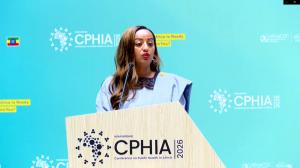
CPHIA 2026 Closes with Call for African Ownership of Health Security
Nov 27, 2026 3594
Addis Ababa, November 27, 2026 (ENA)— The five-day 2026 Conference on Public Health in Africa (CPHIA) concluded in Addis Ababa today with a strong call for African countries to take greater ownership of their health security through increased domestic investment, resilient health systems, and stronger continental cooperation. Closing the conference, Ethiopia’s Health Minister, Dr. Mekdes Daba, urged African governments to translate the commitments made during the gathering into tangible action through national budgets, legislation, and improved frontline healthcare delivery. The conference brought together more than 50,000 registered participants and featured over 90 sessions, attracting heads of state, ministers, scientists, health professionals, researchers, and private sector leaders. Highlighting Ethiopia’s efforts to strengthen domestic health financing, Dr. Mekdes said the government is funding its health extension workers entirely through local resources. She noted that Ethiopia aims to increase the government’s share of health financing to 53 percent by 2030 while reducing out-of-pocket healthcare expenditure to 20 percent. The minister called on African countries to prioritize pandemic preparedness, primary healthcare, predictable domestic financing, and local pharmaceutical manufacturing, including the production of African-made vaccines and other essential medical products. She also stressed the importance of stronger partnerships with the private sector, civil society, researchers, and young people in building sustainable health systems and advancing African-led solutions. Outlining the next steps, Dr. Mekdes identified three key actions: reviewing conference priorities and incorporating them into national plans and budgets within 90 days; establishing a permanent multi-stakeholder platform; and assessing progress at the next CPHIA. Africa CDC Director-General Dr. Jean Kaseya described CPHIA 2026 as a milestone in continental public health cooperation, declaring that “CPHIA is not just a conference; CPHIA is a movement” toward African health sovereignty. He said discussions had highlighted Africa’s growing capacity in pandemic preparedness, local manufacturing, and domestic health financing, while stressing the need for countries to learn from one another and deepen regional cooperation. Dr. Kaseya also called for more equitable partnerships with development partners, emphasizing that African countries must assume greater responsibility for their health security through domestic investment, good governance, and accountability. He identified the African Pooled Procurement Mechanism and the African Medicines Agency as important instruments for reducing dependence on external suppliers and strengthening pharmaceutical production across the continent. He reaffirmed Africa CDC’s commitment to building a continental community that connects countries, facilitates experience-sharing, coordinates health priorities, and advances collective ownership of Africa’s health security. For his part, Addis Ababa Deputy Mayor Samuel Molalign called for stronger cooperation in developing urban health solutions, highlighting the capital’s use of artificial intelligence and digital health technologies to improve patient record management, identify health risks early, and deliver more efficient healthcare services. He said Addis Ababa remained open to piloting innovative urban health initiatives in collaboration with partners. Samuel also encouraged participants to share Ethiopia’s development and healthcare achievements in their respective countries and serve as ambassadors for Addis Ababa and Ethiopia. During the five-day conference, two continental health roadmaps were also launched. The first seeks to improve maternal, newborn, child, and adolescent health by 2030 and is championed by Tanzanian President Samia Suluhu Hassan. The second focuses on advancing African-led artificial intelligence and digital health solutions and is championed by Ethiopian Prime Minister Abiy Ahmed.
' + getPhotos(pictures, true) + '
';
/*let navs = getNavs();
let lastNav = navs[navs.length - 1];
if (pictures.length > 10) {
getNav().classList.add("multiline");
}
for (let i = navs.length; i < pictures.length; i++) {
let newNav = lastNav.cloneNode(true);
lastNav.parentNode.insertBefore(newNav, lastNav.nextSibling);
lastNav = newNav;
}*/
let titleText = document.getElementById("ena_title_text")
if (titleText) {
setTimeout(titleText.scrollIntoView(), 100);
}
}
function getPhotos(pictures, pictureOnly) {
let result = "";
pictures.forEach(picture => {
result += '';
result += '
';
})
return result;
}
function getPhotoImage(picture, pictureOnly) {
let result = '';
if (!pictureOnly) {
result += '';
}
result += '';
result += getPhotoImage(picture, pictureOnly);
result += '
';
if (!pictureOnly) {
result += '';
result += getPhotoText(picture);
result += '
';
}
result += '';
result += '
';
if (!pictureOnly) {
result += '';
}
return result;
}
function getPhotoText(picture) {
let result = '';
result += '';
result += '';
result += '
';
result += '';
result += getPhotoTitle(picture);
result += '
';
result += '';
return result;
}
function getPhotoTitle(picture) {
let image = picture.getElementsByTagName("IMG")[0];
return image.alt;
}
function getPhotoLink(picture) {
let image = picture.getElementsByTagName("IMG")[0];
return image.src.replace("&download=true","");
}
let contents=Array.from(
fragmentElement.getElementsByClassName(
"ena_display_item_content"));
contents.forEach(item => {
item.innerHTML=item.innerHTML.replaceAll(" "," ")})
Array.from(fragmentElement.getElementsByClassName(
"ena_display_item_content")).forEach(item => {
if (item.innerHTML.length!=item.textContent.length) {
item.innerHTML=item.textContent;}});
if (checkModes(["headlines", "alertbar", "slider", "advertisement"])) {
if (checkModes(["headlines", "alertbar"])) {
moveTo(getItems().length > 1 ? 1 : 0);
} else {
moveTo(0);
}
if (checkModes(["slider"])) {
setTimeout(() => autoMove(), 1);
} else {
autoMove();
}
}
function checkModes(modes, prefix){
if (!prefix) prefix = "mode";
var display = fragmentElement.getElementsByClassName(
"ena_display")[0];
for (let i in modes) {
if (display.classList.contains(
"ena_display_" + prefix + "_" + modes[i])) {
return true;
}
}
return false;
}
function getAutoInterval(){
if (checkModes(["advertisement"])) {
return 10000;
}
else {
return 5000;
}
}
function getCarouselNavs(){
return fragmentElement.getElementsByClassName("ena_carousel_control_navs")[0]}
function getPort(){
return fragmentElement.getElementsByClassName("ena_display_port")[0]}
function getItems(){return Array.from(
getPort().getElementsByClassName("ena_display_item"))}
function getNav(){return document.getElementById("ena_display_control_nav")}
function getNavs() {
if (checkModes(["Photos"], "type")) {
return Array.from(
fragmentElement.getElementsByClassName("ena_display_item_picture"));
} else {
return Array.from(
fragmentElement.getElementsByClassName("ena_display_control_nav_item"));
}
}
function getPrev(){
return fragmentElement.getElementsByClassName(
"ena_display_control_arrow_prev")[0];
}
function getNext(){
return fragmentElement.getElementsByClassName(
"ena_display_control_arrow_next")[0];
}
/*function getArrows(){
return fragmentElement.getElementsByClassName(
"ena_display_control_arrows")[0];
}*/
function getCurrent(items){return items.indexOf(items.find(
item => item.classList.contains("ena_display_current")))}
function setCurrent(index, itemsArray){
let currents = [];
itemsArray.forEach((items, i) => {
currents[i] = getCurrent(items);
if (currents[i]>=0)items[currents[i]].classList.add("ena_display_visible");
items.forEach(
item => {
item.classList.remove("ena_display_a");
item.classList.remove("ena_display_b");
item.classList.remove("ena_display_c");
item.classList.remove("ena_display_current");
item.classList.remove("ena_display_backward");
item.classList.remove("ena_display_forward");
})});
/*setTimeout(()=>{*/
itemsArray.forEach((items, i) => {
if(index >= 0 && index < items.length) {
let current=currents[i];
items[index].classList.add("ena_display_current");
if (current<0 || index==current) {
/*if (index==0){
items[items.length-1].classList.add("ena_display_a");
} else {
items[index-1].classList.add("ena_display_a");
}*/
items[index].classList.add("ena_display_b");
/*if (index==items.length-1){
items[0].classList.add("ena_display_c");
} else {
items[index+1].classList.add("ena_display_c");
}*/
} else {
let direction="";
/*setTimeout(()=>{*/
if(isForward(index, current, items.length-1)){
items[index].classList.add("ena_display_c");
/*setTimeout(()=>{*/
items[current].classList.add("ena_display_b");
/*}, 1000);*/
direction="ena_display_forward";
} else {
items[index].classList.add("ena_display_a");
/*setTimeout(()=>{*/
items[current].classList.add("ena_display_b");
/*}, 1000);*/
direction="ena_display_backward";
}
setTimeout(function(){
items[current].classList.add(direction);
items[index].classList.add(direction);
items[current].classList.remove("ena_display_visible");
}, 100);
/*}, 2000);*/
}
}});
/*}, 2000);*/
/*getItems().filter(
item => item.classList.contains("ena_display_current")).forEach(
item => {if (getPort()) getPort().scrollLeft=item.offsetLeft});*/
}
function isForward(index, current, last){
if(index==0&¤t==last)return true;
if(index==last&¤t==0)return false;
return index>current;
}
function moveTo(index){setCurrent(index, [getItems(), getNavs()]);}
function prevIndex(){
var items = getItems();
var index = getCurrent(items) - 1;
if (index < 0) index = items.length - 1;
return index;
}
function nextIndex(){
var items = getItems();
var index = getCurrent(items) + 1;
if (index >= items.length) index = 0;
return index;
}
getNavs().forEach((item, index) => item.onclick = function(){
moveTo(index)});
getPrev().onclick = function(){moveTo(prevIndex())};
getNext().onclick = function(){moveTo(nextIndex())};
fragmentElement.onmouseenter = function(){
autoStop();
//getArrows().style.display="inline-flex";
}
fragmentElement.onmouseleave = function(){
autoMove();
//getArrows().style.display="none";
}
function autoMove(){
autoStop();
if (fragmentElement.getElementsByClassName("portlet-topper").length==0
&& !fragmentElement.ena_timer_display){
fragmentElement.ena_timer_display=setInterval(
() => {
fragmentChild = fragmentElement.children[0];
let visibility = window.getComputedStyle(fragmentChild, null).visibility;
if (visibility != "hidden") {
moveTo(nextIndex());
}
}, getAutoInterval());
}
}
function autoStop(){
clearInterval(fragmentElement.ena_timer_display);
fragmentElement.ena_timer_display = null;
};}());
Economy
Russian Delegation Explores Ethiopia’s Nuclear Energy Vision for Peaceful Development
Nov 28, 2026 2062
Addis Ababa, November 28, 2026 (ENA) – A Russian delegation has explored Ethiopia’s growing ambitions in nuclear science and technology, including the country's vision for harnessing nuclear energy for peaceful development. The delegation, led by Russian Chargé d’Affaires Mikhail Borovkov, visited the Ethiopian Nuclear Energy Commission (ENEC) Museum, where members viewed exhibitions documenting Ethiopia’s progress in nuclear science and technology. The exhibits highlighted the country's journey in developing nuclear science capabilities and its long-term aspirations to harness nuclear energy for peaceful and development-oriented purposes. The visit provided the Russian delegation with an opportunity to gain insight into Ethiopia's nuclear energy ambitions and its efforts to advance scientific and technological capabilities as part of its broader development agenda. Ethiopia has been pursuing the development of nuclear energy for peaceful applications, viewing nuclear science and technology as potential contributors to its long-term development ambitions, it was learned.
A Strong Ethiopia, A Stable Horn: The Strategic Vision for National Transformation
Nov 28, 2026 3229
By Staff Writer November 28, 2026 (ENA) Ethiopia’s pursuit of national transformation is increasingly shaped by a fundamental strategic question: how can a country with enormous human, economic and geopolitical potential translate its national aspirations into lasting stability, prosperity and regional influence? Prime Minister Abiy Ahmed’s recent address to the House of Peoples’ Representatives offers a broad perspective on this question, bringing together political unity, regional diplomacy, economic development, national sovereignty and institutional capacity as interconnected pillars of Ethiopia’s long-term national agenda. At the heart of the vision is a recognition that Ethiopia’s future cannot be secured through economic growth alone, military strength in isolation or diplomatic engagement detached from domestic realities. Rather, sustainable national progress requires a comprehensive approach in which political consensus strengthens institutions, economic development reinforces sovereignty, and regional peace creates opportunities for shared prosperity. The Prime Minister’s remarks on Sudan, Eritrea, the Ethiopian National Dialogue, the Medemer Grand Strategy and national defense therefore reflect more than separate government priorities. Together, they point to a broader ambition: building an internally cohesive, economically capable and sovereign Ethiopia that can play a constructive role in shaping the future of the Horn of Africa. Regional Peace: Ethiopia’s Security Begins Beyond Its Borders “Sudan’s peace is our peace.” Prime Minister Abiy’s statement captures a central principle underpinning Ethiopia’s approach to regional diplomacy: the security and stability of neighboring countries are inseparable from Ethiopia’s own long-term interests. The relationship between Ethiopia and Sudan extends beyond geographical proximity. Historical, social, economic and cultural connections have made the stability of one country an important consideration for the other. Sudan’s prolonged conflict consequently carries implications extending across borders, affecting trade, humanitarian conditions, population movements and the broader security environment of the Horn of Africa. Against this backdrop, the Prime Minister reaffirmed Ethiopia’s readiness to contribute diplomatic, financial and institutional resources to Sudan’s peace and recovery. He called on the warring parties to embrace dialogue and give Ethiopia’s proposed peace initiative an opportunity. The proposed initiative seeks to bring together Sudanese military, political and civilian stakeholders through an inclusive, Sudanese-led national dialogue facilitated by Ethiopia. Its underlying premise is that sustainable peace cannot be imposed from outside; it must emerge from political ownership, meaningful participation and an agreement among the country's principal stakeholders. This approach also reflects a broader strategic understanding: instability in the Horn of Africa cannot be addressed through isolated national responses. The region's interconnected security challenges require sustained diplomatic engagement, collective responsibility and practical cooperation among neighboring countries. Ethiopia’s relations with Eritrea present another important dimension of this regional vision. The Prime Minister reiterated Ethiopia’s preference for peaceful coexistence and mutually beneficial development while expressing concern over the deterioration of bilateral relations. Recalling the efforts made following the rapprochement between the two countries, he highlighted Ethiopia’s initiatives to facilitate Eritrea’s regional diplomatic engagement, offer electricity supplies at domestic Ethiopian rates and pursue joint infrastructure development, including roads and ports. These proposals reflected an understanding that geographical proximity and complementary economic resources could serve as foundations for shared prosperity rather than confrontation. The failure to translate these opportunities into sustained cooperation, as described by the Prime Minister, illustrates the challenges confronting relations between the two neighboring countries. It also underscores the importance of rebuilding confidence, maintaining diplomatic channels and addressing differences through peaceful engagement. For Ethiopia, constructive relations with Eritrea are particularly significant within the wider context of Horn of Africa stability, regional connectivity and economic integration. The broader strategic lesson is that lasting regional influence is built not simply on geographical position, population size or military capabilities, but also on the ability to establish trust, develop mutually beneficial partnerships and accommodate the legitimate interests of neighboring states. Sovereignty and Security: Strength Through Peace and Preparedness Ethiopia’s commitment to regional peace, as outlined in the parliamentary address, was accompanied by an equally firm emphasis on protecting national sovereignty and territorial integrity. The Prime Minister underscored that Ethiopia has no intention of invading other countries but remains determined to defend itself against external aggression. His remarks also recalled Ethiopia’s historical contributions to international and regional peacekeeping, including missions in Rwanda, Somalia, the Democratic Republic of Congo, Liberia and South Sudan. He acknowledged the sacrifices made by Ethiopian forces in supporting peace and stability beyond the country's borders. These contributions have helped establish Ethiopia as an important participant in African peace and security efforts. They also demonstrate the country's longstanding recognition that regional stability is a shared responsibility. At the same time, the Prime Minister’s invocation of the Battle of Adwa placed national sovereignty within Ethiopia’s historical experience. The victory of 1896 remains a powerful symbol of independence, resistance to colonial domination and the determination of Ethiopians to preserve their national identity. However, sovereignty in today's international environment requires more than historical pride and military preparedness. It depends on a combination of effective diplomacy, economic resilience, technological capabilities, strong institutions and credible defense systems. The Horn of Africa's evolving geopolitical environment, characterized by security challenges, competition over strategic infrastructure and growing interest in maritime connectivity, makes these capabilities particularly important. A capable defense system and a commitment to peaceful coexistence are not contradictory. Properly developed, they reinforce one another by protecting national interests while creating conditions for diplomacy and cooperation. Ethiopia’s National Dialogue in Building Unity Through Reconciliation While regional stability and national sovereignty define important aspects of Ethiopia’s external environment, the durability of its national transformation ultimately depends on its internal political foundations. This makes the Ethiopian National Dialogue one of the most consequential initiatives highlighted in the Prime Minister’s address. Ethiopia's political and social challenges cannot be resolved through administrative measures or security responses alone. They require a political environment in which different communities, political groups and social constituencies can express their grievances, aspirations and competing visions of the country's future. The National Dialogue seeks to provide such a platform. According to the Prime Minister, hundreds of thousands of Ethiopians, both inside the country and abroad, have participated in discussions throughout the four-year process. His reference to approximately 4,000 participants conducting discussions in one hall over 46 days illustrates the scale and complexity of the undertaking. The importance of this process, however, extends beyond the number of participants or the duration of discussions. Its real significance lies in its potential to transform political differences into constructive national engagement. Ethiopia's diversity is an essential part of its national identity. Building lasting unity does not mean eliminating differences or requiring uniform political perspectives. It means establishing credible institutions and mechanisms through which differences can be managed peacefully, constitutional rights protected and common national interests advanced. In this regard, the Prime Minister's reference to Article 39 of the Constitution is particularly significant. The constitutional recognition of the rights of nations, nationalities and peoples to use their languages, administer themselves and protect their rights remains a fundamental component of Ethiopia's federal framework. The broader challenge is to strengthen these constitutional guarantees while promoting national cohesion, equal citizenship, effective federal institutions and confidence in the country's constitutional order. These objectives should be mutually reinforcing. National unity becomes more sustainable when citizens feel represented, their rights are respected and public institutions respond equitably to their needs. Ultimately, the credibility of the National Dialogue will be determined by what follows the discussions. Its recommendations must translate into meaningful political, legislative and institutional reforms. Citizens must see that their participation contributes to addressing the structural challenges facing the country. The process therefore presents an opportunity to build a more inclusive political settlement and establish a stronger foundation for Ethiopia's long-term stability. Medemer: A Long-Term Framework for National Transformation The political foundations of national unity are closely connected to Ethiopia's broader economic and institutional ambitions. This is where the Medemer Grand Strategy assumes particular significance. At its core, Medemer advances the principles of cooperation, complementarity and the pooling of individual and collective capabilities. It seeks to translate Ethiopia's human, natural, geographical and economic resources into productive national strength. The underlying proposition is straightforward but strategically important: resources alone do not generate prosperity. Their value depends on the institutions, knowledge, technology, infrastructure and productive capabilities available to mobilize them. For a country with Ethiopia's population, agricultural potential, strategic location and expanding economic ambitions, this requires a sustained commitment to economic modernization, industrial development, infrastructure expansion, technological advancement and human capital investment. The Medemer framework also places considerable importance on institutional development and generational continuity. Ethiopia's transformation cannot depend exclusively on the priorities of individual political administrations. It requires long-term national frameworks capable of preserving achievements, correcting shortcomings and sustaining development beyond political transitions. This is particularly important in a country where the scale of development challenges demands consistency in economic planning, investment policy, institutional reform and public administration. The strategic value of a long-term national development framework lies in its ability to establish continuity while allowing policies to evolve in response to changing economic and social realities. For Medemer to achieve its broader ambitions, its principles must be reflected in effective institutions, measurable development outcomes, productive investment and tangible improvements in citizens' livelihoods. Its ultimate test is whether it can help transform national potential into sustainable and broadly shared prosperity. Economic Strength for the Foundation of National Sovereignty An important thread running through the Prime Minister's address is the relationship between economic development and national security. His observation that defense cannot be built independently of economic capacity highlights a fundamental reality of modern statecraft: a country's ability to safeguard its sovereignty is closely linked to the strength of its economy. Contemporary defense systems require far more than military personnel and conventional equipment. They depend on technological innovation, industrial capacity, skilled professionals, effective logistics, research and development, and sustainable financial resources. A strong economy enables a country to invest in these capabilities without undermining other national development priorities. This relationship is particularly important for Ethiopia as it seeks to expand its productive base, modernize its institutions and strengthen its strategic autonomy. Economic transformation, therefore, is not simply about increasing national output or attracting investment. It is also about building the capabilities that enable the country to make independent strategic decisions, withstand external pressures and protect its long-term national interests. The Prime Minister's references to air capabilities, ground forces and technological advancement reflect the importance attached to developing a comprehensive national defense system. However, sustainable defense modernization must be accompanied by professional standards, institutional accountability and continued attention to the welfare of the armed forces. The broader lesson is that national sovereignty is strongest when supported by a productive economy, capable institutions, technological advancement and responsible diplomacy. The Horn of Africa: From Geopolitical Competition to Shared Prosperity Ethiopia's national transformation agenda cannot be fully understood without considering its position in the Horn of Africa. As one of the region's largest countries by population and a major diplomatic and economic center, Ethiopia occupies a strategic position in shaping regional political and economic developments. Yet the Horn of Africa remains affected by protracted conflicts, political instability, limited economic integration, climate-related pressures, humanitarian emergencies and competition over strategic infrastructure and maritime connectivity. These challenges also present opportunities for a different regional future. Improved relations among neighboring countries could unlock significant economic potential through cross-border trade, electricity exchanges, transport infrastructure, logistics networks and coordinated development initiatives. For Ethiopia, stronger regional connectivity would expand access to markets, improve the movement of goods and services and create opportunities for investment and industrial development. Similarly, regional energy cooperation could allow countries to benefit from complementary resources, while coordinated infrastructure development could reduce economic fragmentation and strengthen commercial relations. The pursuit of these opportunities requires a regional environment founded on trust, predictable relations, respect for sovereignty and peaceful resolution of disagreements. Ethiopia's aspirations for greater regional engagement will therefore be most sustainable when its national development objectives are advanced alongside the legitimate interests of neighboring countries. Regional leadership in the contemporary international environment is not measured solely by national capabilities. It is demonstrated through the ability to generate shared benefits, facilitate dialogue and contribute to solutions to common challenges. In this sense, Ethiopia's national transformation and the future of the Horn of Africa are closely connected. Turning National Vision into Tangible Results Perhaps the most important analytical lesson from the Prime Minister's address is the interconnectedness of the priorities he outlined. Political dialogue, constitutional inclusion, regional diplomacy, economic transformation and defense modernization are not isolated policy areas. They constitute complementary dimensions of a broader national development and state-building project. Political consensus provides the foundation for stability. Effective institutions strengthen governance and public confidence. Economic development mobilizes human and financial resources. Defense capabilities safeguard sovereignty, while regional peace creates opportunities for trade, investment and connectivity. However, the success of this vision will ultimately depend not on the scale of its ambitions but on the effectiveness of its implementation. Three priorities will be particularly decisive. First, political inclusion must produce meaningful institutional outcomes. The National Dialogue needs to translate participation into credible reforms, strengthen constitutional legitimacy and build confidence across different political and social constituencies. Its success should be measured by its contribution to addressing underlying differences and strengthening national institutions. Second, regional diplomacy must prioritize trust and sustained cooperation. Ethiopia's engagement with Sudan and its pursuit of constructive relations with Eritrea require consistent diplomatic efforts, confidence-building measures and respect for the legitimate interests of all parties. Sustainable regional influence is achieved through partnerships and practical cooperation rather than confrontation. Third, economic transformation must improve the everyday lives of citizens. Development must generate employment, increase productivity, strengthen livelihoods, improve public services and expand opportunities for younger generations. National economic progress becomes a durable foundation for stability when its benefits are reflected in the lives of ordinary people. These priorities are essential to ensuring that the country's broader national vision translates into measurable and lasting achievements. In a nutshell, Prime Minister Abiy Ahmed's parliamentary address brings together some of the most consequential questions shaping Ethiopia's future: how to consolidate national unity, safeguard sovereignty, transform economic potential into prosperity, contribute to peace in Sudan, establish constructive relations with Eritrea and build institutions capable of sustaining progress across generations. The vision articulated in the address rests on a fundamental understanding that these objectives are inseparable. A politically cohesive Ethiopia is better positioned to pursue economic transformation. A stronger economy provides the resources and capabilities necessary to protect sovereignty. Effective institutions sustain development and strengthen public confidence. Constructive relations with neighboring countries create opportunities for regional peace, trade and shared prosperity. The challenge is to advance these priorities simultaneously while ensuring that national ambitions are matched by inclusive governance, institutional accountability and tangible results. Ethiopia's historical experience has demonstrated the importance of independence, resilience and collective responsibility. Its contemporary ambitions require these strengths to be complemented by modern institutions, technological innovation, economic competitiveness, political inclusion and constructive international partnerships. Ultimately, the measure of Ethiopia's national transformation will not be determined simply by the resources it possesses, the strategies it announces or the influence it seeks. It will be determined by the strength of the institutions it builds, the trust it establishes among its citizens, the prosperity it delivers and the contribution it makes to a more peaceful and economically integrated Horn of Africa. The strategic ambition is clear. It is an Ethiopia that is strong at home, sovereign in its decisions, prosperous in its economy and constructive in its engagement with the world.
Addis Ababa Gears Up to Welcome Over 100,000 Global Participants for COP32, Says Mayor Adanech
Nov 28, 2026 4864
Addis Ababa, November 28, 2026 (ENA)— Addis Ababa is intensifying preparations to welcome more than 100,000 participants for the 32nd UN Climate Change Conference (COP32) in 2027, building on its successful hosting of a major international public health conference that demonstrated the capital's capacity to accommodate large-scale international gatherings. Mayor of the capital, Adanech Abiebie announced the preparations in a message shared on her social media pages, describing the successful hosting of the 2026 International Conference on Public Health in Africa (CPHIA). The Conference attracted more than 30,000 participants, as a demonstration of the city's growing ability to organize major international events with confidence and professionalism, it was pointed out. She noted that over the six days of the conference, participants experienced not only the conference facilities but also different parts of the capital, exploring its streets, hospitality, and vibrant urban atmosphere during the day and into the evening. The positive feedback from visitors, she said, underscored Addis Ababa's capacity to deliver major international gatherings while providing a welcoming environment and quality services. The Mayor credited the achievement to the leadership and coordination of the Africa Centres for Disease Control and Prevention (Africa CDC) and the Ministry of Health, alongside the dedicated contributions of institutions and professionals responsible for transportation, accommodation, utilities, security, tourism, sanitation, hospitality, and other essential services. Expressing appreciation to all stakeholders, Adanech said the experience had provided a valuable foundation for preparing the capital to host an even larger global gathering. Building on this success, Addis Ababa is now gearing up to welcome more than 100,000 participants for COP32, with plans to further enhance its capacity, service delivery, and organizational standards. The upcoming conference is a major opportunity to showcase Ethiopia's hospitality, institutional capacity, creativity, and development potential to the world, she revealed. Adanech urged all stakeholders to intensify their efforts, complete preparations on schedule, and ensure that every aspect of the event meets the highest standards. The Mayor stressed that COP32 should go beyond hosting an international conference and become a platform for elevating Ethiopia's global profile while creating a lasting legacy for Addis Ababa and the country. "Let us welcome the world to our capital and show what Ethiopia can achieve," she said. Ethiopia is scheduled to host COP32 in Addis Ababa in November 2027, bringing together world leaders, climate negotiators, policymakers, scientists, investors, and development partners to advance discussions on global climate action.
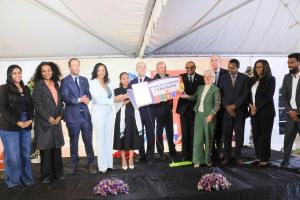
Ethiopia, Netherlands Eye New Investment Frontiers as Trade Ties Mark 100 Years
Nov 28, 2026 1859
Addis Ababa, November 28, 2026 (ENA)— Ethiopia and the Netherlands are seeking to unlock new investment opportunities and deepen their century-old economic partnership. The two countries are looking to transform their longstanding trade relations into a broader economic partnership that harnesses the Netherlands' technological expertise and global market access alongside Ethiopia's resources, production capacity, and expanding investment opportunities. Speaking at a forum marking 100 years of Ethiopia-Netherlands trade relations at the Embassy of the Netherlands in Addis Ababa, Ethiopian Investment Commission (EIC) Commissioner Hana Tehelku emphasized the need to build on the historical partnership by moving beyond conventional trade exchanges toward more diversified and mutually beneficial economic cooperation. She underscored the importance of shifting from raw material exports to value-added production through processing, packaging, and branding. She added this would enable Ethiopia to strengthen its export competitiveness, generate employment, and capture greater value from its resources. The Commissioner also identified manufacturing, renewable energy, water management, logistics, and digital services as promising sectors for expanding Dutch investment, highlighting the potential for closer collaboration in emerging and strategic industries. Hana noted that combining Dutch technological capabilities, specialized expertise, and international market access with Ethiopia's natural resources and growing production capacity could create new opportunities for industrial expansion, job creation, export diversification, and private-sector development. The century-long economic relationship already provides a foundation for this next phase of cooperation. Early ventures, including the Wonji Sugar Factory and Desta Candy, demonstrated the longstanding commercial connections between the two countries. Over the years, these ties have evolved into a broader investment partnership, with Dutch-linked businesses, including Heineken, Holland Yogurt, and Zequala Horticulture, alongside companies operating in Ethiopia's horticulture and floriculture industries, contributing to the country's economic activities. Looking toward the next century, Hana stressed that sustaining and expanding the partnership would require continued improvements in the investment climate, particularly through transparent administrative procedures, efficient logistics, and a more conducive business environment. She also highlighted human capital development as a critical pillar of future cooperation, calling for stronger collaboration among universities, technical and vocational education institutions, young entrepreneurs, and women-led businesses. The Commissioner invited Dutch investors to explore Ethiopia's expanding investment opportunities and increase their engagement across strategic sectors, reaffirming the Ethiopian Investment Commission's commitment to facilitating investment and supporting businesses. During a panel discussion organized by the Ethiopia-Netherlands Business Association (ENLBA), Hana also outlined the Ethiopian government's investment reforms, the progress achieved, and the opportunities these changes are creating for domestic and foreign investors.U The forum, jointly organized by ENLBA and the Embassy of the Netherlands under the theme "100 Years of Living Trade: Connecting Heritage, Investment and the Future," brought together former Ethiopian Prime Minister Hailemariam Desalegn, senior government officials, diplomats, and business leaders. Beyond commemorating a century of commercial relations, the gathering provided a platform to examine emerging investment opportunities and identify ways to translate the historical partnership into stronger economic cooperation in the decades ahead. A book documenting the 100-year history of Ethiopia-Netherlands relations was also launched at the conclusion of the event.
' + getPhotos(pictures, true) + '
';
/*let navs = getNavs();
let lastNav = navs[navs.length - 1];
if (pictures.length > 10) {
getNav().classList.add("multiline");
}
for (let i = navs.length; i < pictures.length; i++) {
let newNav = lastNav.cloneNode(true);
lastNav.parentNode.insertBefore(newNav, lastNav.nextSibling);
lastNav = newNav;
}*/
let titleText = document.getElementById("ena_title_text")
if (titleText) {
setTimeout(titleText.scrollIntoView(), 100);
}
}
function getPhotos(pictures, pictureOnly) {
let result = "";
pictures.forEach(picture => {
result += '';
result += '
';
})
return result;
}
function getPhotoImage(picture, pictureOnly) {
let result = '';
if (!pictureOnly) {
result += '';
}
result += '';
result += getPhotoImage(picture, pictureOnly);
result += '
';
if (!pictureOnly) {
result += '';
result += getPhotoText(picture);
result += '
';
}
result += '';
result += '
';
if (!pictureOnly) {
result += '';
}
return result;
}
function getPhotoText(picture) {
let result = '';
result += '';
result += '';
result += '
';
result += '';
result += getPhotoTitle(picture);
result += '
';
result += '';
return result;
}
function getPhotoTitle(picture) {
let image = picture.getElementsByTagName("IMG")[0];
return image.alt;
}
function getPhotoLink(picture) {
let image = picture.getElementsByTagName("IMG")[0];
return image.src.replace("&download=true","");
}
let contents=Array.from(
fragmentElement.getElementsByClassName(
"ena_display_item_content"));
contents.forEach(item => {
item.innerHTML=item.innerHTML.replaceAll(" "," ")})
Array.from(fragmentElement.getElementsByClassName(
"ena_display_item_content")).forEach(item => {
if (item.innerHTML.length!=item.textContent.length) {
item.innerHTML=item.textContent;}});
if (checkModes(["headlines", "alertbar", "slider", "advertisement"])) {
if (checkModes(["headlines", "alertbar"])) {
moveTo(getItems().length > 1 ? 1 : 0);
} else {
moveTo(0);
}
if (checkModes(["slider"])) {
setTimeout(() => autoMove(), 1);
} else {
autoMove();
}
}
function checkModes(modes, prefix){
if (!prefix) prefix = "mode";
var display = fragmentElement.getElementsByClassName(
"ena_display")[0];
for (let i in modes) {
if (display.classList.contains(
"ena_display_" + prefix + "_" + modes[i])) {
return true;
}
}
return false;
}
function getAutoInterval(){
if (checkModes(["advertisement"])) {
return 10000;
}
else {
return 5000;
}
}
function getCarouselNavs(){
return fragmentElement.getElementsByClassName("ena_carousel_control_navs")[0]}
function getPort(){
return fragmentElement.getElementsByClassName("ena_display_port")[0]}
function getItems(){return Array.from(
getPort().getElementsByClassName("ena_display_item"))}
function getNav(){return document.getElementById("ena_display_control_nav")}
function getNavs() {
if (checkModes(["Photos"], "type")) {
return Array.from(
fragmentElement.getElementsByClassName("ena_display_item_picture"));
} else {
return Array.from(
fragmentElement.getElementsByClassName("ena_display_control_nav_item"));
}
}
function getPrev(){
return fragmentElement.getElementsByClassName(
"ena_display_control_arrow_prev")[0];
}
function getNext(){
return fragmentElement.getElementsByClassName(
"ena_display_control_arrow_next")[0];
}
/*function getArrows(){
return fragmentElement.getElementsByClassName(
"ena_display_control_arrows")[0];
}*/
function getCurrent(items){return items.indexOf(items.find(
item => item.classList.contains("ena_display_current")))}
function setCurrent(index, itemsArray){
let currents = [];
itemsArray.forEach((items, i) => {
currents[i] = getCurrent(items);
if (currents[i]>=0)items[currents[i]].classList.add("ena_display_visible");
items.forEach(
item => {
item.classList.remove("ena_display_a");
item.classList.remove("ena_display_b");
item.classList.remove("ena_display_c");
item.classList.remove("ena_display_current");
item.classList.remove("ena_display_backward");
item.classList.remove("ena_display_forward");
})});
/*setTimeout(()=>{*/
itemsArray.forEach((items, i) => {
if(index >= 0 && index < items.length) {
let current=currents[i];
items[index].classList.add("ena_display_current");
if (current<0 || index==current) {
/*if (index==0){
items[items.length-1].classList.add("ena_display_a");
} else {
items[index-1].classList.add("ena_display_a");
}*/
items[index].classList.add("ena_display_b");
/*if (index==items.length-1){
items[0].classList.add("ena_display_c");
} else {
items[index+1].classList.add("ena_display_c");
}*/
} else {
let direction="";
/*setTimeout(()=>{*/
if(isForward(index, current, items.length-1)){
items[index].classList.add("ena_display_c");
/*setTimeout(()=>{*/
items[current].classList.add("ena_display_b");
/*}, 1000);*/
direction="ena_display_forward";
} else {
items[index].classList.add("ena_display_a");
/*setTimeout(()=>{*/
items[current].classList.add("ena_display_b");
/*}, 1000);*/
direction="ena_display_backward";
}
setTimeout(function(){
items[current].classList.add(direction);
items[index].classList.add(direction);
items[current].classList.remove("ena_display_visible");
}, 100);
/*}, 2000);*/
}
}});
/*}, 2000);*/
/*getItems().filter(
item => item.classList.contains("ena_display_current")).forEach(
item => {if (getPort()) getPort().scrollLeft=item.offsetLeft});*/
}
function isForward(index, current, last){
if(index==0&¤t==last)return true;
if(index==last&¤t==0)return false;
return index>current;
}
function moveTo(index){setCurrent(index, [getItems(), getNavs()]);}
function prevIndex(){
var items = getItems();
var index = getCurrent(items) - 1;
if (index < 0) index = items.length - 1;
return index;
}
function nextIndex(){
var items = getItems();
var index = getCurrent(items) + 1;
if (index >= items.length) index = 0;
return index;
}
getNavs().forEach((item, index) => item.onclick = function(){
moveTo(index)});
getPrev().onclick = function(){moveTo(prevIndex())};
getNext().onclick = function(){moveTo(nextIndex())};
fragmentElement.onmouseenter = function(){
autoStop();
//getArrows().style.display="inline-flex";
}
fragmentElement.onmouseleave = function(){
autoMove();
//getArrows().style.display="none";
}
function autoMove(){
autoStop();
if (fragmentElement.getElementsByClassName("portlet-topper").length==0
&& !fragmentElement.ena_timer_display){
fragmentElement.ena_timer_display=setInterval(
() => {
fragmentChild = fragmentElement.children[0];
let visibility = window.getComputedStyle(fragmentChild, null).visibility;
if (visibility != "hidden") {
moveTo(nextIndex());
}
}, getAutoInterval());
}
}
function autoStop(){
clearInterval(fragmentElement.ena_timer_display);
fragmentElement.ena_timer_display = null;
};}());
Videos


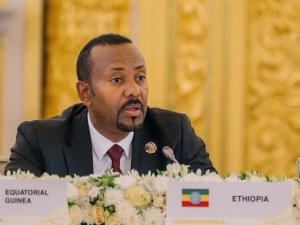
' + getPhotos(pictures, true) + '
';
/*let navs = getNavs();
let lastNav = navs[navs.length - 1];
if (pictures.length > 10) {
getNav().classList.add("multiline");
}
for (let i = navs.length; i < pictures.length; i++) {
let newNav = lastNav.cloneNode(true);
lastNav.parentNode.insertBefore(newNav, lastNav.nextSibling);
lastNav = newNav;
}*/
let titleText = document.getElementById("ena_title_text")
if (titleText) {
setTimeout(titleText.scrollIntoView(), 100);
}
}
function getPhotos(pictures, pictureOnly) {
let result = "";
pictures.forEach(picture => {
result += '';
result += '
';
})
return result;
}
function getPhotoImage(picture, pictureOnly) {
let result = '';
if (!pictureOnly) {
result += '';
}
result += '';
result += getPhotoImage(picture, pictureOnly);
result += '
';
if (!pictureOnly) {
result += '';
result += getPhotoText(picture);
result += '
';
}
result += '';
result += '
';
if (!pictureOnly) {
result += '';
}
return result;
}
function getPhotoText(picture) {
let result = '';
result += '';
result += '';
result += '
';
result += '';
result += getPhotoTitle(picture);
result += '
';
result += '';
return result;
}
function getPhotoTitle(picture) {
let image = picture.getElementsByTagName("IMG")[0];
return image.alt;
}
function getPhotoLink(picture) {
let image = picture.getElementsByTagName("IMG")[0];
return image.src.replace("&download=true","");
}
let contents=Array.from(
fragmentElement.getElementsByClassName(
"ena_display_item_content"));
contents.forEach(item => {
item.innerHTML=item.innerHTML.replaceAll(" "," ")})
Array.from(fragmentElement.getElementsByClassName(
"ena_display_item_content")).forEach(item => {
if (item.innerHTML.length!=item.textContent.length) {
item.innerHTML=item.textContent;}});
if (checkModes(["headlines", "alertbar", "slider", "advertisement"])) {
if (checkModes(["headlines", "alertbar"])) {
moveTo(getItems().length > 1 ? 1 : 0);
} else {
moveTo(0);
}
if (checkModes(["slider"])) {
setTimeout(() => autoMove(), 1);
} else {
autoMove();
}
}
function checkModes(modes, prefix){
if (!prefix) prefix = "mode";
var display = fragmentElement.getElementsByClassName(
"ena_display")[0];
for (let i in modes) {
if (display.classList.contains(
"ena_display_" + prefix + "_" + modes[i])) {
return true;
}
}
return false;
}
function getAutoInterval(){
if (checkModes(["advertisement"])) {
return 10000;
}
else {
return 5000;
}
}
function getCarouselNavs(){
return fragmentElement.getElementsByClassName("ena_carousel_control_navs")[0]}
function getPort(){
return fragmentElement.getElementsByClassName("ena_display_port")[0]}
function getItems(){return Array.from(
getPort().getElementsByClassName("ena_display_item"))}
function getNav(){return document.getElementById("ena_display_control_nav")}
function getNavs() {
if (checkModes(["Photos"], "type")) {
return Array.from(
fragmentElement.getElementsByClassName("ena_display_item_picture"));
} else {
return Array.from(
fragmentElement.getElementsByClassName("ena_display_control_nav_item"));
}
}
function getPrev(){
return fragmentElement.getElementsByClassName(
"ena_display_control_arrow_prev")[0];
}
function getNext(){
return fragmentElement.getElementsByClassName(
"ena_display_control_arrow_next")[0];
}
/*function getArrows(){
return fragmentElement.getElementsByClassName(
"ena_display_control_arrows")[0];
}*/
function getCurrent(items){return items.indexOf(items.find(
item => item.classList.contains("ena_display_current")))}
function setCurrent(index, itemsArray){
let currents = [];
itemsArray.forEach((items, i) => {
currents[i] = getCurrent(items);
if (currents[i]>=0)items[currents[i]].classList.add("ena_display_visible");
items.forEach(
item => {
item.classList.remove("ena_display_a");
item.classList.remove("ena_display_b");
item.classList.remove("ena_display_c");
item.classList.remove("ena_display_current");
item.classList.remove("ena_display_backward");
item.classList.remove("ena_display_forward");
})});
/*setTimeout(()=>{*/
itemsArray.forEach((items, i) => {
if(index >= 0 && index < items.length) {
let current=currents[i];
items[index].classList.add("ena_display_current");
if (current<0 || index==current) {
/*if (index==0){
items[items.length-1].classList.add("ena_display_a");
} else {
items[index-1].classList.add("ena_display_a");
}*/
items[index].classList.add("ena_display_b");
/*if (index==items.length-1){
items[0].classList.add("ena_display_c");
} else {
items[index+1].classList.add("ena_display_c");
}*/
} else {
let direction="";
/*setTimeout(()=>{*/
if(isForward(index, current, items.length-1)){
items[index].classList.add("ena_display_c");
/*setTimeout(()=>{*/
items[current].classList.add("ena_display_b");
/*}, 1000);*/
direction="ena_display_forward";
} else {
items[index].classList.add("ena_display_a");
/*setTimeout(()=>{*/
items[current].classList.add("ena_display_b");
/*}, 1000);*/
direction="ena_display_backward";
}
setTimeout(function(){
items[current].classList.add(direction);
items[index].classList.add(direction);
items[current].classList.remove("ena_display_visible");
}, 100);
/*}, 2000);*/
}
}});
/*}, 2000);*/
/*getItems().filter(
item => item.classList.contains("ena_display_current")).forEach(
item => {if (getPort()) getPort().scrollLeft=item.offsetLeft});*/
}
function isForward(index, current, last){
if(index==0&¤t==last)return true;
if(index==last&¤t==0)return false;
return index>current;
}
function moveTo(index){setCurrent(index, [getItems(), getNavs()]);}
function prevIndex(){
var items = getItems();
var index = getCurrent(items) - 1;
if (index < 0) index = items.length - 1;
return index;
}
function nextIndex(){
var items = getItems();
var index = getCurrent(items) + 1;
if (index >= items.length) index = 0;
return index;
}
getNavs().forEach((item, index) => item.onclick = function(){
moveTo(index)});
getPrev().onclick = function(){moveTo(prevIndex())};
getNext().onclick = function(){moveTo(nextIndex())};
fragmentElement.onmouseenter = function(){
autoStop();
//getArrows().style.display="inline-flex";
}
fragmentElement.onmouseleave = function(){
autoMove();
//getArrows().style.display="none";
}
function autoMove(){
autoStop();
if (fragmentElement.getElementsByClassName("portlet-topper").length==0
&& !fragmentElement.ena_timer_display){
fragmentElement.ena_timer_display=setInterval(
() => {
fragmentChild = fragmentElement.children[0];
let visibility = window.getComputedStyle(fragmentChild, null).visibility;
if (visibility != "hidden") {
moveTo(nextIndex());
}
}, getAutoInterval());
}
}
function autoStop(){
clearInterval(fragmentElement.ena_timer_display);
fragmentElement.ena_timer_display = null;
};}());