ENA - ENA English
Live:
' + getPhotos(pictures, true) + '
';
/*let navs = getNavs();
let lastNav = navs[navs.length - 1];
if (pictures.length > 10) {
getNav().classList.add("multiline");
}
for (let i = navs.length; i < pictures.length; i++) {
let newNav = lastNav.cloneNode(true);
lastNav.parentNode.insertBefore(newNav, lastNav.nextSibling);
lastNav = newNav;
}*/
let titleText = document.getElementById("ena_title_text")
if (titleText) {
setTimeout(titleText.scrollIntoView(), 100);
}
}
function getPhotos(pictures, pictureOnly) {
let result = "";
pictures.forEach(picture => {
result += '';
result += '
';
})
return result;
}
function getPhotoImage(picture, pictureOnly) {
let result = '';
if (!pictureOnly) {
result += '';
}
result += '';
result += getPhotoImage(picture, pictureOnly);
result += '
';
if (!pictureOnly) {
result += '';
result += getPhotoText(picture);
result += '
';
}
result += '';
result += '
';
if (!pictureOnly) {
result += '';
}
return result;
}
function getPhotoText(picture) {
let result = '';
result += '';
result += ' ';
result += '
';
result += '';
result += getPhotoTitle(picture);
result += '
';
result += '';
return result;
}
function getPhotoTitle(picture) {
let image = picture.getElementsByTagName("IMG")[0];
return image.alt;
}
function getPhotoLink(picture) {
let image = picture.getElementsByTagName("IMG")[0];
return image.src.replace("&download=true","");
}
let contents=Array.from(
fragmentElement.getElementsByClassName(
"ena_display_item_content"));
contents.forEach(item => {
item.innerHTML=item.innerHTML.replaceAll(" "," ")})
Array.from(fragmentElement.getElementsByClassName(
"ena_display_item_content")).forEach(item => {
if (item.innerHTML.length!=item.textContent.length) {
item.innerHTML=item.textContent;}});
if (checkModes(["headlines", "alertbar", "slider", "advertisement"])) {
if (checkModes(["headlines", "alertbar"])) {
moveTo(getItems().length > 1 ? 1 : 0);
} else {
moveTo(0);
}
if (checkModes(["slider"])) {
setTimeout(() => autoMove(), 1);
} else {
autoMove();
}
}
function checkModes(modes, prefix){
if (!prefix) prefix = "mode";
var display = fragmentElement.getElementsByClassName(
"ena_display")[0];
for (let i in modes) {
if (display.classList.contains(
"ena_display_" + prefix + "_" + modes[i])) {
return true;
}
}
return false;
}
function getAutoInterval(){
if (checkModes(["advertisement"])) {
return 10000;
}
else {
return 5000;
}
}
function getCarouselNavs(){
return fragmentElement.getElementsByClassName("ena_carousel_control_navs")[0]}
function getPort(){
return fragmentElement.getElementsByClassName("ena_display_port")[0]}
function getItems(){return Array.from(
getPort().getElementsByClassName("ena_display_item"))}
function getNav(){return document.getElementById("ena_display_control_nav")}
function getNavs() {
if (checkModes(["Photos"], "type")) {
return Array.from(
fragmentElement.getElementsByClassName("ena_display_item_picture"));
} else {
return Array.from(
fragmentElement.getElementsByClassName("ena_display_control_nav_item"));
}
}
function getPrev(){
return fragmentElement.getElementsByClassName(
"ena_display_control_arrow_prev")[0];
}
function getNext(){
return fragmentElement.getElementsByClassName(
"ena_display_control_arrow_next")[0];
}
/*function getArrows(){
return fragmentElement.getElementsByClassName(
"ena_display_control_arrows")[0];
}*/
function getCurrent(items){return items.indexOf(items.find(
item => item.classList.contains("ena_display_current")))}
function setCurrent(index, itemsArray){
let currents = [];
itemsArray.forEach((items, i) => {
currents[i] = getCurrent(items);
if (currents[i]>=0)items[currents[i]].classList.add("ena_display_visible");
items.forEach(
item => {
item.classList.remove("ena_display_a");
item.classList.remove("ena_display_b");
item.classList.remove("ena_display_c");
item.classList.remove("ena_display_current");
item.classList.remove("ena_display_backward");
item.classList.remove("ena_display_forward");
})});
/*setTimeout(()=>{*/
itemsArray.forEach((items, i) => {
if(index >= 0 && index < items.length) {
let current=currents[i];
items[index].classList.add("ena_display_current");
if (current<0 || index==current) {
/*if (index==0){
items[items.length-1].classList.add("ena_display_a");
} else {
items[index-1].classList.add("ena_display_a");
}*/
items[index].classList.add("ena_display_b");
/*if (index==items.length-1){
items[0].classList.add("ena_display_c");
} else {
items[index+1].classList.add("ena_display_c");
}*/
} else {
let direction="";
/*setTimeout(()=>{*/
if(isForward(index, current, items.length-1)){
items[index].classList.add("ena_display_c");
/*setTimeout(()=>{*/
items[current].classList.add("ena_display_b");
/*}, 1000);*/
direction="ena_display_forward";
} else {
items[index].classList.add("ena_display_a");
/*setTimeout(()=>{*/
items[current].classList.add("ena_display_b");
/*}, 1000);*/
direction="ena_display_backward";
}
setTimeout(function(){
items[current].classList.add(direction);
items[index].classList.add(direction);
items[current].classList.remove("ena_display_visible");
}, 100);
/*}, 2000);*/
}
}});
/*}, 2000);*/
/*getItems().filter(
item => item.classList.contains("ena_display_current")).forEach(
item => {if (getPort()) getPort().scrollLeft=item.offsetLeft});*/
}
function isForward(index, current, last){
if(index==0&¤t==last)return true;
if(index==last&¤t==0)return false;
return index>current;
}
function moveTo(index){setCurrent(index, [getItems(), getNavs()]);}
function prevIndex(){
var items = getItems();
var index = getCurrent(items) - 1;
if (index < 0) index = items.length - 1;
return index;
}
function nextIndex(){
var items = getItems();
var index = getCurrent(items) + 1;
if (index >= items.length) index = 0;
return index;
}
getNavs().forEach((item, index) => item.onclick = function(){
moveTo(index)});
getPrev().onclick = function(){moveTo(prevIndex())};
getNext().onclick = function(){moveTo(nextIndex())};
fragmentElement.onmouseenter = function(){
autoStop();
//getArrows().style.display="inline-flex";
}
fragmentElement.onmouseleave = function(){
autoMove();
//getArrows().style.display="none";
}
function autoMove(){
autoStop();
if (fragmentElement.getElementsByClassName("portlet-topper").length==0
&& !fragmentElement.ena_timer_display){
fragmentElement.ena_timer_display=setInterval(
() => {
fragmentChild = fragmentElement.children[0];
let visibility = window.getComputedStyle(fragmentChild, null).visibility;
if (visibility != "hidden") {
moveTo(nextIndex());
}
}, getAutoInterval());
}
}
function autoStop(){
clearInterval(fragmentElement.ena_timer_display);
fragmentElement.ena_timer_display = null;
};}());


Headlines

Ethiopia’s ICAO Council Election Marks Diplomatic Milestone, Strengthens Africa’s Voice in Global Aviation
Nov 27, 2026 339
Addis Ababa, November 27, 2026 (ENA)— Ethiopia’s election to the Governing Council of the International Civil Aviation Organization (ICAO), securing 133 votes, marks a significant diplomatic milestone that strengthens the country’s role in global aviation governance and advances Africa’s representation in international decision-making. According to Policy Brief-One issued by Office of the Prime Minister, Ethiopia secured one of four newly created seats during the 43rd Extraordinary Session of the ICAO Assembly in Montreal, Canada, following the expansion of the Council from 36 to 40 members. The achievement reflects the convergence of Ethiopia’s eight-decade aviation legacy, sustained diplomatic engagement, African solidarity and South-South cooperation, positioning the country to contribute directly to shaping the future of international civil aviation. A key factor behind Ethiopia’s election was its endorsement by the African Union as the continent’s sole candidate for the additional Council seat, with support from the African Civil Aviation Commission (AFCAC). The endorsement represented a coordinated continental effort to strengthen Africa’s voice in global aviation institutions, positioning Ethiopia’s candidacy within a broader agenda of advancing the continent’s collective interests. The diplomatic support also extended beyond Africa through the BRICS platform. The 18th BRICS Summit, held in New Delhi, explicitly welcomed Ethiopia’s candidacy in paragraph 105 of its New Delhi Declaration, recognizing the African Union’s endorsement of the country as the sole African candidate. This wider recognition demonstrated how continental solidarity and cooperation among emerging economies can reinforce the participation of developing countries in international governance institutions. Expanding Ethiopia’s Role in Global Aviation Governance Ethiopia’s membership in the ICAO Council provides an important platform to participate directly in shaping international aviation policies and standards. As the governing body responsible for overseeing ICAO’s work between Assembly sessions, the Council plays a central role in guiding international aviation cooperation and developing Standards and Recommended Practices (SARPs) covering aviation safety, security, air navigation, environmental sustainability and technological innovation. The position also gives Ethiopia an opportunity to contribute to global discussions on aviation decarbonization, carbon offsetting and sustainable aviation fuels, ensuring that emerging international regulations take into account the circumstances and development priorities of African countries and other developing aviation markets. Office of the Prime Minister noted that the Council seat connects Ethiopia’s diplomatic engagement with its broader economic transformation ambitions. With Ethiopian Airlines, expanding airport infrastructure, modernizing air navigation services and ICAO-aligned aviation training institutions, the country has an established aviation foundation upon which to build greater international connectivity and economic opportunities. The Council membership is expected to further reinforce international confidence in Ethiopia’s aviation regulatory institutions, support the development of its aviation industry and strengthen Addis Ababa’s position as a major intercontinental passenger and cargo hub. These opportunities have implications beyond the aviation sector, with improved connectivity potentially supporting export trade, tourism, foreign investment and the creation of skilled employment opportunities for Ethiopian professionals. Advancing Africa’s Aviation Integration Beyond its national significance, Ethiopia’s election provides an institutional platform to advance Africa’s shared aviation priorities within the global governance system. Working in coordination with the African Union and AFCAC, Ethiopia is expected to champion initiatives aimed at accelerating the implementation of the Single African Air Transport Market (SAATM), harmonizing regional airspace management, expanding intra-African connectivity and strengthening aviation safety and technical capacity across the continent. These priorities are central to improving air transport links among African countries, facilitating trade and tourism, and supporting the continent’s broader economic integration agenda. The development also comes at a time when Africa is seeking greater representation in international institutions and a stronger role in shaping global policies that directly affect its economic development. The Office of the Prime Minister emphasized that maximizing the opportunities created by Ethiopia’s election requires sustained institutional readiness and coordinated engagement by aviation authorities, the private sector and young professionals. It stressed the importance of translating diplomatic representation into institutional excellence, ensuring that the country’s new global mandate delivers tangible benefits for its aviation industry, citizens and the African continent. Ethiopia’s election to the ICAO Council thus opens a new chapter in its aviation diplomacy, linking its longstanding aviation experience with greater participation in global decision-making and the advancement of Africa’s collective interests.

Guba-launched Mega Projects Poised to Shape Ethiopia’s Medemer Vision, Say MPs
Nov 27, 2026 726
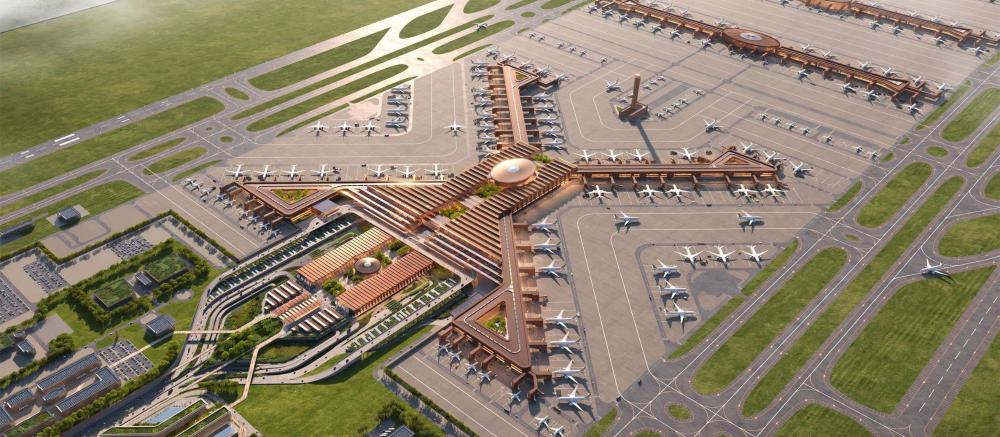
Addis Ababa, November 27, 2026 (ENA)—Ethiopia’s Guba-launched mega-development projects, valued at more than 30 billion USD, hold immense potential to accelerate economic transformation and shape the country’s emerging Medemer civilization, members of the House of Peoples’ Representatives told ENA. The lawmakers described the strategic projects as major engines of national growth, saying their successful completion would expand economic opportunities, enhance citizens’ livelihoods and lay a stronger foundation for Ethiopia’s long-term prosperity. Their remarks follow Prime Minister Abiy Ahmed’s address to the House during the fourth regular session of the first working year of the seventh parliament, where he outlined the progress, strategic significance and national aspirations underpinning the Guba-launched initiatives. Guided by the vision of “A Great Country, A Great People, A Grand Vision,” the projects demonstrate Ethiopia’s capacity to undertake ambitious development initiatives while pursuing greater economic self-reliance, the Prime Minister explained. The strategic portfolio encompasses the Bishoftu International Airport, the Ogaden natural gas project, the 1.5-million-housing development program, nuclear energy initiatives and the Gode soil fertilizer factory. Providing updates on their implementation, PM Abiy disclosed that natural gas from the Ogaden project in the Somali Region is already being used as an input by domestic ceramics factories and for powering Addis Ababa’s city buses, illustrating its contribution to the country's industrial and transport sectors. He also said preparations for the Bishoftu International Airport are advancing with the support of modern artificial intelligence technologies. Initial site selection has been completed, while the tender process for runway construction is underway. The Gode fertilizer factory is also progressing under close supervision, with the development including nearly 18,000 residential units for workers. Meanwhile, the 1.5-million-housing program is incorporating modern construction approaches designed to take citizens’ purchasing power into account. Approached by ENA, MP Addis Alemayehu said the pace of implementation of the mega-projects within a relatively short period was encouraging. She described them as a manifestation of the vision to hand over a more prosperous Ethiopia to future generations. MP Abiyot Delelegn, for her part, highlighted the projects’ round-the-clock construction activities as evidence of an emerging work culture focused on translating national ambitions into tangible results. She said the initiatives have considerable potential to shape Ethiopia’s new Medemer civilization by strengthening the country's development capacity and expanding opportunities for its people. Another MP, Samson Wondmeneh, said the government's vision of positioning Ethiopia as an African beacon of prosperity is being pursued through strategic development planning and major national investments. The lawmaker further reaffirmed their commitment to discharging their parliamentary oversight, support and regulatory responsibilities to ensure the projects are completed within their stipulated timelines and required quality standards and become operational. They emphasized that the successful realization of these strategic investments would be instrumental in advancing Ethiopia’s economic transformation and building a foundation for sustainable prosperity for generations to come.
Prime Minister Abiy Reaffirms Ethiopia’s Readiness to Help Restore Peace in Sudan
Nov 27, 2026 1236
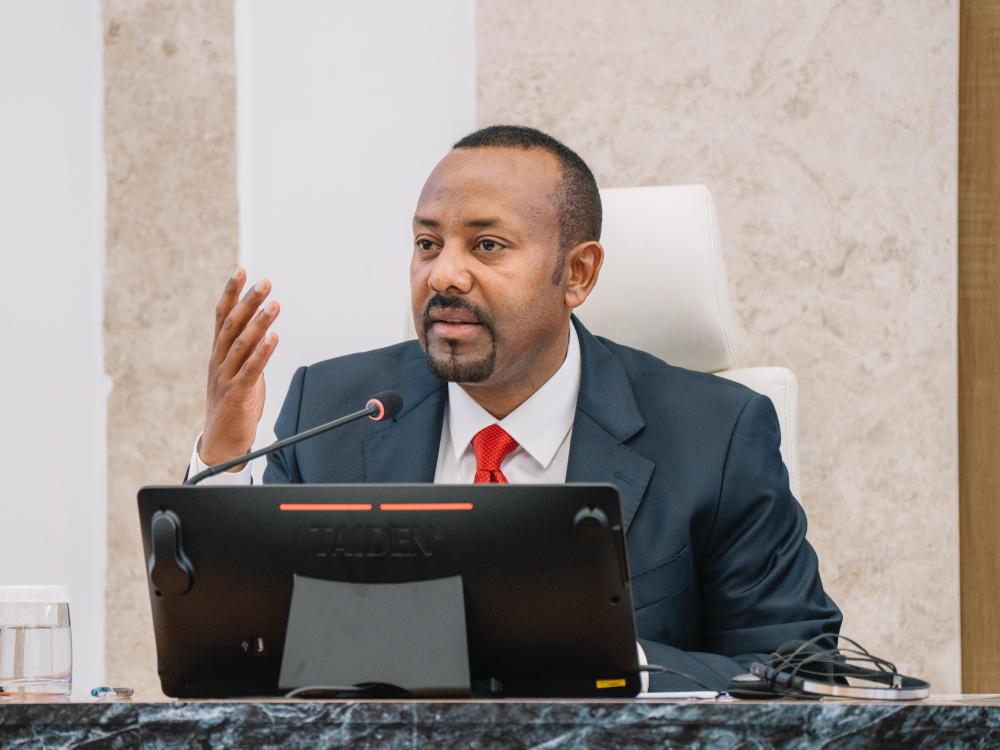
Addis Ababa, November 27, 2026 (ENA)— Prime Minister Abiy Ahmed has reaffirmed Ethiopia’s readiness to commit its resources to restoring peace and stability in war-torn Sudan. The Prime Minister also called on Eritrea to end its alleged support for forces hostile to Ethiopia and embrace peaceful coexistence and mutual development. Addressing the House of Peoples’ Representatives on Thursday, the Prime Minister outlined Ethiopia’s foreign policy priorities toward neighboring countries, underscoring the country’s commitment to regional peace, cooperation and shared prosperity. On Sudan, Prime Minister Abiy reiterated Ethiopia’s longstanding commitment to its neighbor’s stability, emphasizing the deep historical, social and brotherly ties between the two countries. “Sudan’s peace is our peace,” he told lawmakers, reaffirming Ethiopia’s willingness to contribute whatever it can to help the country overcome its devastating conflict. “If Ethiopia can contribute in any way to restoring Sudan to where it was, we are ready to spend our time and our money,” he said, urging the warring parties to give the proposed peace initiative a chance, noting that dialogue could produce meaningful results. The Prime Minister’s remarks build on his recent initiative inviting Sudanese military, political and civilian stakeholders to an inclusive national dialogue hosted and facilitated by Ethiopia. In a statement issued in Arabic, PM Abiy described the initiative as a sincere effort to help Sudan overcome its prolonged conflict through an inclusive, Sudanese-led political process. “At this critical historical juncture, the Ethiopian government is putting forward a sincere and genuine initiative calling on all Sudanese parties, across their military, political, and civilian components, to participate in a comprehensive and open Sudanese dialogue to be hosted and facilitated by Ethiopia,” he stated. Turning to Eritrea, the Prime Minister detailed Ethiopia’s extensive diplomatic and economic efforts to build constructive relations following the rapprochement between the two countries. The Premier also expressing disappointment over Eritrean regime’s rejection of opportunities for cooperation. He recalled that Ethiopia had played an active role in helping Eritrea reconnect with regional neighbors after years of diplomatic isolation, including providing Ethiopian aircraft to facilitate engagements with countries with which Eritrean officials had limited contact. Beyond diplomatic engagement, Ethiopia had also proposed practical economic cooperation, including electricity supplies at domestic Ethiopian rates and joint development of roads and ports to address infrastructure and energy constraints. However, he said, the Eritrean government rejected these proposals, arguing that its lack of a development-oriented vision had undermined opportunities for bilateral cooperation. “The reason is that while the Eritrean government is a government for the time being, words like development and growth do not exist in its vocabulary,” PM Abiy said. The Prime Minister also recalled the initial goodwill demonstrated by Eritrea following the attack on Ethiopia’s Northern Command but said relations subsequently deteriorated after Eritrean forces entered the Tigray region during the conflict. He accused the forces of involvement in killings, looting and the destruction of infrastructure, adding that relations further soured following the signing of the Pretoria Peace Agreement. Against this backdrop, Prime Minister Abiy called on Eritrea to make a clear choice between confrontation and cooperation, outlining two essential expectations for the future of bilateral relations: ending support for forces hostile to Ethiopia and pursuing mutually beneficial development. He urged Asmara to immediately stop arming Ethiopia’s adversaries, end its alleged role as a weapons supply channel and cease cooperation with forces undermining peace and stability.
COP32 Offers Ethiopia A Strategic Path to Green Growth and Global Influence
Nov 27, 2026 1675
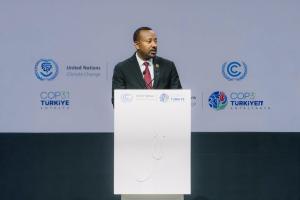
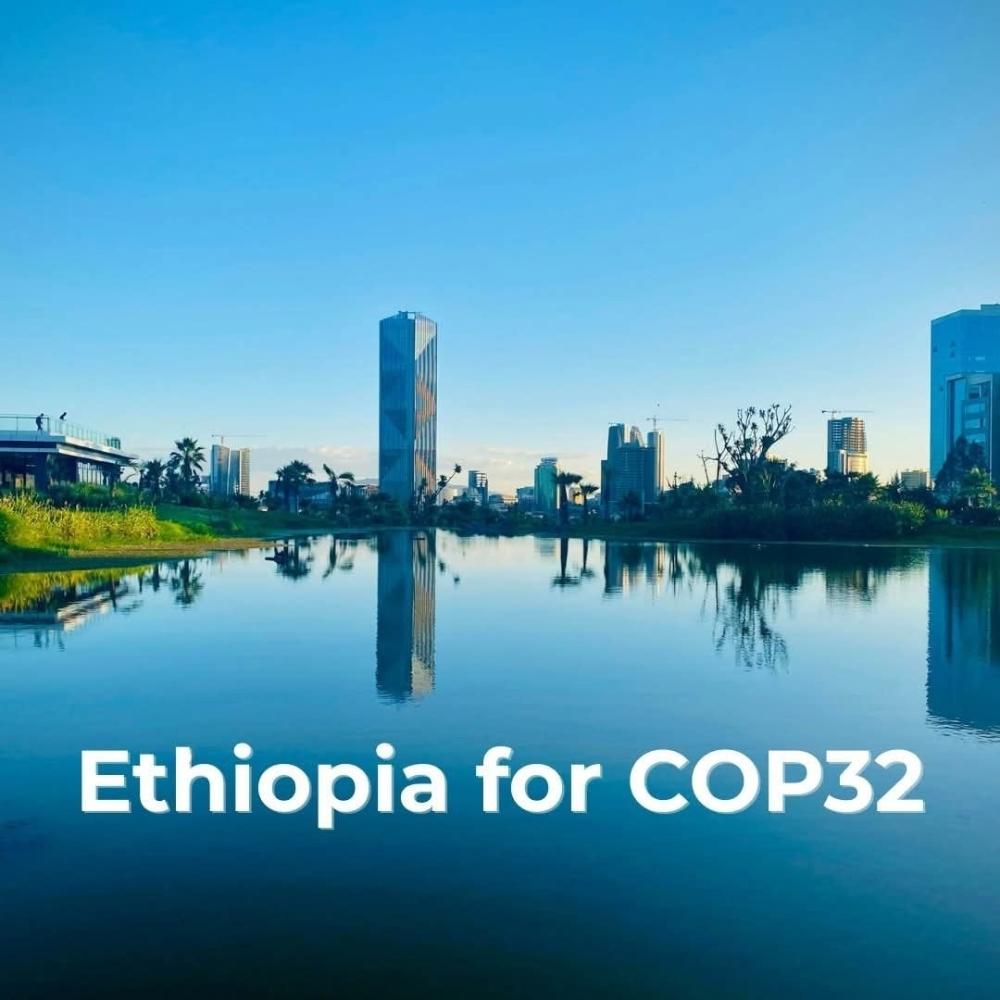
By Staff Writer When world leaders, policymakers, climate negotiators, investors, and development partners gather in Addis Ababa from November 8 to 19, 2027, for the 32nd United Nations Climate Change Conference (COP32), Ethiopia will take center stage in global climate diplomacy at a defining moment for the country and the African continent. Hosting the summit presents Ethiopia with a historic opportunity to strengthen its international standing, mobilize climate finance, attract green investment, deepen development partnerships, and accelerate its transition toward a climate-resilient, low-carbon economy. Beyond convening one of the world's largest diplomatic gatherings, COP32 provides Ethiopia with a powerful platform to place Africa's climate priorities at the heart of global negotiations while showcasing its progress in renewable energy, environmental restoration, sustainable transport, and green development. The opportunity also carries significant political and economic weight. For Ethiopia, COP32 is not simply an international conference to be organized and successfully delivered. It is an opportunity to translate diplomatic leadership into concrete development gains, positioning the country as a destination for climate investment and a prominent voice in shaping the future of global climate cooperation. Ethiopia secured the hosting role following unanimous endorsement by the African Group of Negotiators at COP30 in Belém, Brazil, in November 2025, after Nigeria withdrew its competing bid in support of a unified African candidacy. The endorsement reflected continental confidence in Ethiopia's diplomatic standing and its growing engagement in international climate affairs. The conference also builds on Ethiopia's experience hosting the Second Africa Climate Summit in September 2025, which attracted more than 25,000 participants and produced the Addis Ababa Declaration. As the headquarters of the African Union, Addis Ababa is uniquely positioned to bring together world leaders, policymakers, development partners, climate experts, and investors. The Strategic Value of COP32 The strategic value of COP32 extends far beyond international recognition. It offers Ethiopia an opportunity to mobilize financing for renewable energy, climate-smart agriculture, resilient infrastructure, forest restoration, clean technologies, and sustainable urban development. It also provides a critical platform for advocating accessible, predictable, affordable, and concessional climate finance for African countries, which have contributed relatively little to historical global emissions but face disproportionately severe climate impacts. At COP29 in Baku, countries agreed on a new climate finance goal calling on developed countries to take the lead in mobilizing at least 300 billion USD annually for developing nations by 2035, within a broader ambition to scale climate finance from all sources to 1.3 trillion USD annually. Ethiopia can use its COP32 presidency to advocate for practical mechanisms that translate these commitments into accessible financing for vulnerable economies. Prime Minister Abiy Ahmed has consistently emphasized that climate action must be viewed as an economic and development priority rather than a narrowly environmental concern. Addressing the opening of COP31 in Antalya, Türkiye, in November 2026, he stated: "In Ethiopia, climate action is economic policy." The statement captures an important dimension of Ethiopia's approach to climate change: environmental protection, economic transformation, agricultural productivity, energy development, and livelihood security are interconnected priorities. During the same conference, the Prime Minister called for climate financing that reaches vulnerable communities before disasters occur, stressing: "Funding should be agreed in advance. It can then move at the speed of our forecasters, while there is still time to save lives." These remarks offer a clear indication of the priorities Ethiopia intends to advance as it prepares to assume a prominent role in international climate diplomacy through COP32. Prime Minister Abiy has also highlighted the broader national benefits of hosting the conference. In convening the COP32 National Steering Committee on November 16, 2026, he described the summit as an opportunity to advance Ethiopia's climate and environmental agenda, strengthen international partnerships, attract investment, and translate national initiatives into lasting development outcomes. He further emphasized the need for a coordinated, whole-of-government approach to ensure that preparations are aligned and the country is ready to deliver a successful international conference. Domestic Transformation: Building Credibility Through Action Ethiopia's ambition to host COP32 is anchored in domestic initiatives demonstrating its commitment to environmental protection, renewable energy, and climate-resilient development. One of the most visible is the Green Legacy Initiative, launched in 2019. The nationwide program has mobilized millions of citizens in large-scale tree-planting and environmental restoration campaigns. Government figures indicate that more than 56 billion seedlings have been planted through the initiative, reflecting the scale of the country's efforts to restore degraded landscapes and expand green spaces. The initiative has become an important component of Ethiopia's environmental diplomacy. It also demonstrates how public participation can support national environmental objectives while creating awareness about the importance of protecting natural resources. Speaking at the Second Africa Climate Summit in Addis Ababa in September 2025, Prime Minister Abiy highlighted the initiative as an example of Ethiopia's homegrown climate solutions. He also articulated a broader African ambition, declaring: "We are not here to negotiate our survival. We are here to design the world's next climate economy." The statement reflects Ethiopia's intention to move beyond the conventional portrayal of Africa as merely a victim of climate change and instead position the continent as an active contributor to global climate solutions. In the energy sector, Ethiopia has steadily expanded its renewable electricity generation capacity through investments in hydropower, wind, and solar energy. The inauguration of the Grand Ethiopian Renaissance Dam (GERD) in September 2025 marked a major milestone in the country's ambition to strengthen clean energy generation, expand electricity access, and increase regional power exports. Ethiopia has also taken significant steps toward sustainable transport. Since January 2024, the country has restricted imports of conventional petrol- and diesel-powered vehicles as part of its transition toward electric mobility. Although expanding charging infrastructure, ensuring vehicle affordability, and strengthening electricity distribution remain important priorities, the policy positions Ethiopia as an early mover in Africa's clean transport transition. These initiatives complement Ethiopia's updated Nationally Determined Contribution (NDC 3.0), which targets a reduction in projected greenhouse gas emissions of up to 70.3 percent below business-as-usual levels by 2035, contingent on international support, alongside a long-term ambition of achieving carbon neutrality by 2050. However, Ethiopia's climate agenda extends beyond emissions reduction. Climate change poses significant risks to agriculture, food security, water resources, and rural livelihoods. World Bank assessments have estimated that climate impacts could cost the country between 1 and 1.5 percent of GDP annually, with the potential for substantially greater losses in the coming decades. Consequently, adaptation financing, climate-resilient agriculture, water resource management, early-warning systems, and disaster preparedness must remain central priorities in Ethiopia's preparations for COP32. This is particularly important given the Prime Minister's recent emphasis on early action and financial support for vulnerable communities. At COP31, he underscored the urgency of ensuring that climate finance is available when early warnings are issued and reaches those most exposed to climate risks. His appeal was particularly powerful when he observed: "Our farmers once trusted the seasons to arrive on time. Let us make sure our support does." The statement captures the human dimension of climate change and reinforces the importance of ensuring that international climate commitments produce tangible benefits for communities whose livelihoods depend on increasingly unpredictable weather patterns. Advancing Africa's Climate Priorities COP32 will give Ethiopia an influential platform to amplify Africa's collective position in international climate negotiations, particularly on climate finance, technology transfer, adaptation, and loss and damage. For African countries, the central challenge is balancing the urgent need for industrialization, energy access, employment creation, and agricultural modernization with the growing threats posed by climate change. Ethiopia can use its COP32 presidency to champion a development framework that recognizes Africa's right to economic transformation while supporting clean energy, environmental protection, and climate resilience. At the Second Africa Climate Summit, Prime Minister Abiy offered a particularly important perspective on the continent's position in the global climate economy. He called for a shift in how international partners approach Africa's climate ambitions, stating: "It is time to replace climate aid with climate investment. This is not charity. It is the most strategic investment humanity can make." This position could become a defining theme of Ethiopia's COP32 diplomacy. Rather than treating Africa primarily as a recipient of climate assistance, Ethiopia can advocate for investment partnerships that recognize the continent's enormous renewable energy potential, agricultural resources, biodiversity, critical minerals, and young population. The continent has considerable opportunities to develop solar, wind, geothermal, and hydropower resources, expand green industrialization, strengthen sustainable agriculture, and build climate-resilient infrastructure. However, realizing these opportunities requires affordable financing, technology transfer, capacity building, and stronger international partnerships. COP32 should therefore provide a platform for moving beyond declarations toward practical investment agreements, bankable projects, and measurable implementation commitments. The summit will also offer Ethiopia an opportunity to showcase its tourism potential, biodiversity, cultural heritage, and emerging economic opportunities. From the historical landmarks of Aksum and Lalibela to the Simien and Bale Mountains, the Great Rift Valley, and Lake Tana, Ethiopia possesses considerable natural and cultural assets that can reinforce its broader green growth narrative. Hosting thousands of international delegates will also generate economic opportunities across tourism, hospitality, transport, construction, and other service industries. Investments in conference facilities, urban infrastructure, transport networks, accommodation, and digital connectivity could produce economic benefits extending well beyond the summit. Turning COP32 into Lasting National Gains With less than a year remaining before the summit opens, effective implementation will be decisive in turning Ethiopia's hosting responsibilities into lasting national benefits. The government's establishment of coordination structures and engagement with international partners, alongside Prime Minister Abiy's convening of the National Steering Committee, signals the importance attached to a coordinated national preparation process. Successful delivery will require targeted investments in conference venues, hospitality, public transport, security, telecommunications, and urban environmental management. Equally important will be the participation of the private sector, universities, research institutions, civil society organizations, youth groups, and local communities. The private sector, in particular, has an important role to play in converting the international attention generated by COP32 into investment opportunities. Businesses operating in renewable energy, electric mobility, construction, agriculture, tourism, manufacturing, and financial services should be encouraged to develop partnerships and investment proposals ahead of the conference. Ethiopia must also ensure that its domestic climate achievements are supported by transparent implementation and measurable results. Expanding last-mile electricity access, scaling up clean cooking solutions, strengthening electric vehicle infrastructure, improving climate-smart agricultural practices, and monitoring the long-term survival of planted trees are among the important benchmarks that can demonstrate progress. The conference should also provide an opportunity to strengthen Ethiopia's institutional capacity for climate finance mobilization, project preparation, environmental governance, and international partnership management. Ultimately, the country's credibility as a climate host will depend not only on its ability to organize a successful international gathering but also on its capacity to demonstrate that its climate ambitions are translating into practical development outcomes. A Defining Opportunity for Ethiopia and Africa COP32 represents both an international responsibility and a defining national opportunity for Ethiopia. Prime Minister Abiy Ahmed's vision of moving from climate aid toward climate investment, combined with his emphasis on early action, accessible financing, and climate-resilient development, provides an important foundation for shaping Ethiopia's engagement with the international community. The country's presidency can help advance a more balanced global climate agenda—one that recognizes Africa's development aspirations, acknowledges its disproportionate vulnerability to climate impacts, and creates opportunities for the continent to participate more meaningfully in the emerging global green economy. For Ethiopia, the challenge is to ensure that the diplomatic visibility and international partnerships generated by COP32 translate into renewable energy investments, stronger infrastructure, employment opportunities, improved livelihoods, and greater climate resilience. The ultimate measure of Ethiopia's COP32 presidency will not simply be the successful organization of a global summit in Addis Ababa. It will be the extent to which the conference helps convert international commitments into tangible investments, strengthens Africa's voice in global climate governance, and delivers lasting benefits for Ethiopians and the wider African continent.
Nat'l Dialogue Big Step Forward in Building Culture of Conversation: PM Abiy
Nov 26, 2026 4439
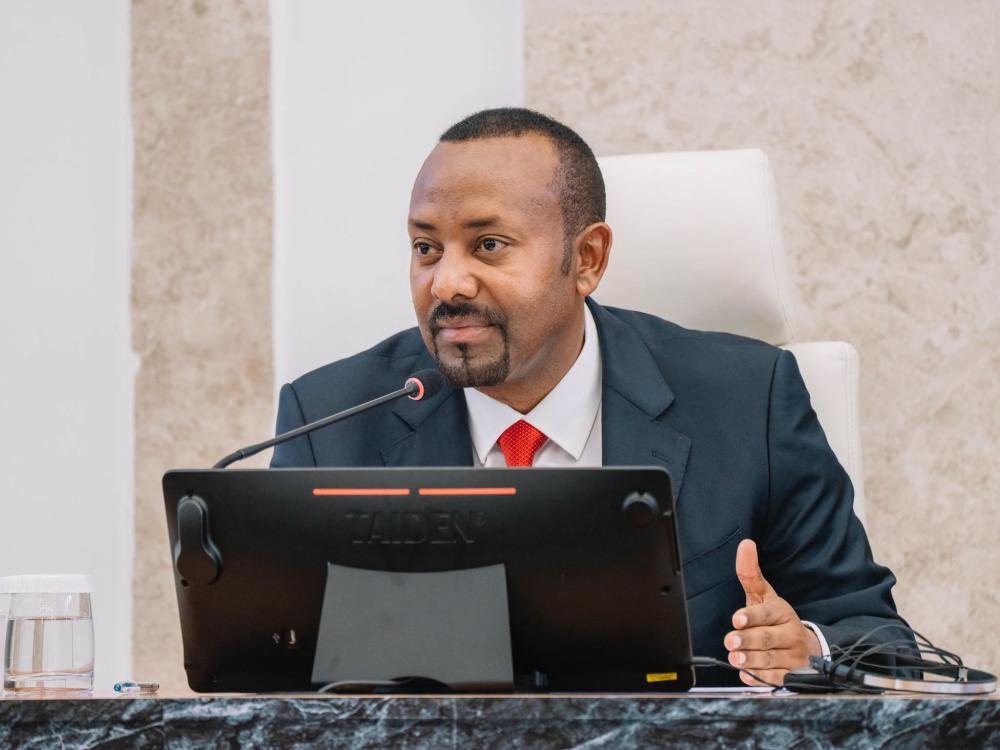
Addis Ababa, November 26, 2026 (ENA)— The Ethiopian National Dialogue is a major leap forward in the nation's history, laying the foundation for a culture of conversation and helping build national consensus, Prime Minister Abiy Ahmed noted. Addressing the House of People’s Representatives today, the PM said hundreds of thousands of Ethiopians, both at home and abroad, had participated in extensive discussions over the past four years on issues of national importance. He described the process as a significant achievement, noting that it brought together people from different regions, ethnic groups, languages, and religious backgrounds to openly discuss the country's affairs. The Prime Minister said the dialogue had created an opportunity to understand public concerns, accommodate diverse perspectives, and strengthen a culture of peaceful discussion. PM Abiy noted that around 4,000 participants held discussions in one hall for 46 days, describing the achievement as a major milestone in Ethiopia's political history. He commended the National Dialogue Commission for successfully managing the challenging process and compiling its findings and recommendations within a short period. The Premier added that the Commission had submitted recommendations to the federal government and regional administrations, covering issues requiring policy adjustments, administrative measures, and constitutional amendments. According to him, the Medemer Grand Strategy has incorporated many of the recommendations, while legal experts have been working to review constitutional reform proposals. He stressed that constitutional reform should build on existing achievements rather than discard the entire document, emphasizing the need to preserve useful provisions while correcting shortcomings. Referring to Article 39 of the present Constitution as an example, PM Abiy said the recognition of the rights of nations, nationalities, and peoples to use their languages, administer themselves, and protect their rights remains important. However, he noted that provisions that need improvements should be improved rather than being totally eliminated. The Commission had been working with that mind set. PM Abiy expressed confidence that the constitutional review process would be completed in the coming weeks and months, with the participation of the House of People’s Representatives, adding that the outcomes of the dialogue and consultations would eventually be presented to the Ethiopian public. The Prime Minister reaffirmed the government's commitment to implementing ideas raised during the four-year dialogue process through legal, policy, and administrative measures. Turning to the Medemer Grand Strategy, Abiy said it seeks to transform Ethiopia's untapped potential into national capability and, ultimately, national power through institutional development, effective governance, and economic advancement. He emphasized that development alone is not sufficient unless it can be sustained across generations, highlighting the importance of stewardship, responsible leadership, and building institutions capable of preserving national achievements. The strategy, he added, outlines 15 nation-building models designed to strengthen institutions, systems, and national capabilities, alongside economic frameworks for mobilizing and managing capital. The Premier elaborated that Medemer, which is the foundation of the country's long-term development ambitions, emphasizes cooperation and the pooling of individual and collective capacities. He said the strategy is not intended to serve a single political party or government but to establish a shared national direction that transcends political administrations and generations. The Prime Minister further stressed that Ethiopia needs a common long-term vision capable of guiding the country over the next 25, 50, 75, and 100 years, noting that national transformation and the preservation of achievements require collective commitment beyond the tenure of individual governments.
' + getPhotos(pictures, true) + '
';
/*let navs = getNavs();
let lastNav = navs[navs.length - 1];
if (pictures.length > 10) {
getNav().classList.add("multiline");
}
for (let i = navs.length; i < pictures.length; i++) {
let newNav = lastNav.cloneNode(true);
lastNav.parentNode.insertBefore(newNav, lastNav.nextSibling);
lastNav = newNav;
}*/
let titleText = document.getElementById("ena_title_text")
if (titleText) {
setTimeout(titleText.scrollIntoView(), 100);
}
}
function getPhotos(pictures, pictureOnly) {
let result = "";
pictures.forEach(picture => {
result += '';
result += '
';
})
return result;
}
function getPhotoImage(picture, pictureOnly) {
let result = '';
if (!pictureOnly) {
result += '';
}
result += '';
result += getPhotoImage(picture, pictureOnly);
result += '
';
if (!pictureOnly) {
result += '';
result += getPhotoText(picture);
result += '
';
}
result += '';
result += '
';
if (!pictureOnly) {
result += '';
}
return result;
}
function getPhotoText(picture) {
let result = '';
result += '';
result += '';
result += '
';
result += '';
result += getPhotoTitle(picture);
result += '
';
result += '';
return result;
}
function getPhotoTitle(picture) {
let image = picture.getElementsByTagName("IMG")[0];
return image.alt;
}
function getPhotoLink(picture) {
let image = picture.getElementsByTagName("IMG")[0];
return image.src.replace("&download=true","");
}
let contents=Array.from(
fragmentElement.getElementsByClassName(
"ena_display_item_content"));
contents.forEach(item => {
item.innerHTML=item.innerHTML.replaceAll(" "," ")})
Array.from(fragmentElement.getElementsByClassName(
"ena_display_item_content")).forEach(item => {
if (item.innerHTML.length!=item.textContent.length) {
item.innerHTML=item.textContent;}});
if (checkModes(["headlines", "alertbar", "slider", "advertisement"])) {
if (checkModes(["headlines", "alertbar"])) {
moveTo(getItems().length > 1 ? 1 : 0);
} else {
moveTo(0);
}
if (checkModes(["slider"])) {
setTimeout(() => autoMove(), 1);
} else {
autoMove();
}
}
function checkModes(modes, prefix){
if (!prefix) prefix = "mode";
var display = fragmentElement.getElementsByClassName(
"ena_display")[0];
for (let i in modes) {
if (display.classList.contains(
"ena_display_" + prefix + "_" + modes[i])) {
return true;
}
}
return false;
}
function getAutoInterval(){
if (checkModes(["advertisement"])) {
return 10000;
}
else {
return 5000;
}
}
function getCarouselNavs(){
return fragmentElement.getElementsByClassName("ena_carousel_control_navs")[0]}
function getPort(){
return fragmentElement.getElementsByClassName("ena_display_port")[0]}
function getItems(){return Array.from(
getPort().getElementsByClassName("ena_display_item"))}
function getNav(){return document.getElementById("ena_display_control_nav")}
function getNavs() {
if (checkModes(["Photos"], "type")) {
return Array.from(
fragmentElement.getElementsByClassName("ena_display_item_picture"));
} else {
return Array.from(
fragmentElement.getElementsByClassName("ena_display_control_nav_item"));
}
}
function getPrev(){
return fragmentElement.getElementsByClassName(
"ena_display_control_arrow_prev")[0];
}
function getNext(){
return fragmentElement.getElementsByClassName(
"ena_display_control_arrow_next")[0];
}
/*function getArrows(){
return fragmentElement.getElementsByClassName(
"ena_display_control_arrows")[0];
}*/
function getCurrent(items){return items.indexOf(items.find(
item => item.classList.contains("ena_display_current")))}
function setCurrent(index, itemsArray){
let currents = [];
itemsArray.forEach((items, i) => {
currents[i] = getCurrent(items);
if (currents[i]>=0)items[currents[i]].classList.add("ena_display_visible");
items.forEach(
item => {
item.classList.remove("ena_display_a");
item.classList.remove("ena_display_b");
item.classList.remove("ena_display_c");
item.classList.remove("ena_display_current");
item.classList.remove("ena_display_backward");
item.classList.remove("ena_display_forward");
})});
/*setTimeout(()=>{*/
itemsArray.forEach((items, i) => {
if(index >= 0 && index < items.length) {
let current=currents[i];
items[index].classList.add("ena_display_current");
if (current<0 || index==current) {
/*if (index==0){
items[items.length-1].classList.add("ena_display_a");
} else {
items[index-1].classList.add("ena_display_a");
}*/
items[index].classList.add("ena_display_b");
/*if (index==items.length-1){
items[0].classList.add("ena_display_c");
} else {
items[index+1].classList.add("ena_display_c");
}*/
} else {
let direction="";
/*setTimeout(()=>{*/
if(isForward(index, current, items.length-1)){
items[index].classList.add("ena_display_c");
/*setTimeout(()=>{*/
items[current].classList.add("ena_display_b");
/*}, 1000);*/
direction="ena_display_forward";
} else {
items[index].classList.add("ena_display_a");
/*setTimeout(()=>{*/
items[current].classList.add("ena_display_b");
/*}, 1000);*/
direction="ena_display_backward";
}
setTimeout(function(){
items[current].classList.add(direction);
items[index].classList.add(direction);
items[current].classList.remove("ena_display_visible");
}, 100);
/*}, 2000);*/
}
}});
/*}, 2000);*/
/*getItems().filter(
item => item.classList.contains("ena_display_current")).forEach(
item => {if (getPort()) getPort().scrollLeft=item.offsetLeft});*/
}
function isForward(index, current, last){
if(index==0&¤t==last)return true;
if(index==last&¤t==0)return false;
return index>current;
}
function moveTo(index){setCurrent(index, [getItems(), getNavs()]);}
function prevIndex(){
var items = getItems();
var index = getCurrent(items) - 1;
if (index < 0) index = items.length - 1;
return index;
}
function nextIndex(){
var items = getItems();
var index = getCurrent(items) + 1;
if (index >= items.length) index = 0;
return index;
}
getNavs().forEach((item, index) => item.onclick = function(){
moveTo(index)});
getPrev().onclick = function(){moveTo(prevIndex())};
getNext().onclick = function(){moveTo(nextIndex())};
fragmentElement.onmouseenter = function(){
autoStop();
//getArrows().style.display="inline-flex";
}
fragmentElement.onmouseleave = function(){
autoMove();
//getArrows().style.display="none";
}
function autoMove(){
autoStop();
if (fragmentElement.getElementsByClassName("portlet-topper").length==0
&& !fragmentElement.ena_timer_display){
fragmentElement.ena_timer_display=setInterval(
() => {
fragmentChild = fragmentElement.children[0];
let visibility = window.getComputedStyle(fragmentChild, null).visibility;
if (visibility != "hidden") {
moveTo(nextIndex());
}
}, getAutoInterval());
}
}
function autoStop(){
clearInterval(fragmentElement.ena_timer_display);
fragmentElement.ena_timer_display = null;
};}());
Featured

Ethiopia’s ICAO Council Election Marks Diplomatic Milestone, Strengthens Africa’s Voice in Global Aviation
Nov 27, 2026 339
Addis Ababa, November 27, 2026 (ENA)— Ethiopia’s election to the Governing Council of the International Civil Aviation Organization (ICAO), securing 133 votes, marks a significant diplomatic milestone that strengthens the country’s role in global aviation governance and advances Africa’s representation in international decision-making. According to Policy Brief-One issued by Office of the Prime Minister, Ethiopia secured one of four newly created seats during the 43rd Extraordinary Session of the ICAO Assembly in Montreal, Canada, following the expansion of the Council from 36 to 40 members. The achievement reflects the convergence of Ethiopia’s eight-decade aviation legacy, sustained diplomatic engagement, African solidarity and South-South cooperation, positioning the country to contribute directly to shaping the future of international civil aviation. A key factor behind Ethiopia’s election was its endorsement by the African Union as the continent’s sole candidate for the additional Council seat, with support from the African Civil Aviation Commission (AFCAC). The endorsement represented a coordinated continental effort to strengthen Africa’s voice in global aviation institutions, positioning Ethiopia’s candidacy within a broader agenda of advancing the continent’s collective interests. The diplomatic support also extended beyond Africa through the BRICS platform. The 18th BRICS Summit, held in New Delhi, explicitly welcomed Ethiopia’s candidacy in paragraph 105 of its New Delhi Declaration, recognizing the African Union’s endorsement of the country as the sole African candidate. This wider recognition demonstrated how continental solidarity and cooperation among emerging economies can reinforce the participation of developing countries in international governance institutions. Expanding Ethiopia’s Role in Global Aviation Governance Ethiopia’s membership in the ICAO Council provides an important platform to participate directly in shaping international aviation policies and standards. As the governing body responsible for overseeing ICAO’s work between Assembly sessions, the Council plays a central role in guiding international aviation cooperation and developing Standards and Recommended Practices (SARPs) covering aviation safety, security, air navigation, environmental sustainability and technological innovation. The position also gives Ethiopia an opportunity to contribute to global discussions on aviation decarbonization, carbon offsetting and sustainable aviation fuels, ensuring that emerging international regulations take into account the circumstances and development priorities of African countries and other developing aviation markets. Office of the Prime Minister noted that the Council seat connects Ethiopia’s diplomatic engagement with its broader economic transformation ambitions. With Ethiopian Airlines, expanding airport infrastructure, modernizing air navigation services and ICAO-aligned aviation training institutions, the country has an established aviation foundation upon which to build greater international connectivity and economic opportunities. The Council membership is expected to further reinforce international confidence in Ethiopia’s aviation regulatory institutions, support the development of its aviation industry and strengthen Addis Ababa’s position as a major intercontinental passenger and cargo hub. These opportunities have implications beyond the aviation sector, with improved connectivity potentially supporting export trade, tourism, foreign investment and the creation of skilled employment opportunities for Ethiopian professionals. Advancing Africa’s Aviation Integration Beyond its national significance, Ethiopia’s election provides an institutional platform to advance Africa’s shared aviation priorities within the global governance system. Working in coordination with the African Union and AFCAC, Ethiopia is expected to champion initiatives aimed at accelerating the implementation of the Single African Air Transport Market (SAATM), harmonizing regional airspace management, expanding intra-African connectivity and strengthening aviation safety and technical capacity across the continent. These priorities are central to improving air transport links among African countries, facilitating trade and tourism, and supporting the continent’s broader economic integration agenda. The development also comes at a time when Africa is seeking greater representation in international institutions and a stronger role in shaping global policies that directly affect its economic development. The Office of the Prime Minister emphasized that maximizing the opportunities created by Ethiopia’s election requires sustained institutional readiness and coordinated engagement by aviation authorities, the private sector and young professionals. It stressed the importance of translating diplomatic representation into institutional excellence, ensuring that the country’s new global mandate delivers tangible benefits for its aviation industry, citizens and the African continent. Ethiopia’s election to the ICAO Council thus opens a new chapter in its aviation diplomacy, linking its longstanding aviation experience with greater participation in global decision-making and the advancement of Africa’s collective interests.
Guba-launched Mega Projects Poised to Shape Ethiopia’s Medemer Vision, Say MPs
Nov 27, 2026 726
Addis Ababa, November 27, 2026 (ENA)—Ethiopia’s Guba-launched mega-development projects, valued at more than 30 billion USD, hold immense potential to accelerate economic transformation and shape the country’s emerging Medemer civilization, members of the House of Peoples’ Representatives told ENA. The lawmakers described the strategic projects as major engines of national growth, saying their successful completion would expand economic opportunities, enhance citizens’ livelihoods and lay a stronger foundation for Ethiopia’s long-term prosperity. Their remarks follow Prime Minister Abiy Ahmed’s address to the House during the fourth regular session of the first working year of the seventh parliament, where he outlined the progress, strategic significance and national aspirations underpinning the Guba-launched initiatives. Guided by the vision of “A Great Country, A Great People, A Grand Vision,” the projects demonstrate Ethiopia’s capacity to undertake ambitious development initiatives while pursuing greater economic self-reliance, the Prime Minister explained. The strategic portfolio encompasses the Bishoftu International Airport, the Ogaden natural gas project, the 1.5-million-housing development program, nuclear energy initiatives and the Gode soil fertilizer factory. Providing updates on their implementation, PM Abiy disclosed that natural gas from the Ogaden project in the Somali Region is already being used as an input by domestic ceramics factories and for powering Addis Ababa’s city buses, illustrating its contribution to the country's industrial and transport sectors. He also said preparations for the Bishoftu International Airport are advancing with the support of modern artificial intelligence technologies. Initial site selection has been completed, while the tender process for runway construction is underway. The Gode fertilizer factory is also progressing under close supervision, with the development including nearly 18,000 residential units for workers. Meanwhile, the 1.5-million-housing program is incorporating modern construction approaches designed to take citizens’ purchasing power into account. Approached by ENA, MP Addis Alemayehu said the pace of implementation of the mega-projects within a relatively short period was encouraging. She described them as a manifestation of the vision to hand over a more prosperous Ethiopia to future generations. MP Abiyot Delelegn, for her part, highlighted the projects’ round-the-clock construction activities as evidence of an emerging work culture focused on translating national ambitions into tangible results. She said the initiatives have considerable potential to shape Ethiopia’s new Medemer civilization by strengthening the country's development capacity and expanding opportunities for its people. Another MP, Samson Wondmeneh, said the government's vision of positioning Ethiopia as an African beacon of prosperity is being pursued through strategic development planning and major national investments. The lawmaker further reaffirmed their commitment to discharging their parliamentary oversight, support and regulatory responsibilities to ensure the projects are completed within their stipulated timelines and required quality standards and become operational. They emphasized that the successful realization of these strategic investments would be instrumental in advancing Ethiopia’s economic transformation and building a foundation for sustainable prosperity for generations to come.
Prime Minister Abiy Reaffirms Ethiopia’s Readiness to Help Restore Peace in Sudan
Nov 27, 2026 1236
Addis Ababa, November 27, 2026 (ENA)— Prime Minister Abiy Ahmed has reaffirmed Ethiopia’s readiness to commit its resources to restoring peace and stability in war-torn Sudan. The Prime Minister also called on Eritrea to end its alleged support for forces hostile to Ethiopia and embrace peaceful coexistence and mutual development. Addressing the House of Peoples’ Representatives on Thursday, the Prime Minister outlined Ethiopia’s foreign policy priorities toward neighboring countries, underscoring the country’s commitment to regional peace, cooperation and shared prosperity. On Sudan, Prime Minister Abiy reiterated Ethiopia’s longstanding commitment to its neighbor’s stability, emphasizing the deep historical, social and brotherly ties between the two countries. “Sudan’s peace is our peace,” he told lawmakers, reaffirming Ethiopia’s willingness to contribute whatever it can to help the country overcome its devastating conflict. “If Ethiopia can contribute in any way to restoring Sudan to where it was, we are ready to spend our time and our money,” he said, urging the warring parties to give the proposed peace initiative a chance, noting that dialogue could produce meaningful results. The Prime Minister’s remarks build on his recent initiative inviting Sudanese military, political and civilian stakeholders to an inclusive national dialogue hosted and facilitated by Ethiopia. In a statement issued in Arabic, PM Abiy described the initiative as a sincere effort to help Sudan overcome its prolonged conflict through an inclusive, Sudanese-led political process. “At this critical historical juncture, the Ethiopian government is putting forward a sincere and genuine initiative calling on all Sudanese parties, across their military, political, and civilian components, to participate in a comprehensive and open Sudanese dialogue to be hosted and facilitated by Ethiopia,” he stated. Turning to Eritrea, the Prime Minister detailed Ethiopia’s extensive diplomatic and economic efforts to build constructive relations following the rapprochement between the two countries. The Premier also expressing disappointment over Eritrean regime’s rejection of opportunities for cooperation. He recalled that Ethiopia had played an active role in helping Eritrea reconnect with regional neighbors after years of diplomatic isolation, including providing Ethiopian aircraft to facilitate engagements with countries with which Eritrean officials had limited contact. Beyond diplomatic engagement, Ethiopia had also proposed practical economic cooperation, including electricity supplies at domestic Ethiopian rates and joint development of roads and ports to address infrastructure and energy constraints. However, he said, the Eritrean government rejected these proposals, arguing that its lack of a development-oriented vision had undermined opportunities for bilateral cooperation. “The reason is that while the Eritrean government is a government for the time being, words like development and growth do not exist in its vocabulary,” PM Abiy said. The Prime Minister also recalled the initial goodwill demonstrated by Eritrea following the attack on Ethiopia’s Northern Command but said relations subsequently deteriorated after Eritrean forces entered the Tigray region during the conflict. He accused the forces of involvement in killings, looting and the destruction of infrastructure, adding that relations further soured following the signing of the Pretoria Peace Agreement. Against this backdrop, Prime Minister Abiy called on Eritrea to make a clear choice between confrontation and cooperation, outlining two essential expectations for the future of bilateral relations: ending support for forces hostile to Ethiopia and pursuing mutually beneficial development. He urged Asmara to immediately stop arming Ethiopia’s adversaries, end its alleged role as a weapons supply channel and cease cooperation with forces undermining peace and stability.
COP32 Offers Ethiopia A Strategic Path to Green Growth and Global Influence
Nov 27, 2026 1675
By Staff Writer When world leaders, policymakers, climate negotiators, investors, and development partners gather in Addis Ababa from November 8 to 19, 2027, for the 32nd United Nations Climate Change Conference (COP32), Ethiopia will take center stage in global climate diplomacy at a defining moment for the country and the African continent. Hosting the summit presents Ethiopia with a historic opportunity to strengthen its international standing, mobilize climate finance, attract green investment, deepen development partnerships, and accelerate its transition toward a climate-resilient, low-carbon economy. Beyond convening one of the world's largest diplomatic gatherings, COP32 provides Ethiopia with a powerful platform to place Africa's climate priorities at the heart of global negotiations while showcasing its progress in renewable energy, environmental restoration, sustainable transport, and green development. The opportunity also carries significant political and economic weight. For Ethiopia, COP32 is not simply an international conference to be organized and successfully delivered. It is an opportunity to translate diplomatic leadership into concrete development gains, positioning the country as a destination for climate investment and a prominent voice in shaping the future of global climate cooperation. Ethiopia secured the hosting role following unanimous endorsement by the African Group of Negotiators at COP30 in Belém, Brazil, in November 2025, after Nigeria withdrew its competing bid in support of a unified African candidacy. The endorsement reflected continental confidence in Ethiopia's diplomatic standing and its growing engagement in international climate affairs. The conference also builds on Ethiopia's experience hosting the Second Africa Climate Summit in September 2025, which attracted more than 25,000 participants and produced the Addis Ababa Declaration. As the headquarters of the African Union, Addis Ababa is uniquely positioned to bring together world leaders, policymakers, development partners, climate experts, and investors. The Strategic Value of COP32 The strategic value of COP32 extends far beyond international recognition. It offers Ethiopia an opportunity to mobilize financing for renewable energy, climate-smart agriculture, resilient infrastructure, forest restoration, clean technologies, and sustainable urban development. It also provides a critical platform for advocating accessible, predictable, affordable, and concessional climate finance for African countries, which have contributed relatively little to historical global emissions but face disproportionately severe climate impacts. At COP29 in Baku, countries agreed on a new climate finance goal calling on developed countries to take the lead in mobilizing at least 300 billion USD annually for developing nations by 2035, within a broader ambition to scale climate finance from all sources to 1.3 trillion USD annually. Ethiopia can use its COP32 presidency to advocate for practical mechanisms that translate these commitments into accessible financing for vulnerable economies. Prime Minister Abiy Ahmed has consistently emphasized that climate action must be viewed as an economic and development priority rather than a narrowly environmental concern. Addressing the opening of COP31 in Antalya, Türkiye, in November 2026, he stated: "In Ethiopia, climate action is economic policy." The statement captures an important dimension of Ethiopia's approach to climate change: environmental protection, economic transformation, agricultural productivity, energy development, and livelihood security are interconnected priorities. During the same conference, the Prime Minister called for climate financing that reaches vulnerable communities before disasters occur, stressing: "Funding should be agreed in advance. It can then move at the speed of our forecasters, while there is still time to save lives." These remarks offer a clear indication of the priorities Ethiopia intends to advance as it prepares to assume a prominent role in international climate diplomacy through COP32. Prime Minister Abiy has also highlighted the broader national benefits of hosting the conference. In convening the COP32 National Steering Committee on November 16, 2026, he described the summit as an opportunity to advance Ethiopia's climate and environmental agenda, strengthen international partnerships, attract investment, and translate national initiatives into lasting development outcomes. He further emphasized the need for a coordinated, whole-of-government approach to ensure that preparations are aligned and the country is ready to deliver a successful international conference. Domestic Transformation: Building Credibility Through Action Ethiopia's ambition to host COP32 is anchored in domestic initiatives demonstrating its commitment to environmental protection, renewable energy, and climate-resilient development. One of the most visible is the Green Legacy Initiative, launched in 2019. The nationwide program has mobilized millions of citizens in large-scale tree-planting and environmental restoration campaigns. Government figures indicate that more than 56 billion seedlings have been planted through the initiative, reflecting the scale of the country's efforts to restore degraded landscapes and expand green spaces. The initiative has become an important component of Ethiopia's environmental diplomacy. It also demonstrates how public participation can support national environmental objectives while creating awareness about the importance of protecting natural resources. Speaking at the Second Africa Climate Summit in Addis Ababa in September 2025, Prime Minister Abiy highlighted the initiative as an example of Ethiopia's homegrown climate solutions. He also articulated a broader African ambition, declaring: "We are not here to negotiate our survival. We are here to design the world's next climate economy." The statement reflects Ethiopia's intention to move beyond the conventional portrayal of Africa as merely a victim of climate change and instead position the continent as an active contributor to global climate solutions. In the energy sector, Ethiopia has steadily expanded its renewable electricity generation capacity through investments in hydropower, wind, and solar energy. The inauguration of the Grand Ethiopian Renaissance Dam (GERD) in September 2025 marked a major milestone in the country's ambition to strengthen clean energy generation, expand electricity access, and increase regional power exports. Ethiopia has also taken significant steps toward sustainable transport. Since January 2024, the country has restricted imports of conventional petrol- and diesel-powered vehicles as part of its transition toward electric mobility. Although expanding charging infrastructure, ensuring vehicle affordability, and strengthening electricity distribution remain important priorities, the policy positions Ethiopia as an early mover in Africa's clean transport transition. These initiatives complement Ethiopia's updated Nationally Determined Contribution (NDC 3.0), which targets a reduction in projected greenhouse gas emissions of up to 70.3 percent below business-as-usual levels by 2035, contingent on international support, alongside a long-term ambition of achieving carbon neutrality by 2050. However, Ethiopia's climate agenda extends beyond emissions reduction. Climate change poses significant risks to agriculture, food security, water resources, and rural livelihoods. World Bank assessments have estimated that climate impacts could cost the country between 1 and 1.5 percent of GDP annually, with the potential for substantially greater losses in the coming decades. Consequently, adaptation financing, climate-resilient agriculture, water resource management, early-warning systems, and disaster preparedness must remain central priorities in Ethiopia's preparations for COP32. This is particularly important given the Prime Minister's recent emphasis on early action and financial support for vulnerable communities. At COP31, he underscored the urgency of ensuring that climate finance is available when early warnings are issued and reaches those most exposed to climate risks. His appeal was particularly powerful when he observed: "Our farmers once trusted the seasons to arrive on time. Let us make sure our support does." The statement captures the human dimension of climate change and reinforces the importance of ensuring that international climate commitments produce tangible benefits for communities whose livelihoods depend on increasingly unpredictable weather patterns. Advancing Africa's Climate Priorities COP32 will give Ethiopia an influential platform to amplify Africa's collective position in international climate negotiations, particularly on climate finance, technology transfer, adaptation, and loss and damage. For African countries, the central challenge is balancing the urgent need for industrialization, energy access, employment creation, and agricultural modernization with the growing threats posed by climate change. Ethiopia can use its COP32 presidency to champion a development framework that recognizes Africa's right to economic transformation while supporting clean energy, environmental protection, and climate resilience. At the Second Africa Climate Summit, Prime Minister Abiy offered a particularly important perspective on the continent's position in the global climate economy. He called for a shift in how international partners approach Africa's climate ambitions, stating: "It is time to replace climate aid with climate investment. This is not charity. It is the most strategic investment humanity can make." This position could become a defining theme of Ethiopia's COP32 diplomacy. Rather than treating Africa primarily as a recipient of climate assistance, Ethiopia can advocate for investment partnerships that recognize the continent's enormous renewable energy potential, agricultural resources, biodiversity, critical minerals, and young population. The continent has considerable opportunities to develop solar, wind, geothermal, and hydropower resources, expand green industrialization, strengthen sustainable agriculture, and build climate-resilient infrastructure. However, realizing these opportunities requires affordable financing, technology transfer, capacity building, and stronger international partnerships. COP32 should therefore provide a platform for moving beyond declarations toward practical investment agreements, bankable projects, and measurable implementation commitments. The summit will also offer Ethiopia an opportunity to showcase its tourism potential, biodiversity, cultural heritage, and emerging economic opportunities. From the historical landmarks of Aksum and Lalibela to the Simien and Bale Mountains, the Great Rift Valley, and Lake Tana, Ethiopia possesses considerable natural and cultural assets that can reinforce its broader green growth narrative. Hosting thousands of international delegates will also generate economic opportunities across tourism, hospitality, transport, construction, and other service industries. Investments in conference facilities, urban infrastructure, transport networks, accommodation, and digital connectivity could produce economic benefits extending well beyond the summit. Turning COP32 into Lasting National Gains With less than a year remaining before the summit opens, effective implementation will be decisive in turning Ethiopia's hosting responsibilities into lasting national benefits. The government's establishment of coordination structures and engagement with international partners, alongside Prime Minister Abiy's convening of the National Steering Committee, signals the importance attached to a coordinated national preparation process. Successful delivery will require targeted investments in conference venues, hospitality, public transport, security, telecommunications, and urban environmental management. Equally important will be the participation of the private sector, universities, research institutions, civil society organizations, youth groups, and local communities. The private sector, in particular, has an important role to play in converting the international attention generated by COP32 into investment opportunities. Businesses operating in renewable energy, electric mobility, construction, agriculture, tourism, manufacturing, and financial services should be encouraged to develop partnerships and investment proposals ahead of the conference. Ethiopia must also ensure that its domestic climate achievements are supported by transparent implementation and measurable results. Expanding last-mile electricity access, scaling up clean cooking solutions, strengthening electric vehicle infrastructure, improving climate-smart agricultural practices, and monitoring the long-term survival of planted trees are among the important benchmarks that can demonstrate progress. The conference should also provide an opportunity to strengthen Ethiopia's institutional capacity for climate finance mobilization, project preparation, environmental governance, and international partnership management. Ultimately, the country's credibility as a climate host will depend not only on its ability to organize a successful international gathering but also on its capacity to demonstrate that its climate ambitions are translating into practical development outcomes. A Defining Opportunity for Ethiopia and Africa COP32 represents both an international responsibility and a defining national opportunity for Ethiopia. Prime Minister Abiy Ahmed's vision of moving from climate aid toward climate investment, combined with his emphasis on early action, accessible financing, and climate-resilient development, provides an important foundation for shaping Ethiopia's engagement with the international community. The country's presidency can help advance a more balanced global climate agenda—one that recognizes Africa's development aspirations, acknowledges its disproportionate vulnerability to climate impacts, and creates opportunities for the continent to participate more meaningfully in the emerging global green economy. For Ethiopia, the challenge is to ensure that the diplomatic visibility and international partnerships generated by COP32 translate into renewable energy investments, stronger infrastructure, employment opportunities, improved livelihoods, and greater climate resilience. The ultimate measure of Ethiopia's COP32 presidency will not simply be the successful organization of a global summit in Addis Ababa. It will be the extent to which the conference helps convert international commitments into tangible investments, strengthens Africa's voice in global climate governance, and delivers lasting benefits for Ethiopians and the wider African continent.
Nat'l Dialogue Big Step Forward in Building Culture of Conversation: PM Abiy
Nov 26, 2026 4439
Addis Ababa, November 26, 2026 (ENA)— The Ethiopian National Dialogue is a major leap forward in the nation's history, laying the foundation for a culture of conversation and helping build national consensus, Prime Minister Abiy Ahmed noted. Addressing the House of People’s Representatives today, the PM said hundreds of thousands of Ethiopians, both at home and abroad, had participated in extensive discussions over the past four years on issues of national importance. He described the process as a significant achievement, noting that it brought together people from different regions, ethnic groups, languages, and religious backgrounds to openly discuss the country's affairs. The Prime Minister said the dialogue had created an opportunity to understand public concerns, accommodate diverse perspectives, and strengthen a culture of peaceful discussion. PM Abiy noted that around 4,000 participants held discussions in one hall for 46 days, describing the achievement as a major milestone in Ethiopia's political history. He commended the National Dialogue Commission for successfully managing the challenging process and compiling its findings and recommendations within a short period. The Premier added that the Commission had submitted recommendations to the federal government and regional administrations, covering issues requiring policy adjustments, administrative measures, and constitutional amendments. According to him, the Medemer Grand Strategy has incorporated many of the recommendations, while legal experts have been working to review constitutional reform proposals. He stressed that constitutional reform should build on existing achievements rather than discard the entire document, emphasizing the need to preserve useful provisions while correcting shortcomings. Referring to Article 39 of the present Constitution as an example, PM Abiy said the recognition of the rights of nations, nationalities, and peoples to use their languages, administer themselves, and protect their rights remains important. However, he noted that provisions that need improvements should be improved rather than being totally eliminated. The Commission had been working with that mind set. PM Abiy expressed confidence that the constitutional review process would be completed in the coming weeks and months, with the participation of the House of People’s Representatives, adding that the outcomes of the dialogue and consultations would eventually be presented to the Ethiopian public. The Prime Minister reaffirmed the government's commitment to implementing ideas raised during the four-year dialogue process through legal, policy, and administrative measures. Turning to the Medemer Grand Strategy, Abiy said it seeks to transform Ethiopia's untapped potential into national capability and, ultimately, national power through institutional development, effective governance, and economic advancement. He emphasized that development alone is not sufficient unless it can be sustained across generations, highlighting the importance of stewardship, responsible leadership, and building institutions capable of preserving national achievements. The strategy, he added, outlines 15 nation-building models designed to strengthen institutions, systems, and national capabilities, alongside economic frameworks for mobilizing and managing capital. The Premier elaborated that Medemer, which is the foundation of the country's long-term development ambitions, emphasizes cooperation and the pooling of individual and collective capacities. He said the strategy is not intended to serve a single political party or government but to establish a shared national direction that transcends political administrations and generations. The Prime Minister further stressed that Ethiopia needs a common long-term vision capable of guiding the country over the next 25, 50, 75, and 100 years, noting that national transformation and the preservation of achievements require collective commitment beyond the tenure of individual governments.
' + getPhotos(pictures, true) + '
';
/*let navs = getNavs();
let lastNav = navs[navs.length - 1];
if (pictures.length > 10) {
getNav().classList.add("multiline");
}
for (let i = navs.length; i < pictures.length; i++) {
let newNav = lastNav.cloneNode(true);
lastNav.parentNode.insertBefore(newNav, lastNav.nextSibling);
lastNav = newNav;
}*/
let titleText = document.getElementById("ena_title_text")
if (titleText) {
setTimeout(titleText.scrollIntoView(), 100);
}
}
function getPhotos(pictures, pictureOnly) {
let result = "";
pictures.forEach(picture => {
result += '';
result += '
';
})
return result;
}
function getPhotoImage(picture, pictureOnly) {
let result = '';
if (!pictureOnly) {
result += '';
}
result += '';
result += getPhotoImage(picture, pictureOnly);
result += '
';
if (!pictureOnly) {
result += '';
result += getPhotoText(picture);
result += '
';
}
result += '';
result += '
';
if (!pictureOnly) {
result += '';
}
return result;
}
function getPhotoText(picture) {
let result = '';
result += '';
result += '';
result += '
';
result += '';
result += getPhotoTitle(picture);
result += '
';
result += '';
return result;
}
function getPhotoTitle(picture) {
let image = picture.getElementsByTagName("IMG")[0];
return image.alt;
}
function getPhotoLink(picture) {
let image = picture.getElementsByTagName("IMG")[0];
return image.src.replace("&download=true","");
}
let contents=Array.from(
fragmentElement.getElementsByClassName(
"ena_display_item_content"));
contents.forEach(item => {
item.innerHTML=item.innerHTML.replaceAll(" "," ")})
Array.from(fragmentElement.getElementsByClassName(
"ena_display_item_content")).forEach(item => {
if (item.innerHTML.length!=item.textContent.length) {
item.innerHTML=item.textContent;}});
if (checkModes(["headlines", "alertbar", "slider", "advertisement"])) {
if (checkModes(["headlines", "alertbar"])) {
moveTo(getItems().length > 1 ? 1 : 0);
} else {
moveTo(0);
}
if (checkModes(["slider"])) {
setTimeout(() => autoMove(), 1);
} else {
autoMove();
}
}
function checkModes(modes, prefix){
if (!prefix) prefix = "mode";
var display = fragmentElement.getElementsByClassName(
"ena_display")[0];
for (let i in modes) {
if (display.classList.contains(
"ena_display_" + prefix + "_" + modes[i])) {
return true;
}
}
return false;
}
function getAutoInterval(){
if (checkModes(["advertisement"])) {
return 10000;
}
else {
return 5000;
}
}
function getCarouselNavs(){
return fragmentElement.getElementsByClassName("ena_carousel_control_navs")[0]}
function getPort(){
return fragmentElement.getElementsByClassName("ena_display_port")[0]}
function getItems(){return Array.from(
getPort().getElementsByClassName("ena_display_item"))}
function getNav(){return document.getElementById("ena_display_control_nav")}
function getNavs() {
if (checkModes(["Photos"], "type")) {
return Array.from(
fragmentElement.getElementsByClassName("ena_display_item_picture"));
} else {
return Array.from(
fragmentElement.getElementsByClassName("ena_display_control_nav_item"));
}
}
function getPrev(){
return fragmentElement.getElementsByClassName(
"ena_display_control_arrow_prev")[0];
}
function getNext(){
return fragmentElement.getElementsByClassName(
"ena_display_control_arrow_next")[0];
}
/*function getArrows(){
return fragmentElement.getElementsByClassName(
"ena_display_control_arrows")[0];
}*/
function getCurrent(items){return items.indexOf(items.find(
item => item.classList.contains("ena_display_current")))}
function setCurrent(index, itemsArray){
let currents = [];
itemsArray.forEach((items, i) => {
currents[i] = getCurrent(items);
if (currents[i]>=0)items[currents[i]].classList.add("ena_display_visible");
items.forEach(
item => {
item.classList.remove("ena_display_a");
item.classList.remove("ena_display_b");
item.classList.remove("ena_display_c");
item.classList.remove("ena_display_current");
item.classList.remove("ena_display_backward");
item.classList.remove("ena_display_forward");
})});
/*setTimeout(()=>{*/
itemsArray.forEach((items, i) => {
if(index >= 0 && index < items.length) {
let current=currents[i];
items[index].classList.add("ena_display_current");
if (current<0 || index==current) {
/*if (index==0){
items[items.length-1].classList.add("ena_display_a");
} else {
items[index-1].classList.add("ena_display_a");
}*/
items[index].classList.add("ena_display_b");
/*if (index==items.length-1){
items[0].classList.add("ena_display_c");
} else {
items[index+1].classList.add("ena_display_c");
}*/
} else {
let direction="";
/*setTimeout(()=>{*/
if(isForward(index, current, items.length-1)){
items[index].classList.add("ena_display_c");
/*setTimeout(()=>{*/
items[current].classList.add("ena_display_b");
/*}, 1000);*/
direction="ena_display_forward";
} else {
items[index].classList.add("ena_display_a");
/*setTimeout(()=>{*/
items[current].classList.add("ena_display_b");
/*}, 1000);*/
direction="ena_display_backward";
}
setTimeout(function(){
items[current].classList.add(direction);
items[index].classList.add(direction);
items[current].classList.remove("ena_display_visible");
}, 100);
/*}, 2000);*/
}
}});
/*}, 2000);*/
/*getItems().filter(
item => item.classList.contains("ena_display_current")).forEach(
item => {if (getPort()) getPort().scrollLeft=item.offsetLeft});*/
}
function isForward(index, current, last){
if(index==0&¤t==last)return true;
if(index==last&¤t==0)return false;
return index>current;
}
function moveTo(index){setCurrent(index, [getItems(), getNavs()]);}
function prevIndex(){
var items = getItems();
var index = getCurrent(items) - 1;
if (index < 0) index = items.length - 1;
return index;
}
function nextIndex(){
var items = getItems();
var index = getCurrent(items) + 1;
if (index >= items.length) index = 0;
return index;
}
getNavs().forEach((item, index) => item.onclick = function(){
moveTo(index)});
getPrev().onclick = function(){moveTo(prevIndex())};
getNext().onclick = function(){moveTo(nextIndex())};
fragmentElement.onmouseenter = function(){
autoStop();
//getArrows().style.display="inline-flex";
}
fragmentElement.onmouseleave = function(){
autoMove();
//getArrows().style.display="none";
}
function autoMove(){
autoStop();
if (fragmentElement.getElementsByClassName("portlet-topper").length==0
&& !fragmentElement.ena_timer_display){
fragmentElement.ena_timer_display=setInterval(
() => {
fragmentChild = fragmentElement.children[0];
let visibility = window.getComputedStyle(fragmentChild, null).visibility;
if (visibility != "hidden") {
moveTo(nextIndex());
}
}, getAutoInterval());
}
}
function autoStop(){
clearInterval(fragmentElement.ena_timer_display);
fragmentElement.ena_timer_display = null;
};}());
';
let carouselNavs = getCarouselNavs();
carouselNavs.innerHTML = '

' + getPhotos(pictures, true) + '
';
/*let navs = getNavs();
let lastNav = navs[navs.length - 1];
if (pictures.length > 10) {
getNav().classList.add("multiline");
}
for (let i = navs.length; i < pictures.length; i++) {
let newNav = lastNav.cloneNode(true);
lastNav.parentNode.insertBefore(newNav, lastNav.nextSibling);
lastNav = newNav;
}*/
let titleText = document.getElementById("ena_title_text")
if (titleText) {
setTimeout(titleText.scrollIntoView(), 100);
}
}
function getPhotos(pictures, pictureOnly) {
let result = "";
pictures.forEach(picture => {
result += '';
result += '
';
})
return result;
}
function getPhotoImage(picture, pictureOnly) {
let result = '';
if (!pictureOnly) {
result += '';
}
result += '';
result += getPhotoImage(picture, pictureOnly);
result += '
';
if (!pictureOnly) {
result += '';
result += getPhotoText(picture);
result += '
';
}
result += '';
result += '
';
if (!pictureOnly) {
result += '';
}
return result;
}
function getPhotoText(picture) {
let result = '';
result += '';
result += '';
result += '
';
result += '';
result += getPhotoTitle(picture);
result += '
';
result += '';
return result;
}
function getPhotoTitle(picture) {
let image = picture.getElementsByTagName("IMG")[0];
return image.alt;
}
function getPhotoLink(picture) {
let image = picture.getElementsByTagName("IMG")[0];
return image.src.replace("&download=true","");
}
let contents=Array.from(
fragmentElement.getElementsByClassName(
"ena_display_item_content"));
contents.forEach(item => {
item.innerHTML=item.innerHTML.replaceAll(" "," ")})
Array.from(fragmentElement.getElementsByClassName(
"ena_display_item_content")).forEach(item => {
if (item.innerHTML.length!=item.textContent.length) {
item.innerHTML=item.textContent;}});
if (checkModes(["headlines", "alertbar", "slider", "advertisement"])) {
if (checkModes(["headlines", "alertbar"])) {
moveTo(getItems().length > 1 ? 1 : 0);
} else {
moveTo(0);
}
if (checkModes(["slider"])) {
setTimeout(() => autoMove(), 1);
} else {
autoMove();
}
}
function checkModes(modes, prefix){
if (!prefix) prefix = "mode";
var display = fragmentElement.getElementsByClassName(
"ena_display")[0];
for (let i in modes) {
if (display.classList.contains(
"ena_display_" + prefix + "_" + modes[i])) {
return true;
}
}
return false;
}
function getAutoInterval(){
if (checkModes(["advertisement"])) {
return 10000;
}
else {
return 5000;
}
}
function getCarouselNavs(){
return fragmentElement.getElementsByClassName("ena_carousel_control_navs")[0]}
function getPort(){
return fragmentElement.getElementsByClassName("ena_display_port")[0]}
function getItems(){return Array.from(
getPort().getElementsByClassName("ena_display_item"))}
function getNav(){return document.getElementById("ena_display_control_nav")}
function getNavs() {
if (checkModes(["Photos"], "type")) {
return Array.from(
fragmentElement.getElementsByClassName("ena_display_item_picture"));
} else {
return Array.from(
fragmentElement.getElementsByClassName("ena_display_control_nav_item"));
}
}
function getPrev(){
return fragmentElement.getElementsByClassName(
"ena_display_control_arrow_prev")[0];
}
function getNext(){
return fragmentElement.getElementsByClassName(
"ena_display_control_arrow_next")[0];
}
/*function getArrows(){
return fragmentElement.getElementsByClassName(
"ena_display_control_arrows")[0];
}*/
function getCurrent(items){return items.indexOf(items.find(
item => item.classList.contains("ena_display_current")))}
function setCurrent(index, itemsArray){
let currents = [];
itemsArray.forEach((items, i) => {
currents[i] = getCurrent(items);
if (currents[i]>=0)items[currents[i]].classList.add("ena_display_visible");
items.forEach(
item => {
item.classList.remove("ena_display_a");
item.classList.remove("ena_display_b");
item.classList.remove("ena_display_c");
item.classList.remove("ena_display_current");
item.classList.remove("ena_display_backward");
item.classList.remove("ena_display_forward");
})});
/*setTimeout(()=>{*/
itemsArray.forEach((items, i) => {
if(index >= 0 && index < items.length) {
let current=currents[i];
items[index].classList.add("ena_display_current");
if (current<0 || index==current) {
/*if (index==0){
items[items.length-1].classList.add("ena_display_a");
} else {
items[index-1].classList.add("ena_display_a");
}*/
items[index].classList.add("ena_display_b");
/*if (index==items.length-1){
items[0].classList.add("ena_display_c");
} else {
items[index+1].classList.add("ena_display_c");
}*/
} else {
let direction="";
/*setTimeout(()=>{*/
if(isForward(index, current, items.length-1)){
items[index].classList.add("ena_display_c");
/*setTimeout(()=>{*/
items[current].classList.add("ena_display_b");
/*}, 1000);*/
direction="ena_display_forward";
} else {
items[index].classList.add("ena_display_a");
/*setTimeout(()=>{*/
items[current].classList.add("ena_display_b");
/*}, 1000);*/
direction="ena_display_backward";
}
setTimeout(function(){
items[current].classList.add(direction);
items[index].classList.add(direction);
items[current].classList.remove("ena_display_visible");
}, 100);
/*}, 2000);*/
}
}});
/*}, 2000);*/
/*getItems().filter(
item => item.classList.contains("ena_display_current")).forEach(
item => {if (getPort()) getPort().scrollLeft=item.offsetLeft});*/
}
function isForward(index, current, last){
if(index==0&¤t==last)return true;
if(index==last&¤t==0)return false;
return index>current;
}
function moveTo(index){setCurrent(index, [getItems(), getNavs()]);}
function prevIndex(){
var items = getItems();
var index = getCurrent(items) - 1;
if (index < 0) index = items.length - 1;
return index;
}
function nextIndex(){
var items = getItems();
var index = getCurrent(items) + 1;
if (index >= items.length) index = 0;
return index;
}
getNavs().forEach((item, index) => item.onclick = function(){
moveTo(index)});
getPrev().onclick = function(){moveTo(prevIndex())};
getNext().onclick = function(){moveTo(nextIndex())};
fragmentElement.onmouseenter = function(){
autoStop();
//getArrows().style.display="inline-flex";
}
fragmentElement.onmouseleave = function(){
autoMove();
//getArrows().style.display="none";
}
function autoMove(){
autoStop();
if (fragmentElement.getElementsByClassName("portlet-topper").length==0
&& !fragmentElement.ena_timer_display){
fragmentElement.ena_timer_display=setInterval(
() => {
fragmentChild = fragmentElement.children[0];
let visibility = window.getComputedStyle(fragmentChild, null).visibility;
if (visibility != "hidden") {
moveTo(nextIndex());
}
}, getAutoInterval());
}
}
function autoStop(){
clearInterval(fragmentElement.ena_timer_display);
fragmentElement.ena_timer_display = null;
};}());
POA English
Pulse Of Africa - English Language
Leaks:
hfiLThEf5UN4Vxf7rUCcR8vNjRBxY4bYIEfjpHNnfjaprTWRww2VXFyOnAeVdvRWoWFcV7HrfCIAKCH0eZEPLZEElUhC83MfbcLJcTPH008ZPyVH7h7cRUGSkqwcOEaoNvQUfAeMTGMBgKu2WoYLMAl7PEdgzhiYWTKoqXCj9XRicJycYOaGUJvDYuvQi1MBLKRh8HGHBImbamhM1MhqhFQkPWOtltMuqQEGe1CnRqSZSL1LirVT0bMddq9KKWhffl9JqQ3yyUWeS4Zl2rFhxSvqp9sUeAjgxwgU6z9LcsEUnAKaHUlgco5kqmjyEmDvVbrgH6qSNMa2g2cm2E9kqLbCDWAeq9pOZaq0qFSkp4l0skgmKwhpnTWqE3fdcnFeyeKDie2JZ6eRz8GIi9H1kycTWK13CQujvnMTsbsfxqq4TQi11pwVVHeOEYkCzpVfsZYNwT4LOxJFj5A4d6bP5ByYdvacSC1Z1wlv10GPuGaWldwbZ4Fifi4rhwzIwQIBVFtZLWDdP5Z7DoaPDQeYD1duVbvvSpVYyVv4ix8ceBBc8KMkaWMFAlOUF6J09BgftiLdcjIT2ozf8qAVwey8jHIGLYYFG3hCjbwBJwyhMcnc34BEXOD6mZx1l6ob8L1vwJeIautSTdv7GPGQHbpdECHEl8T4P6FOUccRLH7MgJ6g8D19t0shidMKBbBafj9PDJHdhHacmO5jNhwrXPeBkeG5URjMYour news, current affairs and entertainment channel
Leaks:
UABN3ZXGbLZzofXG60smlehvPnF3pr4NSYyqWGSAnsWrqI6vubPLeusjZ6qgqTCNcVt8ie5KIWL1N6Pfs3p2mDsI6x6fLF7UoRou5hBe1nHA5vWsDwru21dTefAyL2gul7q7LaIIn2YygdAiVyUk7NhC5cIjoVt5J0skurVpF97ChnIM8OjfqCoehgD3Z1229Ee5huxwSU55E5MV7Srxmu9gmi8R0Qae9nlkWdnxZ0hyGBQL1h2qM7XB7CIycNNZ8cN1acYHG4snDIuQxY1pJj5SUaA9QVPKzmquvBUPMrFMmREimlvpRQJoZtn3GZt4JWC9jH1wbJqkp3KHaRSrNnr4wyofjy6phrcDgdgx4Tb1aZ7zT3p2UVHYFu3DLposCC65fALeKIgYDNCg2MoRM3T7TXhQghQcT48amMt1ZEHXRaGjRvUNgwItbVIhLG29schnhDsWcnVddOEIQQ4OEwXTJ85RvOl7msOFaRaIBfQOWkA1IRuWaN79X0U5MVid9nr6eQFwBSaw9mat47chdoQ1GLRWlyCI2dUGU1l06at9id4qY5cU4kzUXQX9uTKnOL9czdI8le4UnP99tSvaRAjYx2nNLDYbGSCr8e2VJJQ4mNxHEatSgKHfps4qbdVZrS4WksWyNG1BiIFkXPLWncbNB53oj4GyOEpzRCsversySppbc8Y0b8paWjxyvZmWwI9BX65j63n9grMy2Pc3N5xKGBupLenMiPxBmfEnp2ZZN5oLo1tq3G8sDhGfRrNeCtdOJvDPW8Lf85fh6cwLLCwIFw9rLJJ2Rw5Jy8NSYKq2y6UZWuUFISrhPh1tpjojlB5OPqYxjb2XSoTdfrqNvOzysIPLtdUa8egNz2Vj1Snxv0hUGcZFSlA0xX9cWrDB0AzcQSKtxNDZw3meRaUJVbEQiYZCSGByqsXpWGIlOMqc6ErZc5Z7xM3IxRJQLEgeHzPqYtOFIgwOIyaLrfXMWie7n41T7JBdFir2evSjpSIXPPZstkbgVyre0dD0prlCLUcCVb4rPc9qfr0sFS4U3pq82m9dsuul0k1b5fJ3b2emG2KNItdG0drkjtvlvsiKCb6RpqjErvB69EGrM52fnfXVx2F5SKB20a167MoxdXwMiujAj6XmBoimE1E37TuqaL1mtAVicHhejafgPatGztKSfZFKGK6GDP8FksvKm1Npmvsd16uBKDaBqDAO7RApyLw4K6rcAHxXyDbcuHg3CHZrUrBwE2MLwN47gfIUP2AR7JduDipzJ2wHuyn3oACBMJWkhvoa82C90BpYxC7tjttyq9BbRe4uQxNCVW563p06dMLN7OoRLbapyM6hUro1TbbWWhuWJIbjna8PIS49tnOaQkaHSULmKtrcehU6k4UNMm1IsAO1aqSKcl7AxGWfGLvrAQlpE97Ap4sd83zBMBixrmMDLnWluIXlWXxIRuNfd92DQSrU0ghW8TFBAsqmsj1zxxhTrY2Bay1hWA1vCvj7YbP7hlHxvmdJKqwr6hkJbYNcE4ttCcZtkV30IkuMCWAc2IdPTNBqh6JUz5uZOoRTiFSpb5KAlCNf3lixJ7rQFJ0L7LxPy0ltMCSmBh6Dh3x2nUKqpVgCQZgljisMjJYZ8zC44QBHf9mXaUk2cNoLnQSRDCgGuhPFcFP9FlNSkxiD5eTtI8ysvgPu5EHC7T04u7Q9NhorMQct0hIC0DN0lzjeAocc61RRzk6SfEDHM6tddYGYar0g56gaoXejBbb2x3ef549DPhf0TGB3FkMKUlDoV8WDww1McrGGELv4REjO3RvPo23QaYnQCbGCh3fYU0Re0c7v2UVBIJfgXJdcLn4ErU2cKA9Ba5gjaC9fIsJhMFulTKpTfrQOsktiGclmOJ7jkdHgcafHZ5IKHniH08k1KBnm6W196XEw51gTdsSfcyL9iogyN7HLHNxJfXIkEIaBry19rVcJPiTZhMRkyfa00DYGWQFLMa638Lo6HvZ8AiRkDBbNq5QHAkrMDkjeI9OMXizIvM4PdXscGhJaa73pyyzTSGLcGx3WUuTZHIiB8bykh60rN4L6xNCd9BianrliKWk4VAc3B1tEYg7ErvcTFXtOVaVC4QOoq6Kwq0n6SRRAXuWdeXHmH35SUD2LSaflaqL2U7RNCs7dnLZiL2eljVVluR29ZBQHq2YRd2Eax2ytfRTkDdJuUbSvheg5jki5jTOzln6Tz1gtXBXpfgDLsYx5Ar6BKVNye5hcQpJMIlUSsvg6V0qLqFCE4KKhwrzwT9XipFjoVeMRNgU5Jr6y31hKEfT5oNPP7xUdiHF3t8AxLd0G2ZLP80d2ftIuZhaJi0cnisSco19E7AG5od4jdimFzyA6S3ziivdD0ZeEVQ0f7zMBIMRq47XY5WbSu73jfQzd7eRsKuesOAdwT1L0XM6Mg2wVni9IU0iYYjjJII9qWG6sGlKUcn47XnCpgBOfOW53wPZHwZFU8scnfaOegggkbwocMN4SrgK3Zc9nMYysNBRmUxujzC2t0XaMkCdgw0fuMInPvWtSeTLAwjJZ1LiaN1Dt1OlomcqL5V0YCz9gTL7TaRfcDgTdsao7ObLnS5YoaFJ5tz5OZ1TrVDbsIxRVOo6KZRqTLjVnEb4H3mPrSZzVAKdPyRW3DHUKAvhc9paninuZXPqMPhZrW49IwhyGDJnZnBFRR87nlioJk472UzqkDJfD5bn4WJlyjr3PW7mNa4zJTKOKTWPjmalkeHQ8qJOEGgra7KUel2e3HK8XVdSvMq6yVrQW1l9W9OXOm5fz3n1890X956MPDARhO10svao7to7os22HTX2vlJnNJqkfE18XOuJu0RWm0YWCeQTy3NO15eXEG83TTceVoKY5hGemnsboVqjiSrx2Bz6yWcvimjC2mqAC37dLAzTp7Axcr9Uf9QL5qxOn4uLs2DfQNwC85fo8jZISq1AfLDX37KG3gjYLFKESghUGLNJ6JWzI0oik1T2OW9zKlCzuDym1p6Gg6BLkvHqvPJoin us on
POA Arabic - عربي
Pulse Of Africa - Arabic Language
قناتكم الاخبارية و الترفيهية
Join us on
Politics
Guba-launched Mega Projects Poised to Shape Ethiopia’s Medemer Vision, Say MPs
Nov 27, 2026 726
Addis Ababa, November 27, 2026 (ENA)—Ethiopia’s Guba-launched mega-development projects, valued at more than 30 billion USD, hold immense potential to accelerate economic transformation and shape the country’s emerging Medemer civilization, members of the House of Peoples’ Representatives told ENA. The lawmakers described the strategic projects as major engines of national growth, saying their successful completion would expand economic opportunities, enhance citizens’ livelihoods and lay a stronger foundation for Ethiopia’s long-term prosperity. Their remarks follow Prime Minister Abiy Ahmed’s address to the House during the fourth regular session of the first working year of the seventh parliament, where he outlined the progress, strategic significance and national aspirations underpinning the Guba-launched initiatives. Guided by the vision of “A Great Country, A Great People, A Grand Vision,” the projects demonstrate Ethiopia’s capacity to undertake ambitious development initiatives while pursuing greater economic self-reliance, the Prime Minister explained. The strategic portfolio encompasses the Bishoftu International Airport, the Ogaden natural gas project, the 1.5-million-housing development program, nuclear energy initiatives and the Gode soil fertilizer factory. Providing updates on their implementation, PM Abiy disclosed that natural gas from the Ogaden project in the Somali Region is already being used as an input by domestic ceramics factories and for powering Addis Ababa’s city buses, illustrating its contribution to the country's industrial and transport sectors. He also said preparations for the Bishoftu International Airport are advancing with the support of modern artificial intelligence technologies. Initial site selection has been completed, while the tender process for runway construction is underway. The Gode fertilizer factory is also progressing under close supervision, with the development including nearly 18,000 residential units for workers. Meanwhile, the 1.5-million-housing program is incorporating modern construction approaches designed to take citizens’ purchasing power into account. Approached by ENA, MP Addis Alemayehu said the pace of implementation of the mega-projects within a relatively short period was encouraging. She described them as a manifestation of the vision to hand over a more prosperous Ethiopia to future generations. MP Abiyot Delelegn, for her part, highlighted the projects’ round-the-clock construction activities as evidence of an emerging work culture focused on translating national ambitions into tangible results. She said the initiatives have considerable potential to shape Ethiopia’s new Medemer civilization by strengthening the country's development capacity and expanding opportunities for its people. Another MP, Samson Wondmeneh, said the government's vision of positioning Ethiopia as an African beacon of prosperity is being pursued through strategic development planning and major national investments. The lawmaker further reaffirmed their commitment to discharging their parliamentary oversight, support and regulatory responsibilities to ensure the projects are completed within their stipulated timelines and required quality standards and become operational. They emphasized that the successful realization of these strategic investments would be instrumental in advancing Ethiopia’s economic transformation and building a foundation for sustainable prosperity for generations to come.
Prime Minister Abiy Reaffirms Ethiopia’s Readiness to Help Restore Peace in Sudan
Nov 27, 2026 1236
Addis Ababa, November 27, 2026 (ENA)— Prime Minister Abiy Ahmed has reaffirmed Ethiopia’s readiness to commit its resources to restoring peace and stability in war-torn Sudan. The Prime Minister also called on Eritrea to end its alleged support for forces hostile to Ethiopia and embrace peaceful coexistence and mutual development. Addressing the House of Peoples’ Representatives on Thursday, the Prime Minister outlined Ethiopia’s foreign policy priorities toward neighboring countries, underscoring the country’s commitment to regional peace, cooperation and shared prosperity. On Sudan, Prime Minister Abiy reiterated Ethiopia’s longstanding commitment to its neighbor’s stability, emphasizing the deep historical, social and brotherly ties between the two countries. “Sudan’s peace is our peace,” he told lawmakers, reaffirming Ethiopia’s willingness to contribute whatever it can to help the country overcome its devastating conflict. “If Ethiopia can contribute in any way to restoring Sudan to where it was, we are ready to spend our time and our money,” he said, urging the warring parties to give the proposed peace initiative a chance, noting that dialogue could produce meaningful results. The Prime Minister’s remarks build on his recent initiative inviting Sudanese military, political and civilian stakeholders to an inclusive national dialogue hosted and facilitated by Ethiopia. In a statement issued in Arabic, PM Abiy described the initiative as a sincere effort to help Sudan overcome its prolonged conflict through an inclusive, Sudanese-led political process. “At this critical historical juncture, the Ethiopian government is putting forward a sincere and genuine initiative calling on all Sudanese parties, across their military, political, and civilian components, to participate in a comprehensive and open Sudanese dialogue to be hosted and facilitated by Ethiopia,” he stated. Turning to Eritrea, the Prime Minister detailed Ethiopia’s extensive diplomatic and economic efforts to build constructive relations following the rapprochement between the two countries. The Premier also expressing disappointment over Eritrean regime’s rejection of opportunities for cooperation. He recalled that Ethiopia had played an active role in helping Eritrea reconnect with regional neighbors after years of diplomatic isolation, including providing Ethiopian aircraft to facilitate engagements with countries with which Eritrean officials had limited contact. Beyond diplomatic engagement, Ethiopia had also proposed practical economic cooperation, including electricity supplies at domestic Ethiopian rates and joint development of roads and ports to address infrastructure and energy constraints. However, he said, the Eritrean government rejected these proposals, arguing that its lack of a development-oriented vision had undermined opportunities for bilateral cooperation. “The reason is that while the Eritrean government is a government for the time being, words like development and growth do not exist in its vocabulary,” PM Abiy said. The Prime Minister also recalled the initial goodwill demonstrated by Eritrea following the attack on Ethiopia’s Northern Command but said relations subsequently deteriorated after Eritrean forces entered the Tigray region during the conflict. He accused the forces of involvement in killings, looting and the destruction of infrastructure, adding that relations further soured following the signing of the Pretoria Peace Agreement. Against this backdrop, Prime Minister Abiy called on Eritrea to make a clear choice between confrontation and cooperation, outlining two essential expectations for the future of bilateral relations: ending support for forces hostile to Ethiopia and pursuing mutually beneficial development. He urged Asmara to immediately stop arming Ethiopia’s adversaries, end its alleged role as a weapons supply channel and cease cooperation with forces undermining peace and stability.
Nat'l Dialogue Big Step Forward in Building Culture of Conversation: PM Abiy
Nov 26, 2026 4439
Addis Ababa, November 26, 2026 (ENA)— The Ethiopian National Dialogue is a major leap forward in the nation's history, laying the foundation for a culture of conversation and helping build national consensus, Prime Minister Abiy Ahmed noted. Addressing the House of People’s Representatives today, the PM said hundreds of thousands of Ethiopians, both at home and abroad, had participated in extensive discussions over the past four years on issues of national importance. He described the process as a significant achievement, noting that it brought together people from different regions, ethnic groups, languages, and religious backgrounds to openly discuss the country's affairs. The Prime Minister said the dialogue had created an opportunity to understand public concerns, accommodate diverse perspectives, and strengthen a culture of peaceful discussion. PM Abiy noted that around 4,000 participants held discussions in one hall for 46 days, describing the achievement as a major milestone in Ethiopia's political history. He commended the National Dialogue Commission for successfully managing the challenging process and compiling its findings and recommendations within a short period. The Premier added that the Commission had submitted recommendations to the federal government and regional administrations, covering issues requiring policy adjustments, administrative measures, and constitutional amendments. According to him, the Medemer Grand Strategy has incorporated many of the recommendations, while legal experts have been working to review constitutional reform proposals. He stressed that constitutional reform should build on existing achievements rather than discard the entire document, emphasizing the need to preserve useful provisions while correcting shortcomings. Referring to Article 39 of the present Constitution as an example, PM Abiy said the recognition of the rights of nations, nationalities, and peoples to use their languages, administer themselves, and protect their rights remains important. However, he noted that provisions that need improvements should be improved rather than being totally eliminated. The Commission had been working with that mind set. PM Abiy expressed confidence that the constitutional review process would be completed in the coming weeks and months, with the participation of the House of People’s Representatives, adding that the outcomes of the dialogue and consultations would eventually be presented to the Ethiopian public. The Prime Minister reaffirmed the government's commitment to implementing ideas raised during the four-year dialogue process through legal, policy, and administrative measures. Turning to the Medemer Grand Strategy, Abiy said it seeks to transform Ethiopia's untapped potential into national capability and, ultimately, national power through institutional development, effective governance, and economic advancement. He emphasized that development alone is not sufficient unless it can be sustained across generations, highlighting the importance of stewardship, responsible leadership, and building institutions capable of preserving national achievements. The strategy, he added, outlines 15 nation-building models designed to strengthen institutions, systems, and national capabilities, alongside economic frameworks for mobilizing and managing capital. The Premier elaborated that Medemer, which is the foundation of the country's long-term development ambitions, emphasizes cooperation and the pooling of individual and collective capacities. He said the strategy is not intended to serve a single political party or government but to establish a shared national direction that transcends political administrations and generations. The Prime Minister further stressed that Ethiopia needs a common long-term vision capable of guiding the country over the next 25, 50, 75, and 100 years, noting that national transformation and the preservation of achievements require collective commitment beyond the tenure of individual governments.
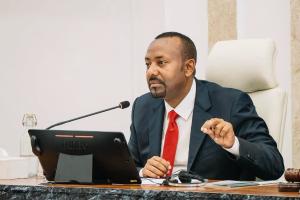
PM Abiy Urges Eritrea to Stop Arming Ethiopia’s Adversaries, Calls for Joint Development
Nov 26, 2026 4359
Addis Ababa, November 26, 2026 (ENA)— Prime Minister Abiy Ahmed has urged the Eritrean government to stop arming and collaborating with forces hostile to Ethiopia, while renewing his call for the two countries to pursue peaceful coexistence and joint development. Addressing the fourth regular session of the first year of the seventh House of People's Representatives, the Prime Minister said Ethiopia had made considerable efforts to help Eritrea overcome diplomatic isolation and build stronger relations with neighboring countries. He recalled that Ethiopia provided its own aircraft to facilitate Eritrea’s engagement with regional neighbors, driven by the belief that the two countries could achieve shared progress. Ethiopia had also offered to supply electricity to Eritrea at domestic Ethiopian rates, given its power shortages, and proposed joint development of roads and ports, PM Abiy added. However, the Eritrean government rejected these initiatives. “Words like development and growth do not exist in its vocabulary,” he said, describing the Eritrean government’s approach as a major obstacle to cooperation. The Prime Minister acknowledged Eritrea’s supportive stance toward Ethiopia when the Northern Command was attacked, but said relations deteriorated after Eritrean forces entered Tigray region, where he accused them of killing young people, destroying infrastructure and looting. He added that tensions deepened following the signing of the Pretoria Agreement. PM Abiy outlined two key expectations from the Eritrean government: ending its support for armed groups and other forces hostile to Ethiopia, including serving as a weapons supply conduit, and engaging in cooperation for mutual development. “Let us work together for mutual development,” he urged, noting that Ethiopia is prepared to contribute ideas, financing and labor, and seeking cooperation from the Eritrean side. The Prime Minister said peaceful coexistence remains possible if the two countries pursue cooperation, but warned that continued support for forces hostile to Ethiopia could have serious consequences for Eritrea. “If you can do this (pursue cooperation), living together in peace is possible,” he added. However, the Premier underscored that “destruction will fall upon Eritrea, if Shaebia remains a force mired in incorrigible mistakes”.
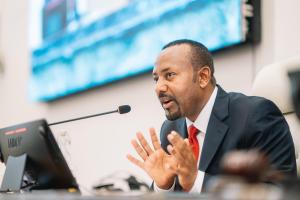
PM Reaffirms Ethiopia’s Commitment to Regional Peace, Vows to Defend Sovereignty at Any Cost
Nov 26, 2026 4862
Addis Ababa, November 26, 2026 (ENA)— Prime Minister Abiy Ahmed has reaffirmed Ethiopia’s commitment to regional peace and stability, while warning that any attempt to invade the country would be met with resolute response. Addressing the House of People’s Representatives today, the PM noted that Ethiopia has been historically contributing to peace and security across the African continent. The Premier described the country’s role as that of an older brother committed to the stability of the region. He cited Ethiopia’s longstanding peacekeeping and military contributions in Rwanda, Somalia, the Democratic Republic of Congo, Liberia and South Sudan. Ethiopian forces have repeatedly stood on the front lines and made significant sacrifices for regional peace, the PM added. PM Abiy stressed that Ethiopia has no history or intention of invading other countries but would never tolerate violations of its territorial integrity. “Throughout its history, Ethiopia has never been known for invading any country, nor does it have any desire to do so in the future. However, no one can come to Ethiopia’s borders, invade the country and return with honor. Adwa will be repeated; do not test us!” he warned. He further stated that Ethiopia’s history is marked by generations who defended the country's independence, identity and sovereignty through extraordinary courage and sacrifice, adding that the current generation has a responsibility to preserve this legacy. Prime Minister Abiy also emphasized that peaceful conflict resolution, dialogue, patience and forgiveness remain central to Ethiopia’s approach to national and regional challenges. The government prioritizes peace because it understands the immense value of stability to ordinary citizens, particularly mothers and families affected by conflict. “Resolving problems peacefully through dialogue is a sign of civilization,” the PM said, underscoring that forgiveness and dialogue are essential to building the nation and strengthening regional stability. Meanwhile, Prime Minister Abiy expressed appreciation to the House for recognizing the sacrifices and contributions of the Ethiopian National Defense Force. He highlighted the difficult conditions under which members of the Defense Force serve, including marching 30 to 40 kilometers a day and enduring rain, frost and extreme heat to protect the country. Despite the modest salaries and immense personal sacrifices of military personnel, the PM said, recognizing those who have fallen, wounded and shed blood in defense of Ethiopia is an important expression of national gratitude.
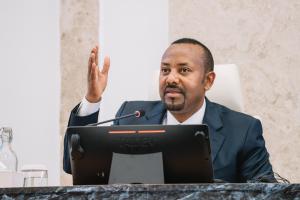
PM Abiy Underscores Ethiopia Has Overcome Centuries of Challenges Through Unity, Sacrifice
Nov 26, 2026 3396
Addis Ababa, November 26, 2026 (ENA)— Prime Minister Abiy Ahmed said Ethiopia has endured centuries of challenges through the resilience of its people, national unity and the sacrifices of generations who defended the country's sovereignty. Addressing the House of Peoples’ Representatives, he said Ethiopia has repeatedly overcome adversity through its organized military forces, united people and citizens willing to make the ultimate sacrifice to safeguard the nation. Speaking on Ethiopia’s national defense, Prime Minister Abiy emphasized that building a strong defense force requires more than military investment, stressing that a sustainable economy must underpin the country's defense capabilities. "Defense is like a house. If we build the defense force alone, it will not endure. We must ensure that the economy can sustain it," he said. He explained that a strong defense system must rest on interconnected pillars, including air power, ground forces and technological capabilities. The Prime Minister said Ethiopia is pursuing a comprehensive defense strategy aimed at building a capable, resilient and technologically advanced military that can effectively operate across all these domains. He added that the ongoing transformation has strengthened the Defense Force's ability to utilize modern technology, with tangible results already being demonstrated.
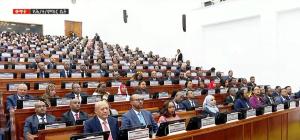
House Members Posing Questions to PM Abiy on Key National Issues
Nov 26, 2026 4736
Addis Ababa, November 26, 2026 (ENA)— Members of the House of People’s Representatives are putting Prime Minister Abiy Ahmed under parliamentary scrutiny over pressing national issues, including security threats, relations with Eritrea, economic performance, institutional reforms and major strategic development projects. The Prime Minister is going to respond to questions from lawmakers during the ongoing session of the House. The questions cover a wide range of issues shaping Ethiopia’s domestic and regional agenda, including peace and security, regional geopolitical developments, law enforcement, human rights, the implementation of institutional reforms under the Medemer government and the progress of major development initiatives. Particular attention is being given to Ethiopia’s security concerns and the actions of the Eritrean government, with lawmakers questioning the nation’s policy response to what they described as repeated efforts to undermine the country's peace and stability. The Members sought clarification on the government's position toward Eritrea's support for forces seeking to destabilize Ethiopia, asking what concrete measures have been taken to safeguard national sovereignty, protect citizens and prevent further security threats. They also asked the government on how it intends to balance diplomatic engagement and negotiated solutions with firm law enforcement, emphasizing the need for lasting peace and security. Beyond security, lawmakers raised questions about the government's efforts to strengthen Ethiopia's strategic deterrence capabilities and advance military technology, underscoring the importance of building a strong national defense capacity amid evolving regional security dynamics. The House is also expected to cover the rising cost of living, economic activities, the government's diplomatic engagements and the execution of flagship development projects, including the ongoing corridor development initiatives and the Bishoftu International Airport project. Meanwhile, the House members commended the government, under the leadership of Prime Minister Abiy Ahmed, for navigating unprecedented challenges while sustaining economic growth and advancing the country's diplomatic, security and development agendas. They also praised the Ethiopian security forces for their role in countering threats to national stability and safeguarding the country against coordinated efforts by anti-Ethiopian forces and extremist groups. The questions and exchanges are taking place during the Fourth Regular Session of the First Year of the Seventh House of People’s Representatives, providing a parliamentary platform for the government to address lawmakers' concerns and clarify its policy direction on critical national matters.
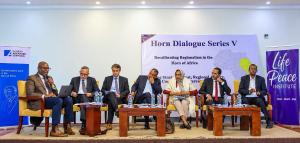
Horn Dialogue Participants Call for Stronger Cooperation, Strategic Trust in Horn Africa
Nov 25, 2026 6622
Addis Ababa, November 25, 2026 (ENA)— Strengthening regional cooperation, building strategic trust, and promoting collective action are essential to addressing the multifaceted challenges facing the Horn of Africa, participants at the fifth edition of the Horn Dialogue Series emphasized. The forum opened in Addis Ababa today under the theme, “Recalibrating Regionalism in the Horn of Africa: Building Strategic Trust, Regional Agency, and Cooperative Interdependence.” Speaking at the opening ceremony, Ambassador Adam Tesfaye, Chief of Staff at the Ministry of Foreign Affairs, described the dialogue as an important platform for bringing together scholars, diplomats, and other key stakeholders to exchange perspectives and develop practical solutions to pressing regional challenges. Despite its considerable economic potential and strong geographical, economic, and social interconnectedness, the Horn of Africa continues to grapple with interstate tensions, internal conflicts, competing national interests, and divergent security perceptions, he noted. Ambassador Adam stressed that addressing these challenges requires collective action, emphasizing that regional integration is crucial to advancing peace, stability, economic development, and connectivity. He reaffirmed Ethiopia’s commitment to regional and continental integration, highlighting the country's ongoing efforts to expand cross-border transport and energy infrastructure. He also underscored Ethiopia’s active and constructive engagement in promoting regional peace and security through the Intergovernmental Authority on Development (IGAD), the African Union, and the United Nations. The Ambassador further highlighted the strategic importance of Red Sea security to regional stability and Ethiopia’s national security. He reiterated Ethiopia’s commitment to securing reliable access to the sea through peaceful dialogue, diplomacy, international law, and mutually beneficial arrangements. For his part, Gizachew Asrat, Chief of Staff at the Institute of Foreign Affairs, said the region’s strategic location, economic potential, and proximity to major maritime routes present significant opportunities for shared prosperity and development. However, persistent conflicts, insecurity, fragmented economic cooperation, and a lack of mutual trust continue to prevent countries in the region from fully harnessing their economic complementarities, he noted. Gizachew described the dialogue series as a vital platform for generating practical policy recommendations, strengthening cooperation among regional research institutions, and fostering lasting networks between policymakers and scholars. Similarly, Paul-Simon Handy, East Africa Regional Director and Representative to the African Union for the Institute for Security Studies, said the forum would contribute to building a community of practice and knowledge to address the region’s complex challenges. Despite persistent instability, the Horn of Africa has considerable economic potential and continues to record notable growth, he observed. He added that this year’s edition places particular emphasis on translating regional cooperation into practical action, even amid strained political relations. Meanwhile, Jan-Ole Voss, Director of the Konrad-Adenauer-Stiftung Regional Programme Security Dialogue for East Africa, emphasized that trust-building, dialogue, and regional ownership are fundamental to achieving sustainable peace and development. He called on regional states to strengthen existing cooperation frameworks and work collectively to address shared challenges, including climate change, food insecurity, migration, and evolving security threats. He stressed that sustainable solutions must be rooted in local realities and shaped by the people of the Horn of Africa. The fifth edition of the Horn Dialogue Series brought together policymakers, diplomats, researchers, security experts, and other regional stakeholders to deliberate on strategic trust, economic cooperation, regional connectivity, and the future of regional institutions.
' + getPhotos(pictures, true) + '
';
/*let navs = getNavs();
let lastNav = navs[navs.length - 1];
if (pictures.length > 10) {
getNav().classList.add("multiline");
}
for (let i = navs.length; i < pictures.length; i++) {
let newNav = lastNav.cloneNode(true);
lastNav.parentNode.insertBefore(newNav, lastNav.nextSibling);
lastNav = newNav;
}*/
let titleText = document.getElementById("ena_title_text")
if (titleText) {
setTimeout(titleText.scrollIntoView(), 100);
}
}
function getPhotos(pictures, pictureOnly) {
let result = "";
pictures.forEach(picture => {
result += '';
result += '
';
})
return result;
}
function getPhotoImage(picture, pictureOnly) {
let result = '';
if (!pictureOnly) {
result += '';
}
result += '';
result += getPhotoImage(picture, pictureOnly);
result += '
';
if (!pictureOnly) {
result += '';
result += getPhotoText(picture);
result += '
';
}
result += '';
result += '
';
if (!pictureOnly) {
result += '';
}
return result;
}
function getPhotoText(picture) {
let result = '';
result += '';
result += '';
result += '
';
result += '';
result += getPhotoTitle(picture);
result += '
';
result += '';
return result;
}
function getPhotoTitle(picture) {
let image = picture.getElementsByTagName("IMG")[0];
return image.alt;
}
function getPhotoLink(picture) {
let image = picture.getElementsByTagName("IMG")[0];
return image.src.replace("&download=true","");
}
let contents=Array.from(
fragmentElement.getElementsByClassName(
"ena_display_item_content"));
contents.forEach(item => {
item.innerHTML=item.innerHTML.replaceAll(" "," ")})
Array.from(fragmentElement.getElementsByClassName(
"ena_display_item_content")).forEach(item => {
if (item.innerHTML.length!=item.textContent.length) {
item.innerHTML=item.textContent;}});
if (checkModes(["headlines", "alertbar", "slider", "advertisement"])) {
if (checkModes(["headlines", "alertbar"])) {
moveTo(getItems().length > 1 ? 1 : 0);
} else {
moveTo(0);
}
if (checkModes(["slider"])) {
setTimeout(() => autoMove(), 1);
} else {
autoMove();
}
}
function checkModes(modes, prefix){
if (!prefix) prefix = "mode";
var display = fragmentElement.getElementsByClassName(
"ena_display")[0];
for (let i in modes) {
if (display.classList.contains(
"ena_display_" + prefix + "_" + modes[i])) {
return true;
}
}
return false;
}
function getAutoInterval(){
if (checkModes(["advertisement"])) {
return 10000;
}
else {
return 5000;
}
}
function getCarouselNavs(){
return fragmentElement.getElementsByClassName("ena_carousel_control_navs")[0]}
function getPort(){
return fragmentElement.getElementsByClassName("ena_display_port")[0]}
function getItems(){return Array.from(
getPort().getElementsByClassName("ena_display_item"))}
function getNav(){return document.getElementById("ena_display_control_nav")}
function getNavs() {
if (checkModes(["Photos"], "type")) {
return Array.from(
fragmentElement.getElementsByClassName("ena_display_item_picture"));
} else {
return Array.from(
fragmentElement.getElementsByClassName("ena_display_control_nav_item"));
}
}
function getPrev(){
return fragmentElement.getElementsByClassName(
"ena_display_control_arrow_prev")[0];
}
function getNext(){
return fragmentElement.getElementsByClassName(
"ena_display_control_arrow_next")[0];
}
/*function getArrows(){
return fragmentElement.getElementsByClassName(
"ena_display_control_arrows")[0];
}*/
function getCurrent(items){return items.indexOf(items.find(
item => item.classList.contains("ena_display_current")))}
function setCurrent(index, itemsArray){
let currents = [];
itemsArray.forEach((items, i) => {
currents[i] = getCurrent(items);
if (currents[i]>=0)items[currents[i]].classList.add("ena_display_visible");
items.forEach(
item => {
item.classList.remove("ena_display_a");
item.classList.remove("ena_display_b");
item.classList.remove("ena_display_c");
item.classList.remove("ena_display_current");
item.classList.remove("ena_display_backward");
item.classList.remove("ena_display_forward");
})});
/*setTimeout(()=>{*/
itemsArray.forEach((items, i) => {
if(index >= 0 && index < items.length) {
let current=currents[i];
items[index].classList.add("ena_display_current");
if (current<0 || index==current) {
/*if (index==0){
items[items.length-1].classList.add("ena_display_a");
} else {
items[index-1].classList.add("ena_display_a");
}*/
items[index].classList.add("ena_display_b");
/*if (index==items.length-1){
items[0].classList.add("ena_display_c");
} else {
items[index+1].classList.add("ena_display_c");
}*/
} else {
let direction="";
/*setTimeout(()=>{*/
if(isForward(index, current, items.length-1)){
items[index].classList.add("ena_display_c");
/*setTimeout(()=>{*/
items[current].classList.add("ena_display_b");
/*}, 1000);*/
direction="ena_display_forward";
} else {
items[index].classList.add("ena_display_a");
/*setTimeout(()=>{*/
items[current].classList.add("ena_display_b");
/*}, 1000);*/
direction="ena_display_backward";
}
setTimeout(function(){
items[current].classList.add(direction);
items[index].classList.add(direction);
items[current].classList.remove("ena_display_visible");
}, 100);
/*}, 2000);*/
}
}});
/*}, 2000);*/
/*getItems().filter(
item => item.classList.contains("ena_display_current")).forEach(
item => {if (getPort()) getPort().scrollLeft=item.offsetLeft});*/
}
function isForward(index, current, last){
if(index==0&¤t==last)return true;
if(index==last&¤t==0)return false;
return index>current;
}
function moveTo(index){setCurrent(index, [getItems(), getNavs()]);}
function prevIndex(){
var items = getItems();
var index = getCurrent(items) - 1;
if (index < 0) index = items.length - 1;
return index;
}
function nextIndex(){
var items = getItems();
var index = getCurrent(items) + 1;
if (index >= items.length) index = 0;
return index;
}
getNavs().forEach((item, index) => item.onclick = function(){
moveTo(index)});
getPrev().onclick = function(){moveTo(prevIndex())};
getNext().onclick = function(){moveTo(nextIndex())};
fragmentElement.onmouseenter = function(){
autoStop();
//getArrows().style.display="inline-flex";
}
fragmentElement.onmouseleave = function(){
autoMove();
//getArrows().style.display="none";
}
function autoMove(){
autoStop();
if (fragmentElement.getElementsByClassName("portlet-topper").length==0
&& !fragmentElement.ena_timer_display){
fragmentElement.ena_timer_display=setInterval(
() => {
fragmentChild = fragmentElement.children[0];
let visibility = window.getComputedStyle(fragmentChild, null).visibility;
if (visibility != "hidden") {
moveTo(nextIndex());
}
}, getAutoInterval());
}
}
function autoStop(){
clearInterval(fragmentElement.ena_timer_display);
fragmentElement.ena_timer_display = null;
};}());
Politics
Guba-launched Mega Projects Poised to Shape Ethiopia’s Medemer Vision, Say MPs
Nov 27, 2026 726
Addis Ababa, November 27, 2026 (ENA)—Ethiopia’s Guba-launched mega-development projects, valued at more than 30 billion USD, hold immense potential to accelerate economic transformation and shape the country’s emerging Medemer civilization, members of the House of Peoples’ Representatives told ENA. The lawmakers described the strategic projects as major engines of national growth, saying their successful completion would expand economic opportunities, enhance citizens’ livelihoods and lay a stronger foundation for Ethiopia’s long-term prosperity. Their remarks follow Prime Minister Abiy Ahmed’s address to the House during the fourth regular session of the first working year of the seventh parliament, where he outlined the progress, strategic significance and national aspirations underpinning the Guba-launched initiatives. Guided by the vision of “A Great Country, A Great People, A Grand Vision,” the projects demonstrate Ethiopia’s capacity to undertake ambitious development initiatives while pursuing greater economic self-reliance, the Prime Minister explained. The strategic portfolio encompasses the Bishoftu International Airport, the Ogaden natural gas project, the 1.5-million-housing development program, nuclear energy initiatives and the Gode soil fertilizer factory. Providing updates on their implementation, PM Abiy disclosed that natural gas from the Ogaden project in the Somali Region is already being used as an input by domestic ceramics factories and for powering Addis Ababa’s city buses, illustrating its contribution to the country's industrial and transport sectors. He also said preparations for the Bishoftu International Airport are advancing with the support of modern artificial intelligence technologies. Initial site selection has been completed, while the tender process for runway construction is underway. The Gode fertilizer factory is also progressing under close supervision, with the development including nearly 18,000 residential units for workers. Meanwhile, the 1.5-million-housing program is incorporating modern construction approaches designed to take citizens’ purchasing power into account. Approached by ENA, MP Addis Alemayehu said the pace of implementation of the mega-projects within a relatively short period was encouraging. She described them as a manifestation of the vision to hand over a more prosperous Ethiopia to future generations. MP Abiyot Delelegn, for her part, highlighted the projects’ round-the-clock construction activities as evidence of an emerging work culture focused on translating national ambitions into tangible results. She said the initiatives have considerable potential to shape Ethiopia’s new Medemer civilization by strengthening the country's development capacity and expanding opportunities for its people. Another MP, Samson Wondmeneh, said the government's vision of positioning Ethiopia as an African beacon of prosperity is being pursued through strategic development planning and major national investments. The lawmaker further reaffirmed their commitment to discharging their parliamentary oversight, support and regulatory responsibilities to ensure the projects are completed within their stipulated timelines and required quality standards and become operational. They emphasized that the successful realization of these strategic investments would be instrumental in advancing Ethiopia’s economic transformation and building a foundation for sustainable prosperity for generations to come.
Prime Minister Abiy Reaffirms Ethiopia’s Readiness to Help Restore Peace in Sudan
Nov 27, 2026 1236
Addis Ababa, November 27, 2026 (ENA)— Prime Minister Abiy Ahmed has reaffirmed Ethiopia’s readiness to commit its resources to restoring peace and stability in war-torn Sudan. The Prime Minister also called on Eritrea to end its alleged support for forces hostile to Ethiopia and embrace peaceful coexistence and mutual development. Addressing the House of Peoples’ Representatives on Thursday, the Prime Minister outlined Ethiopia’s foreign policy priorities toward neighboring countries, underscoring the country’s commitment to regional peace, cooperation and shared prosperity. On Sudan, Prime Minister Abiy reiterated Ethiopia’s longstanding commitment to its neighbor’s stability, emphasizing the deep historical, social and brotherly ties between the two countries. “Sudan’s peace is our peace,” he told lawmakers, reaffirming Ethiopia’s willingness to contribute whatever it can to help the country overcome its devastating conflict. “If Ethiopia can contribute in any way to restoring Sudan to where it was, we are ready to spend our time and our money,” he said, urging the warring parties to give the proposed peace initiative a chance, noting that dialogue could produce meaningful results. The Prime Minister’s remarks build on his recent initiative inviting Sudanese military, political and civilian stakeholders to an inclusive national dialogue hosted and facilitated by Ethiopia. In a statement issued in Arabic, PM Abiy described the initiative as a sincere effort to help Sudan overcome its prolonged conflict through an inclusive, Sudanese-led political process. “At this critical historical juncture, the Ethiopian government is putting forward a sincere and genuine initiative calling on all Sudanese parties, across their military, political, and civilian components, to participate in a comprehensive and open Sudanese dialogue to be hosted and facilitated by Ethiopia,” he stated. Turning to Eritrea, the Prime Minister detailed Ethiopia’s extensive diplomatic and economic efforts to build constructive relations following the rapprochement between the two countries. The Premier also expressing disappointment over Eritrean regime’s rejection of opportunities for cooperation. He recalled that Ethiopia had played an active role in helping Eritrea reconnect with regional neighbors after years of diplomatic isolation, including providing Ethiopian aircraft to facilitate engagements with countries with which Eritrean officials had limited contact. Beyond diplomatic engagement, Ethiopia had also proposed practical economic cooperation, including electricity supplies at domestic Ethiopian rates and joint development of roads and ports to address infrastructure and energy constraints. However, he said, the Eritrean government rejected these proposals, arguing that its lack of a development-oriented vision had undermined opportunities for bilateral cooperation. “The reason is that while the Eritrean government is a government for the time being, words like development and growth do not exist in its vocabulary,” PM Abiy said. The Prime Minister also recalled the initial goodwill demonstrated by Eritrea following the attack on Ethiopia’s Northern Command but said relations subsequently deteriorated after Eritrean forces entered the Tigray region during the conflict. He accused the forces of involvement in killings, looting and the destruction of infrastructure, adding that relations further soured following the signing of the Pretoria Peace Agreement. Against this backdrop, Prime Minister Abiy called on Eritrea to make a clear choice between confrontation and cooperation, outlining two essential expectations for the future of bilateral relations: ending support for forces hostile to Ethiopia and pursuing mutually beneficial development. He urged Asmara to immediately stop arming Ethiopia’s adversaries, end its alleged role as a weapons supply channel and cease cooperation with forces undermining peace and stability.
Nat'l Dialogue Big Step Forward in Building Culture of Conversation: PM Abiy
Nov 26, 2026 4439
Addis Ababa, November 26, 2026 (ENA)— The Ethiopian National Dialogue is a major leap forward in the nation's history, laying the foundation for a culture of conversation and helping build national consensus, Prime Minister Abiy Ahmed noted. Addressing the House of People’s Representatives today, the PM said hundreds of thousands of Ethiopians, both at home and abroad, had participated in extensive discussions over the past four years on issues of national importance. He described the process as a significant achievement, noting that it brought together people from different regions, ethnic groups, languages, and religious backgrounds to openly discuss the country's affairs. The Prime Minister said the dialogue had created an opportunity to understand public concerns, accommodate diverse perspectives, and strengthen a culture of peaceful discussion. PM Abiy noted that around 4,000 participants held discussions in one hall for 46 days, describing the achievement as a major milestone in Ethiopia's political history. He commended the National Dialogue Commission for successfully managing the challenging process and compiling its findings and recommendations within a short period. The Premier added that the Commission had submitted recommendations to the federal government and regional administrations, covering issues requiring policy adjustments, administrative measures, and constitutional amendments. According to him, the Medemer Grand Strategy has incorporated many of the recommendations, while legal experts have been working to review constitutional reform proposals. He stressed that constitutional reform should build on existing achievements rather than discard the entire document, emphasizing the need to preserve useful provisions while correcting shortcomings. Referring to Article 39 of the present Constitution as an example, PM Abiy said the recognition of the rights of nations, nationalities, and peoples to use their languages, administer themselves, and protect their rights remains important. However, he noted that provisions that need improvements should be improved rather than being totally eliminated. The Commission had been working with that mind set. PM Abiy expressed confidence that the constitutional review process would be completed in the coming weeks and months, with the participation of the House of People’s Representatives, adding that the outcomes of the dialogue and consultations would eventually be presented to the Ethiopian public. The Prime Minister reaffirmed the government's commitment to implementing ideas raised during the four-year dialogue process through legal, policy, and administrative measures. Turning to the Medemer Grand Strategy, Abiy said it seeks to transform Ethiopia's untapped potential into national capability and, ultimately, national power through institutional development, effective governance, and economic advancement. He emphasized that development alone is not sufficient unless it can be sustained across generations, highlighting the importance of stewardship, responsible leadership, and building institutions capable of preserving national achievements. The strategy, he added, outlines 15 nation-building models designed to strengthen institutions, systems, and national capabilities, alongside economic frameworks for mobilizing and managing capital. The Premier elaborated that Medemer, which is the foundation of the country's long-term development ambitions, emphasizes cooperation and the pooling of individual and collective capacities. He said the strategy is not intended to serve a single political party or government but to establish a shared national direction that transcends political administrations and generations. The Prime Minister further stressed that Ethiopia needs a common long-term vision capable of guiding the country over the next 25, 50, 75, and 100 years, noting that national transformation and the preservation of achievements require collective commitment beyond the tenure of individual governments.
PM Abiy Urges Eritrea to Stop Arming Ethiopia’s Adversaries, Calls for Joint Development
Nov 26, 2026 4359
Addis Ababa, November 26, 2026 (ENA)— Prime Minister Abiy Ahmed has urged the Eritrean government to stop arming and collaborating with forces hostile to Ethiopia, while renewing his call for the two countries to pursue peaceful coexistence and joint development. Addressing the fourth regular session of the first year of the seventh House of People's Representatives, the Prime Minister said Ethiopia had made considerable efforts to help Eritrea overcome diplomatic isolation and build stronger relations with neighboring countries. He recalled that Ethiopia provided its own aircraft to facilitate Eritrea’s engagement with regional neighbors, driven by the belief that the two countries could achieve shared progress. Ethiopia had also offered to supply electricity to Eritrea at domestic Ethiopian rates, given its power shortages, and proposed joint development of roads and ports, PM Abiy added. However, the Eritrean government rejected these initiatives. “Words like development and growth do not exist in its vocabulary,” he said, describing the Eritrean government’s approach as a major obstacle to cooperation. The Prime Minister acknowledged Eritrea’s supportive stance toward Ethiopia when the Northern Command was attacked, but said relations deteriorated after Eritrean forces entered Tigray region, where he accused them of killing young people, destroying infrastructure and looting. He added that tensions deepened following the signing of the Pretoria Agreement. PM Abiy outlined two key expectations from the Eritrean government: ending its support for armed groups and other forces hostile to Ethiopia, including serving as a weapons supply conduit, and engaging in cooperation for mutual development. “Let us work together for mutual development,” he urged, noting that Ethiopia is prepared to contribute ideas, financing and labor, and seeking cooperation from the Eritrean side. The Prime Minister said peaceful coexistence remains possible if the two countries pursue cooperation, but warned that continued support for forces hostile to Ethiopia could have serious consequences for Eritrea. “If you can do this (pursue cooperation), living together in peace is possible,” he added. However, the Premier underscored that “destruction will fall upon Eritrea, if Shaebia remains a force mired in incorrigible mistakes”.
PM Reaffirms Ethiopia’s Commitment to Regional Peace, Vows to Defend Sovereignty at Any Cost
Nov 26, 2026 4862
Addis Ababa, November 26, 2026 (ENA)— Prime Minister Abiy Ahmed has reaffirmed Ethiopia’s commitment to regional peace and stability, while warning that any attempt to invade the country would be met with resolute response. Addressing the House of People’s Representatives today, the PM noted that Ethiopia has been historically contributing to peace and security across the African continent. The Premier described the country’s role as that of an older brother committed to the stability of the region. He cited Ethiopia’s longstanding peacekeeping and military contributions in Rwanda, Somalia, the Democratic Republic of Congo, Liberia and South Sudan. Ethiopian forces have repeatedly stood on the front lines and made significant sacrifices for regional peace, the PM added. PM Abiy stressed that Ethiopia has no history or intention of invading other countries but would never tolerate violations of its territorial integrity. “Throughout its history, Ethiopia has never been known for invading any country, nor does it have any desire to do so in the future. However, no one can come to Ethiopia’s borders, invade the country and return with honor. Adwa will be repeated; do not test us!” he warned. He further stated that Ethiopia’s history is marked by generations who defended the country's independence, identity and sovereignty through extraordinary courage and sacrifice, adding that the current generation has a responsibility to preserve this legacy. Prime Minister Abiy also emphasized that peaceful conflict resolution, dialogue, patience and forgiveness remain central to Ethiopia’s approach to national and regional challenges. The government prioritizes peace because it understands the immense value of stability to ordinary citizens, particularly mothers and families affected by conflict. “Resolving problems peacefully through dialogue is a sign of civilization,” the PM said, underscoring that forgiveness and dialogue are essential to building the nation and strengthening regional stability. Meanwhile, Prime Minister Abiy expressed appreciation to the House for recognizing the sacrifices and contributions of the Ethiopian National Defense Force. He highlighted the difficult conditions under which members of the Defense Force serve, including marching 30 to 40 kilometers a day and enduring rain, frost and extreme heat to protect the country. Despite the modest salaries and immense personal sacrifices of military personnel, the PM said, recognizing those who have fallen, wounded and shed blood in defense of Ethiopia is an important expression of national gratitude.
PM Abiy Underscores Ethiopia Has Overcome Centuries of Challenges Through Unity, Sacrifice
Nov 26, 2026 3396
Addis Ababa, November 26, 2026 (ENA)— Prime Minister Abiy Ahmed said Ethiopia has endured centuries of challenges through the resilience of its people, national unity and the sacrifices of generations who defended the country's sovereignty. Addressing the House of Peoples’ Representatives, he said Ethiopia has repeatedly overcome adversity through its organized military forces, united people and citizens willing to make the ultimate sacrifice to safeguard the nation. Speaking on Ethiopia’s national defense, Prime Minister Abiy emphasized that building a strong defense force requires more than military investment, stressing that a sustainable economy must underpin the country's defense capabilities. "Defense is like a house. If we build the defense force alone, it will not endure. We must ensure that the economy can sustain it," he said. He explained that a strong defense system must rest on interconnected pillars, including air power, ground forces and technological capabilities. The Prime Minister said Ethiopia is pursuing a comprehensive defense strategy aimed at building a capable, resilient and technologically advanced military that can effectively operate across all these domains. He added that the ongoing transformation has strengthened the Defense Force's ability to utilize modern technology, with tangible results already being demonstrated.
House Members Posing Questions to PM Abiy on Key National Issues
Nov 26, 2026 4736
Addis Ababa, November 26, 2026 (ENA)— Members of the House of People’s Representatives are putting Prime Minister Abiy Ahmed under parliamentary scrutiny over pressing national issues, including security threats, relations with Eritrea, economic performance, institutional reforms and major strategic development projects. The Prime Minister is going to respond to questions from lawmakers during the ongoing session of the House. The questions cover a wide range of issues shaping Ethiopia’s domestic and regional agenda, including peace and security, regional geopolitical developments, law enforcement, human rights, the implementation of institutional reforms under the Medemer government and the progress of major development initiatives. Particular attention is being given to Ethiopia’s security concerns and the actions of the Eritrean government, with lawmakers questioning the nation’s policy response to what they described as repeated efforts to undermine the country's peace and stability. The Members sought clarification on the government's position toward Eritrea's support for forces seeking to destabilize Ethiopia, asking what concrete measures have been taken to safeguard national sovereignty, protect citizens and prevent further security threats. They also asked the government on how it intends to balance diplomatic engagement and negotiated solutions with firm law enforcement, emphasizing the need for lasting peace and security. Beyond security, lawmakers raised questions about the government's efforts to strengthen Ethiopia's strategic deterrence capabilities and advance military technology, underscoring the importance of building a strong national defense capacity amid evolving regional security dynamics. The House is also expected to cover the rising cost of living, economic activities, the government's diplomatic engagements and the execution of flagship development projects, including the ongoing corridor development initiatives and the Bishoftu International Airport project. Meanwhile, the House members commended the government, under the leadership of Prime Minister Abiy Ahmed, for navigating unprecedented challenges while sustaining economic growth and advancing the country's diplomatic, security and development agendas. They also praised the Ethiopian security forces for their role in countering threats to national stability and safeguarding the country against coordinated efforts by anti-Ethiopian forces and extremist groups. The questions and exchanges are taking place during the Fourth Regular Session of the First Year of the Seventh House of People’s Representatives, providing a parliamentary platform for the government to address lawmakers' concerns and clarify its policy direction on critical national matters.
Horn Dialogue Participants Call for Stronger Cooperation, Strategic Trust in Horn Africa
Nov 25, 2026 6622
Addis Ababa, November 25, 2026 (ENA)— Strengthening regional cooperation, building strategic trust, and promoting collective action are essential to addressing the multifaceted challenges facing the Horn of Africa, participants at the fifth edition of the Horn Dialogue Series emphasized. The forum opened in Addis Ababa today under the theme, “Recalibrating Regionalism in the Horn of Africa: Building Strategic Trust, Regional Agency, and Cooperative Interdependence.” Speaking at the opening ceremony, Ambassador Adam Tesfaye, Chief of Staff at the Ministry of Foreign Affairs, described the dialogue as an important platform for bringing together scholars, diplomats, and other key stakeholders to exchange perspectives and develop practical solutions to pressing regional challenges. Despite its considerable economic potential and strong geographical, economic, and social interconnectedness, the Horn of Africa continues to grapple with interstate tensions, internal conflicts, competing national interests, and divergent security perceptions, he noted. Ambassador Adam stressed that addressing these challenges requires collective action, emphasizing that regional integration is crucial to advancing peace, stability, economic development, and connectivity. He reaffirmed Ethiopia’s commitment to regional and continental integration, highlighting the country's ongoing efforts to expand cross-border transport and energy infrastructure. He also underscored Ethiopia’s active and constructive engagement in promoting regional peace and security through the Intergovernmental Authority on Development (IGAD), the African Union, and the United Nations. The Ambassador further highlighted the strategic importance of Red Sea security to regional stability and Ethiopia’s national security. He reiterated Ethiopia’s commitment to securing reliable access to the sea through peaceful dialogue, diplomacy, international law, and mutually beneficial arrangements. For his part, Gizachew Asrat, Chief of Staff at the Institute of Foreign Affairs, said the region’s strategic location, economic potential, and proximity to major maritime routes present significant opportunities for shared prosperity and development. However, persistent conflicts, insecurity, fragmented economic cooperation, and a lack of mutual trust continue to prevent countries in the region from fully harnessing their economic complementarities, he noted. Gizachew described the dialogue series as a vital platform for generating practical policy recommendations, strengthening cooperation among regional research institutions, and fostering lasting networks between policymakers and scholars. Similarly, Paul-Simon Handy, East Africa Regional Director and Representative to the African Union for the Institute for Security Studies, said the forum would contribute to building a community of practice and knowledge to address the region’s complex challenges. Despite persistent instability, the Horn of Africa has considerable economic potential and continues to record notable growth, he observed. He added that this year’s edition places particular emphasis on translating regional cooperation into practical action, even amid strained political relations. Meanwhile, Jan-Ole Voss, Director of the Konrad-Adenauer-Stiftung Regional Programme Security Dialogue for East Africa, emphasized that trust-building, dialogue, and regional ownership are fundamental to achieving sustainable peace and development. He called on regional states to strengthen existing cooperation frameworks and work collectively to address shared challenges, including climate change, food insecurity, migration, and evolving security threats. He stressed that sustainable solutions must be rooted in local realities and shaped by the people of the Horn of Africa. The fifth edition of the Horn Dialogue Series brought together policymakers, diplomats, researchers, security experts, and other regional stakeholders to deliberate on strategic trust, economic cooperation, regional connectivity, and the future of regional institutions.
' + getPhotos(pictures, true) + '
';
/*let navs = getNavs();
let lastNav = navs[navs.length - 1];
if (pictures.length > 10) {
getNav().classList.add("multiline");
}
for (let i = navs.length; i < pictures.length; i++) {
let newNav = lastNav.cloneNode(true);
lastNav.parentNode.insertBefore(newNav, lastNav.nextSibling);
lastNav = newNav;
}*/
let titleText = document.getElementById("ena_title_text")
if (titleText) {
setTimeout(titleText.scrollIntoView(), 100);
}
}
function getPhotos(pictures, pictureOnly) {
let result = "";
pictures.forEach(picture => {
result += '';
result += '
';
})
return result;
}
function getPhotoImage(picture, pictureOnly) {
let result = '';
if (!pictureOnly) {
result += '';
}
result += '';
result += getPhotoImage(picture, pictureOnly);
result += '
';
if (!pictureOnly) {
result += '';
result += getPhotoText(picture);
result += '
';
}
result += '';
result += '
';
if (!pictureOnly) {
result += '';
}
return result;
}
function getPhotoText(picture) {
let result = '';
result += '';
result += '';
result += '
';
result += '';
result += getPhotoTitle(picture);
result += '
';
result += '';
return result;
}
function getPhotoTitle(picture) {
let image = picture.getElementsByTagName("IMG")[0];
return image.alt;
}
function getPhotoLink(picture) {
let image = picture.getElementsByTagName("IMG")[0];
return image.src.replace("&download=true","");
}
let contents=Array.from(
fragmentElement.getElementsByClassName(
"ena_display_item_content"));
contents.forEach(item => {
item.innerHTML=item.innerHTML.replaceAll(" "," ")})
Array.from(fragmentElement.getElementsByClassName(
"ena_display_item_content")).forEach(item => {
if (item.innerHTML.length!=item.textContent.length) {
item.innerHTML=item.textContent;}});
if (checkModes(["headlines", "alertbar", "slider", "advertisement"])) {
if (checkModes(["headlines", "alertbar"])) {
moveTo(getItems().length > 1 ? 1 : 0);
} else {
moveTo(0);
}
if (checkModes(["slider"])) {
setTimeout(() => autoMove(), 1);
} else {
autoMove();
}
}
function checkModes(modes, prefix){
if (!prefix) prefix = "mode";
var display = fragmentElement.getElementsByClassName(
"ena_display")[0];
for (let i in modes) {
if (display.classList.contains(
"ena_display_" + prefix + "_" + modes[i])) {
return true;
}
}
return false;
}
function getAutoInterval(){
if (checkModes(["advertisement"])) {
return 10000;
}
else {
return 5000;
}
}
function getCarouselNavs(){
return fragmentElement.getElementsByClassName("ena_carousel_control_navs")[0]}
function getPort(){
return fragmentElement.getElementsByClassName("ena_display_port")[0]}
function getItems(){return Array.from(
getPort().getElementsByClassName("ena_display_item"))}
function getNav(){return document.getElementById("ena_display_control_nav")}
function getNavs() {
if (checkModes(["Photos"], "type")) {
return Array.from(
fragmentElement.getElementsByClassName("ena_display_item_picture"));
} else {
return Array.from(
fragmentElement.getElementsByClassName("ena_display_control_nav_item"));
}
}
function getPrev(){
return fragmentElement.getElementsByClassName(
"ena_display_control_arrow_prev")[0];
}
function getNext(){
return fragmentElement.getElementsByClassName(
"ena_display_control_arrow_next")[0];
}
/*function getArrows(){
return fragmentElement.getElementsByClassName(
"ena_display_control_arrows")[0];
}*/
function getCurrent(items){return items.indexOf(items.find(
item => item.classList.contains("ena_display_current")))}
function setCurrent(index, itemsArray){
let currents = [];
itemsArray.forEach((items, i) => {
currents[i] = getCurrent(items);
if (currents[i]>=0)items[currents[i]].classList.add("ena_display_visible");
items.forEach(
item => {
item.classList.remove("ena_display_a");
item.classList.remove("ena_display_b");
item.classList.remove("ena_display_c");
item.classList.remove("ena_display_current");
item.classList.remove("ena_display_backward");
item.classList.remove("ena_display_forward");
})});
/*setTimeout(()=>{*/
itemsArray.forEach((items, i) => {
if(index >= 0 && index < items.length) {
let current=currents[i];
items[index].classList.add("ena_display_current");
if (current<0 || index==current) {
/*if (index==0){
items[items.length-1].classList.add("ena_display_a");
} else {
items[index-1].classList.add("ena_display_a");
}*/
items[index].classList.add("ena_display_b");
/*if (index==items.length-1){
items[0].classList.add("ena_display_c");
} else {
items[index+1].classList.add("ena_display_c");
}*/
} else {
let direction="";
/*setTimeout(()=>{*/
if(isForward(index, current, items.length-1)){
items[index].classList.add("ena_display_c");
/*setTimeout(()=>{*/
items[current].classList.add("ena_display_b");
/*}, 1000);*/
direction="ena_display_forward";
} else {
items[index].classList.add("ena_display_a");
/*setTimeout(()=>{*/
items[current].classList.add("ena_display_b");
/*}, 1000);*/
direction="ena_display_backward";
}
setTimeout(function(){
items[current].classList.add(direction);
items[index].classList.add(direction);
items[current].classList.remove("ena_display_visible");
}, 100);
/*}, 2000);*/
}
}});
/*}, 2000);*/
/*getItems().filter(
item => item.classList.contains("ena_display_current")).forEach(
item => {if (getPort()) getPort().scrollLeft=item.offsetLeft});*/
}
function isForward(index, current, last){
if(index==0&¤t==last)return true;
if(index==last&¤t==0)return false;
return index>current;
}
function moveTo(index){setCurrent(index, [getItems(), getNavs()]);}
function prevIndex(){
var items = getItems();
var index = getCurrent(items) - 1;
if (index < 0) index = items.length - 1;
return index;
}
function nextIndex(){
var items = getItems();
var index = getCurrent(items) + 1;
if (index >= items.length) index = 0;
return index;
}
getNavs().forEach((item, index) => item.onclick = function(){
moveTo(index)});
getPrev().onclick = function(){moveTo(prevIndex())};
getNext().onclick = function(){moveTo(nextIndex())};
fragmentElement.onmouseenter = function(){
autoStop();
//getArrows().style.display="inline-flex";
}
fragmentElement.onmouseleave = function(){
autoMove();
//getArrows().style.display="none";
}
function autoMove(){
autoStop();
if (fragmentElement.getElementsByClassName("portlet-topper").length==0
&& !fragmentElement.ena_timer_display){
fragmentElement.ena_timer_display=setInterval(
() => {
fragmentChild = fragmentElement.children[0];
let visibility = window.getComputedStyle(fragmentChild, null).visibility;
if (visibility != "hidden") {
moveTo(nextIndex());
}
}, getAutoInterval());
}
}
function autoStop(){
clearInterval(fragmentElement.ena_timer_display);
fragmentElement.ena_timer_display = null;
};}());
Social
House Members Posing Questions to PM Abiy on Key National Issues
Nov 26, 2026 4736
Addis Ababa, November 26, 2026 (ENA)— Members of the House of People’s Representatives are putting Prime Minister Abiy Ahmed under parliamentary scrutiny over pressing national issues, including security threats, relations with Eritrea, economic performance, institutional reforms and major strategic development projects. The Prime Minister is going to respond to questions from lawmakers during the ongoing session of the House. The questions cover a wide range of issues shaping Ethiopia’s domestic and regional agenda, including peace and security, regional geopolitical developments, law enforcement, human rights, the implementation of institutional reforms under the Medemer government and the progress of major development initiatives. Particular attention is being given to Ethiopia’s security concerns and the actions of the Eritrean government, with lawmakers questioning the nation’s policy response to what they described as repeated efforts to undermine the country's peace and stability. The Members sought clarification on the government's position toward Eritrea's support for forces seeking to destabilize Ethiopia, asking what concrete measures have been taken to safeguard national sovereignty, protect citizens and prevent further security threats. They also asked the government on how it intends to balance diplomatic engagement and negotiated solutions with firm law enforcement, emphasizing the need for lasting peace and security. Beyond security, lawmakers raised questions about the government's efforts to strengthen Ethiopia's strategic deterrence capabilities and advance military technology, underscoring the importance of building a strong national defense capacity amid evolving regional security dynamics. The House is also expected to cover the rising cost of living, economic activities, the government's diplomatic engagements and the execution of flagship development projects, including the ongoing corridor development initiatives and the Bishoftu International Airport project. Meanwhile, the House members commended the government, under the leadership of Prime Minister Abiy Ahmed, for navigating unprecedented challenges while sustaining economic growth and advancing the country's diplomatic, security and development agendas. They also praised the Ethiopian security forces for their role in countering threats to national stability and safeguarding the country against coordinated efforts by anti-Ethiopian forces and extremist groups. The questions and exchanges are taking place during the Fourth Regular Session of the First Year of the Seventh House of People’s Representatives, providing a parliamentary platform for the government to address lawmakers' concerns and clarify its policy direction on critical national matters.
Ethiopia’s Returnee Support Model Emerges as Regional Benchmark, Says IOM Officer
Nov 25, 2026 4553
Addis Ababa, November 25, 2026 (ENA)— Ethiopia is transitioning its support for citizens returning from abroad from short-term humanitarian assistance to a sustainable, government-led system integrated into existing public institutions, an International Organization for Migration (IOM) senior officer said. Memory Mwale, IOM Senior Programme Officer for Protection, told ENA that the new approach aims to ensure returning migrants receive long-term support and access to essential services while reducing their dependence on humanitarian organizations. “The best practice is really government-led systems. We need to move from a service-based system to a government-led, sustainable, institutionalized framework,” Mwale said. She explained that the Ministry of Women and Social Affairs, the Ministry of Labor and Skills, and other government institutions are working through a coordinated mechanism to strengthen existing structures rather than establish parallel systems. “We are not recreating the wheel or bringing in new systems, but working with what is available. We strengthen the systems that are there and work together with the communities as well,” she said. Mwale emphasized that community participation is essential to sustainable reintegration, noting that local communities are best positioned to understand their challenges, identify their needs, and develop appropriate solutions. “Communities have a wealth of information. They are the people living in these environments; they know the issues they face and have solutions. Communities lead, and we are there to support,” she added. Ethiopia's National Referral Mechanism (NRM), implemented alongside the National Reintegration Directive, is also emerging as a regional model for connecting vulnerable migrants and returnees with protection services, healthcare, legal assistance, and other essential support. According to Mwale, several countries have visited Ethiopia to exchange experiences and draw lessons from the mechanism, underscoring its potential to strengthen coordinated assistance for returning migrants. “We have had several countries coming into Ethiopia, and we have exchanged different lessons learned from that national referral mechanism,” she said. She stressed that effective implementation requires stronger government leadership, institutional ownership, and community engagement. Mwale further noted that sustainable reintegration could help address some of the underlying factors driving irregular migration by creating opportunities for people to make informed and voluntary migration decisions. “Communities will be able to migrate in a regular manner, to make a choice in migrating rather than being forced to migrate because of difficult circumstances,” she said. In another effort to institutionalize support for returnees, Ethiopia's Fayda national digital identification programme has been integrated into services provided at the IOM Transit Centre in Addis Ababa, which receives approximately 7,000 returnees annually. Previously, many returnees left the centre without identification documents, limiting their ability to access banking and other public services. The integration of Fayda has helped address this challenge by enabling returnees to obtain identification before returning to their communities. “At this point in time, all returnees coming through the transit center receive an ID before going back to their communities. They are able to access banking systems and other services offered by the government,” Mwale said. With the Ministry of Women and Social Affairs playing a central coordinating role, the initiative seeks to strengthen institutional capacity, improve access to essential services, and empower returning migrants to take an active role in their recovery and reintegration. “We need to tap into that agency so that they lead their own lives and make their own decisions,” Mwale said.
Ethiopia Showcases Africa’s Potential through Tangible Milestones in Health Sector
Nov 25, 2026 6234
Addis Ababa, November 25, 2026 (ENA)— Ethiopia is demonstrating Africa’s capabilities and potential through tangible achievements and transformative progress in the healthcare sector, Minister of Health Dr. Mekdes Daba said. Speaking to ENA on the sidelines of the 5th International Conference on Public Health in Africa (CPHIA 2026), currently underway at the Addis International Convention Center with more than 30,000 participants from over 100 countries, Dr. Mekdes highlighted the strong multisectoral engagement and high-level participation at the event. She noted that, alongside health officials, more than 46 ministers representing finance, planning, agriculture, and environmental protection are also attending the conference. The Minister emphasized that conference delegates have had the opportunity to witness firsthand Ethiopia’s impactful initiatives, proven best practices, and far-reaching transformations across other key development sectors. She explained that these achievements stand as tangible evidence of the nation's capacity to translate ambitions into concrete results, significantly strengthening international confidence in Africa’s potential. Through this collaborative platform, which brings together government and non-governmental institutions, development partners, and the private sector, Ethiopia is also showcasing its scientific and technological advancements across multiple areas, Dr. Mekdes noted. In particular, participants have witnessed the country's pioneering work in artificial intelligence, digital health, primary healthcare, and medical referral systems. The practical application of the Electronic Community Health Information System (eCHIS), an innovative digital platform that enables Health Extension Workers to efficiently monitor, track, and manage community health services, was also among the advancements showcased to delegates. As a result, several countries have expressed keen interest in adopting Ethiopia’s healthcare models and digital solutions, creating new opportunities for knowledge exchange, cooperation, and the sharing of best practices. Addressing the evolving dynamics of global health governance, the Minister highlighted Ethiopia’s strategic use of health diplomacy to strengthen Africa’s voice, influence, and standing on the international stage. She affirmed that the conference will help translate the vision of Africa’s health sovereignty into concrete actions and meaningful resolutions. Dr. Mekdes further emphasized that the continent is increasingly asserting itself not merely as a recipient of global health policies, discourse, and scientific applications, but as an active contributor, innovator, and driver of solutions. Finally, she noted that the series of international and continental summits previously hosted by Ethiopia had established a strong foundation, paving the way for the successful convening of this landmark gathering.
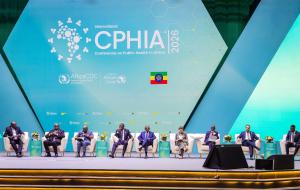
WHO Urges African Countries to Prioritize Domestic Financing for Pandemic Preparedness
Nov 25, 2026 3981
Addis Ababa, November 25, 2026 (ENA)— African governments have to increase domestic investment in pandemic preparedness instead reliance on external partners to finance health emergency responses after outbreaks have begun, Dr. Mohamed Yakub Janabi, WHO Regional Director for Africa said. The Regional Director made the call during a panel discussion at the 2026 Conference on Public Health in Africa (CPHIA), emphasizing that preparedness requires sustained investment before health emergencies emerge. According to him, African countries should prioritize financing national preparedness plans rather than waiting for international partners to provide resources after outbreaks begin. "Preparedness is cheaper, is faster, and it saves lives," Dr. Janabi said, urging governments to strengthen their readiness against emerging health threats. Citing Nigeria's experience, he said President Bola Tinubu approved 10 billion naira in June for the Nigeria Centre for Disease Control and Prevention and emergency preparedness ahead of an imported Ebola case. Accordingly, the Regional Director urged development partners to redirect more support toward preparedness and called on African governments not to depend on external funding to finance their readiness. "Preparedness is an investment, and then response is the bill," he said, underscoring the importance of investing in national health systems before outbreaks occur. Dr. Janabi highlighted Africa's collective negotiations on amendments to the International Health Regulations and the WHO Pandemic Agreement as important steps toward strengthening coordinated pandemic prevention and response. The amended International Health Regulations entered into force on September 19, 2025, introducing provisions on pandemic emergencies, national implementation mechanisms and equitable access to medical products. The Regional Director urged member states to incorporate the amended regulations into their national laws, translating international commitments into practical domestic health preparedness measures. He also emphasized the need to finalize the Pandemic Agreement's Pathogen Access and Benefit-Sharing annex, which addresses equitable access to vaccines, diagnostic tests and treatments developed using shared pathogen samples. "Our continent cannot only be study sites and subject of the clinical trials," Dr. Janabi stressed, calling for assurances that countries sharing pathogen samples also benefit from resulting medical products. Negotiations on the annex remain ongoing, with WHO member states reaffirming their commitment in November 2026 to finalize it for consideration by the World Health Assembly in May 2027. The Regional Director further called for expanded pooled procurement, stronger continental health institutions, including the African Medicines Agency, and increased regional pharmaceutical manufacturing to strengthen Africa's capacity to meet its medical needs. On WHO's institutional financing, he noted that member states had approved two increments toward raising assessed contributions to cover half of the organization's base budget by 2030–2031. His remarks underscored the importance of African ownership, sustainable financing and regional cooperation in strengthening the continent's capacity to prevent, detect and respond to future public health emergencies.
' + getPhotos(pictures, true) + '
';
/*let navs = getNavs();
let lastNav = navs[navs.length - 1];
if (pictures.length > 10) {
getNav().classList.add("multiline");
}
for (let i = navs.length; i < pictures.length; i++) {
let newNav = lastNav.cloneNode(true);
lastNav.parentNode.insertBefore(newNav, lastNav.nextSibling);
lastNav = newNav;
}*/
let titleText = document.getElementById("ena_title_text")
if (titleText) {
setTimeout(titleText.scrollIntoView(), 100);
}
}
function getPhotos(pictures, pictureOnly) {
let result = "";
pictures.forEach(picture => {
result += '';
result += '
';
})
return result;
}
function getPhotoImage(picture, pictureOnly) {
let result = '';
if (!pictureOnly) {
result += '';
}
result += '';
result += getPhotoImage(picture, pictureOnly);
result += '
';
if (!pictureOnly) {
result += '';
result += getPhotoText(picture);
result += '
';
}
result += '';
result += '
';
if (!pictureOnly) {
result += '';
}
return result;
}
function getPhotoText(picture) {
let result = '';
result += '';
result += '';
result += '
';
result += '';
result += getPhotoTitle(picture);
result += '
';
result += '';
return result;
}
function getPhotoTitle(picture) {
let image = picture.getElementsByTagName("IMG")[0];
return image.alt;
}
function getPhotoLink(picture) {
let image = picture.getElementsByTagName("IMG")[0];
return image.src.replace("&download=true","");
}
let contents=Array.from(
fragmentElement.getElementsByClassName(
"ena_display_item_content"));
contents.forEach(item => {
item.innerHTML=item.innerHTML.replaceAll(" "," ")})
Array.from(fragmentElement.getElementsByClassName(
"ena_display_item_content")).forEach(item => {
if (item.innerHTML.length!=item.textContent.length) {
item.innerHTML=item.textContent;}});
if (checkModes(["headlines", "alertbar", "slider", "advertisement"])) {
if (checkModes(["headlines", "alertbar"])) {
moveTo(getItems().length > 1 ? 1 : 0);
} else {
moveTo(0);
}
if (checkModes(["slider"])) {
setTimeout(() => autoMove(), 1);
} else {
autoMove();
}
}
function checkModes(modes, prefix){
if (!prefix) prefix = "mode";
var display = fragmentElement.getElementsByClassName(
"ena_display")[0];
for (let i in modes) {
if (display.classList.contains(
"ena_display_" + prefix + "_" + modes[i])) {
return true;
}
}
return false;
}
function getAutoInterval(){
if (checkModes(["advertisement"])) {
return 10000;
}
else {
return 5000;
}
}
function getCarouselNavs(){
return fragmentElement.getElementsByClassName("ena_carousel_control_navs")[0]}
function getPort(){
return fragmentElement.getElementsByClassName("ena_display_port")[0]}
function getItems(){return Array.from(
getPort().getElementsByClassName("ena_display_item"))}
function getNav(){return document.getElementById("ena_display_control_nav")}
function getNavs() {
if (checkModes(["Photos"], "type")) {
return Array.from(
fragmentElement.getElementsByClassName("ena_display_item_picture"));
} else {
return Array.from(
fragmentElement.getElementsByClassName("ena_display_control_nav_item"));
}
}
function getPrev(){
return fragmentElement.getElementsByClassName(
"ena_display_control_arrow_prev")[0];
}
function getNext(){
return fragmentElement.getElementsByClassName(
"ena_display_control_arrow_next")[0];
}
/*function getArrows(){
return fragmentElement.getElementsByClassName(
"ena_display_control_arrows")[0];
}*/
function getCurrent(items){return items.indexOf(items.find(
item => item.classList.contains("ena_display_current")))}
function setCurrent(index, itemsArray){
let currents = [];
itemsArray.forEach((items, i) => {
currents[i] = getCurrent(items);
if (currents[i]>=0)items[currents[i]].classList.add("ena_display_visible");
items.forEach(
item => {
item.classList.remove("ena_display_a");
item.classList.remove("ena_display_b");
item.classList.remove("ena_display_c");
item.classList.remove("ena_display_current");
item.classList.remove("ena_display_backward");
item.classList.remove("ena_display_forward");
})});
/*setTimeout(()=>{*/
itemsArray.forEach((items, i) => {
if(index >= 0 && index < items.length) {
let current=currents[i];
items[index].classList.add("ena_display_current");
if (current<0 || index==current) {
/*if (index==0){
items[items.length-1].classList.add("ena_display_a");
} else {
items[index-1].classList.add("ena_display_a");
}*/
items[index].classList.add("ena_display_b");
/*if (index==items.length-1){
items[0].classList.add("ena_display_c");
} else {
items[index+1].classList.add("ena_display_c");
}*/
} else {
let direction="";
/*setTimeout(()=>{*/
if(isForward(index, current, items.length-1)){
items[index].classList.add("ena_display_c");
/*setTimeout(()=>{*/
items[current].classList.add("ena_display_b");
/*}, 1000);*/
direction="ena_display_forward";
} else {
items[index].classList.add("ena_display_a");
/*setTimeout(()=>{*/
items[current].classList.add("ena_display_b");
/*}, 1000);*/
direction="ena_display_backward";
}
setTimeout(function(){
items[current].classList.add(direction);
items[index].classList.add(direction);
items[current].classList.remove("ena_display_visible");
}, 100);
/*}, 2000);*/
}
}});
/*}, 2000);*/
/*getItems().filter(
item => item.classList.contains("ena_display_current")).forEach(
item => {if (getPort()) getPort().scrollLeft=item.offsetLeft});*/
}
function isForward(index, current, last){
if(index==0&¤t==last)return true;
if(index==last&¤t==0)return false;
return index>current;
}
function moveTo(index){setCurrent(index, [getItems(), getNavs()]);}
function prevIndex(){
var items = getItems();
var index = getCurrent(items) - 1;
if (index < 0) index = items.length - 1;
return index;
}
function nextIndex(){
var items = getItems();
var index = getCurrent(items) + 1;
if (index >= items.length) index = 0;
return index;
}
getNavs().forEach((item, index) => item.onclick = function(){
moveTo(index)});
getPrev().onclick = function(){moveTo(prevIndex())};
getNext().onclick = function(){moveTo(nextIndex())};
fragmentElement.onmouseenter = function(){
autoStop();
//getArrows().style.display="inline-flex";
}
fragmentElement.onmouseleave = function(){
autoMove();
//getArrows().style.display="none";
}
function autoMove(){
autoStop();
if (fragmentElement.getElementsByClassName("portlet-topper").length==0
&& !fragmentElement.ena_timer_display){
fragmentElement.ena_timer_display=setInterval(
() => {
fragmentChild = fragmentElement.children[0];
let visibility = window.getComputedStyle(fragmentChild, null).visibility;
if (visibility != "hidden") {
moveTo(nextIndex());
}
}, getAutoInterval());
}
}
function autoStop(){
clearInterval(fragmentElement.ena_timer_display);
fragmentElement.ena_timer_display = null;
};}());
Economy
Ethiopia’s ICAO Council Election Marks Diplomatic Milestone, Strengthens Africa’s Voice in Global Aviation
Nov 27, 2026 339
Addis Ababa, November 27, 2026 (ENA)— Ethiopia’s election to the Governing Council of the International Civil Aviation Organization (ICAO), securing 133 votes, marks a significant diplomatic milestone that strengthens the country’s role in global aviation governance and advances Africa’s representation in international decision-making. According to Policy Brief-One issued by Office of the Prime Minister, Ethiopia secured one of four newly created seats during the 43rd Extraordinary Session of the ICAO Assembly in Montreal, Canada, following the expansion of the Council from 36 to 40 members. The achievement reflects the convergence of Ethiopia’s eight-decade aviation legacy, sustained diplomatic engagement, African solidarity and South-South cooperation, positioning the country to contribute directly to shaping the future of international civil aviation. A key factor behind Ethiopia’s election was its endorsement by the African Union as the continent’s sole candidate for the additional Council seat, with support from the African Civil Aviation Commission (AFCAC). The endorsement represented a coordinated continental effort to strengthen Africa’s voice in global aviation institutions, positioning Ethiopia’s candidacy within a broader agenda of advancing the continent’s collective interests. The diplomatic support also extended beyond Africa through the BRICS platform. The 18th BRICS Summit, held in New Delhi, explicitly welcomed Ethiopia’s candidacy in paragraph 105 of its New Delhi Declaration, recognizing the African Union’s endorsement of the country as the sole African candidate. This wider recognition demonstrated how continental solidarity and cooperation among emerging economies can reinforce the participation of developing countries in international governance institutions. Expanding Ethiopia’s Role in Global Aviation Governance Ethiopia’s membership in the ICAO Council provides an important platform to participate directly in shaping international aviation policies and standards. As the governing body responsible for overseeing ICAO’s work between Assembly sessions, the Council plays a central role in guiding international aviation cooperation and developing Standards and Recommended Practices (SARPs) covering aviation safety, security, air navigation, environmental sustainability and technological innovation. The position also gives Ethiopia an opportunity to contribute to global discussions on aviation decarbonization, carbon offsetting and sustainable aviation fuels, ensuring that emerging international regulations take into account the circumstances and development priorities of African countries and other developing aviation markets. Office of the Prime Minister noted that the Council seat connects Ethiopia’s diplomatic engagement with its broader economic transformation ambitions. With Ethiopian Airlines, expanding airport infrastructure, modernizing air navigation services and ICAO-aligned aviation training institutions, the country has an established aviation foundation upon which to build greater international connectivity and economic opportunities. The Council membership is expected to further reinforce international confidence in Ethiopia’s aviation regulatory institutions, support the development of its aviation industry and strengthen Addis Ababa’s position as a major intercontinental passenger and cargo hub. These opportunities have implications beyond the aviation sector, with improved connectivity potentially supporting export trade, tourism, foreign investment and the creation of skilled employment opportunities for Ethiopian professionals. Advancing Africa’s Aviation Integration Beyond its national significance, Ethiopia’s election provides an institutional platform to advance Africa’s shared aviation priorities within the global governance system. Working in coordination with the African Union and AFCAC, Ethiopia is expected to champion initiatives aimed at accelerating the implementation of the Single African Air Transport Market (SAATM), harmonizing regional airspace management, expanding intra-African connectivity and strengthening aviation safety and technical capacity across the continent. These priorities are central to improving air transport links among African countries, facilitating trade and tourism, and supporting the continent’s broader economic integration agenda. The development also comes at a time when Africa is seeking greater representation in international institutions and a stronger role in shaping global policies that directly affect its economic development. The Office of the Prime Minister emphasized that maximizing the opportunities created by Ethiopia’s election requires sustained institutional readiness and coordinated engagement by aviation authorities, the private sector and young professionals. It stressed the importance of translating diplomatic representation into institutional excellence, ensuring that the country’s new global mandate delivers tangible benefits for its aviation industry, citizens and the African continent. Ethiopia’s election to the ICAO Council thus opens a new chapter in its aviation diplomacy, linking its longstanding aviation experience with greater participation in global decision-making and the advancement of Africa’s collective interests.
Guba-launched Mega Projects Poised to Shape Ethiopia’s Medemer Vision, Say MPs
Nov 27, 2026 726
Addis Ababa, November 27, 2026 (ENA)—Ethiopia’s Guba-launched mega-development projects, valued at more than 30 billion USD, hold immense potential to accelerate economic transformation and shape the country’s emerging Medemer civilization, members of the House of Peoples’ Representatives told ENA. The lawmakers described the strategic projects as major engines of national growth, saying their successful completion would expand economic opportunities, enhance citizens’ livelihoods and lay a stronger foundation for Ethiopia’s long-term prosperity. Their remarks follow Prime Minister Abiy Ahmed’s address to the House during the fourth regular session of the first working year of the seventh parliament, where he outlined the progress, strategic significance and national aspirations underpinning the Guba-launched initiatives. Guided by the vision of “A Great Country, A Great People, A Grand Vision,” the projects demonstrate Ethiopia’s capacity to undertake ambitious development initiatives while pursuing greater economic self-reliance, the Prime Minister explained. The strategic portfolio encompasses the Bishoftu International Airport, the Ogaden natural gas project, the 1.5-million-housing development program, nuclear energy initiatives and the Gode soil fertilizer factory. Providing updates on their implementation, PM Abiy disclosed that natural gas from the Ogaden project in the Somali Region is already being used as an input by domestic ceramics factories and for powering Addis Ababa’s city buses, illustrating its contribution to the country's industrial and transport sectors. He also said preparations for the Bishoftu International Airport are advancing with the support of modern artificial intelligence technologies. Initial site selection has been completed, while the tender process for runway construction is underway. The Gode fertilizer factory is also progressing under close supervision, with the development including nearly 18,000 residential units for workers. Meanwhile, the 1.5-million-housing program is incorporating modern construction approaches designed to take citizens’ purchasing power into account. Approached by ENA, MP Addis Alemayehu said the pace of implementation of the mega-projects within a relatively short period was encouraging. She described them as a manifestation of the vision to hand over a more prosperous Ethiopia to future generations. MP Abiyot Delelegn, for her part, highlighted the projects’ round-the-clock construction activities as evidence of an emerging work culture focused on translating national ambitions into tangible results. She said the initiatives have considerable potential to shape Ethiopia’s new Medemer civilization by strengthening the country's development capacity and expanding opportunities for its people. Another MP, Samson Wondmeneh, said the government's vision of positioning Ethiopia as an African beacon of prosperity is being pursued through strategic development planning and major national investments. The lawmaker further reaffirmed their commitment to discharging their parliamentary oversight, support and regulatory responsibilities to ensure the projects are completed within their stipulated timelines and required quality standards and become operational. They emphasized that the successful realization of these strategic investments would be instrumental in advancing Ethiopia’s economic transformation and building a foundation for sustainable prosperity for generations to come.
COP32 Offers Ethiopia A Strategic Path to Green Growth and Global Influence
Nov 27, 2026 1675
By Staff Writer When world leaders, policymakers, climate negotiators, investors, and development partners gather in Addis Ababa from November 8 to 19, 2027, for the 32nd United Nations Climate Change Conference (COP32), Ethiopia will take center stage in global climate diplomacy at a defining moment for the country and the African continent. Hosting the summit presents Ethiopia with a historic opportunity to strengthen its international standing, mobilize climate finance, attract green investment, deepen development partnerships, and accelerate its transition toward a climate-resilient, low-carbon economy. Beyond convening one of the world's largest diplomatic gatherings, COP32 provides Ethiopia with a powerful platform to place Africa's climate priorities at the heart of global negotiations while showcasing its progress in renewable energy, environmental restoration, sustainable transport, and green development. The opportunity also carries significant political and economic weight. For Ethiopia, COP32 is not simply an international conference to be organized and successfully delivered. It is an opportunity to translate diplomatic leadership into concrete development gains, positioning the country as a destination for climate investment and a prominent voice in shaping the future of global climate cooperation. Ethiopia secured the hosting role following unanimous endorsement by the African Group of Negotiators at COP30 in Belém, Brazil, in November 2025, after Nigeria withdrew its competing bid in support of a unified African candidacy. The endorsement reflected continental confidence in Ethiopia's diplomatic standing and its growing engagement in international climate affairs. The conference also builds on Ethiopia's experience hosting the Second Africa Climate Summit in September 2025, which attracted more than 25,000 participants and produced the Addis Ababa Declaration. As the headquarters of the African Union, Addis Ababa is uniquely positioned to bring together world leaders, policymakers, development partners, climate experts, and investors. The Strategic Value of COP32 The strategic value of COP32 extends far beyond international recognition. It offers Ethiopia an opportunity to mobilize financing for renewable energy, climate-smart agriculture, resilient infrastructure, forest restoration, clean technologies, and sustainable urban development. It also provides a critical platform for advocating accessible, predictable, affordable, and concessional climate finance for African countries, which have contributed relatively little to historical global emissions but face disproportionately severe climate impacts. At COP29 in Baku, countries agreed on a new climate finance goal calling on developed countries to take the lead in mobilizing at least 300 billion USD annually for developing nations by 2035, within a broader ambition to scale climate finance from all sources to 1.3 trillion USD annually. Ethiopia can use its COP32 presidency to advocate for practical mechanisms that translate these commitments into accessible financing for vulnerable economies. Prime Minister Abiy Ahmed has consistently emphasized that climate action must be viewed as an economic and development priority rather than a narrowly environmental concern. Addressing the opening of COP31 in Antalya, Türkiye, in November 2026, he stated: "In Ethiopia, climate action is economic policy." The statement captures an important dimension of Ethiopia's approach to climate change: environmental protection, economic transformation, agricultural productivity, energy development, and livelihood security are interconnected priorities. During the same conference, the Prime Minister called for climate financing that reaches vulnerable communities before disasters occur, stressing: "Funding should be agreed in advance. It can then move at the speed of our forecasters, while there is still time to save lives." These remarks offer a clear indication of the priorities Ethiopia intends to advance as it prepares to assume a prominent role in international climate diplomacy through COP32. Prime Minister Abiy has also highlighted the broader national benefits of hosting the conference. In convening the COP32 National Steering Committee on November 16, 2026, he described the summit as an opportunity to advance Ethiopia's climate and environmental agenda, strengthen international partnerships, attract investment, and translate national initiatives into lasting development outcomes. He further emphasized the need for a coordinated, whole-of-government approach to ensure that preparations are aligned and the country is ready to deliver a successful international conference. Domestic Transformation: Building Credibility Through Action Ethiopia's ambition to host COP32 is anchored in domestic initiatives demonstrating its commitment to environmental protection, renewable energy, and climate-resilient development. One of the most visible is the Green Legacy Initiative, launched in 2019. The nationwide program has mobilized millions of citizens in large-scale tree-planting and environmental restoration campaigns. Government figures indicate that more than 56 billion seedlings have been planted through the initiative, reflecting the scale of the country's efforts to restore degraded landscapes and expand green spaces. The initiative has become an important component of Ethiopia's environmental diplomacy. It also demonstrates how public participation can support national environmental objectives while creating awareness about the importance of protecting natural resources. Speaking at the Second Africa Climate Summit in Addis Ababa in September 2025, Prime Minister Abiy highlighted the initiative as an example of Ethiopia's homegrown climate solutions. He also articulated a broader African ambition, declaring: "We are not here to negotiate our survival. We are here to design the world's next climate economy." The statement reflects Ethiopia's intention to move beyond the conventional portrayal of Africa as merely a victim of climate change and instead position the continent as an active contributor to global climate solutions. In the energy sector, Ethiopia has steadily expanded its renewable electricity generation capacity through investments in hydropower, wind, and solar energy. The inauguration of the Grand Ethiopian Renaissance Dam (GERD) in September 2025 marked a major milestone in the country's ambition to strengthen clean energy generation, expand electricity access, and increase regional power exports. Ethiopia has also taken significant steps toward sustainable transport. Since January 2024, the country has restricted imports of conventional petrol- and diesel-powered vehicles as part of its transition toward electric mobility. Although expanding charging infrastructure, ensuring vehicle affordability, and strengthening electricity distribution remain important priorities, the policy positions Ethiopia as an early mover in Africa's clean transport transition. These initiatives complement Ethiopia's updated Nationally Determined Contribution (NDC 3.0), which targets a reduction in projected greenhouse gas emissions of up to 70.3 percent below business-as-usual levels by 2035, contingent on international support, alongside a long-term ambition of achieving carbon neutrality by 2050. However, Ethiopia's climate agenda extends beyond emissions reduction. Climate change poses significant risks to agriculture, food security, water resources, and rural livelihoods. World Bank assessments have estimated that climate impacts could cost the country between 1 and 1.5 percent of GDP annually, with the potential for substantially greater losses in the coming decades. Consequently, adaptation financing, climate-resilient agriculture, water resource management, early-warning systems, and disaster preparedness must remain central priorities in Ethiopia's preparations for COP32. This is particularly important given the Prime Minister's recent emphasis on early action and financial support for vulnerable communities. At COP31, he underscored the urgency of ensuring that climate finance is available when early warnings are issued and reaches those most exposed to climate risks. His appeal was particularly powerful when he observed: "Our farmers once trusted the seasons to arrive on time. Let us make sure our support does." The statement captures the human dimension of climate change and reinforces the importance of ensuring that international climate commitments produce tangible benefits for communities whose livelihoods depend on increasingly unpredictable weather patterns. Advancing Africa's Climate Priorities COP32 will give Ethiopia an influential platform to amplify Africa's collective position in international climate negotiations, particularly on climate finance, technology transfer, adaptation, and loss and damage. For African countries, the central challenge is balancing the urgent need for industrialization, energy access, employment creation, and agricultural modernization with the growing threats posed by climate change. Ethiopia can use its COP32 presidency to champion a development framework that recognizes Africa's right to economic transformation while supporting clean energy, environmental protection, and climate resilience. At the Second Africa Climate Summit, Prime Minister Abiy offered a particularly important perspective on the continent's position in the global climate economy. He called for a shift in how international partners approach Africa's climate ambitions, stating: "It is time to replace climate aid with climate investment. This is not charity. It is the most strategic investment humanity can make." This position could become a defining theme of Ethiopia's COP32 diplomacy. Rather than treating Africa primarily as a recipient of climate assistance, Ethiopia can advocate for investment partnerships that recognize the continent's enormous renewable energy potential, agricultural resources, biodiversity, critical minerals, and young population. The continent has considerable opportunities to develop solar, wind, geothermal, and hydropower resources, expand green industrialization, strengthen sustainable agriculture, and build climate-resilient infrastructure. However, realizing these opportunities requires affordable financing, technology transfer, capacity building, and stronger international partnerships. COP32 should therefore provide a platform for moving beyond declarations toward practical investment agreements, bankable projects, and measurable implementation commitments. The summit will also offer Ethiopia an opportunity to showcase its tourism potential, biodiversity, cultural heritage, and emerging economic opportunities. From the historical landmarks of Aksum and Lalibela to the Simien and Bale Mountains, the Great Rift Valley, and Lake Tana, Ethiopia possesses considerable natural and cultural assets that can reinforce its broader green growth narrative. Hosting thousands of international delegates will also generate economic opportunities across tourism, hospitality, transport, construction, and other service industries. Investments in conference facilities, urban infrastructure, transport networks, accommodation, and digital connectivity could produce economic benefits extending well beyond the summit. Turning COP32 into Lasting National Gains With less than a year remaining before the summit opens, effective implementation will be decisive in turning Ethiopia's hosting responsibilities into lasting national benefits. The government's establishment of coordination structures and engagement with international partners, alongside Prime Minister Abiy's convening of the National Steering Committee, signals the importance attached to a coordinated national preparation process. Successful delivery will require targeted investments in conference venues, hospitality, public transport, security, telecommunications, and urban environmental management. Equally important will be the participation of the private sector, universities, research institutions, civil society organizations, youth groups, and local communities. The private sector, in particular, has an important role to play in converting the international attention generated by COP32 into investment opportunities. Businesses operating in renewable energy, electric mobility, construction, agriculture, tourism, manufacturing, and financial services should be encouraged to develop partnerships and investment proposals ahead of the conference. Ethiopia must also ensure that its domestic climate achievements are supported by transparent implementation and measurable results. Expanding last-mile electricity access, scaling up clean cooking solutions, strengthening electric vehicle infrastructure, improving climate-smart agricultural practices, and monitoring the long-term survival of planted trees are among the important benchmarks that can demonstrate progress. The conference should also provide an opportunity to strengthen Ethiopia's institutional capacity for climate finance mobilization, project preparation, environmental governance, and international partnership management. Ultimately, the country's credibility as a climate host will depend not only on its ability to organize a successful international gathering but also on its capacity to demonstrate that its climate ambitions are translating into practical development outcomes. A Defining Opportunity for Ethiopia and Africa COP32 represents both an international responsibility and a defining national opportunity for Ethiopia. Prime Minister Abiy Ahmed's vision of moving from climate aid toward climate investment, combined with his emphasis on early action, accessible financing, and climate-resilient development, provides an important foundation for shaping Ethiopia's engagement with the international community. The country's presidency can help advance a more balanced global climate agenda—one that recognizes Africa's development aspirations, acknowledges its disproportionate vulnerability to climate impacts, and creates opportunities for the continent to participate more meaningfully in the emerging global green economy. For Ethiopia, the challenge is to ensure that the diplomatic visibility and international partnerships generated by COP32 translate into renewable energy investments, stronger infrastructure, employment opportunities, improved livelihoods, and greater climate resilience. The ultimate measure of Ethiopia's COP32 presidency will not simply be the successful organization of a global summit in Addis Ababa. It will be the extent to which the conference helps convert international commitments into tangible investments, strengthens Africa's voice in global climate governance, and delivers lasting benefits for Ethiopians and the wider African continent.
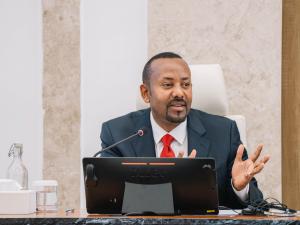
Guba Mega Projects Valued at over 30 Billion USD on Track, Says PM Abiy
Nov 26, 2026 5548
Addis Ababa, November 26, 2026 (ENA)— Ethiopia’s Guba mega projects that span from mass housing, nuclear energy, natural gas, fertilizer manufacturing to aviation are advancing on schedule, Prime Minister Abiy Ahmed told the House of People’s Representatives. Recall that Prime Minister Abiy Ahmed announced the Guba mega projects valued at over 30 billion USD during the September 2025 inauguration of the Grand Ethiopian Renaissance Dam (GERD) at Guba in Benishangul-Gumuz Region. Addressing the House today, the PM highlighted progress in the 1.5 Million-Home Program, the Ogaden LNG and gas infrastructure, the Gode urea fertilizer plant and oil refinery, Bishoftu International Airport, and nuclear energy development. Regarding the 1.5 Million-Home Mega Project, the PM said policy approval, land preparation, establishment of financing and mortgage systems are underway. The government is also testing modern construction technologies from Turkey, China, and South Korea to accelerate housing development. He disclosed that hundreds of thousands of houses are currently under construction in urban and rural areas across the country, while efforts are underway to establish a mortgage system that enables citizens to purchase homes through bank financing. Regarding the Ogaden gas project, the first phase of gas extraction has been completed, while infrastructure for transportation, distribution, and utilization is being developed. PM Abiy noted that gas distribution stations have been constructed in Adama, Dire Dawa, and Addis Ababa, while industries in Debre Berhan and Mojo have started using the resource. The government is also introducing gas-powered buses and expanding industrial applications to strengthen the gas value chain. Using gas instead of conventional fuel could reduce transportation costs by up to 50 percent, he added. On the Gode fertilizer project, the Premier said extensive site preparation has been undertaken, with construction materials and major equipment arriving despite logistical challenges. The project, estimated to cost at least 3 billion US dollars, comprises ammonia, urea, granulation, and packaging plants, as well as a gas pipeline and distribution infrastructure. It will also involve the construction of 18,000 houses for workers. He expressed confidence that the fertilizer project would be completed within its planned timeframe, barring unforeseen challenges. Regarding Bishoftu International Airport, the Prime Minister said initial site preparation is expected to be completed within the coming two to three months, while the tender process for runway construction is underway. PM Abiy described the airport as a major strategic investment requiring substantial financing, modern technology, and strong implementation capacity. He emphasized that the projects require substantial resources, infrastructure, and implementation capacity, but expressed confidence that they would be completed through continued government efforts and public support. On nuclear energy development, the Prime Minister said an institution has been established, technology selected, and potential project sites identified. Discussions with partner countries are also underway to secure financing and advance implementation. The PM also highlighted progress in energy infrastructure, particularly the Koysha hydropower project, which is expected to generate more than 2,000 megawatts of electricity. He said civil construction is nearing completion, while electromechanical works are expected to advance further. Prime Minister Abiy further noted that progress in cement, coal, steel, ceramics, and glass production has helped Ethiopia achieve 6 billion US dollars in import substitution, marking significant progress in domestic manufacturing.
' + getPhotos(pictures, true) + '
';
/*let navs = getNavs();
let lastNav = navs[navs.length - 1];
if (pictures.length > 10) {
getNav().classList.add("multiline");
}
for (let i = navs.length; i < pictures.length; i++) {
let newNav = lastNav.cloneNode(true);
lastNav.parentNode.insertBefore(newNav, lastNav.nextSibling);
lastNav = newNav;
}*/
let titleText = document.getElementById("ena_title_text")
if (titleText) {
setTimeout(titleText.scrollIntoView(), 100);
}
}
function getPhotos(pictures, pictureOnly) {
let result = "";
pictures.forEach(picture => {
result += '';
result += '
';
})
return result;
}
function getPhotoImage(picture, pictureOnly) {
let result = '';
if (!pictureOnly) {
result += '';
}
result += '';
result += getPhotoImage(picture, pictureOnly);
result += '
';
if (!pictureOnly) {
result += '';
result += getPhotoText(picture);
result += '
';
}
result += '';
result += '
';
if (!pictureOnly) {
result += '';
}
return result;
}
function getPhotoText(picture) {
let result = '';
result += '';
result += '';
result += '
';
result += '';
result += getPhotoTitle(picture);
result += '
';
result += '';
return result;
}
function getPhotoTitle(picture) {
let image = picture.getElementsByTagName("IMG")[0];
return image.alt;
}
function getPhotoLink(picture) {
let image = picture.getElementsByTagName("IMG")[0];
return image.src.replace("&download=true","");
}
let contents=Array.from(
fragmentElement.getElementsByClassName(
"ena_display_item_content"));
contents.forEach(item => {
item.innerHTML=item.innerHTML.replaceAll(" "," ")})
Array.from(fragmentElement.getElementsByClassName(
"ena_display_item_content")).forEach(item => {
if (item.innerHTML.length!=item.textContent.length) {
item.innerHTML=item.textContent;}});
if (checkModes(["headlines", "alertbar", "slider", "advertisement"])) {
if (checkModes(["headlines", "alertbar"])) {
moveTo(getItems().length > 1 ? 1 : 0);
} else {
moveTo(0);
}
if (checkModes(["slider"])) {
setTimeout(() => autoMove(), 1);
} else {
autoMove();
}
}
function checkModes(modes, prefix){
if (!prefix) prefix = "mode";
var display = fragmentElement.getElementsByClassName(
"ena_display")[0];
for (let i in modes) {
if (display.classList.contains(
"ena_display_" + prefix + "_" + modes[i])) {
return true;
}
}
return false;
}
function getAutoInterval(){
if (checkModes(["advertisement"])) {
return 10000;
}
else {
return 5000;
}
}
function getCarouselNavs(){
return fragmentElement.getElementsByClassName("ena_carousel_control_navs")[0]}
function getPort(){
return fragmentElement.getElementsByClassName("ena_display_port")[0]}
function getItems(){return Array.from(
getPort().getElementsByClassName("ena_display_item"))}
function getNav(){return document.getElementById("ena_display_control_nav")}
function getNavs() {
if (checkModes(["Photos"], "type")) {
return Array.from(
fragmentElement.getElementsByClassName("ena_display_item_picture"));
} else {
return Array.from(
fragmentElement.getElementsByClassName("ena_display_control_nav_item"));
}
}
function getPrev(){
return fragmentElement.getElementsByClassName(
"ena_display_control_arrow_prev")[0];
}
function getNext(){
return fragmentElement.getElementsByClassName(
"ena_display_control_arrow_next")[0];
}
/*function getArrows(){
return fragmentElement.getElementsByClassName(
"ena_display_control_arrows")[0];
}*/
function getCurrent(items){return items.indexOf(items.find(
item => item.classList.contains("ena_display_current")))}
function setCurrent(index, itemsArray){
let currents = [];
itemsArray.forEach((items, i) => {
currents[i] = getCurrent(items);
if (currents[i]>=0)items[currents[i]].classList.add("ena_display_visible");
items.forEach(
item => {
item.classList.remove("ena_display_a");
item.classList.remove("ena_display_b");
item.classList.remove("ena_display_c");
item.classList.remove("ena_display_current");
item.classList.remove("ena_display_backward");
item.classList.remove("ena_display_forward");
})});
/*setTimeout(()=>{*/
itemsArray.forEach((items, i) => {
if(index >= 0 && index < items.length) {
let current=currents[i];
items[index].classList.add("ena_display_current");
if (current<0 || index==current) {
/*if (index==0){
items[items.length-1].classList.add("ena_display_a");
} else {
items[index-1].classList.add("ena_display_a");
}*/
items[index].classList.add("ena_display_b");
/*if (index==items.length-1){
items[0].classList.add("ena_display_c");
} else {
items[index+1].classList.add("ena_display_c");
}*/
} else {
let direction="";
/*setTimeout(()=>{*/
if(isForward(index, current, items.length-1)){
items[index].classList.add("ena_display_c");
/*setTimeout(()=>{*/
items[current].classList.add("ena_display_b");
/*}, 1000);*/
direction="ena_display_forward";
} else {
items[index].classList.add("ena_display_a");
/*setTimeout(()=>{*/
items[current].classList.add("ena_display_b");
/*}, 1000);*/
direction="ena_display_backward";
}
setTimeout(function(){
items[current].classList.add(direction);
items[index].classList.add(direction);
items[current].classList.remove("ena_display_visible");
}, 100);
/*}, 2000);*/
}
}});
/*}, 2000);*/
/*getItems().filter(
item => item.classList.contains("ena_display_current")).forEach(
item => {if (getPort()) getPort().scrollLeft=item.offsetLeft});*/
}
function isForward(index, current, last){
if(index==0&¤t==last)return true;
if(index==last&¤t==0)return false;
return index>current;
}
function moveTo(index){setCurrent(index, [getItems(), getNavs()]);}
function prevIndex(){
var items = getItems();
var index = getCurrent(items) - 1;
if (index < 0) index = items.length - 1;
return index;
}
function nextIndex(){
var items = getItems();
var index = getCurrent(items) + 1;
if (index >= items.length) index = 0;
return index;
}
getNavs().forEach((item, index) => item.onclick = function(){
moveTo(index)});
getPrev().onclick = function(){moveTo(prevIndex())};
getNext().onclick = function(){moveTo(nextIndex())};
fragmentElement.onmouseenter = function(){
autoStop();
//getArrows().style.display="inline-flex";
}
fragmentElement.onmouseleave = function(){
autoMove();
//getArrows().style.display="none";
}
function autoMove(){
autoStop();
if (fragmentElement.getElementsByClassName("portlet-topper").length==0
&& !fragmentElement.ena_timer_display){
fragmentElement.ena_timer_display=setInterval(
() => {
fragmentChild = fragmentElement.children[0];
let visibility = window.getComputedStyle(fragmentChild, null).visibility;
if (visibility != "hidden") {
moveTo(nextIndex());
}
}, getAutoInterval());
}
}
function autoStop(){
clearInterval(fragmentElement.ena_timer_display);
fragmentElement.ena_timer_display = null;
};}());
Videos


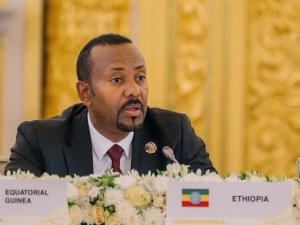
' + getPhotos(pictures, true) + '
';
/*let navs = getNavs();
let lastNav = navs[navs.length - 1];
if (pictures.length > 10) {
getNav().classList.add("multiline");
}
for (let i = navs.length; i < pictures.length; i++) {
let newNav = lastNav.cloneNode(true);
lastNav.parentNode.insertBefore(newNav, lastNav.nextSibling);
lastNav = newNav;
}*/
let titleText = document.getElementById("ena_title_text")
if (titleText) {
setTimeout(titleText.scrollIntoView(), 100);
}
}
function getPhotos(pictures, pictureOnly) {
let result = "";
pictures.forEach(picture => {
result += '';
result += '
';
})
return result;
}
function getPhotoImage(picture, pictureOnly) {
let result = '';
if (!pictureOnly) {
result += '';
}
result += '';
result += getPhotoImage(picture, pictureOnly);
result += '
';
if (!pictureOnly) {
result += '';
result += getPhotoText(picture);
result += '
';
}
result += '';
result += '
';
if (!pictureOnly) {
result += '';
}
return result;
}
function getPhotoText(picture) {
let result = '';
result += '';
result += '';
result += '
';
result += '';
result += getPhotoTitle(picture);
result += '
';
result += '';
return result;
}
function getPhotoTitle(picture) {
let image = picture.getElementsByTagName("IMG")[0];
return image.alt;
}
function getPhotoLink(picture) {
let image = picture.getElementsByTagName("IMG")[0];
return image.src.replace("&download=true","");
}
let contents=Array.from(
fragmentElement.getElementsByClassName(
"ena_display_item_content"));
contents.forEach(item => {
item.innerHTML=item.innerHTML.replaceAll(" "," ")})
Array.from(fragmentElement.getElementsByClassName(
"ena_display_item_content")).forEach(item => {
if (item.innerHTML.length!=item.textContent.length) {
item.innerHTML=item.textContent;}});
if (checkModes(["headlines", "alertbar", "slider", "advertisement"])) {
if (checkModes(["headlines", "alertbar"])) {
moveTo(getItems().length > 1 ? 1 : 0);
} else {
moveTo(0);
}
if (checkModes(["slider"])) {
setTimeout(() => autoMove(), 1);
} else {
autoMove();
}
}
function checkModes(modes, prefix){
if (!prefix) prefix = "mode";
var display = fragmentElement.getElementsByClassName(
"ena_display")[0];
for (let i in modes) {
if (display.classList.contains(
"ena_display_" + prefix + "_" + modes[i])) {
return true;
}
}
return false;
}
function getAutoInterval(){
if (checkModes(["advertisement"])) {
return 10000;
}
else {
return 5000;
}
}
function getCarouselNavs(){
return fragmentElement.getElementsByClassName("ena_carousel_control_navs")[0]}
function getPort(){
return fragmentElement.getElementsByClassName("ena_display_port")[0]}
function getItems(){return Array.from(
getPort().getElementsByClassName("ena_display_item"))}
function getNav(){return document.getElementById("ena_display_control_nav")}
function getNavs() {
if (checkModes(["Photos"], "type")) {
return Array.from(
fragmentElement.getElementsByClassName("ena_display_item_picture"));
} else {
return Array.from(
fragmentElement.getElementsByClassName("ena_display_control_nav_item"));
}
}
function getPrev(){
return fragmentElement.getElementsByClassName(
"ena_display_control_arrow_prev")[0];
}
function getNext(){
return fragmentElement.getElementsByClassName(
"ena_display_control_arrow_next")[0];
}
/*function getArrows(){
return fragmentElement.getElementsByClassName(
"ena_display_control_arrows")[0];
}*/
function getCurrent(items){return items.indexOf(items.find(
item => item.classList.contains("ena_display_current")))}
function setCurrent(index, itemsArray){
let currents = [];
itemsArray.forEach((items, i) => {
currents[i] = getCurrent(items);
if (currents[i]>=0)items[currents[i]].classList.add("ena_display_visible");
items.forEach(
item => {
item.classList.remove("ena_display_a");
item.classList.remove("ena_display_b");
item.classList.remove("ena_display_c");
item.classList.remove("ena_display_current");
item.classList.remove("ena_display_backward");
item.classList.remove("ena_display_forward");
})});
/*setTimeout(()=>{*/
itemsArray.forEach((items, i) => {
if(index >= 0 && index < items.length) {
let current=currents[i];
items[index].classList.add("ena_display_current");
if (current<0 || index==current) {
/*if (index==0){
items[items.length-1].classList.add("ena_display_a");
} else {
items[index-1].classList.add("ena_display_a");
}*/
items[index].classList.add("ena_display_b");
/*if (index==items.length-1){
items[0].classList.add("ena_display_c");
} else {
items[index+1].classList.add("ena_display_c");
}*/
} else {
let direction="";
/*setTimeout(()=>{*/
if(isForward(index, current, items.length-1)){
items[index].classList.add("ena_display_c");
/*setTimeout(()=>{*/
items[current].classList.add("ena_display_b");
/*}, 1000);*/
direction="ena_display_forward";
} else {
items[index].classList.add("ena_display_a");
/*setTimeout(()=>{*/
items[current].classList.add("ena_display_b");
/*}, 1000);*/
direction="ena_display_backward";
}
setTimeout(function(){
items[current].classList.add(direction);
items[index].classList.add(direction);
items[current].classList.remove("ena_display_visible");
}, 100);
/*}, 2000);*/
}
}});
/*}, 2000);*/
/*getItems().filter(
item => item.classList.contains("ena_display_current")).forEach(
item => {if (getPort()) getPort().scrollLeft=item.offsetLeft});*/
}
function isForward(index, current, last){
if(index==0&¤t==last)return true;
if(index==last&¤t==0)return false;
return index>current;
}
function moveTo(index){setCurrent(index, [getItems(), getNavs()]);}
function prevIndex(){
var items = getItems();
var index = getCurrent(items) - 1;
if (index < 0) index = items.length - 1;
return index;
}
function nextIndex(){
var items = getItems();
var index = getCurrent(items) + 1;
if (index >= items.length) index = 0;
return index;
}
getNavs().forEach((item, index) => item.onclick = function(){
moveTo(index)});
getPrev().onclick = function(){moveTo(prevIndex())};
getNext().onclick = function(){moveTo(nextIndex())};
fragmentElement.onmouseenter = function(){
autoStop();
//getArrows().style.display="inline-flex";
}
fragmentElement.onmouseleave = function(){
autoMove();
//getArrows().style.display="none";
}
function autoMove(){
autoStop();
if (fragmentElement.getElementsByClassName("portlet-topper").length==0
&& !fragmentElement.ena_timer_display){
fragmentElement.ena_timer_display=setInterval(
() => {
fragmentChild = fragmentElement.children[0];
let visibility = window.getComputedStyle(fragmentChild, null).visibility;
if (visibility != "hidden") {
moveTo(nextIndex());
}
}, getAutoInterval());
}
}
function autoStop(){
clearInterval(fragmentElement.ena_timer_display);
fragmentElement.ena_timer_display = null;
};}());